NSP/RSP Series High-Efficiency Enclosed AC/DC Power Supplies
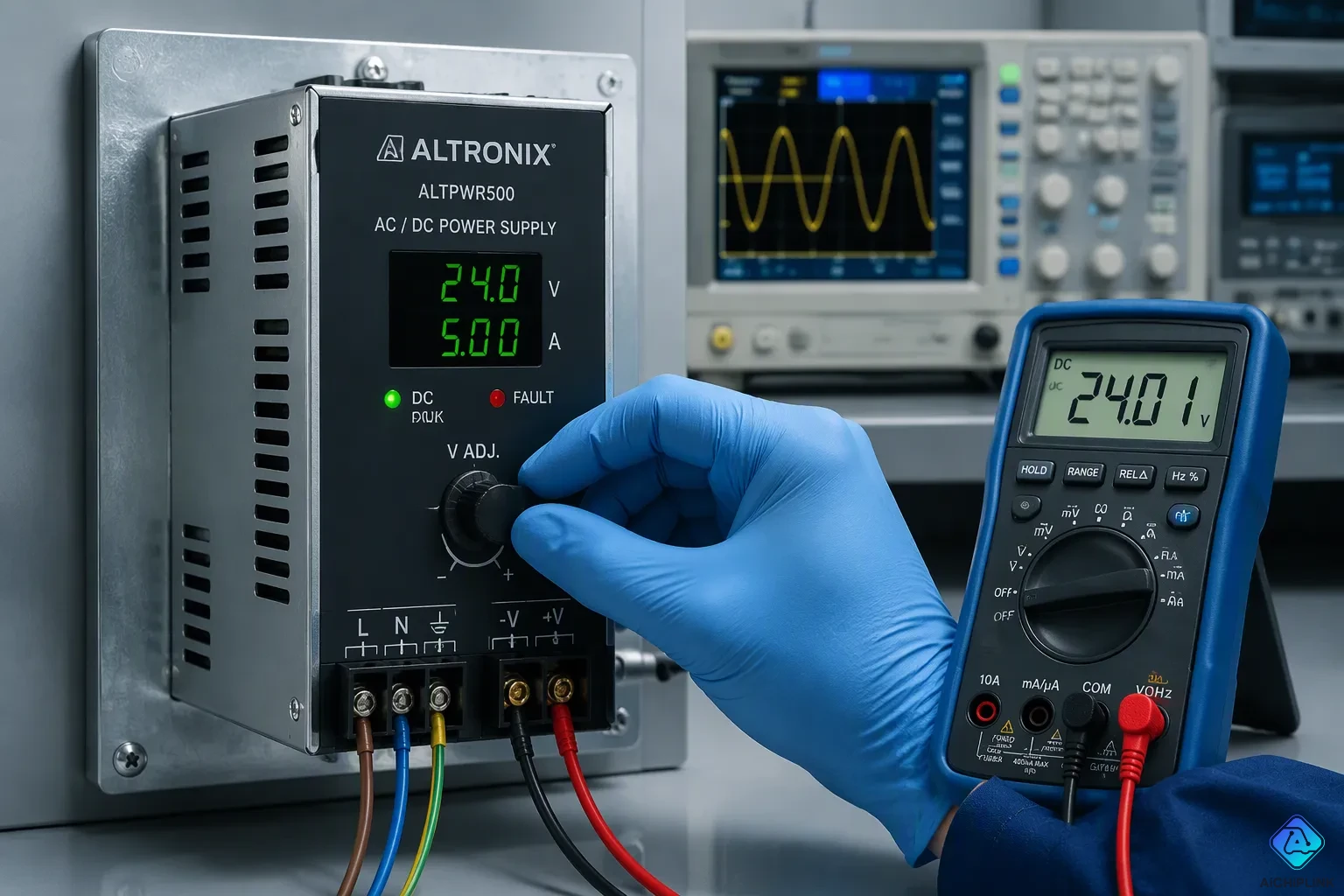
The NSP/RSP series are high-efficiency enclosed AC/DC power supplies from MEAN WELL. These units turn AC mains power into steady DC power for equipment mounted in cabinets and enclosures. Their job is simple: deliver efficient, reliable DC power in a chassis-mount, touch-safe package. The single-output range covers 75 W to 2,400 W.
The NSP models reach 90–94.5% efficiency and use under 0.3 W to 0.5 W when there is no load. Readers will learn the key features, how the RSP line changed into the NSP line, the certifications behind each unit, and the best uses for these AC/DC supplies. This knowledge helps you choose with confidence and supports long-term reliability in real installations.
Key Takeaways
-
These power supplies work very well and use less energy.
-
The NSP series is smaller and works in more extreme temperatures.
-
Both series have strong safeguards to keep your equipment safe.
-
You can easily swap out an old RSP unit for a new NSP unit.
-
Pick the right model for your space, temperature, and power needs.
What the NSP/RSP Series Is
MEAN WELL makes the NSP/RSP series. The company builds these units as ac/dc power supplies for equipment kept inside a cabinet. Each model takes AC mains at the input and gives one regulated DC output. That single output covers a wide range, from 75 W to 2,400 W. So a designer can power a small control box or a large machine frame from the same product family.
Enclosed AC/DC Form Factor
The case is the main feature. These are enclosed-type power supplies, which means the circuit board and its parts sit inside a metal housing. The housing is chassis-mount, so screws hold it to a panel or a cabinet floor. It is also touch-safe, so a technician who opens the cabinet door does not touch live parts.
This format works well for cabinet installation for three reasons. First, the metal case protects the switching circuit from dust and accidental contact. Second, the mounting holes line up with standard panel layouts. Third, the enclosed body moves heat out through its own surface, so no separate cover is needed. The result is a clean ac/dc conversion block that fits into a control panel with little wiring work.
Single-Output Range and Input Options
Input flexibility matters as much as output power. The RSP line accepted 85–264 Vac, and the RSP-1000 model was rated at 90–264 Vac. The NSP line widens that window to 85–305 Vac. The wider range covers North America's 277 Vac standard and lowers the risk of damage when the AC supply is unstable.
Output voltage choices span 5 V to 60 V across the family. A single output keeps wiring simple. One pair of terminals feeds the load, and the rated current sets the cable gauge. Buyers who compare ac/dc power supplies for industrial and medical uses often value this simplicity. Fewer output rails mean fewer failure points and easier fault tracing. The family also supports remote control, so a host system can turn the output on or off without a manual step. That feature supports reliability in unattended cabinets, where a scheduled shutdown protects downstream electronics. Overall efficiency stays high across the range, which keeps heat inside the enclosure low and extends component life.
Key Features of These AC/DC Power Supplies
Compact Size and High Efficiency
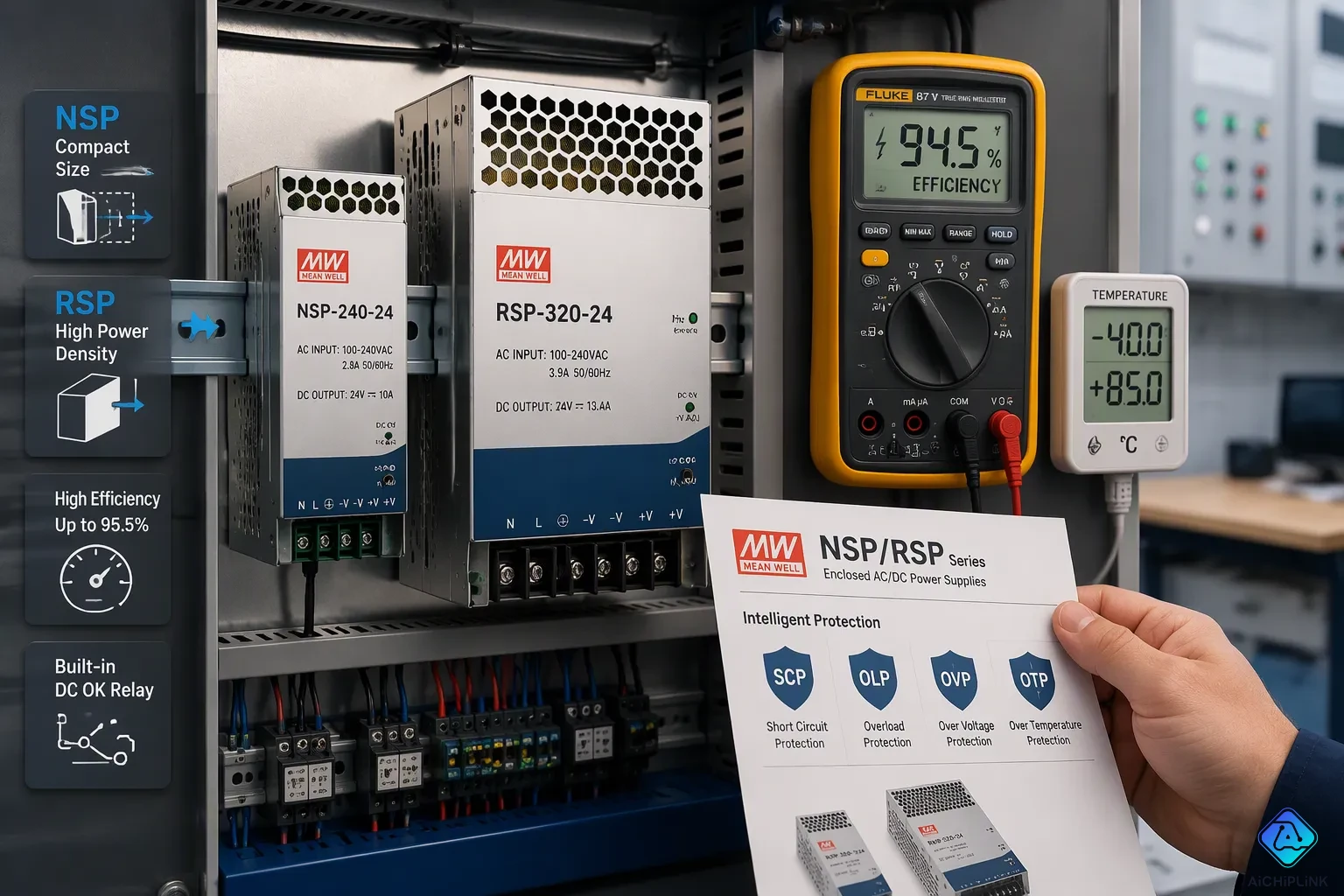
Size and heat are always big concerns in cabinet design. The NSP-500/750 models solve both problems. Their efficiency reaches 90–95%, and they draw very little power when idle. A 200% peak power capability lets the unit handle short power surges, like motor starts, without needing a bigger supply.
| Parameter | Value |
|---|---|
| Typical efficiency | Up to 90–95% |
| No-load power consumption | Ultra-low, under 0.75–1 W (model dependent) |
The RSP line was the earlier standard. It uses free-air convection cooling. No fan means no bearing wear and no dust pulled into the case. The NSP series improves on that with higher efficiency and a smaller footprint. Across the family, efficiency runs from 89% to 95% depending on the model, with most units reaching up to 94.5%. This high efficiency keeps heat low inside the enclosure. Less heat supports compact ac/dc conversion and longer part life.
Every model shows the push toward higher efficiency and smaller size.
Wide Temperature Range and Intelligent Protection
Real-world conditions rarely match the lab. These ac/dc power supplies work from -40 °C to +85 °C, and they need derating above +60 °C. That range fits cold outdoor cabinets and hot machine rooms alike. Advanced thermal management keeps the internal parts within safe limits across that span.
Intelligent protection guards both the load and the supply. Each unit includes short circuit protection, overload protection, over voltage protection, and over temperature protection. These full protections act fast. A short circuit or an overload shuts the output down before damage can spread. Over temperature protection kicks in when airflow drops or the room gets hotter. The current limit also keeps the output within safe bounds during a fault.
This protection set matters for reliability in industrial and medical uses. A supply that trips and recovers cleanly is better than one that fails and takes a whole line down. The wide thermal range and the protection suite work together. One handles the environment, and the other handles faults. Together they let the nsp/rsp series serve unattended cabinets with confidence.
Reliability and Certifications
Safety and EMC Standards
Certifications decide whether a design moves forward or gets stuck in review. These ac/dc power supplies have the safety certifications that approval groups expect for cabinet-mounted equipment. Each unit meets the right safety standards for its class, and the family covers both industrial and medical safety requirements. That coverage matters for teams building one platform for several markets. A single approved supply can serve more than one product line.
EMC performance supports the same goal. The units limit conducted and radiated emissions, and they hold up under the immunity tests that real installations demand. Designers can submit a panel for review with fewer surprises. The safety certifications also shorten the approval path, because reviewers recognize the marks and the test reports behind them. For industrial and medical applications, this paperwork is not just a formality. It is the proof that the supply will not put a patient or an operator in danger. Reliability starts with a unit that passed the tests before it ever reached the cabinet.
Drop-In Replacement and Mounting
Serviceability shapes long-term reliability as much as any internal part. The NSP series keeps the same mounting-hole distances as the RSP series. A failed RSP unit comes out, and an NSP unit goes in, with no drilling and no new bracket. That seamless replacement protects the installed base. Machines built years ago can move to newer, more efficient parts without a redesign.
The mounting pattern also makes spare-parts planning simpler. One panel layout serves both lines, so a service team stocks fewer variants. Technicians spend minutes on a swap instead of hours on fabrication. This continuity supports the nsp/rsp series as a long-life platform. The current design and the older design share a footprint, and that shared footprint lowers the cost of every future upgrade.
Medical and Industrial Power Supplies in Practice
Industrial Automation and Control
Factory floors need power that stays steady through noise, vibration, and load changes. These ac/dc power supplies are made for that kind of place. They handle the high short-term and peak power demands that motors, pumps, and capacitive loads create. A PLC or sensor rail keeps its voltage steady even when a nearby servo starts and pulls a surge. That steadiness protects precision work, where a small drift can ruin a batch.
The NSP-2400 model shows how wide this role is. It serves industrial automation along with semiconductor equipment, medical devices, laser processing, and test systems. Growing demand for more power in smaller cabinets drives this design. The supplies fit more output into less space, so a control panel holds more function without getting bigger. For teams comparing ac/dc power supplies, this density matters as much as raw wattage.
Designed for tough applications—from industrial automation to new energy systems—this is the smart, compact power solution your design needs.
Lighting, Security, and Fire Protection
These units also serve building systems. MEAN WELL reports that the RSP-75/100/150/200/320 series has sold more than 10 million units over a decade of commercial availability. Those supplies found wide use in industrial control, communication equipment, architectural lighting, security, and fire protection. The newer NSP-75/100/150/200/320 series replaces them with greater miniaturization and higher efficiency.
That track record speaks to reliability in unattended sites. A security panel or fire system must run for years without a service call. The wide thermal range and intelligent protection support that duty. The same platform covers medical and industrial applications, including medical equipment where leakage current limits are strict. One family this way serves many rooms of a building, from the control cabinet to the life-safety panel.
Benefits of the NSP/RSP Series
Matching RSP and NSP to the Application
Both lines share the same main strengths. Each unit gives high efficiency, supports remote control, and brings industrial-grade reliability into the cabinet. The NSP series adds higher efficiency, a smaller footprint, and a wider thermal range. The RSP series is still a proven baseline with a long service record. Neither line is the better choice in every case. The right pick depends on the load and the environment.
A few criteria clearly separate the two lines. The NSP series runs from -40 to +85 °C, offers 200% peak power, and keeps medical leakage current below 350 µA. The RSP series has a narrower thermal range and lower peak capability. The table below sums up the main differences.
| Criterion | NSP Series | RSP Series |
|---|---|---|
| Size | Up to ~55% smaller | Larger footprint |
| Peak power | 200% | Lower |
| Temperature range | -40 to +85 °C | Narrower |
| Medical leakage current | <350 µA | ~1–2 mA |
| Warranty | 5 years | Shorter |
Choose the NSP series for new designs with tight space, cold or hot sites, or medical leakage limits. Choose the RSP series for older cabinets that already use its layout. Check the datasheet for each model before you commit.
Sourcing and Availability
Supply planning starts with the datasheet. Each model lists its input range, output voltage, and derating curve. Lead times vary by wattage and region, so confirm stock before a build. Many NSP models fit into RSP mounting holes, which makes spare-parts planning simpler. A service team can stock one layout for both lines.
Support matters as much as stock. Application engineers can help match a unit to your load profile and confirm the protection settings. These ac/dc power supplies carry full protections, and the right setup keeps reliability high over years of service. Ask for test reports and certification files early. That step shortens design approval and keeps the schedule on track.
The NSP/RSP series are enclosed ac/dc power supplies from MEAN WELL. They give strong efficiency, a small chassis-mount case, a wide temperature range, smart protection, and safety certifications that people trust. Output goes from 89% to 95%, and the units work from –40 °C to +85 °C.
Picking between the two lines depends on what the job needs. The NSP series offers higher efficiency, a smaller size, and 200% peak power. The RSP series is still a proven baseline with a long service record. Neither line is better than the other for every job.
Check lead times and stock before you start a build. Look at the datasheets, or ask support for help choosing. Both lines give you reliability and solid protection.

Written by Jack Elliott from AIChipLink.
AIChipLink, one of the fastest-growing global independent electronic components distributors in the world, offers millions of products from thousands of manufacturers, and many of our in-stock parts is available to ship same day.
We mainly source and distribute integrated circuit (IC) products of brands such as Broadcom, Microchip, Texas Instruments, Infineon, NXP, Analog Devices, Qualcomm, Intel, etc., which are widely used in communication & network, telecom, industrial control, new energy and automotive electronics.
Empowered by AI, Linked to the Future. Get started on AIChipLink and submit your RFQ online today!
Frequently Asked Questions
What power range does the NSP/RSP family cover?
The family covers 75 W to 2,400 W on a single output. This range lets one product line power a small control box or a large machine frame. Buyers can use one family across many cabinet designs.
Which input voltages do these units accept?
The NSP line takes 85–305 Vac, which is a wider window than the RSP line. The wider range covers 277 Vac systems and AC supplies that are not stable.
How do the two lines differ for a new design?
The NSP series adds higher efficiency, a smaller footprint, 200% peak power, and a -40 to +85 °C range. The RSP series is still a proven baseline with a long service record. Match your choice to your load and site conditions.
Can an NSP unit replace an existing RSP unit?
Yes. The NSP series keeps the same mounting-hole distances as the RSP series. A swap needs no drilling and no new bracket. This shared footprint makes spare-parts planning simpler and supports long-term reliability in installed cabinets.
What protections come standard?
Every unit includes short circuit, overload, over voltage, and over temperature protection. These protections act fast during a fault. The wide thermal range and this protection set suit unattended cabinets running ac/dc power supplies all day and night. Teams comparing ac/dc options should confirm settings on the datasheet.