Introduction
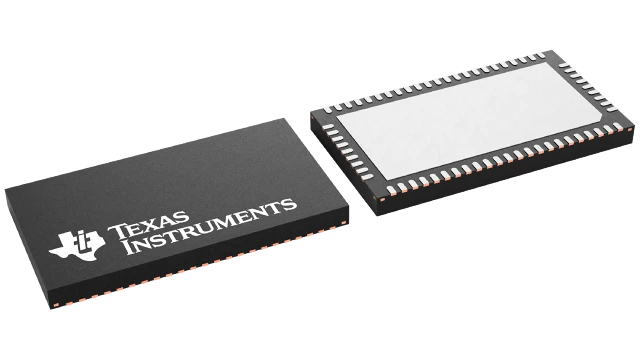
The LMX1204RHAT is a high-performance RF frequency synthesizer manufactured by Texas Instruments, featuring integrated PLL (Phase-Locked Loop) with VCO (Voltage-Controlled Oscillator) covering 0.5-4.8 GHz, ultra-low phase noise performance, and programmable output power for wireless communications, test equipment, and RF signal generation applications requiring precise, low-jitter frequency synthesis.
Technical Overview
Core Specifications
| Parameter | Specification |
|---|---|
| Frequency Range | 0.5 - 4.8 GHz |
| Phase Noise | -110 dBc/Hz @ 10 kHz offset (typ) |
| Output Power | -4 to +5 dBm (programmable) |
| Reference Input | 10 - 200 MHz |
| Resolution | <1 Hz (fractional-N) |
| Supply Voltage | 3.3V |
| Package | VQFN-32 (5×5 mm) |
| Operating Temp | -40°C to +85°C |
Key Features
Wide Frequency Coverage:
- VCO range: 0.5 - 4.8 GHz
- Covers most wireless bands (GSM, WCDMA, LTE, Wi-Fi, ISM)
- Programmable output dividers (1, 2, 4, 8, 16)
- Extended range via external dividers
Ultra-Low Phase Noise:
- -110 dBc/Hz @ 10 kHz offset (2.4 GHz carrier)
- -135 dBc/Hz @ 100 kHz offset
- Critical for sensitive receiver applications
- Enables high-order modulation (256-QAM)
Fractional-N PLL:
- Sub-1 Hz frequency resolution
- Flexible channel spacing
- Third-order Σ-Δ modulator
- Reduced spurious content
Programmable Interface:
- SPI/I²C digital control
- Output power adjustment (-4 to +5 dBm)
- Register-based configuration
- EEPROM-less design (host configuration)
Complete Specifications
Frequency Specifications
| Parameter | Min | Typ | Max | Unit |
|---|---|---|---|---|
| VCO Frequency | 0.5 | - | 4.8 | GHz |
| Reference Input | 10 | - | 200 | MHz |
| PFD Frequency | - | - | 125 | MHz |
| Output Frequency | 0.031 | - | 4.8 | GHz |
Output Divider Options: 1, 2, 4, 8, 16 (extends low-frequency range to 31.25 MHz)
Phase Noise Performance (@ 2.4 GHz)
| Offset Frequency | Phase Noise |
|---|---|
| 1 kHz | -95 dBc/Hz |
| 10 kHz | -110 dBc/Hz |
| 100 kHz | -135 dBc/Hz |
| 1 MHz | -152 dBc/Hz |
Integrated RMS Phase Noise: <0.5° (1 kHz - 100 MHz)
Output Power & Harmonics
| Parameter | Specification |
|---|---|
| Output Power Range | -4 to +5 dBm |
| Power Step | 3 dB (programmable) |
| Second Harmonic | -15 dBc (typical) |
| Third Harmonic | -20 dBc (typical) |
Electrical Specifications
| Parameter | Min | Typ | Max | Unit |
|---|---|---|---|---|
| Supply Voltage | 3.0 | 3.3 | 3.6 | V |
| Supply Current | - | 120 | 150 | mA |
| Lock Time | - | 500 | - | μs |
| Reference Spur | - | -70 | - | dBc |
Applications
Wireless Communications
Base Station Equipment:
- LTE/5G small cells
- Distributed antenna systems (DAS)
- Repeaters and signal boosters
- Femtocells and picocells
Local Oscillator (LO) Generation:
- Upconverter/downconverter LO
- I/Q modulator/demodulator clocking
- Frequency agile transceivers
Test & Measurement
Signal Generators:
- RF signal source (0.5-4.8 GHz)
- Swept frequency testing
- Modulation test signals
- Calibration sources
Spectrum Analyzer LO:
- First/second LO in multi-stage conversion
- Wide tuning range for spectrum coverage
Radar & Defense
FMCW Radar:
- Automotive radar (24 GHz, 77 GHz with multipliers)
- Industrial level sensing
- Frequency-modulated continuous wave systems
EW (Electronic Warfare):
- Jamming signal generation
- Frequency-hopping systems
- Software-defined radio (SDR) LO
Satellite Communications
VSAT Terminals:
- Ku-band upconverters (with frequency multiplication)
- C-band downconverters
- L-band IF generation
Design Guidelines
Basic PLL Configuration
Reference Oscillator (10-200 MHz)
    ↓
Phase Detector ← Feedback Divider
    ↓              ↑
Charge Pump → Loop Filter
    ↓
VCO (0.5-4.8 GHz) → Output Divider → RF Output
Loop Filter Design
Critical for Phase Noise & Lock Time:
Third-Order Passive Filter (Typical):
VCO Tune Input
    |
   [R1]──┬──[C1]──GND
         │
        [C2]──[R2]──GND
         │
        [C3]──GND

Component values depend on:
- Loop bandwidth (10-100 kHz typical)
- Phase margin (>45° recommended)
- Reference frequency
Design Tools: TI provides WEBENCH Filter Designer for LMX1204RHAT
PCB Layout
Best Practices:
- 4-layer PCB minimum (top signal, GND, power, bottom signal)
- Solid GND plane under RF sections
- VCC decoupling: 10μF + 1μF + 0.1μF + 100pF (close to pins)
- Separate analog/digital grounds (star point at package)
- 50Ω controlled impedance for RF output
- Short loop filter traces (<10mm)
Programming Interface
SPI Configuration:
MCU/FPGA → SPI (CLK, DATA, LE)
              ↓
         LMX1204RHAT

Registers:
- R0: N divider (14-bit integer)
- R1: Fractional divider (24-bit)
- R2: Output power, divider select
- R3: Phase detector frequency
- R4-R7: Auxiliary settings
Register Programming Sequence:
- Power-up delay (1 ms)
- Write initialization registers (R7 → R0)
- Set frequency (R0, R1)
- Enable output (R2)
- Wait for lock (monitor LOCK pin)
Comparison & Alternatives
vs ADF4351 (Analog Devices)
| Feature | LMX1204RHAT (TI) | ADF4351 (ADI) |
|---|---|---|
| Frequency Range | 0.5-4.8 GHz | 0.035-4.4 GHz |
| Phase Noise @ 10kHz | -110 dBc/Hz | -100 dBc/Hz |
| Output Power | +5 dBm max | +5 dBm max |
| Supply Current | 120 mA | 90 mA |
| Package | VQFN-32 | LFCSP-32 |
| Best For | Low phase noise | Lower power |
vs LMX2571 (TI - Lower Cost)
| Feature | LMX1204RHAT | LMX2571 |
|---|---|---|
| Frequency | 0.5-4.8 GHz | 0.0125-1.344 GHz |
| Phase Noise | -110 dBc/Hz | -110 dBc/Hz |
| Integrated VCO | Yes | Yes |
| Price | Premium | Budget-friendly |
| Use Case | Wideband | Sub-1.5 GHz |
Conclusion
The LMX1204RHAT delivers exceptional RF frequency synthesis performance with 0.5-4.8 GHz coverage, ultra-low phase noise (-110 dBc/Hz @ 10 kHz), programmable output power, and fractional-N resolution, making it ideal for demanding wireless communications, test equipment, radar, and satellite applications requiring precise, low-jitter local oscillator generation.
Key Advantages:
✅ Wide Coverage: 0.5-4.8 GHz VCO range
✅ Ultra-Low Phase Noise: -110 dBc/Hz @ 10 kHz
✅ Fractional-N PLL: Sub-1 Hz resolution
✅ Fast Lock: <500 μs switching time
✅ Programmable Power: -4 to +5 dBm
✅ Integrated VCO: Minimal external components
✅ Industrial Temp: -40 to +85°C
Designing RF systems? Visit AiChipLink.com for RF synthesizer sourcing and frequency planning consultation.

Written by Jack Elliott from AIChipLink.
AIChipLink, one of the fastest-growing global independent electronic components distributors in the world, offers millions of products from thousands of manufacturers, and many of our in-stock parts is available to ship same day.
We mainly source and distribute integrated circuit (IC) products of brands such as Broadcom, Microchip, Texas Instruments, Infineon, NXP, Analog Devices, Qualcomm, Intel, etc., which are widely used in communication & network, telecom, industrial control, new energy and automotive electronics.
Empowered by AI, Linked to the Future. Get started on AIChipLink.com and submit your RFQ online today!
Frequently Asked Questions
What is LMX1204RHAT used for?
The LMX1204RHAT from Texas Instruments is used to generate precise RF frequencies for applications such as wireless communication systems, radar, satellite equipment, and RF test instruments. It typically serves as a local oscillator (LO) in transmitters and receivers.
What is the frequency range of LMX1204RHAT?
The LMX1204RHAT supports a VCO frequency range of 0.5 GHz to 4.8 GHz, with programmable output dividers that allow lower output frequencies down to tens of MHz, covering many common RF and wireless bands.
How do you program LMX1204RHAT?
The device is configured through a 3-wire SPI interface (clock, data, latch enable). A microcontroller or FPGA writes register values to set the desired output frequency, divider settings, and operating modes.
What is the phase noise performance?
The LMX1204RHAT offers low phase noise performance, typically around -110 dBc/Hz at 10 kHz offset, making it suitable for high-performance RF systems that require stable and clean frequency generation.
Can LMX1204RHAT be used for 5G applications?
Yes, the LMX1204RHAT is suitable for sub-6 GHz 5G applications, such as small cells and RF transceivers, but it is not designed for mmWave 5G frequencies without additional frequency multiplication.