2026 Humanoid Robot BOM Breakdown from Components to Total Cost
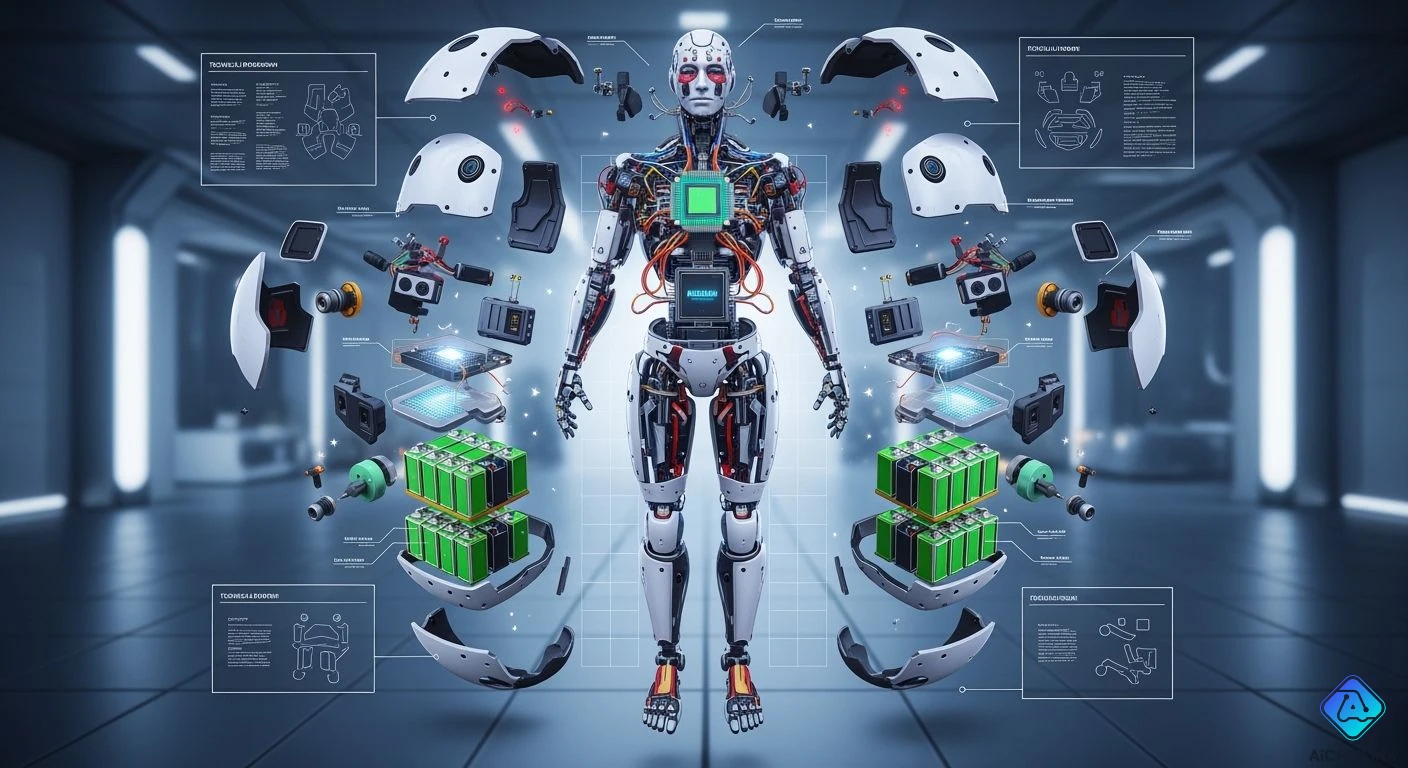
The 2026 industrial market shows quick growth. Venture capital provides funding to the humanoid sector. Business teams compare every humanoid robot price with traditional machines. Technical buyers examine the humanoid robot bom breakdown across main subsystems. Total unit manufacturing cost ranges from $30,000 to $150,000 based on production volume. Engineers test every active robot sensor and dynamic robot joint.
| Category | Range | Details |
|---|---|---|
| Manufacturing Cost (2026) | $30,000 – $150,000 | Per unit cost |
| Hardware BOM | $35,000 – $100,000 | Chinese supply chain vs Western pilot-stage |
Using humanoid robots requires careful financial study. Factory managers figure out total cost of ownership, operational costs, maintenance costs, and projected roi for every robot.
Key Takeaways
-
Making a humanoid robot costs between $30,000 and $150,000 for each unit in 2026.
-
Motors and movement parts account for 40% to 50% of overall equipment costs.
-
Making these robots in large numbers lowers the cost for each one. This brings the price closer to future goals of $15,000 to $20,000.
-
High-tech camera sensors and AI computer chips add high processing expenses to every robot.
-
Companies that make their own parts cut manufacturing costs by building key components in-house.
-
Yearly expenses to run factory robots usually fall between $15,000 and $40,000 for each machine.
-
Quick setup plans help factory bosses get a good return on their money much faster.
2026 Humanoid Robot BOM Breakdown by Tier
Engineers group active systems into clear pricing levels. Factory production numbers directly decide hardware costs. A company financial study connects build expenses directly to expected work output.
Humanoid Robot Price Tiers and Manufacturing Costs
Hardware expenses divide into several production tiers in 2026. A full humanoid robot bom breakdown shows huge hardware differences across these groups. Making more units directly drives down individual costs.
Entry-Level and Educational Platforms
Entry-level platforms target colleges and software researchers. These machines use basic metal frames and standard ready-to-buy actuators.
-
Entry-level humanoid platforms cost between $5,000 and $20,000.
-
The Unitree R1 platform sells for about $5,900.
-
The Unitree G1 base price stays around $16,000.
These lightweight machines leave out expensive touch-sensing hands to save money. Their simple design speeds up software testing without risking costly parts.
Enterprise and Commercial Deployment Tiers
Commercial platforms target factory moving jobs and simple building tasks. Plant managers figure out roi for every potential setup. Commercial models run from $20,000 to over $250,000 based on lifting power and finger movement. High-precision actuators and motion systems make up 40% to 50% of total hardware expenses. Advanced vision sensors and fast onboard AI chips add big hardware costs. Smaller production runs during early launch phases keep these initial platform prices high.
| Scale Level | Unit Cost | Detail |
|---|---|---|
| Current (2025) | $30,000 – $150,000 | Initial range depending on configuration |
| Projected at scale | $15,000 – $20,000 | Industry projections as manufacturing scales |
| Cost reduction rate | 40% YoY | Faster than anticipated annual reductions |
| Volume indicator | 50,000–100,000 shipments in 2026 | Expected sharp volume increases thereafter |
A plant manager balances upfront hardware spending against long-term roi gains. Quick setup schedules help speed up this business return math.
Advanced R&D and Custom Platform Expense
High-end platforms need special component supply chains. Custom engineering work raises the total platform cost by a lot.
Research Hardware Requirements
Advanced research platforms need maximum movement abilities and active balance. High humanoid performance needs custom frameless brushless motors with special strain wave gears. Complex physical builds increase total frame design efforts. Advanced space-mapping sensor setups include solid-state LiDAR units, 3D cameras, and multi-axis force sensors. Onboard graphics processing units run real-time control software right on the machine. These computing chips process deep learning models directly at the physical location. Fast sensor processing speeds up split-second decision making.
Hardware engineers must handle trapped heat inside tight body frames. Heavy computing work creates extra heat during constant balancing tasks. High thermal levels require active liquid cooling tubes or special heat sinks inside carbon-fiber leg frames. These complex custom parts raise early prototype production costs.
High-Dexterity Custom Actuation Costs
Flexible multi-fingered hands are a main reason for high costs. A fully bending hand uses tiny motors connected to delicate cable systems. Touch sensor networks cover every fingertip to measure gripping force correctly. Special sensor wiring raises overall hardware costs.
Robotics teams check early hardware costs to predict working roi correctly. High humanoid robot price tags reflect custom factory machining expenses. Small production runs prevent quick volume savings during early building phases. High starting costs naturally slow down widespread factory use. Efficient software setup steps help businesses see positive roi much sooner. Quick business setup allows companies to get maximum machine use every day.
The total humanoid robot bom breakdown shows high motor and sensor focus. High-precision actuators and dynamic joint controllers form most of the overall costs. Actuators, frame parts, and computer chips represent main cost areas. Factory automation reduces part building costs over time. Larger production runs bring down individual joint prices steadily.
Companies compare total humanoid robot price against older factory automation tools. Each plant manager calculates roi based on labor replacement values. Smooth team use relies on predictable part replacement plans. Easy software connections link single machines directly to main business tracking systems. This helpful software setup increases overall machine usefulness across everyday factory tasks. Modern factory growth will soon bring total humanoid unit manufacturing costs down closer to mass market prices.
Core Subsystems Driving Costs in Humanoid Robots
Engineering teams examine six major hardware subsystems across current commercial platforms. These core modules drive the total hardware bill of materials within a typical range of $36,000 to $104,000 per unit. Motion control hardware accounts for the largest budget allocation during production. Detailed hardware teardowns reveal clear manufacturing expenses across every physical joint and computing board.
Actuators and Precision Motion Systems
Motion control and actuation demand the largest financial investment from platform manufacturers. Teardown data shows these dynamic motion systems account for 40% to 50% of aggregate hardware expenditure.
| Source | Actuator Hardware Percentage | Analysis Notes |
|---|---|---|
| McKinsey | 40–60% | Percentage of total bill of materials |
| Interact Analysis | >30% (high-config) / >50% (simpler) | Varies based on robot features |
| Tesla | ~56% | Share of Optimus platform hardware |
| Boston Dynamics | >60% | Share of Atlas material expenditure |
Strain Wave Gears and Harmonic Drives
Precision gearboxes create physical bottlenecks in hardware production lines. Specialized suppliers like Harmonic Drive, Nabtesco, and Leaderdrive build these precise strain wave components. The precision-bound, capital-intensive manufacturing process limits rapid factory output. Limited component supply directly increases unit expenditure for every enterprise builder. Supply chain geographical choices dramatically affect overall manufacturing budgets. For example, building a Tesla Optimus platform without Chinese suppliers drives joint component spending up to a range between $46,000 and $131,000 per unit.
Frameless Brushless DC Motors
Frameless brushless motors deliver necessary rotary torque within tight structural boundaries. Design engineers fit custom copper windings and permanent magnets directly into leg and arm joints. A full Tesla Optimus Gen 3 build integrates 28 joint actuators in its main body frame. The advanced machine also includes over 50 individual actuators in its high-dexterity hands. This high motor count significantly increases hardware expenses across assembly steps. Vertical integration allows companies to lower internal production costs over long manufacturing runs.
Linear Actuators and Planar Drives
Heavy lifting tasks require durable linear motion systems. Heavy-duty planar drives push structural rods to move dynamic hip and knee joints safely. These parts demand high-grade steel rods and low-backlash ball screws. Compact designs push manufacturing tolerances to strict physical limits. Precision machining raises component expenses while ensuring smooth mechanical movements.
Compute Architecture and AI Processing
Real-time software execution demands substantial hardware infrastructure onboard every machine. Advanced artificial intelligence processing requires tight integration between specialized computing chips and motor command boards.
Edge AI System-on-Chip Modules
Modern processors handle visual data and dynamic balance adjustments simultaneously. High-performance computing boards execute machine learning models right at the factory floor location.
Edge AI processors have crossed the performance threshold that makes real-time robot learning practical on the factory floor. The chips are fast enough, power-efficient enough, and affordable enough (most edge modules cost $500-$2,000) that adding AI capability to a robotic cell doesn't require a massive infrastructure investment.
These affordable modules reduce central computing reliance while executing rapid path decisions.
Real-Time Bus Controllers and Wiring
Robust real-time signal distribution requires specialized wiring harnesses and control boards. Industrial EtherCAT networks connect central processors to individual motor drives.
-
Flexible communication buses transmit sensor feedback at high frequencies.
-
Shielded signal cables prevent electrical interference inside motor housings.
-
Dedicated joint microcontrollers convert central movement orders into smooth motor actions.
A successful physical integration protects delicate wiring from wear inside moving leg joints. Tight physical space forces custom harness routing through narrow structural channels. This specialized software and hardware integration ensures rapid mechanical reaction times during balance recovery.
Overall design choices dictate ultimate hardware expenses. Mass manufacturing lowers component prices over long production schedules. Early engineering analysis helps companies select optimal supply paths for high-volume manufacturing success.
Perception, Power, and Structural Component Costs
Sensors, energy storage, and structural frames form basic costs for every robot. Engineers balance visual sensors with total budget targets during initial designs.
Spatial Perception and Sensor Suites
Sensor choices create environmental awareness for each working machine. Optical equipment and touch elements use up major money during machine assembly.
Solid-State LiDAR and Stereo Cameras
Vision systems track physical space across active factory floors. Top-grade solid-state LiDAR units like the Ouster OS-1 cost over $5,000 each. Designers pair expensive sensors with cheaper visual gear to control costs. An Intel RealSense D435i depth camera costs between $150 and $250.
| Subsystem Component | Cost Range (USD) | Details |
|---|---|---|
| Perception Suite | $2,000 – $20,000+ | Cameras, LiDAR, IMUs, force sensors |
| Power Systems | $800 – $5,000+ | Battery pack ($300–$2,000) and delivery ($500–$3,000) |
| Structural Frame | $5–$8/kg (aluminum) | Machining costs add $50–$150 per part |
System designers control camera budgets with care. Sensor choices change final production expenses.
Tactile Arrays and Multi-Axis Force Sensors
Force sensors make up nearly 11% of total component costs. A modern commercial robot needs over 40 single sensor units. Hands account for almost 18% of total hardware value. Tiny fingertip force sensor costs fell from above ¥100,000 to below ¥200. This price drop lets teams make working hands for under ¥10,000.
Pacini Perception's DexH13 GEN2 is the first dexterous hand to combine multi-dimensional tactile sensing with AI vision, allowing humanoid robots to simultaneously 'feel' and 'see' objects.
Six-axis force sensors guide dynamic balance control while lifting loads. Sensor integration needs tight wiring paths inside fingers to protect each arm.
Energy Storage and Frame Materials
Power packs and body frames set working times and machine weight. Material choices dictate ultimate frame build costs.
High-Discharge Lithium Battery Systems
Battery designs set the working time for an active machine. A 3 kWh battery pack costs near $300 at standard prices. Power regulation parts add $500 to $3,000 in extra costs.
-
NCM/NCA ternary lithium options carry a 20-50% higher cost than LFP cells.
-
LFP battery chemistry reduces costs by 20-50% compared to NCM/NCA packs.
-
Solid-state battery packs add 2 to 3 times the cost of NCM/NCA units.
Engineers pick battery types that deliver stable power during heavy work. Wiring connections link power boards straight to motor controllers.
Carbon-Fiber Composites and Structural Alloys
Factory shaping choices change body production expenses. Raw aluminum runs $5 to $8 per kilogram, while machine shaping adds $50 to $150 per part. Titanium materials increase raw metal expenses ten times over aluminum.
Designers pick light composite covers for upper body frames. Lighter body weight reduces motor stress on leg joints during work. Carbon-fiber parts help keep steady balance during daily factory duties. A custom body frame protects internal wires during repetitive workplace moves. Strong structural frames keep internal parts lined up under heavy loads. Mobile robot builds rely on stiff structural parts to stay accurate. Heavy frame loads raise factory tooling expenses for composite bodies.
Comparative BOM Analysis of Leading 2026 Models
Engineering groups evaluate building methods across major platform designs. Makers pick between custom part creation and standard buying networks. This direct comparison shows big differences between Western builders and Asian makers. Teams review every single cost to boost overall output.
Enterprise Industrial Class Models
Enterprise models handle tough work inside busy factory settings. Designers refine hardware setups to hit positive roi numbers during long work shifts.
Vertically Integrated Components
In-house production lets companies like Tesla manage main component expenses. The Optimus machine shares supply lines with car operations. The system runs on a 2.3 kWh battery pack made from standard energy cells. Special motor designs use smart lessons from car engines.
-
In-house production builds custom motors, processors, and visual sensors in company factories.
-
Spreading artificial intelligence creation costs across a big vehicle fleet reduces total spending.
-
Common buying networks lower material costs far below normal market prices.
The actuator generates motion, but it’s also the largest part of the robot’s bill of materials. … If you source them externally, you pay all the extra costs on top: shipping, other people’s margins, some value-based pricing. So a robot built in the US — where manufacturing actuators is challenging — ends up structurally more expensive than one built on the same supply chain a Unitree or many Chinese robots use. … To compete on cost, you have to compete on the same actuator supply chain, which is extremely difficult.
Buying outside parts adds extra vendor markups. Western makers pay high component prices when ordering standard joint assemblies. Deep internal manufacturing gives a clear path toward lasting cost savings.
Target Retail Price versus Production BOM
A complete humanoid robot bom breakdown shows large gaps between building expenses and final retail goals. Current machine build expenses for business platforms run from $50,000 to $100,000 for each unit. High component expenses affect early plant buying choices.
| Category | Price Range |
|---|---|
| Target Retail Price (Enterprise Humanoid Robots) | $20,000–$30,000 (Tesla Optimus target); $90,000–$250,000 (industrial models) |
| Production BOM (per unit) | $30,000–$150,000+ |
High manufacturing costs slow down initial business adoption speeds. Plant managers estimate clear roi values before placing large fleet orders. Smart software setup helps factory leaders achieve profitable roi targets faster. High production runs drop the basic humanoid robot price for business buyers. Lower hardware expenses speed up plant adoption.
Compact and Low-Weight Commercial Platforms
Lightweight commercial units use streamlined body frames. Engineers cut component count to speed up factory setup timelines.
Simplified End-Effectors and Motor Consolidation
Simple builds remove extra parts to cut production costs. Basic gripper hands replace complex fingers on low-cost models. High-end business hands use 50 motors for intricate tasks. Basic hand designs group motors together to lower frame joint expenses.
A lower humanoid robot price appeals to software groups and research centers. Fewer moving parts improve full robot dependability over time. Plant owners gain stable roi results from smaller repair bills. Every working robot handles standard material moving jobs smoothly.
Direct-Drive and Tendon-Driven Cost Savings
Direct-drive motors cut internal resistance inside moving leg joints. Strong cables move flexible wrist parts without heavy gear units. Smart physical choices lower total part spending. Each working robot carries active weight loads safely during daily tasks.
Asian producers use local suppliers for rapid part ordering. Lower joint assembly costs reduce the total humanoid robot price. Companies check total roi numbers to rate each working machine. Detailed expense reports show that simple designs speed up deployment across modern work sites. Fast setup in plant locations cuts total overhead costs.
Scaling Production and Total Cost of Ownership
Building more units changes the price of parts. Plant managers carefully study the total cost of ownership over a machine's full lifespan. Good planning helps leaders get strong returns on their money.
Unit Cost Reduction Curves at Scale
Making thousands of items drops the price for each part. Business leaders look at these expenses before growing their factories.
Price Erosion from 100 to 100,000 Units
Making 100,000 units instead of 100 lowers the cost per unit. Higher production spreads engineering bills across many more machines. Lower part costs lower the normal humanoid robot price. Plant managers track operating metrics to project final returns. Clear financial data makes profit math much simpler. Precise return guesses help businesses buy machines much faster.
Tooling Amortization and Automated Assembly
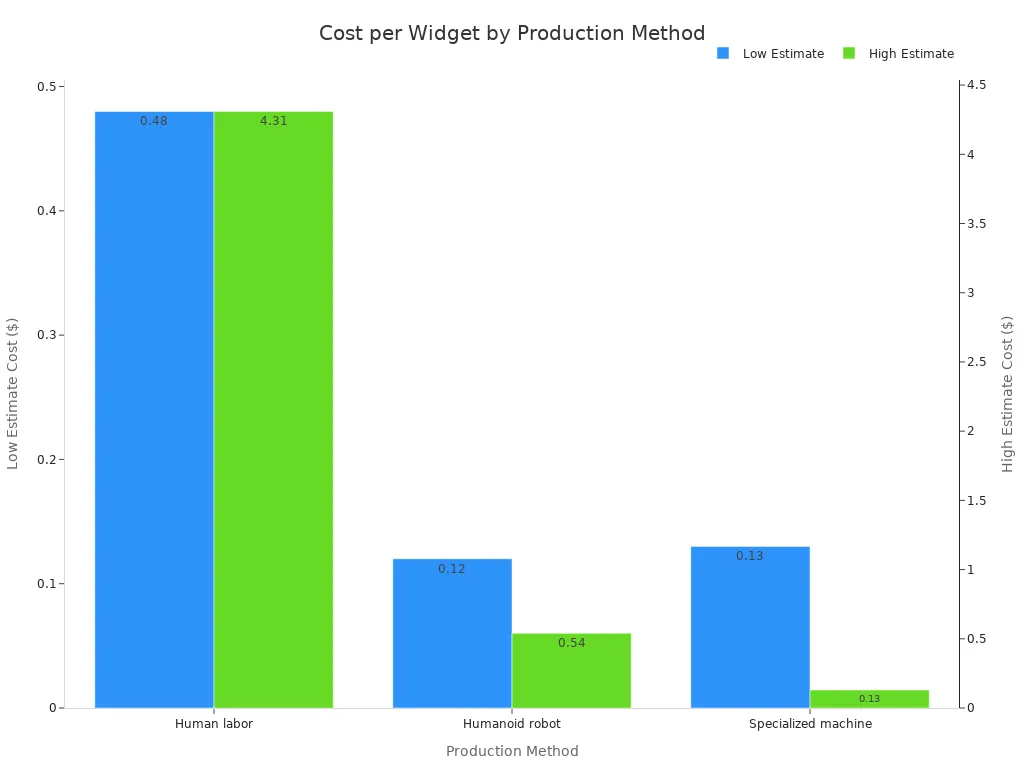
Special equipment requires high upfront costs of about $70,000 every year. Factories spread these equipment expenses across massive production numbers. Custom machinery makes individual parts for just $0.13 each. People produce those same parts for $0.48 to $4.31. A humanoid robot platform makes a part for $0.12 to $0.54. Humanoid systems avoid custom factory equipment entirely. This flexibility lowers starting expenses for short factory runs.
Smart factory automation improves build quality along the assembly lines. Quick software setup speeds up early machine installation tasks.
Post-Purchase Cost of Ownership Factors
Ongoing running costs affect long-term company budgets. Managers track repair bills to protect their overall investment metrics.
Testing, Calibration, and Quality Assurance
Engineers test every part thoroughly before factory work begins. Setup checks make sure motor joints move with great accuracy. Sensor software needs special tools during initial system setup. Teams streamline setup steps to avoid costly factory delays. Smooth initial setup keeps implementation expenses low for companies. Quick machine setups guarantee fast financial returns for businesses.
Field Maintenance, Spares, and Component Wear
Working units cost between $15,000 and $40,000 to run each year. Regular preventive service costs between $2,000 and $5,000. This care includes joint checks, motor inspections, and new batteries. Unexpected fixes add $1,000 to $3,000 every year. Everyday supply items require $500 to $2,000 annually. Yearly support plans cost between $10,000 and $30,000. Extra replacement parts hold up $3,000 to $10,000 in cash.
| Cost Category | Annual Cost (USD) |
|---|---|
| Preventive maintenance (includes calibration, actuator inspection, battery replacement) | $2,000 – $5,000 |
| Repairs (unplanned) | $1,000 – $3,000 |
| Consumables | $500 – $2,000 |
| Support contract | $10,000 – $30,000 |
| Spare parts inventory (capital tied up, not annual) | $3,000 – $10,000 |
| Total annual operating cost (commercial deployment) | $15,000 – $40,000 |
Yearly robot care costs 5% to 15% of the original price. Plant managers track service bills to calculate the total cost of ownership. Proper maintenance helps single machines last much longer. Longer machine lives maximize total profit for the factory. Reliable performance protects the overall investment for the fleet. Steady physical output confirms long-term cost of ownership planning. Long-lasting machines ensure steady output for the entire facility. Managers use simple math models to track total hardware expenses over time. Each robot deployment brings clear financial gains through steady factory work.
An ultimate humanoid robot bom breakdown reveals that hardware prices drop as factories make more units. Major cost drivers like actuators and compute systems set early platform launch budgets.
| Cost Driver | Percentage of BoM |
|---|---|
| Actuators | 40-60% |
| Sensing & Perception | 10-20% |
| Compute & Control | 10-15% |
| Structural Components | 5-10% |
| Battery Modules | 5-10% |
Growing supply chains push high build expenses down toward future targets under $20,000. Cheaper build expenses shift industry rivalry straight to smart software capabilities. This financial shift lets plant managers calculate total cost of ownership, clear early implementation barriers, and evaluate full operational expenses. Sound business math speeds up setup schedules, protects fast roi, and increases overall fleet returns across every industrial job. Quick setup plans help maintain projected roi numbers over time.

Written by Jack Elliott from AIChipLink.
AIChipLink, one of the fastest-growing global independent electronic components distributors in the world, offers millions of products from thousands of manufacturers, and many of our in-stock parts is available to ship same day.
We mainly source and distribute integrated circuit (IC) products of brands such as Broadcom, Microchip, Texas Instruments, Infineon, NXP, Analog Devices, Qualcomm, Intel, etc., which are widely used in communication & network, telecom, industrial control, new energy and automotive electronics.
Empowered by AI, Linked to the Future. Get started on AIChipLink and submit your RFQ online today!
Frequently Asked Questions
What is the average humanoid robot price in 2026?
Basic models cost about $5,000. Factory machines run between $20,000 and $250,000 depending on their body parts. Making more units will lower future hardware expenses across all work platforms.
What is the typical total cost of ownership for commercial fleets?
Working robot groups need $15,000 to $40,000 in yearly running expenses for each machine. Factory leaders figure out this total cost of ownership by adding service checks, support plans, extra parts, and sensor testing.
Which hardware subsystems drive primary manufacturing costs?
Movement parts create the highest spending during building steps. Joint motors, drives, and gearboxes take up 40% to 50% of all hardware expenses. Built-in computer chips and vision cameras also add major part costs.
How quickly can a factory achieve positive roi?
Easy program setups speed up daily factory jobs. Work groups get positive roi quicker when they swap specialized tools for flexible bots. Cheaper setup expenses directly raise early financial roi results for site leaders.
How does initial implementation strategy affect project financial return?
Fast starting setup lowers early setup waiting times. Correct tuning checks stop sudden machine damage. Quick factory setups help bosses compare real machine work to starting roi targets, keeping robot use smooth across active work zones.
Why does scaling production lower manufacturing costs?
Making huge numbers spreads machine setup bills over many products. Part sellers give price cuts for big motor and sensor buys. Mass building drops single-unit assembly expenses far below early sample costs, boosting expected roi totals.
How do post-purchase factors alter the long-term cost of ownership?
Yearly service plans and extra parts add ongoing money needs. Every working bot needs regular care to stop breakdowns. Plant managers check all post-purchase cost of ownership points during system setup to get good long-term roi returns.