What is ARM Processor?
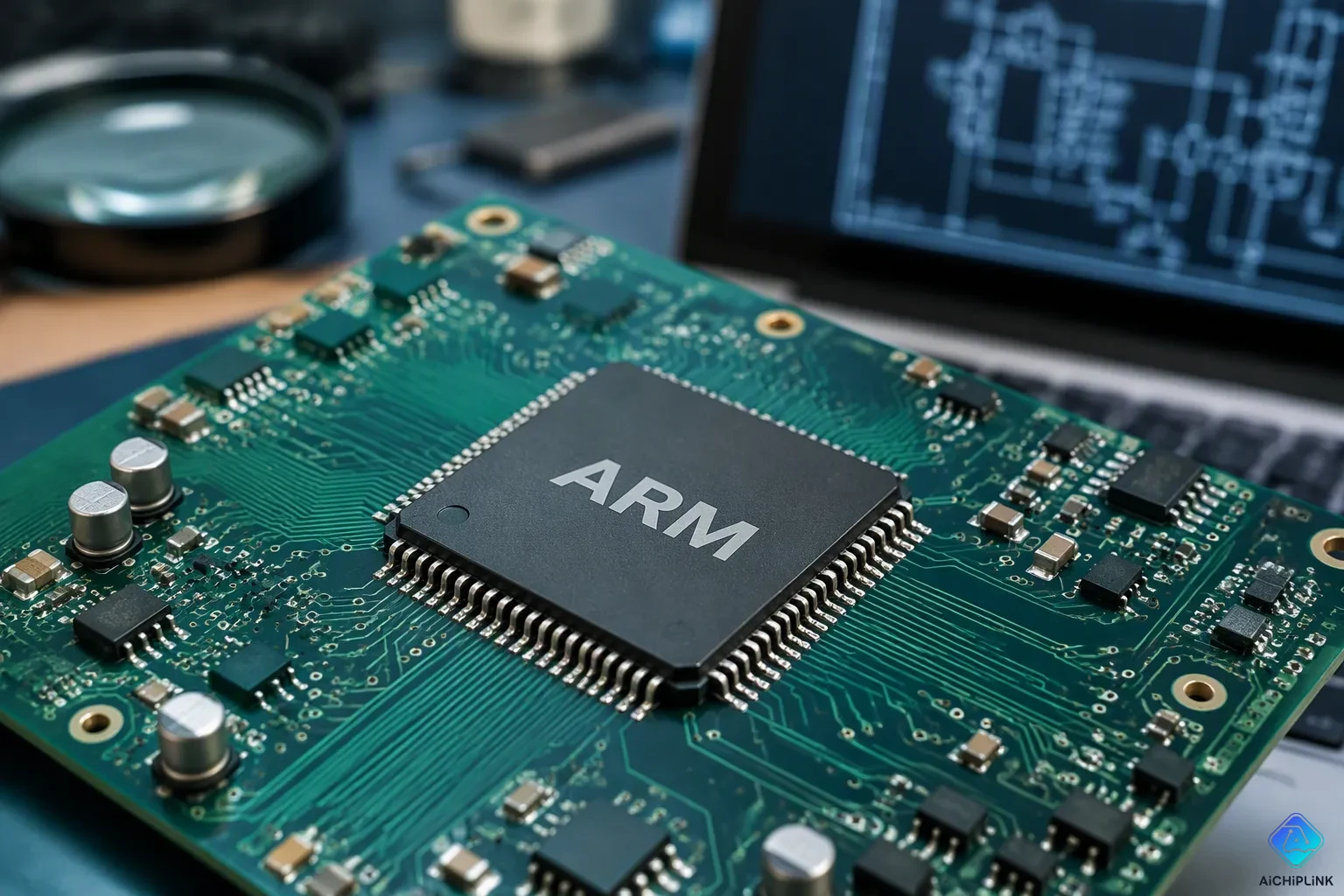
What is ARM Processor? It is a CPU that uses RISC design and was made by Arm Holdings. ARM stands for Advanced RISC Machine, and originally it stood for Acorn RISC Machine. This company designs the instruction set and licenses it to other manufacturers. This licensing model explains why ARM chips appear in many brands. Understanding ARM architectures helps you see why they dominate mobile devices. The RISC design focuses on efficiency by using simpler instructions. ARM's design puts energy efficiency first, making it ideal for battery-powered devices. Licensing lets companies create custom ARM chips, encouraging innovation across industries. This approach has led to widespread use.
Key Takeaways
-
ARM processors use a RISC design with simple instructions to save more energy.
-
Arm Holdings lets many companies use its chip designs to create their own ARM processors.
-
ARM uses very little power, so it is great for smartphones, tablets, and other devices that run on batteries.
-
ARM chips give you long battery life and quiet running, but some x86 software may need emulation.
What Is an ARM Processor?
You may wonder what is ARM processor technology at its core. An ARM processor is a family of RISC instruction set architectures for computer processors, developed by Arm Holdings. The name ARM stands for Advanced RISC Machine. Originally, it stood for Acorn RISC Machine. This company designs the instruction set architecture and licenses it to other companies. That licensing model ensures software compatibility across all Arm-based CPU designs.
ARM Meaning and RISC Basics
The ARM architecture builds on Reduced Instruction Set Computing, or RISC. The core concept of RISC architecture centers on one principle: each instruction performs only one simple function. Copying a value from memory to a register is a good example. RISC processors typically feature many high-speed, general-purpose registers. They use a load-store architecture. Arithmetic and test instructions operate only on registers. Memory access is restricted to separate load and store instructions. This design allows for few and simple addressing modes and predictable instruction times. That simplicity simplifies the overall system design.
A RISC processor has an instruction set that is designed for efficient execution by a pipelined processor and for code generation by an optimizing compiler. — Michael Slater, Microprocessor Report
You should understand a few key points about RISC. The term "reduced" does not mean fewer instructions. RISC instruction sets have grown and may even be larger than some CISC sets. The reduction refers to the amount of work per instruction. A RISC instruction typically uses one data memory cycle. CISC instructions may require many cycles. RISC designs often use fixed-length instructions and simple encoding. This approach simplifies fetch, decode, and issue logic. Many RISC architectures feature a Harvard memory model, which separates instruction and data streams. The internal operations of a RISC processor are exposed to the compiler. That exposure enables better optimization. ARM emphasizes efficiency by executing simpler instructions, often within a single cycle.
How ARM Designs Are Licensed
Arm Holdings does not manufacture chips. Instead, the company licenses its designs to other companies. This model explains why ARM chips appear across many brands. Arm offers different tiers of licensing. Each tier serves a different type of partner.
| Tier | Description |
|---|---|
| Arm Total Access | Most comprehensive package of latest technology and tools; scalable subscription for large enterprises; includes evaluation, design, manufacturing rights, and support. |
| Arm Flexible Access | Wide portfolio of proven technology; pay-as-you-go membership for startups and SMEs; per-project manufacturing fees only due at tape-out. |
| Arm Academic Access | Pre-designed packages of Arm IP; free tape-outs for academic or non-commercial research (up to 1000 units per tape-out); university-friendly agreement. |
These tiers let you choose the right level of access for your needs. A large enterprise might pick Arm Total Access. A startup might prefer Arm Flexible Access. A university researcher might use Arm Academic Access. This flexible system encourages innovation across industries. It also ensures that every ARM-based processor follows the same core instruction set. That consistency is a major reason for ARM's widespread use.
ARM Processor vs. x86
You now get the arm architecture and its RISC base. But how does this stack up against the other big processor family, x86? The main difference is in how they are designed. ARM uses RISC. x86 uses CISC. This part explains these design differences and how they affect power use.
RISC vs. CISC Explained
RISC stands for Reduced Instruction Set Computing. CISC stands for Complex Instruction Set Computing. These two ideas handle instructions in very different ways. RISC processors, like those built on arm architecture, use simple instructions that are all the same length. Each instruction does one basic job. This lets the processor run most instructions in one clock cycle. The design is simpler. The control unit needs less logic. This cuts down chip area and power.
CISC processors, like the x86 family, use instructions that vary in length. One CISC instruction can do several jobs at once. For example, one instruction could load data from memory, do math, and store the result. This cuts down the number of instructions a program needs. But it makes the processor's decoding logic more complex. The control unit has to handle many different instruction formats. This complexity leads to larger chip area and more power draw per computation.
The complexity of the instruction set directly affects efficiency. RISC architectures use less power per computation because their instruction sets are simpler. Each instruction takes less energy to decode and run. CISC architectures need more power per computation because their instruction sets are complex. A CISC processor might need more transistors and more clock cycles to handle a single instruction.
Power Efficiency Differences
The power efficiency edge of arm processor designs comes straight from RISC principles. Because arm processors use simple instructions, they need less energy per operation. This makes them great for battery-powered devices. You see arm chips in smartphones, tablets, and sensors. These devices need to do many computations without draining the battery.
CISC processors put raw performance ahead of efficiency. The design complexity of CISC adds to its higher power consumption. The processor needs more transistors for decoding and control logic. More transistors means more leakage current and dynamic power. Also, variable-length instructions make it harder to pipeline efficiently. This further lowers energy efficiency.
RISC processors are more power-efficient, making them great for portable devices. The arm architecture gets its efficiency through simplicity. Fewer transistors doing simpler tasks make less heat. This lets arm-based chips run without big cooling fans. They can also throttle down to very low power states when idle.
Different arm architectures, from Cortex-M to Cortex-A, optimize for different power and performance points. The mobile market values the power efficiency of arm. The server market is now looking at arm processors for their performance per watt advantage. However, the x86 ecosystem stays strong for tasks needing maximum single-thread performance.
Understanding these differences helps you see why arm has become dominant in mobile and is growing into laptops and servers.
Where ARM Processors Are Used
You can find ARM technology in more places than you might think. The same efficiency that makes an arm processor great for a phone also works well in a laptop or a server. Different markets pick this design for different reasons. Each one likes the low power use and simple instruction handling.
Mobile and Embedded Systems
Mobile devices are the natural home for ARM. Smartphones and tablets need to run all day on a small battery. An arm-based processor gives that performance without draining power fast. You see this design in fitness trackers, smartwatches, and wireless earbuds. These tiny devices cannot hold a big battery. They need a chip that sips energy instead of gulping it.
Embedded systems also depend on this architecture. A smart thermostat, a car's braking sensor, or a factory robot controller all use ARM chips. These systems often run for years without a battery change. The simple instruction set keeps heat low. That reliability matters when a device sits inside a wall or under a car hood. The arm design handles these jobs without complex cooling.
Laptops, Desktops, and Servers
Laptops now use ARM chips for long battery life and quiet operation. You can work on a plane or in a cafe without hunting for an outlet. Desktop computers and servers are following. Cloud providers have welcomed this shift. They offer ARM-based virtual machines to cut power costs in large data centers.
| Cloud Provider | Estimated Market Share | ARM-based VM Instance Example |
|---|---|---|
| AWS | ~36% | Graviton4-based EC2 R8g instances |
| Microsoft Azure | ~23% | Cobalt 100 virtual machines |
| Google Cloud | ~7% | Axion-based C4A metal instances |
| Oracle (OCI) | Not specified (fourth) | Ampere-based A4 Standard instances |
These providers see the value in arm architectures for server workloads. A processor built on this design uses less electricity for the same task. That savings adds up across thousands of machines. The server market once belonged to x86 alone. Now you see arm chips handling web servers, databases, and container workloads. This growth shows how far the design has traveled from its mobile roots.
Advantages and Disadvantages of ARM
Key Benefits
You get real benefits from arm designs. Low power use stands out first. An arm chip runs cool and sips electricity. This makes fanless tablets and thin laptops possible. You never hear a noisy cooling fan. The device stays quiet and light.
Low-power processors (e.g., Intel Atom, ARM-based chips) minimize heat generation.
That low heat comes from the RISC design. Simple instructions need less energy to decode and run. You also get long battery life. A phone or tablet can last all day on one charge. Arm chips integrate multiple components onto one die. This cuts the need for extra hardware. You save space and cost. Licensing also helps. Many companies build arm chips, so you enjoy more choices and lower prices. The architecture scales from tiny sensors to large servers. You pick the right chip for your needs.
Main Drawbacks
Software compatibility remains the biggest problem. Most Windows apps target x86, not arm. You must run them through emulation. That emulation often feels slow and buggy. Developers have been slow to support Windows on arm. The small market share did not justify the work. Microsoft improved support in Windows 11, but x64 emulation is still imperfect. System-level software, anti-cheat games, and heavy apps break or slow down. Discord may run with bugs. Adobe Creative Cloud and OBS can suffer performance hits. Games mostly fail because no arm version exists. You can look for native ARM64 apps or use web versions. For unsupported software, you might need an x86 laptop instead.
An arm processor is a CPU built on RISC design and licensed by Arm Holdings. You learned that ARM uses simple instructions, while x86 relies on complex ones. This difference gives ARM lower power use, longer battery life, and quieter devices. You also saw the drawbacks: software compatibility and emulation issues. Arm architectures now power phones, laptops, and servers. That growth shows how far this design has come.

Written by Jack Elliott from AIChipLink.
AIChipLink, one of the fastest-growing global independent electronic components distributors in the world, offers millions of products from thousands of manufacturers, and many of our in-stock parts is available to ship same day.
We mainly source and distribute integrated circuit (IC) products of brands such as Broadcom, Microchip, Texas Instruments, Infineon, NXP, Analog Devices, Qualcomm, Intel, etc., which are widely used in communication & network, telecom, industrial control, new energy and automotive electronics.
Empowered by AI, Linked to the Future. Get started on AIChipLink and submit your RFQ online today!
Frequently Asked Questions
What is arm processor?
An arm processor is built with a RISC design. The company arm holdings writes the specifications. Other companies pay to license and make these chips.
Why do RISC chips use less power?
You will see that RISC architecture uses simple instructions. This design needs fewer transistors. Using less power also means making less heat.
Can you run x86 software on these devices?
You must use emulation to run x86 apps. Windows 11 can do this. Some games and system apps do not work well. Apps made for arm run the best.
What devices use arm architectures?
You can find arm architectures in smartphones, tablets, and laptops. Cloud providers such as AWS also sell arm servers.