What Is a Weight Sensor? An In-Depth Look at Load Cells
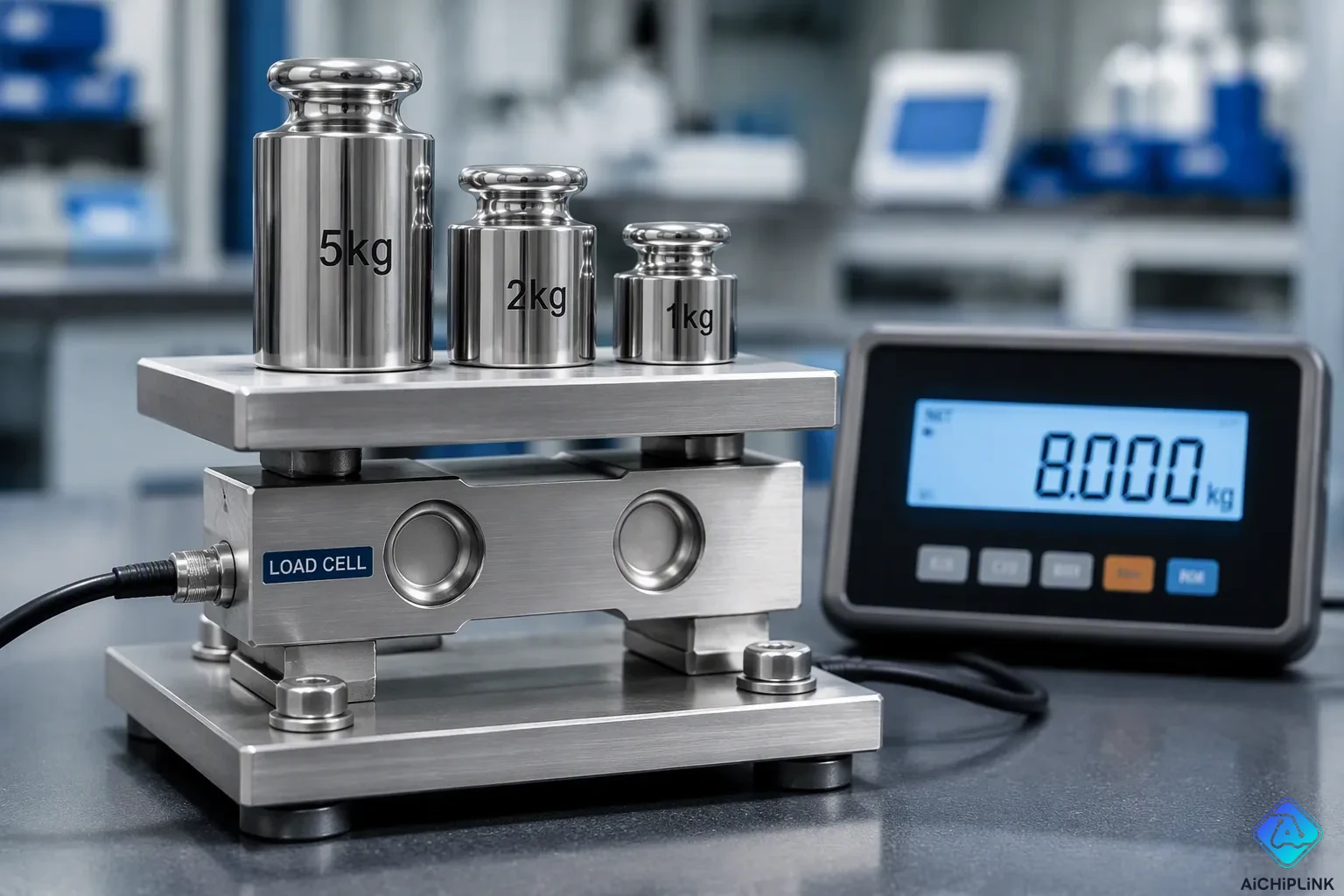
You stand at the airport kiosk, heart racing, as the screen shows your luggage weight. That small device uses weight sensors to measure the force your bag pushes down with. In simple terms, weight sensors turn mechanical force into an electrical signal you can read. The most common way to do this is with a load cell, which is the core component inside most weight sensors. You likely see these sensors every day, from kitchen scales to big industrial platforms. This article explains how load cells change physical pressure into useful data. You will learn about strain gauges, different sensor types, and real-world uses. Knowing these ideas helps you appreciate the technology behind everyday measurements, especially how weight sensors make modern life more convenient and accurate.
Key Takeaways
-
Weight sensors use load cells to turn physical force into an electrical signal you can measure.
-
Strain gauges inside load cells bend and change their resistance when force is applied.
-
A Wheatstone bridge circuit measures the tiny resistance change from the strain gauge.
-
Pick a load cell type by deciding if you are measuring push or pull force.
-
Calibrating your scale regularly with known weights helps keep your weight readings accurate.
What Are Weight Sensors?
Weight sensors measure force by converting mechanical pressure into an electrical signal you can read. The most common type of weight sensor is the load cell, a device that sits inside scales and weighing systems. You encounter these sensors daily without noticing them. Your kitchen scale uses one to measure flour. An industrial floor scale relies on several to weigh pallets. Even an Arduino project in a hobbyist's workshop depends on a small load cell to detect pressure. All these devices share the same fundamental principle: they turn physical force into data you can use.
The Definition of a Load Cell
A load cell is a transducer that converts mechanical force into an electrical output. The force can come from compression, tension, or pressure. When you place an object on a scale, gravity pulls it downward. That downward force presses against the load cell. The cell responds by producing a tiny electrical signal proportional to the force applied. This signal then travels to a display or controller, which translates it into a weight reading.
The technology behind load cells has a rich history. Ancient Egyptians used equal-arm balances to weigh gold. The Industrial Revolution introduced spring scales and levers, but these had limitations. In 1938, Edward E. Simmons and Arthur C. Ruge independently created the first bonded resistance wire strain gauge. This invention changed everything. By the 1940s, the first practical load cells emerged at MIT. During the 1950s and 1960s, engineers combined strain gauges with Wheatstone bridge circuits to improve accuracy. The 1980s brought digital load cells with microprocessors. Today, modern load cells feature wireless capabilities and self-diagnosing electronics.
How Force Becomes an Electrical Signal
The conversion process starts with deformation. When force presses on a load cell, the metal structure bends slightly. A strain gauge attached to this structure stretches or compresses with the metal. This deformation changes the gauge's electrical resistance. The gauge connects in a Wheatstone bridge circuit, which detects even tiny resistance changes. The bridge produces a millivolt-level output that requires amplification.
Most industrial load cells have a sensitivity rating between 1 and 3 mV/V, with 2 mV/V being the most widely used value. This rating means the output signal per volt of excitation voltage falls in that range. A higher value indicates a larger output signal for the same excitation voltage.
Sensitivity (mV/V) values of 1, 2, and 3 mV/V are typical, where a higher value indicates a larger output signal for the same excitation voltage.
Since most measurement systems require larger signals, a strain gauge amplifier converts the millivolt output to a standard analog signal like 4-20 mA or 0-10 VDC. This signal conditioning step makes the load cell compatible with common equipment.
Calibration with known weights is necessary for accuracy. You place standard weights on the scale and adjust the system until the readings match. Key performance parameters define how accurate a load cell can be. Zero offset describes the output at zero load. Linearity measures the deviation from an ideal straight line between no-load and rated load. Hysteresis shows the difference between readings when increasing versus decreasing the load. Repeatability reflects the cell's ability to produce consistent output under identical conditions. Temperature shift affects both span and zero balance. Understanding these parameters helps you choose the right sensor for your application.
How Strain Gauges Work in Weight Sensors
The strain gauge is the core of every load cell. This small part detects the tiny bending that happens when force pushes on the sensor. Knowing how the strain gauge works helps you see the accuracy behind every weight reading.
The Role of the Strain Gauge
A strain gauge is a thin strip with a zigzag pattern of electrical conductor. This layout lets more conductor fit into a small space. That makes the gauge better at sensing deformation. When force hits the load cell body, the body bends a little. This bending is like a fishing rod flexing when a fish tugs the line. The strain gauge sticks tightly to the body at set spots. That bond makes the gauge bend along with the body. Any movement of the metal passes straight to the gauge.
That bending changes the electrical resistance of the conductor. Stretching the conductor makes resistance go up. Squeezing it makes resistance go down. This link between strain and resistance follows a simple formula. The gauge factor (GF) describes this link. For metal foil gauges, the gauge factor is usually between 2 and 4. Semiconductor gauges have a much higher factor, from 50 to 200. The formula is ΔR = R * GF * ε, where ΔR is the change in resistance, R is the starting resistance, and ε is the strain. This straight-line relationship works within the material's elastic limit. The conductor snaps back to its original shape when you take the load off.
Manufacturers use different materials for strain gauges. Common materials include:
| Material | Usage Context |
|---|---|
| Constantan alloy | Most common; designed for self-temperature compensation |
| Karma alloys | Alternative to constantan; also self-temperature-compensating |
| Isoelastic alloy | Used in gauges without self-temperature compensation |
| Silicon | Used in pressure sensor strain gauges |
| Polysilicon | Used in pressure sensor strain gauges |
| Metal film | Used in pressure sensor strain gauges |
| Thick film | Used in pressure sensor strain gauges |
| Bonded foil | Used in pressure sensor strain gauges |
Constantan alloy is the top pick for general-purpose load cells. This material gives self-temperature compensation, which cuts down on errors from temperature shifts.
The Wheatstone Bridge Circuit
A single strain gauge gives off a very small resistance change. You can't measure that tiny change with a regular ohmmeter. Engineers hook the gauge to a Wheatstone bridge circuit to fix this. This circuit picks up small resistance changes and creates a voltage difference. The bridge uses several strain gauges set up in a split layout.
Different bridge setups work for different jobs. Each setup balances sensitivity, cost, and temperature control. The table below shows the common setups:
| Configuration | Active Gauges | Typical Sensitivity (at 1000 µε) | Temperature Compensation |
|---|---|---|---|
| Quarter bridge | 1 | ~0.5 mV/V | Requires dummy gauge |
| Half bridge (Type I/II) | 2 | 0.65–1.0 mV/V | Partial |
| Full bridge | 4 | ~2.0 mV/V | High |
The full-bridge setup is the most common for load cells. This setup uses four active strain gauges. It gives the highest sensitivity and the best temperature control. The full bridge turns mechanical force into electrical signals with great accuracy. The bridge output with no load is zero volts. This balanced state is called the null condition. Any bending throws off the balance. That imbalance creates a measurable voltage change that matches the strain.
The signal from the Wheatstone bridge is very weak. It falls in the nanovolt to millivolt range. Most systems need a stronger signal. You need a strain gauge amplifier to boost this weak signal. The amplifier turns the millivolt output into a standard analog signal, like 4-20 mA or 0-10 VDC. This step makes the load cell work with common equipment.
Types of Weight Sensors
Weight sensors come in many types, each built for different force directions and weight needs. Knowing these differences helps you pick the right sensor for your project.
Compression and Tension Load Cells
Compression load cells measure force that pushes down on a surface. You find these in high-capacity static weighing, like checking material levels in silos or weighing trucks on platform scales. These cells handle heavy loads with great stability. Industries like farming, chemical plants, mining, and power plants use compression cells for inventory control and quality checks. Special thru‑hole versions track pump performance in oil and gas operations.
Tension load cells work in the opposite way. They measure pulling force instead of pushing force. You see these in crane scales, hanging hoppers, and lifting machines. The S‑type load cell can do both compression and tension, making it useful for many setups. Tension dynamometers reach high capacities, with some models rated up to 250 tons for industrial cranes.
| Load Cell Type | Capacity Range (kg) |
|---|---|
| Single Point | 5 – 300 |
| Shear Beam | 50 – 5,000 |
| Double Ended Shear Beam | 500 – 50,000+ |
| S‑Type (Tension/Compression) | 10 – 5,000 |
| Pancake | 1,000 – 500,000+ |
| Canister | 100 – 10,000+ |
| Digital | 1 – 100,000+ |
Rated capacity is the maximum load a cell can measure. Makers offer the same design in many capacities by changing the physical size and strain gauge choice.
Single‑Point and Bending Beam Load Cells
Single‑point load cells are common in platform scales. These cells measure weight no matter where on the platform you place it, not just at the center. This feature makes setup simple because you only need one cell instead of four. The benefits include easy setup, accurate readings, great repeatability, and a small low‑profile shape. Typical capacities range from 5 kg to 300 kg, covering most retail and light factory needs.
Bending beam load cells work on a different idea. The beam bends a little when force is applied, and strain gauges detect this bending. These cells suit lower capacity jobs, roughly 50 to 500 pounds. Cheap models start at 1 kg to 10 kg for small scales and DIY projects. Aluminum construction keeps weight low while staying accurate. For heavier loads, shear beam designs handle 500 to 20,000 pounds with nickel‑plated carbon steel.
When you choose a load cell, think about your operating range carefully. Most cells work best between 20% and 80% of full scale. Using them outside this range shortens sensor life and hurts accuracy. High‑precision jobs may use 10% to 100% of range, but that depends on the maker's specs.
Common Applications for Weight Sensors
Weight sensors show up in almost every field you can think of. They weigh ingredients in food production. They track stock in warehouses. They check shipping weights at distribution centers. These devices are so flexible that they are vital in countless places.
Industrial and Commercial Weighing
Industrial sites rely on weight sensors to control processes and manage inventory. A chemical plant uses compression load cells to watch raw material levels in silos. A mining operation tracks extracted ore on conveyor belt scales. These systems send data straight to control rooms, so operators can make quick decisions.
The market shows how much industries depend on these tools. Industrial weighing equipment hit $5.2 billion in 2025. Analysts expect it to grow to $9.9 billion by 2036, a yearly growth rate of 6.0%. The U.S. quartz weighing sensor market is also growing, with a projected yearly rate of 4.10% from 2025 to 2032. This steady rise points to more investment in weighing technology.
Commercial scales must meet strict legal rules. Regulatory bodies set maximum permissible errors (MPE) to protect consumers and businesses. The table below shows these limits:
| Load Range (in verification scale intervals e) | Maximum Permissible Error (MPE) |
|---|---|
| 0 to 500e | ±0.5e |
| 500e to 2000e | ±1.0e |
| 2000e to 10000e | ±1.5e |
These limits make sure a 10 kg scale at a grocery store reads correctly for fair sales. Calibration technicians use certified test weights to check that scales meet the rules.
DIY and Consumer Electronics
You likely use weight sensors at home without knowing it. Your kitchen scale measures flour for baking. Your bathroom scale tracks your fitness goals. These home devices use the same load cell technology as industrial ones, just smaller.
Hobbyists have adopted weight sensors for fun projects. The Arduino community offers many examples:
-
An Arduino weight system with a load cell and HX711 module that can measure up to 40 kg
-
A Raspberry Pi-based automatic gate that opens when it detects weight
-
An IoT smart container that tracks weight and sends email alerts with live web monitoring
-
A portable Arduino weighing machine with a set weight option for retail packing, measuring up to 10 kg
These projects show how easy weight sensor technology is to use. A beginner can build a working scale for under $20. The same ideas that guide industrial systems apply to these small builds. You learn about strain gauges, bridge circuits, and calibration through hands-on work.
The list of uses keeps growing. Weight sensors now appear in smart shelves, luggage scales, and even pet feeders. As technology improves, you will find these devices in more places than ever.
You now get the main idea. A weight sensor is basically a load cell that uses strain gauges to measure force. Different types fit different needs. Compression cells handle heavy industrial loads. Single-point cells work well in platform scales. Each design matches a specific job.
The technology keeps improving. Engineers are making smaller sensors with wireless features. Smart sensors now link to IoT systems for live monitoring. These advances will bring accurate weighing to more places.
You can dig deeper into this field. Try building an Arduino scale project. Look up load cell specs for your own use. The knowledge you gained today gives you a strong base. Ask questions and keep learning about this cool technology.

Written by Jack Elliott from AIChipLink.
AIChipLink, one of the fastest-growing global independent electronic components distributors in the world, offers millions of products from thousands of manufacturers, and many of our in-stock parts is available to ship same day.
We mainly source and distribute integrated circuit (IC) products of brands such as Broadcom, Microchip, Texas Instruments, Infineon, NXP, Analog Devices, Qualcomm, Intel, etc., which are widely used in communication & network, telecom, industrial control, new energy and automotive electronics.
Empowered by AI, Linked to the Future. Get started on AIChipLink and submit your RFQ online today!
Frequently Asked Questions
How Do I Choose the Right Load Cell?
Start by thinking about which way the force pushes. Compression cells handle pushing forces. Tension cells measure pulling forces. Next, look at capacity. Most cells work best between 20% and 80% of full scale. Choose a cell whose rated capacity is higher than your expected load by a safe amount.
What Does the mV/V Rating Mean?
This rating shows how strong the output signal is for each volt of power. Most industrial cells rate between 1 and 3 mV/V, with 2 mV/V being typical. A higher number means a stronger output signal. That makes the reading easier to boost and use.
Why Is Calibration Necessary?
Calibration keeps readings accurate. You put known weights on the scale and adjust the system until the numbers match. This process fixes zero offset, linearity errors, and hysteresis. Without calibration, your readings will not match the true weight.
Do I Need One Load Cell or Several?
It depends on how your scale is built. Single-point load cells work alone in platform scales up to 300 kg. They measure weight no matter where on the platform you place it. For heavier loads, you need multiple cells working together. A truck scale might use four or more cells to spread the weight evenly.
What Is the Difference Between Accuracy and Repeatability?
Accuracy tells you how close a reading is to the true weight. Repeatability shows whether the cell gives the same reading under the same conditions. A cell can be repeatable but not accurate. Calibration fixes accuracy. Repeatability depends on the cell's mechanical design and quality.