What Is a Wheatstone Bridge
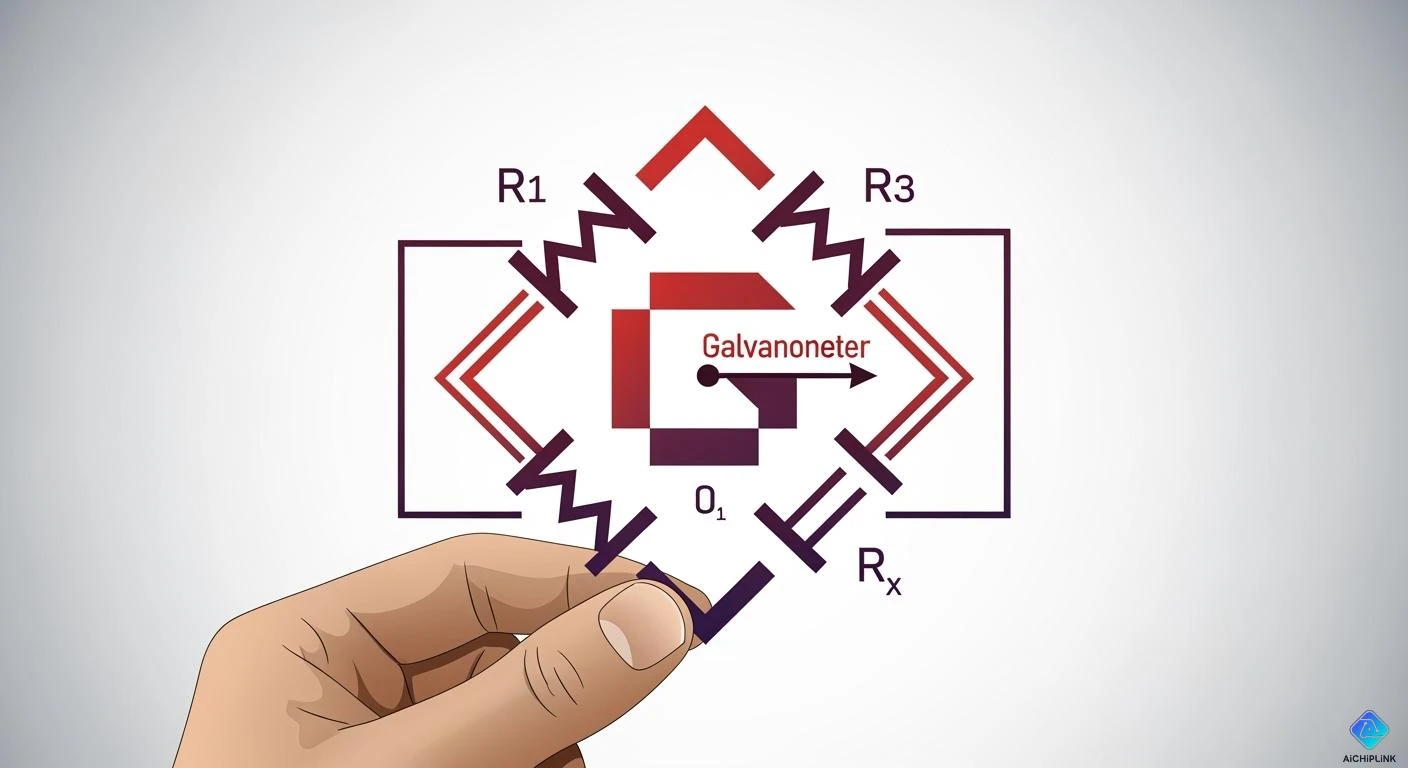
You use a wheatstone bridge to measure an unknown resistance. It helps you get a very accurate answer. The circuit looks like a diamond with four resistors. These resistors work as two voltage dividers. When you balance the bridge, you can find the unknown resistor’s value. This method works best for medium or high resistance. It keeps errors very low, usually less than 0.1%. Many engineers use the wheatstone bridge for exact results in labs and real projects.
Key Takeaways
-
A Wheatstone bridge finds unknown resistance with four resistors and a galvanometer.
-
You balance the bridge by changing a resistor until the galvanometer shows zero.
-
This means there is no current moving.
-
This way works well for measuring medium or high resistance.
-
It gives very exact results, with mistakes usually less than 0.1%.
-
Strain gauge sensors can work with Wheatstone bridges to sense tiny changes in force or pressure.
-
To get better results, use shielded wires and keep the temperature steady during tests.
Wheatstone Bridge Circuit
Circuit Layout and Components
You make a wheatstone bridge with some simple parts. Each part does something important in the circuit. Here are the main things you need:
-
Four resistors: Three have values you know, and one is the unknown resistance you want to find.
-
A variable resistor, called a rheostat, lets you change the circuit to get balance.
-
A voltage source gives energy to the bridge.
-
A galvanometer or multimeter shows if the bridge is balanced.
-
Sometimes, you use an operational amplifier to make the signal stronger.
You put these parts together to build the wheatstone bridge. The way you set it up helps you measure the unknown resistance very well.
Diamond Shape and Voltage Dividers
The wheatstone bridge looks like a diamond. This shape helps you see how the resistors work as a team. The diamond makes two voltage dividers. These voltage dividers split the voltage from the source into two sides. You can check the voltages at the middle spots of the diamond.
The diamond shape helps you notice when the bridge is balanced. It also helps you remove mistakes in the circuit. This means you can measure things more exactly.
Here is a table that explains why the diamond shape matters:
| Feature | Description |
|---|---|
| Circuit Shape | The diamond shape lets you see how the resistors balance each other. |
| Measurement Precision | The layout helps you know when the current is zero, so you get better accuracy. |
Known and Unknown Resistances
You use three resistors you know and one you do not know in the wheatstone bridge. Each resistor has a job in the circuit. The table below tells what each resistor does:
| Resistor | Type | Function |
|---|---|---|
| R1 | Known | Fixed resistor used for balancing |
| R2 | Known | Another fixed resistor for balancing |
| R3 | Variable | You change this to balance the bridge |
| Rx | Unknown | This is the resistance you want to find |
You choose the known resistors from standard values. This helps you get a good answer. You put the unknown resistance into the circuit. Then, you turn the variable resistor until the galvanometer shows zero. This means the bridge is balanced. Now, you can figure out the value of the unknown resistance using the other resistors.
How the Wheatstone Bridge Works
Principle of Operation
The wheatstone bridge helps you find an unknown resistance. It does this by balancing two voltage dividers. The circuit has four resistors in a diamond shape. Two resistors are on one side. Two are on the other side. You connect a voltage source to the bridge. The middle points of the diamond go to a galvanometer. This tool shows if the bridge is balanced.
You turn the variable resistor to make the voltage between the two midpoints zero. When you do this, the bridge is balanced. The ratios of the resistors on both sides are the same. This lets you measure the unknown resistance very well.
Tip: Use exact resistors and keep the circuit quiet for best results.
Here is a short list of how the circuit works:
-
Four resistors make a diamond.
-
Two pairs of resistors split the voltage.
-
You put voltage across the bridge.
-
The galvanometer tells if the bridge is balanced.
-
You turn the variable resistor to get zero voltage at the middle points.
Balanced and Unbalanced States
You can see if the wheatstone bridge is balanced or not by looking at the galvanometer. If the needle stays at zero, the bridge is balanced. If the needle moves, the bridge is not balanced.
| State | Output Voltage | What It Means |
|---|---|---|
| Balanced | 0 volts | Ratios of resistors match. No current flows. |
| Unbalanced | Not 0 volts | Ratios do not match. Current flows. |
When the bridge is balanced, the voltage between the two midpoints is zero. This means the ratio of the known resistors is the same as the ratio of the unknown resistance and the variable resistor. If the bridge is not balanced, the galvanometer shows a voltage. The way the needle moves tells you which side has more resistance.
-
Balanced bridge: Voltage at the galvanometer is zero.
-
Unbalanced bridge: Voltage is not zero. The sign tells which resistor to change.
Calculating Resistance
After you balance the wheatstone bridge, you can find the unknown resistance with a simple formula. You use the values of the other three resistors. The formula is:
Rx = R3 × (R2 / R1)
-
Rx is the unknown resistance.
-
R1 and R2 are the known resistors.
-
R3 is the variable resistor you changed.
You get the best results when you use exact resistors and keep the bridge away from noise. Sometimes, mistakes can happen. These can come from how the resistors are made, changes in temperature, or even the wires. Noise from other devices can also change your answer. You can make these mistakes smaller by using shielded wires and keeping the bridge away from strong electric fields.
Note: Always watch for temperature changes and wire resistance. These can change your answer, especially if you need very good accuracy.
The wheatstone bridge is a great way to measure resistance. You can use it in labs, factories, or school projects. When you know how to balance the bridge and read the results, you can find unknown resistance very exactly.
Wheatstone Bridge Applications
Strain Gauge Measurement
A strain gauge helps measure small changes in force or pressure. It changes resistance when stretched or squeezed. You put the strain gauge in a circuit to find these changes. The wheatstone bridge finds the unknown resistance from the strain gauge. You connect the strain gauge to one part of the bridge. When the strain gauge stretches, its resistance goes up or down. The bridge shows a voltage difference. You read this voltage to see how much the strain gauge moved.
There are different ways to set up strain gauge measurements. You can use a quarter, half, or full bridge. These setups help you get more accurate results. They also help remove errors from temperature or other outside things. You can use strain gauge sensors to watch bridges, buildings, or machines. The wheatstone bridge lets you see tiny changes in the strain gauge. You can measure pressure, force, or weight with high sensitivity. Strain gauge sensors work in labs, factories, or sports equipment.
Tip: Using more than one strain gauge in the bridge can make your results better and help cancel unwanted effects.
Industrial Uses
Strain gauge sensors are used in many industries. They measure pressure in pipes and force in machines. They measure weight in scales. Strain gauge sensors help robots detect movement. Cars use strain gauge sensors to check stress on parts. Energy systems use strain gauge sensors for harvesting power. You can connect strain gauge sensors to solar panels or vibration harvesters. Strain gauge sensors are used for remote sensing. You can monitor equipment without wires. Strain gauge sensors help keep machines safe and working well.
Advantages and Limitations
Strain gauge sensors give high accuracy. They measure small resistance changes. You can use strain gauge sensors for many jobs. Strain gauge sensors work in digital systems for automatic calibration. They help adjust for temperature changes. Strain gauge sensors are used in health monitoring devices.
Here is a table that shows some limitations:
| Limitation | Description |
|---|---|
| Limited High-Frequency Performance | Accuracy drops at very high frequencies. |
| Higher Power Consumption | Uses more power than other circuits. |
| Environmental Sensitivity | Changes can happen from temperature or supply voltage. |
| Overload Protection Challenges | Needs extra parts to protect strain gauge sensors. |
You can compare the wheatstone bridge to other circuits. The wheatstone bridge works well for medium to high resistance. Problems can happen with low resistance because of wire effects. A Kelvin bridge works better for low resistance and gives more accurate results.
Installation Considerations
Lead-Wire Effects
When you build a measurement circuit, the wires matter. These wires have their own resistance. This can change your results. Long or thin wires make this problem worse. The output voltage might change. Sometimes, the reading does not go back to zero. This can happen even if you think it should. This is a big deal if you want very exact results. For example, a 1Ω wire can cause a 0.5% error.
You can use special ways to fix these errors:
-
Three-wire setup: Add a third wire to help cancel lead resistance.
-
Four-wire method: Use two pairs of wires for current and voltage. This almost removes the lead resistance error.
-
Automatic designs: Some circuits can cancel lead resistance by themselves.
If you use these tricks, your measurements get much better.
Temperature and Environment
Temperature changes can make resistance drift. This drift can give you wrong readings. This is a problem if you measure small changes. Fast temperature changes can cause errors. You can use some tricks to keep your results right:
-
Use resistors or dummy gauges that react to temperature. These help balance out temperature effects.
-
Put your sensors in half-bridge or full-bridge setups. This makes sure all parts feel the same temperature.
-
Use circuits or software to fix temperature changes.
You should also think about other things in the environment. The table below shows what to check for outdoor or tough places:
| Environmental Factor | Specification |
|---|---|
| Temperature Tolerance | -40°C to +85°C (commercial); -55°C to +125°C (military) |
| Humidity Resistance | IP65 or IP67; use coatings to block moisture |
| Vibration Immunity | Withstand 10Hz–2000Hz, up to 20G |
| Electromagnetic Compatibility | Shielding and grounding to keep noise below 60dB |
Shielding and Guarding
Electromagnetic interference, or EMI, can add noise to your circuit. This noise can make your results less correct. You can use some tricks to protect your circuit:
-
Physical shielding: Put your circuit and wires in a metal box. Use aluminum or copper to block EMI.
-
Twisted pair wires: Twist your wires together. This helps stop interference, especially with long wires.
-
Filtering: Add filters to block signals you do not want.
-
Good grounding: Connect all parts to ground to stop EMI.
Tip: Always check where your cables go. Keep wires away from power lines or motors. This lowers noise and makes your results better.
- A wheatstone bridge helps you find an unknown resistance very accurately. 2. The circuit uses four resistors and a galvanometer to check balance. 3. You turn the variable resistor until the galvanometer shows zero, then you can figure out the unknown resistance.
The wheatstone bridge can show very small changes in resistance. This makes it great for sensors and science experiments. You should try using this tool in your projects to get exact answers.

Written by Jack Elliott from AIChipLink.
AIChipLink, one of the fastest-growing global independent electronic components distributors in the world, offers millions of products from thousands of manufacturers, and many of our in-stock parts is available to ship same day.
We mainly source and distribute integrated circuit (IC) products of brands such as Broadcom, Microchip, Texas Instruments, Infineon, NXP, Analog Devices, Qualcomm, Intel, etc., which are widely used in communication & network, telecom, industrial control, new energy and automotive electronics.
Empowered by AI, Linked to the Future. Get started on AIChipLink and submit your RFQ online today!
Frequently Asked Questions
What is the main purpose of a Wheatstone bridge?
A Wheatstone bridge helps you measure unknown resistance. It works by balancing two voltage dividers. This way, you get very accurate results. People use this method in science labs and with sensors.
How do you know when the Wheatstone bridge is balanced?
You look at the galvanometer. If the needle is at zero, the bridge is balanced. No current moves between the middle points. Now you can find the unknown resistance.
Can you use a Wheatstone bridge for low resistance measurements?
You should not use a Wheatstone bridge for very low resistance. The wires can cause mistakes in your answer. For low resistance, you should use a Kelvin bridge.
Why do temperature changes affect Wheatstone bridge readings?
When the temperature changes, resistors can drift. This means their resistance changes. If you do not control the temperature, you can get wrong answers.
What are some common mistakes when using a Wheatstone bridge?
You might use wires that are too long or too thin. You may forget to protect the circuit from noise. You can also forget about temperature changes. Always check these things to get the best results.