A Complete Guide to Hysteresis in Electronic Circuits
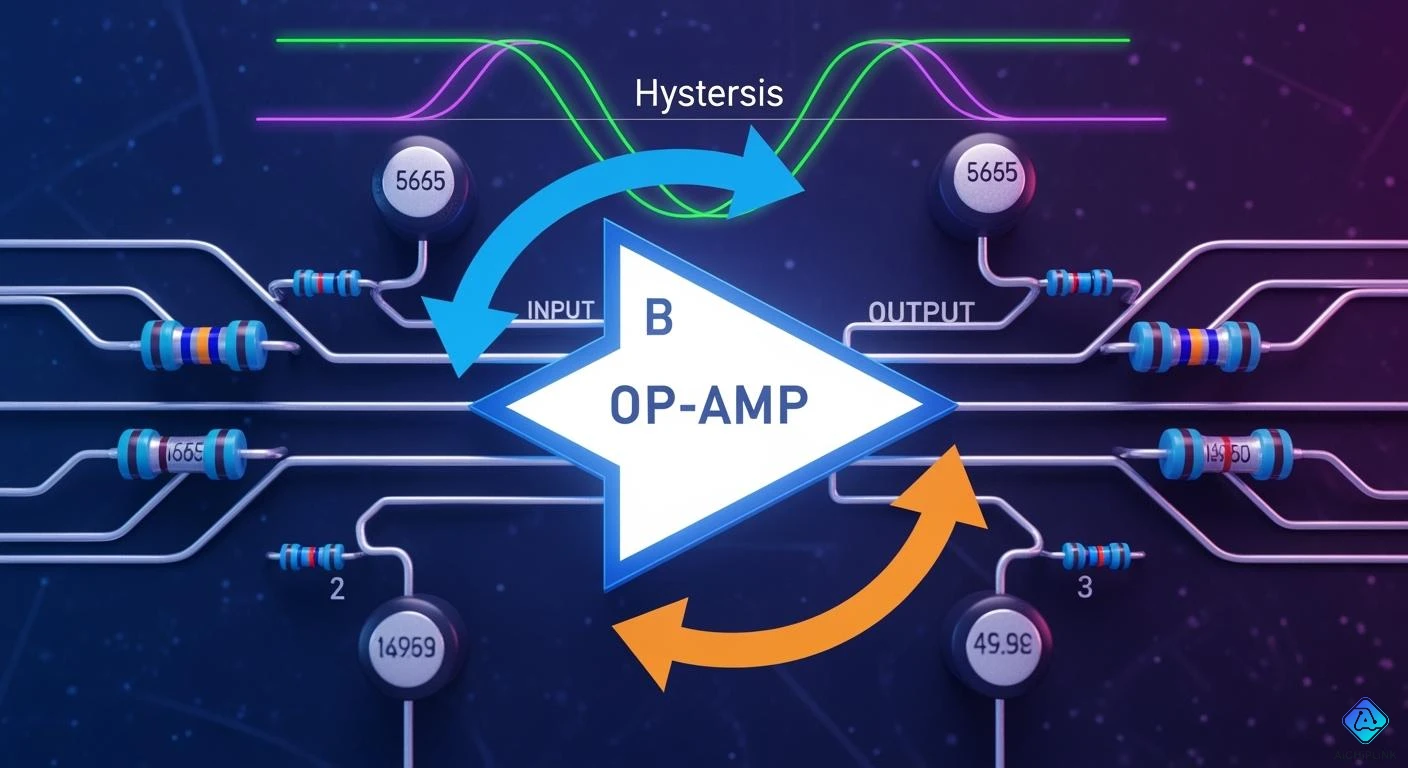
You see hysteresis in electronic circuits when the output depends on what is happening now and also what happened before. This memory effect helps circuits stay steady and stops wrong signals. Many devices use this effect to work better and more reliably.
- You can find hysteresis in circuits like comparators, sensors, and control systems. Schmitt triggers use it to stop fast switching. Control systems use it to filter signals and make outputs smoother.
| Contribution | Description |
|---|---|
| Noise Immunity | A bigger hysteresis window helps block noise and stops wrong signals. |
| Stability | The effect keeps the circuit steady by ignoring small voltage changes. |
| Resilience | Schmitt triggers get stronger against small problems, which stops unwanted switching. |
Hysteresis in Circuits helps you get better results in your projects.
Key Takeaways
-
Hysteresis helps circuits stay steady. It uses old signals to change what happens now. This memory effect cuts down on mistakes. It also makes things work better.
-
Use hysteresis in things like Schmitt triggers and comparators. It helps block out noise and stops fast switching. This gives you signals that are cleaner and more steady.
-
You can change thresholds and use feedback to set hysteresis levels. This helps you pick how sensitive your circuit is. It also helps block out noise.
-
Pick the right materials to control hysteresis. Magnetic and ferroelectric materials can make hysteresis stronger or weaker. This depends on what your circuit needs.
-
Knowing about hysteresis can make devices work better. Use these ideas to build circuits that are more exact and work well.
What Is Hysteresis in Electronic Circuits
Basic Principles and Memory Effect
Hysteresis happens in electronic circuits when the output depends on what is happening now and also what happened before. This means the circuit has a kind of memory. The circuit remembers signals from earlier and uses them to decide what to do. Sometimes, the same input can give different outputs. It depends on if the input is going up or down.
Hysteresis keeps circuits steady. It stops the output from changing quickly when the input is close to a set point. This means you get fewer mistakes and the circuit works better.
Many books and groups explain hysteresis like this:
-
Hysteresis is something that happens in some electronic parts and systems.
-
The output depends on what is happening now and what happened before.
-
The way the system acts is changed by what happened in the past.
You can use hysteresis to block noise and help your devices work well. This memory effect is important in things like comparators, sensors, and control systems.
Hysteresis Loop and Rate Dependence
You can see hysteresis as a loop on a graph in electronic circuits. The loop shows how the output changes when the input goes up and down. The shape of the loop depends on how fast you change the input and what the circuit is made of.
-
Hysteresis loops in electronic circuits, like in perovskite solar cells, are changed by the dielectric constant and scan rate.
-
The loop gets bigger or smaller when you change these things.
-
When you scan forward, the ion-induced electric field goes the same way as the applied electric field, so carrier extraction goes down.
-
When you scan backward, the ion-induced electric field goes the other way, so carrier extraction goes up.
-
The difference in non-radiative recombination rates between forward and backward scanning makes the hysteresis you see.
-
How fast you measure the voltage changes the hysteresis, and it only happens in a certain range of scan rates.
Here is a table that shows how scan rate changes the loop:
| Scan Rate | Hysteresis Loop Shape | Carrier Extraction |
|---|---|---|
| Slow | Small loop | More extraction |
| Medium | Large loop | Less extraction |
| Fast | No loop | Normal extraction |
You can change the loop by measuring or changing the input faster or slower. This helps you control hysteresis in your circuit designs.
Causes and Mechanisms of Hysteresis in Electronics
Material and Physical Origins
Hysteresis starts with the materials inside electronic parts. Some materials, like magnetic cores and ferroelectric substances, act in special ways. These actions make hysteresis happen in electronics.
-
Magnetic materials have remanence and coercivity. Remanence means the material stays a little bit magnetic after you remove the field. Coercivity tells how hard it is to change the magnetism. These things cause energy loss and slow changes when you change the magnetic field.
-
Ferroelectric materials can keep their electric state. They stay this way even after you turn off the electric field. You see this in Ferroelectric RAM, which keeps data without power.
These materials are used in many devices because they remember past states. This memory helps circuits work well and not make mistakes.
Here is a table that shows how these materials help cause hysteresis:
| Material Type | Key Property | Effect on Hysteresis |
|---|---|---|
| Magnetic Core | Remanence, Coercivity | Energy loss, delayed response |
| Ferroelectric | Polarization retention | Data storage, memory effect |
Circuit Design and Feedback
You can also make or control hysteresis by using feedback in your circuit. Feedback changes how the circuit reacts to signals. It helps set clear points for switching.
-
Feedback makes two switching thresholds. One threshold works when the input goes up. The other works when the input goes down. This stops unstable switching from noise or small changes near the switch point.
-
Operational amplifiers often show hysteresis because of their parts and feedback. Positive feedback is important for strong switching points. This makes the circuit more steady and less jumpy from tiny signals.
When you use feedback in your design, your circuit gets more reliable. Feedback helps you control when the circuit switches. This blocks noise you do not want.
Hysteresis happens when you use both material properties and smart design. Both are important for making electronics steady and trustworthy.
Hysteresis in Circuits: Practical Examples
Schmitt Trigger Operation
Schmitt triggers show hysteresis in circuits. They change noisy or slow signals into clean digital signals. These triggers use two voltage thresholds. One threshold works when the input goes up. The other works when the input goes down. The space between these thresholds is the hysteresis window.
-
Schmitt triggers help ADC circuits block noise.
-
They stop wrong signals from noise and keep outputs steady.
-
You can use them to fix waveforms and make signals work better.
The hysteresis window size depends on supply voltage and feedback. If you lower the supply voltage, the thresholds get smaller. For example, dropping from 5V to 3.3V makes thresholds about one-third less. In sensor circuits, the window should be at least twice the noise level. In noisy places, you may need a window that is 20-30% of the input range.
Tip: Use a Schmitt trigger chip or a steady voltage reference to keep thresholds stable.
Op-Amp Comparator with Hysteresis
You can make a comparator with an op-amp and add hysteresis. This helps turn slow or noisy signals into sharp digital outputs. You set two points so the output does not jump when the input is close to the threshold.
-
This stops fast switching in temperature control systems.
-
It helps shape waveforms and makes simple square-wave oscillators.
-
You get clean digital signals from messy analog inputs.
Magnetic Components and Relays
Hysteresis also happens in circuits with magnetic parts like transformers and relays. When you use alternating current in a transformer, the iron core changes its magnetic state. This causes energy loss as heat, called hysteresis loss. Even without a load, the core heats up because magnetic domains keep moving.
Hysteresis loss makes your transformer less efficient. Too much heat can hurt insulation and shorten device life. Materials like silicon steel and ferrites help lower these losses. The area inside the hysteresis loop on a graph shows how much energy is lost each cycle.
Note: High temperatures make hysteresis losses worse, so always check your transformer’s cooling and material.
Applications of Hysteresis in Electronics
Noise Reduction and Signal Stability
Noise can cause problems in electronic circuits. Hysteresis helps block small, unwanted changes in the input. When you use hysteresis, the circuit ignores tiny voltage spikes or drops. This keeps the output steady and clean. For example, a Schmitt trigger uses hysteresis to make a noisy signal sharp and digital. You get fewer false triggers and more stable circuits. This helps your devices work better, even in places with lots of electrical noise.
Sensors and Control Systems
Hysteresis makes sensors and control systems more reliable. Many control systems need to stop fast switching. Fast switching can wear out parts or cause mistakes. Hysteresis sets two points for turning on and off. This gap stops the system from switching too quickly.
-
Here are some control system uses for hysteresis:
- Thermostats use hysteresis to keep temperature in a set range. The heater or air conditioner does not turn on and off too much. This saves energy and helps your system last longer.
You also find hysteresis in level sensors, pressure switches, and motor controllers. These systems use the memory effect to stay steady and avoid quick changes.
Oscillators and Timing Circuits
Oscillators and timing circuits need good timing to work well. Hysteresis is important here. In crystal oscillators, hysteresis makes the frequency change with temperature. When the temperature goes up, the frequency shifts one way. When the temperature goes down, it shifts another way. This can change how steady your timing circuits are. You must manage this effect to keep your devices accurate.
A study showed that fixing thermal hysteresis in crystal oscillators helps a lot. It can cut timing errors from 700 parts per billion to 150 parts per billion. This big change helps your devices keep better time, even when the temperature changes a lot.
Tip: When you design timing circuits, always check for hysteresis effects. Good design helps you build electronics that are stable and reliable.
Managing and Minimizing Hysteresis Effects
Calibration and Threshold Adjustment
You can control hysteresis by calibrating your circuit and changing thresholds. Calibration means you set the right points for switching. This makes your circuit more accurate. Here are some tips:
| Best Practice | Description |
|---|---|
| Tweak air gap | Change the air gap to calibrate, but do not damage the package. |
| Use pull-up resistor | Add a pull-up resistor to limit current and make output voltage better. |
| Consider temperature effects | Watch out for temperature changes because they can move the switch points. |
When you change the threshold, you also change the feedback factor. If you use a lower feedback factor, the hysteresis window gets wider. This blocks more noise but makes your circuit less sensitive to small changes. If you use a higher feedback factor, the window gets smaller. Your circuit will notice smaller signals but might react to noise. You need to pick the best balance for your project.
Feedback and Circuit Optimization
Feedback is important for controlling hysteresis. You can use these ideas to lower unwanted effects:
-
Use precision comparators for better switching.
-
Pick stable parts so your circuit does not act weird.
-
Filter out noise and calibrate your circuit well.
-
Make your PCB with good grounding and layout to stop interference.
-
Choose stable resistor and capacitor values to keep signals steady.
You can also make your circuit better with adaptive controllers or real-time algorithms. These ways help you get the good parts of hysteresis and avoid the bad parts. For example, in a thermostat, you want enough hysteresis to stop fast switching. But you do not want the temperature to change too much.
Material Selection Strategies
The materials you use can change hysteresis. Pick magnetic cores or ferroelectric materials with low memory effects if you want less hysteresis. Sometimes you want materials that remember their state longer. Always choose materials that fit your circuit’s needs.
Tip: Sometimes you want less hysteresis for careful measurements. Other times, you want more to block noise or stop fast switching. Think about what your circuit needs before you choose.
If you know about hysteresis in electronic circuits, you can make better devices. Your circuits will work longer and manage batteries better. You will also get results that are more correct and have fewer mistakes.
-
You can use special tools like Finite Element Analysis to help with hard design problems.
-
You can guess how your circuit will act and fix problems before they start.
Use these tips in your projects. Your circuits will be stronger and more steady.

Written by Jack Elliott from AIChipLink.
AIChipLink, one of the fastest-growing global independent electronic components distributors in the world, offers millions of products from thousands of manufacturers, and many of our in-stock parts is available to ship same day.
We mainly source and distribute integrated circuit (IC) products of brands such as Broadcom, Microchip, Texas Instruments, Infineon, NXP, Analog Devices, Qualcomm, Intel, etc., which are widely used in communication & network, telecom, industrial control, new energy and automotive electronics.
Empowered by AI, Linked to the Future. Get started on AIChipLink and submit your RFQ online today!
Frequently Asked Questions
What is the main benefit of hysteresis in electronic circuits?
Hysteresis lets your circuit ignore tiny changes you do not want. This gives you a steadier output. Your devices can work better when there is noise around them.
Can you adjust the amount of hysteresis in a circuit?
Yes! You can change the resistor values or feedback in your circuit. This helps you pick how much hysteresis you need for your project.
Where do you see hysteresis used most often?
You see hysteresis in things like comparators, sensors, and control systems. Schmitt triggers and thermostats use it to stop fast switching and wrong signals.
Does hysteresis waste energy in electronic devices?
Some energy is lost, mostly in magnetic parts like transformers. You can make this loss smaller by using better materials or making your circuit design better.
How do you know if your circuit needs hysteresis?
If your circuit has noise or switches too fast, you may need hysteresis. Adding it can give you cleaner signals and make your circuit work better.