Tantalum vs MLCC Capacitors for Modern Electronics Design
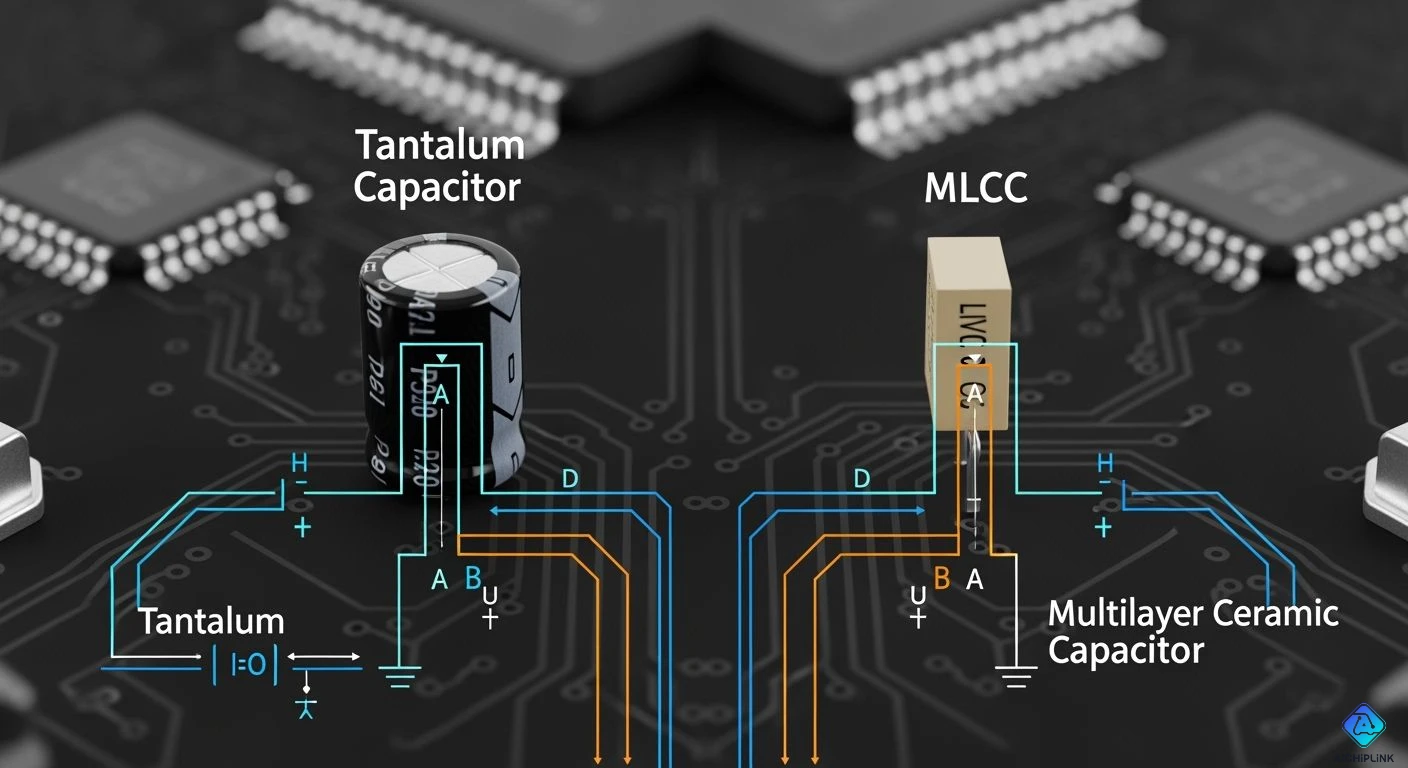
When you look at tantalum vs mlcc, you see that multilayer ceramic capacitors are used more in new electronic circuits. MLCCs are reliable, work well, and save money. Picking the right capacitors helps your project last longer, use power better, and cost less over time. You should think about voltage, energy, size, and shape to make things work well. Comparing these choices is important because bad capacitors can make voltage go down and cause things to stop working. You need clear advice to pick the best one for your design.
Key Takeaways
-
MLCC capacitors are chosen a lot for new designs. They cost less money and work well with high-frequency signals.
-
Tantalum capacitors give a steady voltage and are very reliable. This makes them good for important things like medical tools and car electronics.
-
You should think about the voltage, size, and reliability of capacitors. This helps your project work well and not have problems.
-
Tantalum capacitors last a long time and do not get old. MLCCs can lose power when there is high voltage or heat.
-
If you use both tantalum and MLCC capacitors together, the circuit works better. This is because you get the good parts of both types.
Tantalum vs MLCC: Quick Comparison
Key Differences
It is important to know the main differences between tantalum vs mlcc. Both capacitors are used in electronics, but they work differently. You can see these differences in frequency, voltage, size, and reliability.
Here is a table that shows how tantalum and mlccs compare in frequency characteristics:
| Characteristic | Tantalum Capacitors | Ceramic Capacitors |
|---|---|---|
| Aging | Do not age; no known wear-out mechanism | Age logarithmically over time |
| Polarization | Typically polarized; correct terminal polarity required | Non-polarized; can connect to AC sources |
| Temperature Response | Linear capacitance change | Non-linear response, can be made linear |
| Voltage Response | Consistent stability with applied voltage | Capacitance changes with higher voltages |
Tantalum capacitors do not get old, so they last a long time. MLCCs get older and their performance changes. Tantalum capacitors must be connected the right way, but mlccs can connect to AC because they are non-polarized. Tantalum capacitors change evenly with temperature, but mlccs can change unevenly.
When you check voltage ratings, you see more differences:
-
Tantalum capacitors keep their capacitance even if voltage changes.
-
MLCCs lose capacitance when voltage goes up.
-
If your circuit has changing voltages, tantalum capacitors give steady performance.
-
Tantalum capacitors usually give you all the capacitance you expect, but mlccs may need more units to reach the same value.
You should also think about volumetric efficiency. Tantalum capacitors have high capacitance in a small space, so you save room. MLCCs can be smaller, but you might need more to get the same result. Reliability is important too. Tantalum capacitors work well in tough places, but mlccs can break from shocks.
If you wonder which is better for modern electronics, mlccs are used more. MLCCs cost less, work well at high frequencies, and fit many designs. Tantalum capacitors are still good for special cases where you need steady voltage and high reliability. You should compare both to see which fits your needs.
Typical Use Cases
You can find tantalum vs mlcc in many devices. Each capacitor is best for certain jobs.
Tantalum Capacitors:
-
Cars need reliability in rough conditions.
-
Factories use tantalum capacitors for harsh environments.
-
Down-hole tools need high durability.
-
Phones, tablets, and wearables use tantalum capacitors for power filtering and stability.
-
Computers and storage devices, like motherboards and SSDs, use tantalum capacitors for fast energy release and voltage smoothing.
-
Car electronics, such as ECUs and infotainment systems, use tantalum capacitors for noise filtration and power surge handling.
-
Telecom equipment, like routers and base stations, use tantalum capacitors to keep voltage steady and signals clear.
Tantalum capacitors help keep circuits stable and filter out electrical noise. Their small size and high capacitance make them a good choice for reliable performance.
MLCCs:
-
Portable devices, like phones and wearables, use mlccs for their small size and low price.
-
High-frequency circuits use mlccs for IC decoupling and filtering.
-
Power networks use mlccs to handle high current needs.
MLCCs are used in almost every modern device. They help filter signals, support fast circuits, and keep costs low.
When you compare tantalum vs mlcc, mlccs work best for most new designs. Tantalum capacitors are still useful for special cases where you need steady voltage and high reliability. You should check your project needs and compare both to pick the right capacitors.
Tantalum Capacitors Overview
Characteristics
Tantalum capacitors last a long time and work well. They can stay good for over ten years. You can see how they compare in the table below:
| Capacitor Type | Shelf Life | Degradation Mechanism | Notes |
|---|---|---|---|
| Tantalum (Solid) | 10+ years | Ta₂O₅ dielectric is extremely stable | Very stable; no reforming needed |
| Tantalum (Wet/Hermetic) | 10+ years | Hermetic seal prevents electrolyte loss | Common in military/aerospace applications |
These capacitors use a strong oxide layer inside. This layer does not break easily. They keep working well for many years. You do not need to fix them before using. Tantalum capacitors can heal themselves if there is a small problem. This makes them good for tough places.
Tip: Tantalum capacitors are great when you need steady and reliable parts.
Tantalum capacitors are small but hold a lot of energy. They help save space on circuit boards. They can handle changes in temperature without losing power. These features make them a smart pick for hard projects.
Applications
Tantalum capacitors are used in many things that need to work well and last long. They are good for medical devices because they stay steady. You also find them in aerospace and military gear. These jobs need parts that last and can handle rough conditions.
-
Tantalum capacitors help build circuits for important systems.
-
You use them to filter power and keep voltage steady.
-
They fit well in small electronics like phones and tablets.
-
They work in cars where shaking and heat happen a lot.
-
Tantalum capacitors help storage devices like SSDs by keeping voltage smooth and blocking noise.
-
You use them in factories and sensors for strong performance.
-
They are also in telecom equipment to keep signals clear.
You pick tantalum capacitors when you want parts that work the same even if things change. Their self-healing ability makes them good for designs that must not fail. They are best for jobs where you need everything to keep working.
MLCC (Multilayer Ceramic Capacitors) Overview
Characteristics
You find multilayer ceramic capacitors in most modern devices. These capacitors have a solid design. They are strong and can handle moisture and heat. Ceramic capacitors do not have any liquid inside, so leaks are not a problem. You can use mlccs where high voltage is needed. Many automotive OBCs, wireless power systems, and server power supplies use ceramic capacitors for safe operation. Multi-layer ceramic capacitors are small and have high capacitance. You save space on your circuit board and still get good performance.
Ceramic capacitors work well at high frequencies. You can use them in resonant circuits because they lose little energy. They are reliable in tough places. But ceramic capacitors can break if dropped or hit. MLCCs are cheap, so you can use many without spending much money. Remember, the capacitance of ceramic capacitors goes down under DC voltage. This change can cause problems in power supplies and high-frequency circuits.
Note: Ceramic capacitors are great for high-frequency performance and reliability, but you should check for voltage effects and mechanical stress.
Applications
You use mlccs in many different jobs. Multilayer ceramic capacitors fit well in portable devices like phones and tablets. You find ceramic capacitors in power supply filtering, decoupling, and signal smoothing. MLCCs help build circuits for automotive electronics, wireless power transmission, and server power supplies. Ceramic capacitors are used in high-frequency jobs, like RF circuits and resonant networks. MLCCs work well in tough environments and keep devices running smoothly.
Ceramic capacitors are also used in industrial sensors and factory equipment. You use them for energy storage and noise reduction. MLCCs let you make reliable systems without worrying about cost. You can pick ceramic capacitors for almost any job where you need stability and performance. Multilayer ceramic capacitors give you flexibility and help you meet strict design needs.
Performance & Reliability
Electrical Performance
It is important to know how capacitors work in your circuit. Tantalum and MLCC capacitors act differently. The table below shows their main features:
| Parameter | Tantalum Capacitors | MLCC Capacitors |
|---|---|---|
| ESR | Very low, about 1/8 of standard MnO2 | Low |
| ESL | As low as 1nH | Low |
| Capacitance | High energy density, many sizes available | High-CV, good for small designs |
| Applications | Good for high ripple currents, portable devices | High-frequency IC decoupling and filtering |
| Stability | Almost no aging, voltage, or temperature problems | Can be unstable with some dielectrics |
Tantalum capacitors stay steady for a long time. You do not have to worry about them getting old or changing with voltage. They keep their capacitance even in hard conditions. MLCC capacitors are small but can hold a lot of charge. They work well in fast circuits and high-frequency jobs. Some MLCCs can lose capacitance if voltage or temperature changes. You should check the dielectric type to make sure it is reliable.
Failure Modes
You want your design to last a long time. How capacitors fail affects reliability. Tantalum and MLCC capacitors fail in different ways.
-
Tantalum capacitors:
-
Can leak or short out
-
May have high ESR or drift
-
Can open or lose capacitance
-
-
MLCC capacitors:
-
Can crack from stress or heat
-
Can break down inside (thermal, ionization, or other reasons)
-
Tantalum capacitors can fail if the oxide layer inside breaks. This might cause a short or even a fire. MLCC capacitors can crack if dropped or soldered too hot. Cracks can make a short path inside and hurt your circuit.
MLCCs can fail badly if the ceramic inside breaks down. Too much voltage can crack the ceramic. You should handle MLCCs gently to keep them working well.
Pick the right capacitor by thinking about how they work, how long they last, and how they might fail. This helps you make safe and strong electronics.
Size, Cost & Availability
Volumetric Efficiency
You want your circuit to be small. Tantalum capacitors give lots of capacitance in a tiny package. You need fewer tantalum capacitors to reach your goal. MLCCs are also very small. You often need more MLCCs to get the same capacitance as one tantalum capacitor. MLCCs have many layers inside. This helps them work well in a small space. Both types help save room in portable devices. Always check the datasheet to see which fits your board best.
Cost Factors
You should think about price when picking capacitors. Tantalum capacitors usually cost more money. Their price changes because tantalum comes from only a few places. Making tantalum capacitors needs special machines and skilled workers. You pay extra for their steady performance in hard jobs. MLCCs cost less because ceramic materials are easy to find. Factories make MLCCs in big batches, so you save money.
Here is a table that shows what affects the price of tantalum and MLCC capacitors:
| Cost Factor | Description |
|---|---|
| Material Availability | The limited supply of tantalum, sourced from few global locations, leads to price fluctuations. |
| Manufacturing Complexity | Tantalum capacitors require advanced technology and skilled labor, increasing production costs. |
| Performance Characteristics | Tantalum capacitors are often more expensive due to their superior performance in demanding applications. |
You should balance cost and performance. MLCCs work well for most jobs and help you keep your budget low.
Supply Chain
You need to check if you can get the capacitors you want. Tantalum supply is steady, but there are worries from the Democratic Republic of Congo (DRC). MLCCs are easy to find because factories make millions every day. Electric cars are becoming more popular, so demand for capacitors goes up by 35% each year. Renewable energy projects also need more capacitors for storage systems.
-
Electric cars need more capacitors.
-
Renewable energy projects use lots of capacitors for storing energy.
If you plan your project, watch for supply chain changes. Pick capacitors that are easy to find to avoid delays.
ESR & Stability
ESR Comparison
You should know how ESR affects your circuit. ESR means Equivalent Series Resistance. It tells you how much resistance a capacitor adds. Ceramic capacitors, like MLCCs, have low ESR. This helps your circuit work well at high frequencies. Tantalum capacitors have higher ESR than MLCCs. MLCCs are better for fast signals. They help your circuit stay cool and efficient.
Tip: Pick MLCCs for high-frequency jobs. Their ESR is lower and they keep your circuit cool.
Temperature Effects
Temperature changes can make capacitors act differently. You want your circuit to stay stable in hot or cold places. Here is what happens:
-
Tantalum capacitors keep their capacitance steady in heat and cold. You can use them in places up to 125°C.
-
Class II MLCCs lose capacitance when temperature changes. Your device may lose capacitance if it gets hot.
-
Tantalum capacitors do not change with DC bias voltage. Class II MLCCs can lose capacitance from DC bias.
-
Tantalum capacitors keep their capacitance as they age. Class II MLCCs can lose capacitance over time.
-
Class I ceramic capacitors stay stable with temperature. Class II types do not.
Figure 5 shows tantalum capacitors change in a straight line with temperature. Class II MLCCs change in an uneven way. Check the MLCC type before using it in hot or cold places.
Capacitance Stability
You want your capacitor to keep its value for a long time. Tantalum capacitors give steady capacitance. They do not lose capacitance as they age. MLCCs, especially Class II types, can lose capacitance from temperature, voltage, and aging. If you need stable capacitance, pick tantalum capacitors or Class I MLCCs. Always check the datasheet to see how much capacitance changes in your design.
Note: Stable capacitance helps your circuit work well and keeps your device reliable.
Application Suitability
Power Supply Filtering
You want your power supply to be clean and steady. Feedthrough capacitors help block unwanted noise in fast circuits. These parts give 360° grounding, so your circuit is shielded from outside signals. You get very low resistance across many frequencies, which keeps your circuit safe. Feedthrough capacitors stop high-frequency noise and help your design work better.
You use these capacitors in lots of places. Factories, hospitals, and phone systems all need power entry filtering. Picking the right capacitor makes your device work better and last longer. You get fewer voltage drops and spikes, so your project has fewer problems.
Tip: Feedthrough capacitors are best for strong EMI filtering and blocking high-frequency noise.
Decoupling & Bypass
You want your circuit to work without problems. MLCC capacitors give a low-resistance path, which is needed for decoupling. These parts block high-frequency noise and keep signals clear. MLCCs are small and do not waste much energy, so they fit in tight spots. They work well in hot or cold places, so your device stays strong.
MLCC capacitors have low resistance and low inductance. This helps them do well in decoupling jobs. MLCCs stay steady and work well, even if voltage changes. You use them in many things, like microcontroller boards, power lines, and signal paths. MLCCs help you make circuits that are strong and efficient.
Note: MLCC capacitors are best for decoupling and bypass because they block high-frequency noise and keep your circuit steady.
Safety-Critical Designs
You want your design to be safe and work well. Safety jobs need capacitors that do not break easily. Tantalum capacitors give steady work and last a long time. You use them in medical tools, planes, and car electronics. These capacitors keep working even if things change.
MLCCs are also used in safety jobs. They give steady work, but you must check for stress and voltage problems. You pick the right capacitor by looking at what your project needs. If you choose well, your device works better and stays safe.
| Application Type | Preferred Capacitor | Reason for Choice |
|---|---|---|
| Power Supply Filtering | Feedthrough Capacitors | EMI filtering, ultra-low impedance |
| Decoupling & Bypass | MLCC Capacitors | Low impedance, high-frequency filtering |
| Safety-Critical Designs | Tantalum Capacitors | Steady performance, long-term reliability |
Callout: Always pick the right capacitor for your job. This helps your circuit work better and keeps it safe from breaking.
Pros & Cons Summary
Tantalum Capacitors: Pros & Cons
Tantalum capacitors have many good points. They hold a lot of energy in a small space. Their capacitance stays steady even if temperature or voltage changes. These capacitors last a long time and work well in tough places. You do not need to worry about them drying out. They help you make devices that need steady performance.
Tip: Tantalum capacitors are great for medical tools, aerospace systems, and car electronics.
There are some limits you should know. Tantalum capacitors can break if voltage or current spikes are too high. If you connect them the wrong way, they might fail. High inrush currents can hurt them. Leakage current can go up when temperature or voltage rises. Some types can fail badly, so you must use them carefully.
Here is a table that shows the main pros and cons:
| Pros of Tantalum Capacitors | Cons of Tantalum Capacitors |
|---|---|
| Small size for tight spaces | Sensitive to high voltage and current spikes |
| High capacitance-to-volume ratio | Can fail with reverse voltage |
| Steady capacitance over temperature | More expensive because tantalum metal costs |
| Long-term reliability | Some types can fail in a big way |
MLCC: Pros & Cons
MLCC capacitors are found in almost every modern device. They cost less and work well at high frequencies. You can use them for decoupling and filtering jobs. MLCC capacitors are small and easy to put on circuit boards. They help you keep your design efficient and affordable.
There are some drawbacks to watch for. MLCC capacitors can crack if dropped or heated too much. Their capacitance may change with voltage or temperature. Some types lose capacitance as they get older. You need to check the datasheet to make sure you pick the right MLCC for your job.
Note: MLCC capacitors are best for high-frequency circuits and designs that need to save money, but you must handle them with care.
You can use both tantalum capacitors and MLCC capacitors to build strong and reliable electronics. You should compare their features and limits to pick the best one for your project.
You need to pick capacitors that fit your project. Think about how reliable they are, how much they cost, and what your project needs. Tantalum capacitors are very reliable and work steadily. MLCCs cost less and are good for high-frequency jobs. Look at this table to see the main differences:
| Parameter | Tantalum | Ceramic |
|---|---|---|
| Capacitance/volume | ✔ | |
| Reliability | ✔ | |
| Price | ✔ |
Check these points before you choose:
-
Make sure the voltage and ripple rating are right.
-
Pick low ESR to help block noise.
-
Choose parts with the reliability level you need.
Tip: Check for certifications. This helps your design stay reliable.

Written by Jack Elliott from AIChipLink.
AIChipLink, one of the fastest-growing global independent electronic components distributors in the world, offers millions of products from thousands of manufacturers, and many of our in-stock parts is available to ship same day.
We mainly source and distribute integrated circuit (IC) products of brands such as Broadcom, Microchip, Texas Instruments, Infineon, NXP, Analog Devices, Qualcomm, Intel, etc., which are widely used in communication & network, telecom, industrial control, new energy and automotive electronics.
Empowered by AI, Linked to the Future. Get started on AIChipLink and submit your RFQ online today!
Frequently Asked Questions
What is the main reason to choose MLCC over tantalum capacitors?
MLCC capacitors are good for most new designs. They cost less money. MLCCs work well with fast signals. You can use them in many devices. MLCCs come in lots of sizes and values.
Can you use tantalum and MLCC capacitors together?
Yes! You can use both types in one circuit. MLCCs block high-frequency noise. Tantalum capacitors keep capacitance steady. Using both makes your circuit work better.
Are tantalum capacitors safe for automotive or medical devices?
You can use tantalum capacitors in cars and medical tools. They give steady performance and last a long time. Always check the voltage rating. Follow safety rules for your project.
Why do MLCC capacitors lose capacitance with voltage?
MLCCs use ceramic that changes when voltage goes up. When voltage rises, the layers squeeze together. Capacitance drops when this happens. Check the datasheet to see how much it changes.