ECU vs Domain Controller vs Zone Controller in Automotive Electronics
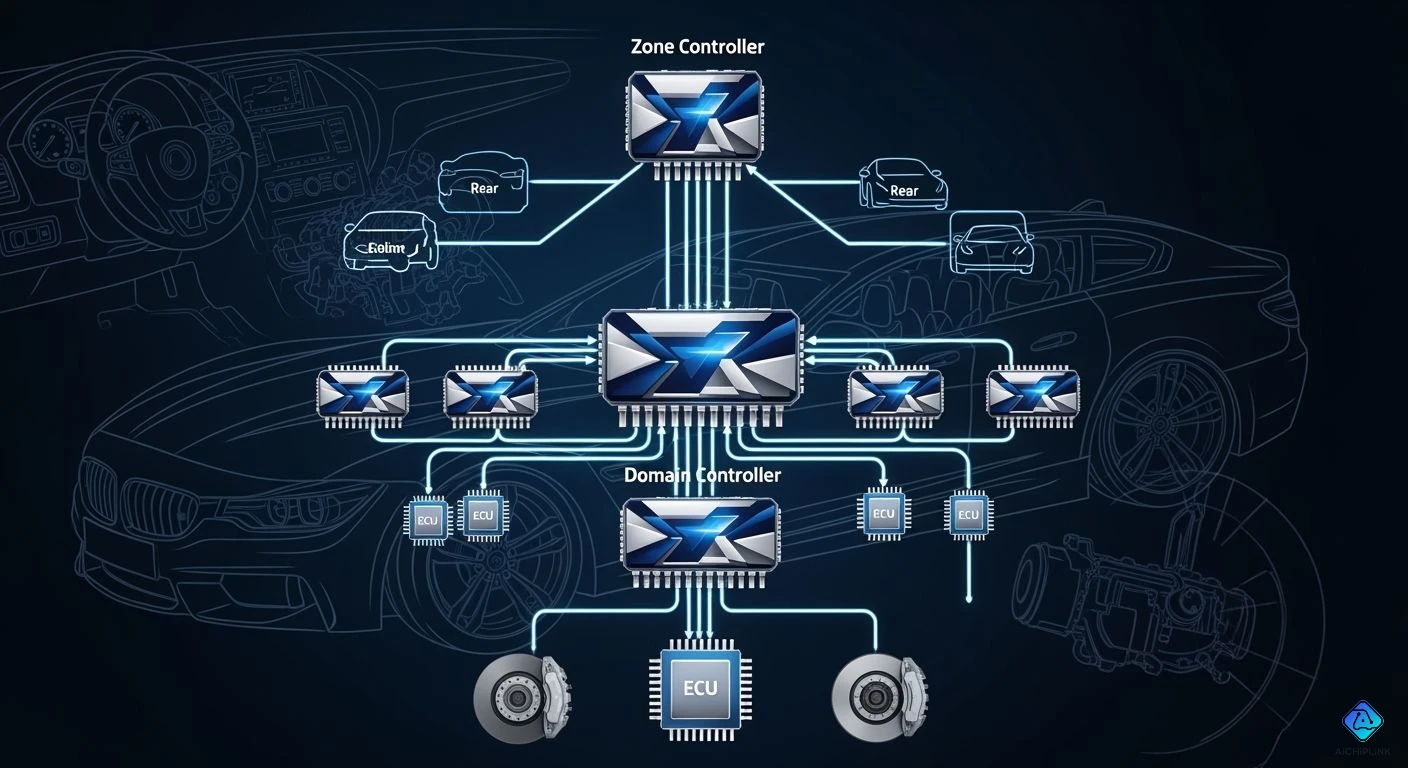
The ECU vs Domain Controller vs Zone Controller comparison shows how each one organizes car electronics. ECUs control single jobs, like braking or engine work. Domain controllers manage groups of ECUs by what they do, such as safety or music systems. Zone controllers group parts by where they are in the car and make wiring easier. Centralized systems now run more than half of cars with smart features. In 2024, zonal layouts were in over 25% of new electric car designs. Zonal controllers help make cars lighter and make it easier to add new systems.
| Year | Market Size (USD Billion) | CAGR (%) |
|---|---|---|
| 2025 | 4.87 | N/A |
| 2026 | 5.31 | N/A |
| 2034 | 12.45 | 11.2 |
Zonal architectures can lower car weight by up to 15 kg and help manage electronics better.
Key Takeaways
-
ECUs handle certain jobs in cars, like brakes or engine work. They help keep the car safe and working well.
-
Domain controllers watch over groups of ECUs. They help ECUs talk to each other and make updates easier.
-
Zone controllers sort electronics by where they are in the car. This cuts down on wires and helps add new things more easily.
-
Zonal architecture can make cars much lighter and more dependable. This helps cars use less energy and work better.
-
Knowing about these systems helps engineers make better cars. These cars are simpler to build and fix.
Key Concepts and Definitions
ECU Explained
An electronic control unit handles one job in a car. Each ECU is in charge of a certain task. Some ECUs control the engine, brakes, or airbags. Most cars have many ECUs, and each does one thing. For example, a body control module works with doors, windows, and lights. The table below lists common types and what they do:
| Term | Definition and Role |
|---|---|
| Body Control Module (BCM) | Manages body auxiliary electrical appliances like doors, windows, and lights, typically found in 1 to 2 units per vehicle. |
Domain Controller Overview
A domain controller manages groups of ECUs by what they do. It is the main hub for one area, like safety or music. Car makers use one to three domain controllers in each car. This depends on how they design the car. Domain controllers combine things like power and communication. The table below shows important features:
| Characteristic | Description |
|---|---|
| Integration of functionalities | Incorporates capabilities such as localized power distribution and communication. |
| Communication capabilities | Provides higher bandwidth for in-vehicle network communication. |
| Power management | Includes robust power management features for system performance and safety. |
Zone Controller Overview
A zonal controller groups car electronics by where they are. It connects sensors and actuators in one part of the car. For example, the front zone has lights, HVAC, and front sensors for driver help. The zonal controller is important for its area. Most cars use two to four zonal controllers.
-
The zonal controller links many sensors and actuators to the main ECU.
-
It makes sure each area works well, like for driver help or climate.
Zone controllers cut down on wires and make new features easier to add.
Roles in Vehicle Electronics
ECU Functions in Vehicles
Electronic control units are very important in cars. Each ECU controls one job, like the engine, brakes, or airbags. These units get information from sensors. They use this data to make decisions. ECUs talk to each other to keep the car safe. For example, when you press the brake pedal, the brake ECU gets sensor data. It then tells the brakes how hard to work. ECUs work together so the car reacts fast and right. They also help with comfort features, like climate control and power windows. This makes driving nicer for everyone.
Domain Controller Capabilities
Domain controllers are like the main boss for groups of ECUs. They put many jobs into one unit, like all safety or music systems. This makes the car’s electronics more neat and strong. Domain controllers let parts share data faster. They help parts talk to each other better. It is easier to update software and add new things. You do not need to change hardware. The table below shows how domain controllers and ECUs are different:
| Feature/Function | Domain Controller | Traditional ECU |
|---|---|---|
| Function Consolidation | Combines many functions in one unit | One function per unit |
| System Complexity | Reduces complexity | High complexity |
| Wiring and Packaging | Lighter and simpler | Heavy and costly |
| Software Updates | Over-the-air updates possible | Needs new hardware for updates |
| Performance | Higher integration and speed | Limited by single function |
Domain controllers make cars lighter and easier to build. They also help add new technology, like driver assistance.
Zone Controller as a Hub
Zone controllers are hubs for electronics in each car area. They connect sensors and actuators in one zone, like the front or back. This setup uses less wiring and makes building cars easier. Zone controllers send data from their area to a main computer. The main computer then makes choices for the whole car. This helps the car work better and lets new features be added fast. In today’s cars, zone controllers help manage complex systems. They support smart features and make cars lighter. By being local managers, zone controllers help each part work well with the rest.
ECU vs Domain Controller vs Zone Controller Comparison
Functional vs Physical Organization
The ecu vs domain controller vs zone controller topic is about how cars organize electronics. ECUs use a functional way. Each ECU controls just one system, like the engine or brakes. This means there are many small units all over the car. Domain architecture puts ECUs into groups by what they do. For example, one controller runs all safety features. Another controller handles music and screens. This setup has fewer separate units and makes updates easier. Zone controllers use a physical way. They group electronics by where they are in the car, like the front or back. In zonal architecture, one controller connects all sensors and actuators in its area. This means less wiring and a simpler setup.
A zonal architecture can make cars lighter and help add new features. Domain architecture helps systems share data fast and work better together. ECUs give exact control but make things more complex as cars get more features. The type of system changes how cars are built, how much they cost, and how easy it is to add new technology.
Replacement and Integration
Today, many cars use domain or zone controllers instead of lots of ECUs. This change affects how car makers design and build electronics. The table below shows how new cars use domain controllers and central gateways to handle complex systems:
| Component | Description |
|---|---|
| Domain Controllers | Four domain controllers managing vehicle, ADAS, body, and battery management functions. |
| Central Gateway | Routes traffic between domain controllers and isolates high-voltage battery domain. |
| Communication Protocols | Utilizes Automotive Ethernet 1000BASE-T1 and CAN-FD for data transmission. |
| Cybersecurity Requirements | A synchronized cybersecurity case covering all four ECUs with a single TARA for threat management. |
This setup means there are fewer ECUs in the car. Domain architecture makes software updates easier and helps the car work better. Zonal architecture makes wiring simpler and helps build cars in parts. Car makers can add or swap features without changing everything. This saves money and makes building cars faster.
Communication and Decision-Making
Communication is very important in the ecu vs domain controller vs zone controller comparison. Each system uses different ways to connect and share data. ECUs often use CAN or LIN networks. These are good for simple jobs but are not very fast. Domain architecture uses faster networks like FlexRay and Automotive Ethernet. These let systems share data quickly and work better.
Zone controllers use Automotive Ethernet for high-speed needs. This helps with sensor fusion and quick decisions. The table below compares the main ways cars send data:
| Protocol | Primary Purpose | Typical Applications | Bandwidth | Determinism | Security |
|---|---|---|---|---|---|
| CAN | Robust, real-time communication for ECUs | Powertrain, chassis, body control, diagnostics | Up to 1 Mbit/s (Classic) | Event-driven (priority-based) | Higher-layer protection (e.g., SecOC) |
| LIN | Low-cost communication for simple actuators/sensors | Comfort functions (windows, climate, seats) | Up to 19.2 kbit/s | Master-slave with a static schedule | No native security |
| FlexRay | Deterministic communication for safety-critical systems | X-by-Wire (braking, steering), safety domains | 10 Mbit/s per channel | Time-triggered (TDMA) | Higher-layer protection (e.g., SecOC) |
| Automotive Ethernet | High-bandwidth, scalable communication for software-defined vehicles | ADAS, infotainment, sensor fusion | 10 Mbit/s – 10 Gbit/s | Deterministic with TSN | MACsec, IPsec, TLS or SecOC required |
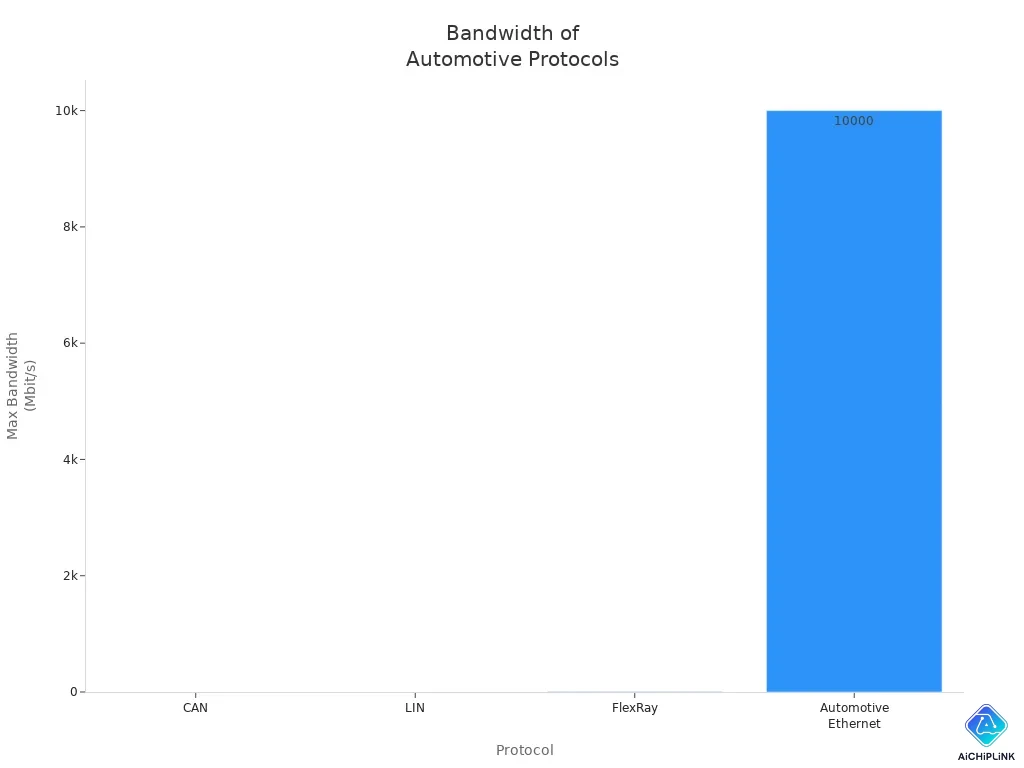
Domain and zonal architectures use faster networks to help cars work better. These systems support smart features like driver help and updates over the air. ECUs are slower because they use old networks and cannot handle lots of data. The system a car uses changes how fast it can process information and react to things.
Design Implications and Trends
Integration and Scalability
Modern cars use many controllers to run electronics. This helps cars grow and change easily. Engineers can add new sensors or features without starting over. Each zone controller does jobs in its own area. If one controller stops working, the others still work. This makes cars safer and more reliable. Electronics now make up about one-third of a car’s value. Software is also more important and is almost 18 percent of the value. This means cars need systems that can grow and get better in the future.
-
It is easy to add new features because of scalability.
-
More controllers mean cars are safer if one fails.
-
Using less wiring and cheaper controllers saves money.
-
Sharing jobs between controllers helps cars work better.
-
Planning for software and power is harder and needs care.
Cabling and Weight Reduction
How a car is built changes how much wiring it needs. Old domain architecture uses 100 to 150 ECUs, each with its own wires. This makes cars heavy and hard to build. Zonal architecture puts devices together by where they are in the car. For example, Tesla cut wiring in the Model 3 from 3 kilometers to 1.5 kilometers. This made the wire harness 85 percent lighter. Sumitomo Electric Industries saw a 35 percent drop in wire weight in 2024 tests. Zonal designs can cut wire length by 30 to 40 percent for each car. These changes make cars lighter and use less energy. This helps batteries last longer and keeps people safe.
| Aspect | Zone Architecture | Domain Architecture |
|---|---|---|
| Cable Length | Shorter wires in each area | Longer wires across the car |
| Routing | Easier to plan for each zone | Harder to plan for the whole car |
| Assembly | Easy to fix and build | Takes more work to put together |
Zonal architecture uses fewer wires, so fixing and building cars is easier.
Security and Maintenance
Keeping cars safe and easy to fix is important. Zone controllers use less wiring, so fixing problems is simpler. Cars are built in parts, so workers can swap out pieces without taking everything apart. This saves time and keeps cars safe. Fewer wires and simple paths mean fewer electrical problems. Domain and zone architectures let cars have smart safety features. Cars can get updates through the air to stay safe and new. Engineers must plan software and power carefully to stop new problems. Zonal architecture makes it easier to take care of car electronics. This helps cars stay safe and work well for a long time.
Future of Vehicle Electronics
Shift to Zonal Architecture
In the future, cars will use zonal architecture more. Cars now have lots of sensors and control units. Old ways of setting them up do not work as well. Zonal architecture fixes this by splitting the car into zones. Each zone has its own controller. This means cars need less wiring. It also costs less money and makes cars more reliable. Cars are getting more complex, so this change is needed. Zonal architecture lets cars have new things like self-driving and better safety. Car makers now think of cars like computers. Zonal architecture helps them update software fast and give better experiences. This change also helps companies make money from connected cars.
Zonal architecture makes cars lighter, more reliable, and easier to upgrade.
Industry Adoption and Examples
Car makers all over the world are using zonal architecture. The market for zonal architecture is growing fast. More companies use it to control electronics in each car. The table below shows how the market is changing:
| Market Segment | 2024 Value (USD) | 2033 Value (USD) | CAGR (%) |
|---|---|---|---|
| Zonal Electronics Architecture | 3.2 billion | 11.3 billion | 15.7 |
| Vehicle-Scale Zonal ECU Platforms | 2.15 billion | 11.41 billion | 18.7 |
| Zone Controller Units (ZCUs) | 3.2 billion | 18.6 billion | 29.7 |
| Automotive E/E Architecture Market | 79.4 billion | 148.6 billion | N/A |
| Projected OEM Adoption | N/A | N/A | ~40% by 2034 |
Many new electric cars already use zonal architecture. Companies like Tesla and Volkswagen are leading the way. They use zonal architecture to cut down on wires and make cars easier to build. By 2034, almost half of new cars might use zonal architecture.
What’s Next?
The next big thing for car electronics will bring more changes. Zonal architecture will move toward using smart, central computers. There will be fewer controllers, but they will be smarter. New ways to send data, like 10BASE-T1 Ethernet, will make things faster and more reliable. Car makers will add sensors and features based on the car model. This plug-and-play style will make building cars easier. Cars will get updates over the air, so you will not need to go to a shop.
New technology will also change cars. Artificial intelligence and edge computing will help cars make choices right away. Generative AI will guess traffic and make driving safer. Devices will learn to take care of themselves. This will help cars last longer and work better.
Zonal architecture, smarter controllers, and AI will change how cars work and how people use them.
ECUs, domain controllers, and zone controllers help cars run electronics. Zonal architecture uses fewer controllers and less wiring. This makes cars simpler and cheaper to build. It also lets features like ADAS work fast and well. Picking the best system depends on a few things:
| Factor | Description |
|---|---|
| Complexity of the vehicle | More complex vehicles may need advanced architectures. |
| Desired level of integration | Higher integration can improve efficiency. |
| Available networking technologies | Networking choices affect performance. |
| Trade-offs | Balance performance, cost, and reliability. |
Knowing about these choices helps engineers build better cars for the future.

Written by Jack Elliott from AIChipLink.
AIChipLink, one of the fastest-growing global independent electronic components distributors in the world, offers millions of products from thousands of manufacturers, and many of our in-stock parts is available to ship same day.
We mainly source and distribute integrated circuit (IC) products of brands such as Broadcom, Microchip, Texas Instruments, Infineon, NXP, Analog Devices, Qualcomm, Intel, etc., which are widely used in communication & network, telecom, industrial control, new energy and automotive electronics.
Empowered by AI, Linked to the Future. Get started on AIChipLink and submit your RFQ online today!
Frequently Asked Questions
What is the main job of an ECU in a car?
An ECU controls just one thing, like the engine or brakes. It gets information from sensors and tells parts what to do. Each ECU works on its own to help keep the car safe.
How does a domain controller improve vehicle electronics?
A domain controller is in charge of many ECUs that do similar jobs, like safety or music. It lets these systems share information fast and makes updating software simple. This setup uses fewer wires and is less confusing.
Why do automakers use zone controllers?
Zone controllers put electronics together by where they are in the car, like the front or back. They link local sensors and devices to the main computer. This way, cars need less wiring and weigh less.
Can a car have both domain and zone controllers?
Yes, some cars use both kinds. Domain controllers take care of certain jobs, and zone controllers connect things in each area. Using both helps cars have cool features and keeps electronics neat.