How to select the best SoC for digital cockpit systems in 2026
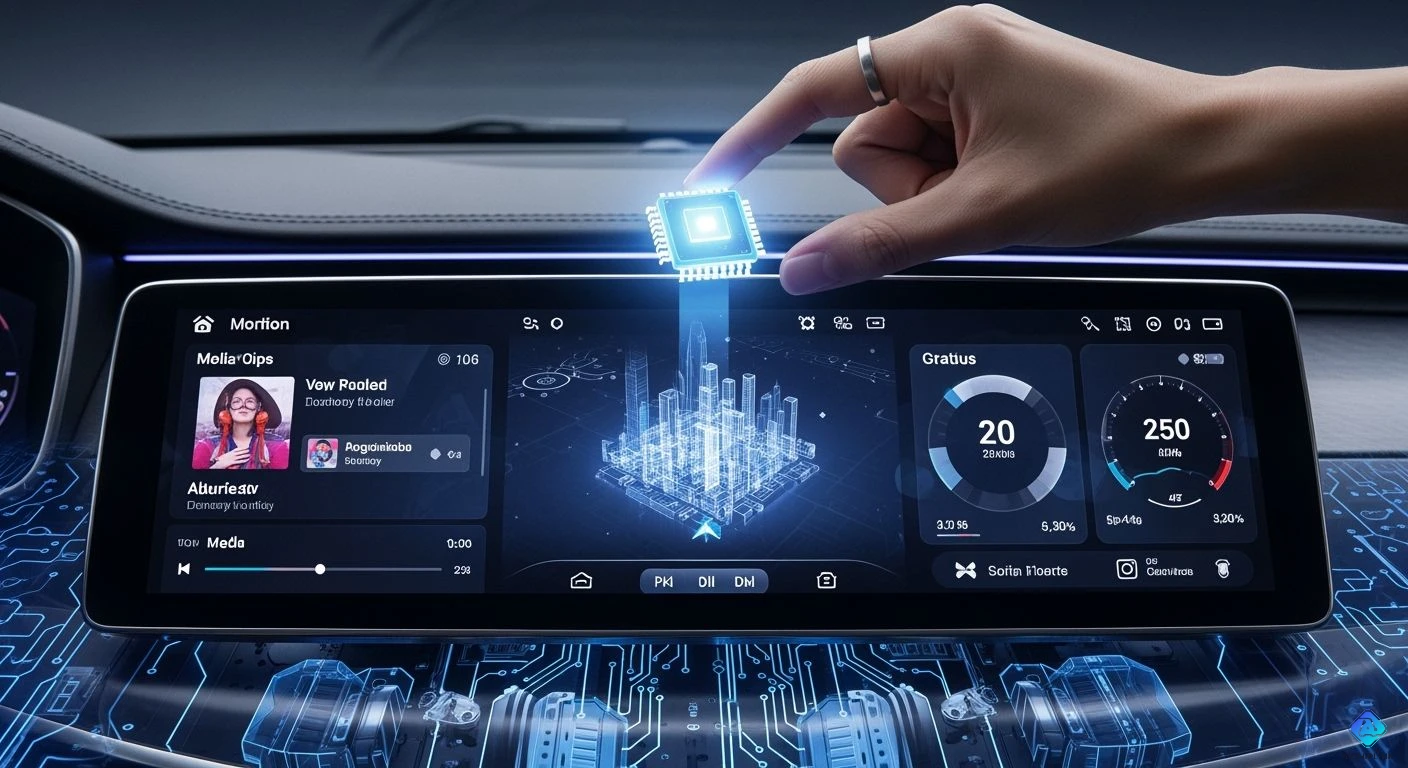
You have an important choice to make regarding Digital Cockpit SoC Selection in 2026. The automotive SoC market will grow rapidly as cars increasingly utilize software and connect to the internet. More vehicles now feature advanced driver assistance systems and require powerful computers. Your digital cockpit must incorporate new features, work seamlessly with ADAS, leverage AI, and be prepared for cloud integration. Car manufacturers are now seeking robust SoCs to address these challenges.
Key Takeaways
-
Pick SoCs that are fast and can grow with needs. Find chips that do at least 200 TOPS. They should use new tech like 4 nm.
-
Choose SoCs that work well with ADAS and cockpit systems. This makes design easier. It lets many features run on one chip.
-
Think about the total cost, not just the first price. Remember future updates, repairs, and the value the SoC gives.
-
Make sure the SoC has secure boot and strong OTA updates. This keeps your digital cockpit safe from hackers. It also makes software updates simple.
-
Choose a vendor with a good ecosystem and support. A trusted partner gives quick updates and help. This helps you succeed for a long time.
Digital cockpit SoC selection criteria
Performance and scalability
When picking a digital cockpit SoC, you should think about how well it works and if it can grow with your needs. Cars today need strong computers. You want SoCs that work fast and can fit many car types. The best ones use new ways to make chips, like 4 nm and 3 nm nodes. These help the SoCs go faster and use less power. The table below shows what digital cockpit SoCs should have in 2026:
| Benchmark | Requirement |
|---|---|
| Performance | At least 200 TOPS |
| Power Envelope | 35 watts |
| Cyber-security | Hardware-rooted |
| Firmware Orchestration | Over-the-air |
| Technology Node | Transition to 4 nm and 3 nm |
| Market Growth Rate | 11.54% CAGR |
| Future Silicon Content per Vehicle | US$ 310 by 2032 |
Pick SoCs that can do easy and hard jobs. If an SoC can scale, you can use it in cheap and fancy cars. This saves time and money when making cars. Top SoC platforms put many car jobs together. This helps the planet and makes things less tricky. Fast computers are needed for electric and self-driving cars. Almost half of ADAS jobs now use SoC designs to get the speed they need.
Tip: Pick SoCs that let you add new features later. This helps you keep up with changes and new tech.
Integration with ADAS and cockpit
You also need to think about how the SoC works with ADAS and cockpit systems. More companies now use one SoC for both jobs. This makes things work better and is easier for drivers. Now, one main computer can run many apps, like ADAS and music, on different boards. This lets you put more features into one SoC. It makes the car work better and costs less.
Here are some things needed for SoCs to work with ADAS:
| Requirement | Description |
|---|---|
| High-Performance Processing | The SoC must provide high computational and graphics power to handle complex tasks. |
| Real-Time Data Handling | Ability to process data from multiple sensors in real-time with low latency and high reliability. |
| Flexible Software Integration | Use of a hypervisor to create separate environments for different software domains with varying needs. |
-
Helps with safety tools like lane-keeping.
-
Lets the car use adaptive cruise control.
-
Makes automatic emergency braking possible.
More cars now have ADAS and smart cockpit features. AR-HUDs are becoming more common. Using one SoC for both ADAS and cockpit is getting popular. This makes the system work better and is nicer for users. You should pick SoCs that can do both jobs to be ready for the future.
Cost and value
Price and what you get for it matter a lot when picking a digital cockpit SoC. You need to find a balance between good performance and a fair price. Using one main computer in the car can cut down on the number of ECUs. This means you spend less on hardware and it is easier to fix. One SoC that does many things saves money and makes things simpler.
Look for SoCs that give you a lot for your money. They should let you update software over the air and keep your car safe with strong cyber-security. The market for these SoCs is growing fast at 11.54% CAGR. By 2032, each car will have about $310 worth of silicon. Picking the right SoC helps you stay ahead and make customers happy.
Note: Always look at the total cost, not just the first price. Think about updates, repairs, and help in the future.
Choosing a digital cockpit SoC means you must think about how well it works, how it fits with other systems, and how much it costs. Pick SoCs that can do both cockpit and ADAS jobs, can grow with your needs, and give you good value.
Hardware essentials for digital cockpit
CPU and GPU requirements
Your digital cockpit needs strong CPUs and GPUs. These parts help your car run many apps at the same time. Modern CPUs and GPUs work together for smooth graphics and quick actions. Some processors have CPU, GPU, and NPU in one chip. This lets you use one software stack. It makes building and updating your cockpit easier. You get fast data processing and clear visuals. These features make your car’s screens look sharp. You can use entertainment and driver-assistance tools without any lag.
AI, DSP, and NPU integration
AI, DSP, and NPU are now very important in digital cockpits. They handle data from cameras, microphones, and sensors right away. This helps your car know if you are tired or not paying attention. You can talk to your car, even if it is loud inside. These chips make your cockpit safer and more personal. Big companies like AMD, NVIDIA, and Qualcomm Automotive make chips with strong AI and signal processing. Some new chips use special tech to make AI three or four times stronger. This makes your cockpit smarter and more helpful.
Power and thermal management
You need to keep your cockpit cool and use power well. Most automotive-grade SoCs use between 15 and 40 watts. Good chips use special materials and metal cases to move heat away. They have sensors to check for hot spots. Some chips can change their power use to save energy. Here are some ways to manage heat: 1. Put thermal vias under hot parts to move heat out. 2. Use heat sinks to cool important parts. 3. Keep heat-sensitive parts away from hot ones.
| Aspect | Details |
|---|---|
| Power Consumption Range | 15 to 40 watts |
| Thermal Management Techniques | Use of thermal interface materials and metal enclosures |
| EMC Requirements | Compliance with automotive EMC standards like CISPR 25 |
| Temperature Range | -40°C to 105°C |
| On-Chip Thermal Sensoring | Monitors temperature at critical hotspots |
| Dynamic Voltage Scaling | Adjusts power and clock frequencies in real-time |
Data bandwidth and movement
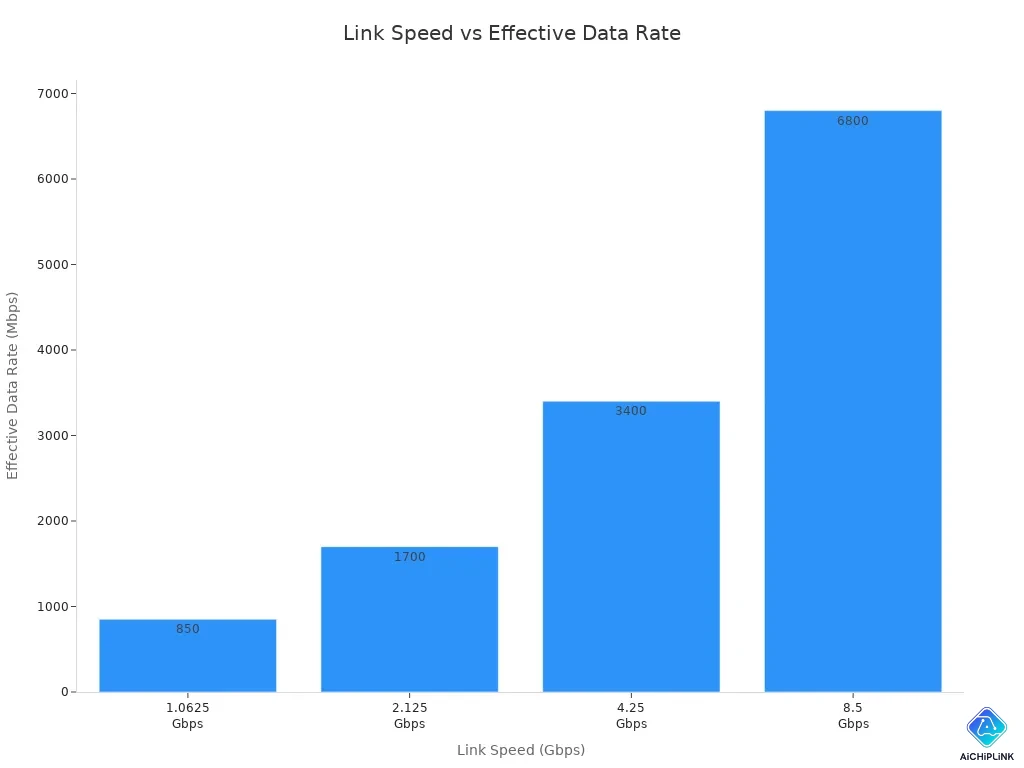
Your cockpit must move lots of data very fast. High-resolution screens and many cameras need strong data links. Some systems use links up to 28 Gbps for video and sensor data. Fast memory and special data paths keep everything running well. Chips use Automotive Ethernet and PCIe to move data quickly. They also use fast memory like LPDDR5 to handle many camera feeds and AI jobs at once.
Mixed criticality support
You need hardware that can run safety and fun features together. This is called mixed criticality. Your chip should use virtualization to keep safety apps away from music or games. Safety islands and secure partitions protect important jobs. Chips use special schedulers and tools to make sure safety jobs always run on time.
| Feature | Description |
|---|---|
| Virtualization | Type-1 hypervisors separate safety and infotainment systems. |
| Safety islands | Dedicated cores for critical tasks. |
| Time/space partitioning | Guarantees CPU and memory for safety jobs. |
| Secure partitions | Hardware boundaries protect important data. |
Tip: Choose high-performance chips that support mixed criticality. This helps you build safe, smart, and fun cockpits for the future.
Software and system integration
Hypervisor and OS support
You need to pick the right hypervisor and operating system for your digital cockpit SoC. These help your car run many apps at once and keep them safe. Hypervisors let you use more than one operating system on a single chip. This keeps safety features away from games and music. The table below lists the most used hypervisors and operating systems:
| Hypervisor/OS | Description | Usage in Digital Cockpit SoCs |
|---|---|---|
| QNX | Dominates automotive cluster systems with high security. | Widely used in intelligent cockpit platforms. |
| Linux | Open-source, serves as the base for custom operating systems. | Supports multiple applications in cockpit systems. |
| Android | Rich application ecosystem, increasingly used in IVI systems. | Popular for infotainment systems. |
| AliOS | Gaining traction in IVI systems due to its application ecosystem. | Used in various cockpit applications. |
| QNX Hypervisor | Allows unification of multiple OS on a single SoC. | Supports QNX, Linux, and Android. |
| ACRN | A flexible hypervisor for automotive applications. | Used for managing multiple OS in SoCs. |
| COQOS Hypervisor | Designed for safety-critical applications. | Supports automotive cockpit functionalities. |
| PikeOS | Real-time operating system for embedded applications. | Used in safety-critical cockpit systems. |
| Harman Device Virtualization | Provides virtualization for automotive applications. | Supports various operating systems in cockpit. |
Hypervisors give strong separation and better safety. You can run safety apps and fun apps together without problems. The table below shows the main good points:
| Benefit | Description |
|---|---|
| Strong Isolation | Ensures safety-critical functions are protected from vulnerabilities. |
| Better Security | Enhances overall security of cockpit functions by isolating environments. |
| Mixed Criticality Support | Allows different levels of criticality to coexist securely on the same hardware. |
Middleware and HMI frameworks
Middleware links your car’s hardware to its software. It makes things easier for people who build apps. You do not have to worry about how the hardware works. Middleware acts like a helper and makes sure apps and car systems talk the same way.
-
Middleware connects software and hardware, handling messages, memory, and jobs.
-
It hides hardware details, so you can focus on making apps.
-
Middleware sits between the app layer and the operating system, giving a smooth link.
-
It gives a steady way for apps to control things like air and maps.
-
AUTOSAR Adaptive manages big services, while AUTOSAR Classic handles quick signals.
-
Android HAL helps apps reach important car features.
For HMI frameworks, you can use tools like HARMAN’s HCAT. This tool helps you make QT-based screens for your cockpit. You get clear displays and easy buttons.
Tip: Middleware and HMI frameworks help you build cockpits that are smart, safe, and easy to use.
Cloud and connectivity integration
Cars need cloud connections to get better features. This helps with things like speed and privacy. Cars can do a lot alone, but still need the cloud for some data.
SoCs work with cloud using telematics gateways and wireless parts. These keep your data safe and your car online. You can use Bluetooth, Wi-Fi, and safe power units to keep your cockpit connected. This lets you update features, get live info, and keep your car working well.
Security and OTA updates
Secure connections and encryption
You need to keep your digital cockpit safe from cyber threats. Encryption helps protect your car’s data as it moves between systems and the cloud. There are different encryption standards you can use for your cockpit. The table below lists the main ones and explains how they work in cars:
| Encryption Standard | Description | Application in Automotive Systems |
|---|---|---|
| Advanced Encryption Standard (AES) | A fast and strong symmetric key algorithm. | Secures messages between ECUs and protects data sent outside the car. |
| Rivest-Shamir-Adleman (RSA) | An asymmetric encryption method for safe data sharing. | Secures software updates and checks message authenticity. |
| Elliptic Curve Cryptography (ECC) | Offers strong security with smaller keys. | Used for key exchange and digital signatures, like in keyless entry. |
| Secure Hash Algorithm (SHA) | Creates hash values to check data integrity. | Verifies software and firmware updates. |
| Transport Layer Security (TLS) | Protocol for safe network communication. | Protects data between vehicles and servers during OTA updates. |
SoC vendors help by adding secure boot to their chips. Secure boot checks each software layer before it runs. Only trusted code can start up. Vendors also use a hardware root of trust. This gives a strong base for all security features. Trusted execution environments, like TrustZone, keep important tasks safe from attacks. TrustZone separates safety apps from other apps and protects secret keys. This setup lowers the chance of hackers getting in.
OTA update mechanisms
You need safe ways to update your car’s software. Over-the-air (OTA) updates let you fix bugs and add features without going to the shop. You must follow best practices to keep updates secure:
-
Always check if updates, servers, and the update process are safe.
-
Watch out for risks like hacked servers, insider threats, and attacks during data transfer.
You should use these steps for safe OTA updates:
-
Secure Boot: Only trusted software can run.
-
Secure Flashing: Check and approve updates before installing.
-
UDS Authentication: Make sure only approved tools talk to your car.
-
Memory Check Routines: Test memory before, during, and after updates.
You must also follow industry rules. Standards like AUTOSAR, ISO 26262, and SAE J3061 set rules for safe updates. Many OTA solutions, such as KPIT’s, already power millions of cars and meet these standards. The table below shows key regulations:
| Regulation | Description |
|---|---|
| UNECE Reg. 156 | Requires legal checks for OTA updates before use. |
| ISO 26262 | Sets rules for safe electronic systems. |
| ISO 21434 | Covers cybersecurity for connected vehicles. |
Tip: Always pick SoCs that support secure boot, trusted execution, and strong OTA update tools. This keeps your cockpit safe and ready for the future.
Future-proofing and evaluation
AI and emerging tech support
You want your digital cockpit to be ready for the future. Pick an SoC that works with the newest AI features. AI can help your car learn what you like and keep you safe. Look for SoCs with NPUs and machine learning support. These chips can handle things like voice commands and driver watching. They also work with gesture controls. Make sure the SoC can use new tech like AR displays and better sensors. This helps your cockpit get new updates later.
Tip: Pick SoCs that work with AI tools like TensorFlow Lite or ONNX. This lets you add smart features more easily.
Vendor ecosystem and support
You need a good partner when you choose an SoC. Good vendors give you more than just the chip. They offer software tools, updates, and help when you need it. A strong ecosystem means you get drivers and security fixes fast. Check if the vendor has done well in cars before. Ask if they support standards like AUTOSAR and ISO 26262.
Here are some things to check in a vendor:
-
Fast and friendly technical help
-
Regular software and security updates
-
Clear guides and training
-
Works with other tech companies
A good vendor helps you fix problems quickly and keeps your cockpit working well.
Evaluation checklist
Before you pick, use a checklist to compare SoCs. This helps you find the best one for your needs.
| Checklist Item | Why It Matters |
|---|---|
| AI and NPU support | Lets you use smart features |
| ADAS and cockpit integration | Saves money and hardware |
| Power and thermal management | Keeps things safe and cool |
| Security and OTA updates | Protects data and makes fixes easy |
| Vendor support and ecosystem | Helps you succeed for a long time |
| Compliance with standards | Follows safety and legal rules |
Note: Go over this checklist with your team. Make sure the SoC you pick fits all your needs now and in the future.
You can pick the right SoC for your digital cockpit by using easy steps. Look at how fast it works and if it can grow with your needs. Make sure it works well with ADAS. The SoC should use AI and let you update safely. Pick a vendor that helps you when you need it. Use this checklist:
-
Look for AI and NPU support
-
Make sure ADAS and cockpit work together
-
Check power and heat control
-
Make sure security and OTA updates are strong
-
See if the vendor gives good help
Remember: A future-proof SoC keeps your cockpit safe, smart, and ready for new features.

Written by Jack Elliott from AIChipLink.
AIChipLink, one of the fastest-growing global independent electronic components distributors in the world, offers millions of products from thousands of manufacturers, and many of our in-stock parts is available to ship same day.
We mainly source and distribute integrated circuit (IC) products of brands such as Broadcom, Microchip, Texas Instruments, Infineon, NXP, Analog Devices, Qualcomm, Intel, etc., which are widely used in communication & network, telecom, industrial control, new energy and automotive electronics.
Empowered by AI, Linked to the Future. Get started on AIChipLink and submit your RFQ online today!
Frequently Asked Questions
What makes an automotive SoC different from regular chips?
Automotive SoCs work in tough places with heat and shaking. They have strong security and help with safety features. These chips must follow strict rules to be reliable. You find them in digital cockpits and ADAS systems.
How do you check if an automotive SoC supports future updates?
You need to see if it has OTA update support and secure boot. Automotive SoCs with trusted execution let you add new software safely. Vendors give tools that make updates easy. This keeps your cockpit ready for new technology.
Why does mixed criticality matter in automotive digital cockpits?
Mixed criticality lets you run safety and fun apps together. You use virtualization to keep important jobs safe. Automotive SoCs with secure partitions protect your data. This helps you build cockpits that are smart and safe.
What are the main security features in automotive SoCs?
Automotive SoCs use encryption, secure boot, and hardware root of trust. You get trusted execution environments like TrustZone. These features help protect your car from cyber threats. You keep your data safe and your cockpit secure.