2nm vs 3nm Chips: What Are the Key Differences?
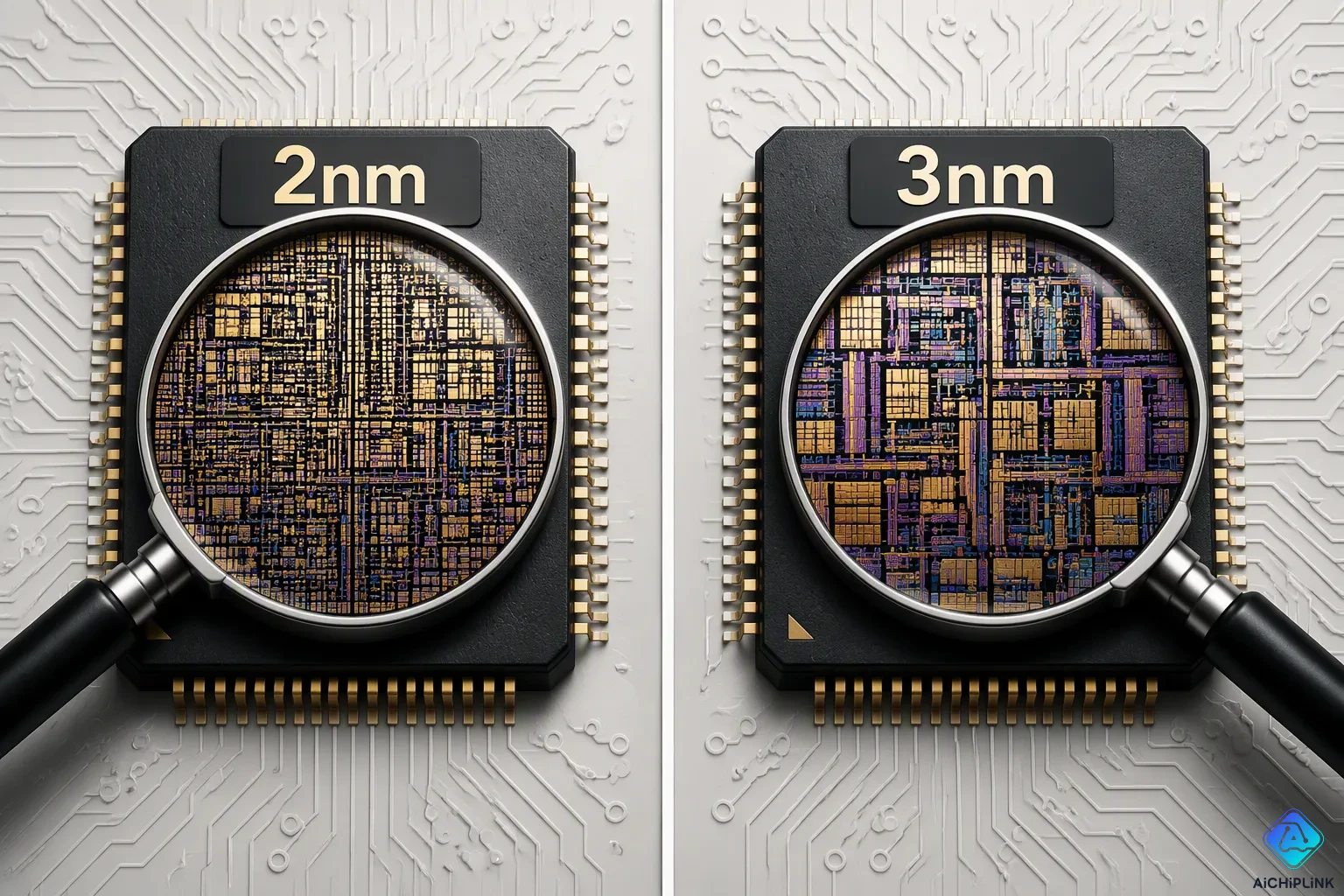
When weighing 2nm vs 3nm chips, you might wonder if the leap in technology truly matters. The core difference is clear: TSMC data shows 2nm chips deliver 10-15% faster performance at the same power draw compared to 3nm chips. This boost comes from the new Gate-All-Around (GAA) transistor architecture. But is that speed increase worth the higher manufacturing costs and potential heat management challenges?
You'll face several trade-offs when comparing 2nm vs 3nm chips. Performance, power efficiency, thermal output, price, and availability all factor into your decision. The newest 2nm processors promise cutting-edge speed, while current 3nm chips offer proven, reliable performance in today's devices. This guide cuts through the technical jargon to help you pick the right option for your specific needs.
Key Takeaways
-
2nm chips run 10-15% faster and use 25-30% less power than 3nm chips.
-
The new Gate-All-Around (GAA) transistor design makes these gains possible by cutting down leakage and boosting control.
-
2nm chips are pricier to make, so devices using them will cost more, and they won't be out until late 2025.
-
3nm chips give you dependability that has been tested and more for your money for most people who use them today.
-
Choose 2nm for top performance and efficiency if you can wait and pay more. Choose 3nm for immediate needs and budget.
2nm vs 3nm Chips: What Does "Nm" Mean?
A nanometer is one billionth of a meter. This number tells you how big the tiny transistors on a chip are, not the size of the chip itself. When you look at 2nm vs 3nm chips, you are comparing the size of billions of microscopic switches packed onto a silicon wafer.
The Transistor Size Analogy
Think of a highway. Each car is a transistor, and the road is the chip. Smaller transistors are like tighter-packed cars. That lets you fit more lanes on the same road. A 3nm chip holds about 100 million transistors per square millimeter. A 2nm chip packs even more into that same area. This higher transistor density gives you more computing power without making the chip bigger.
But the name "2nm" is partly marketing. The real physical channel length is closer to 10nm. The node name shows improvements from one generation to the next, not exact sizes. This naming helps companies show progress during node transitions, even if the numbers don't match the actual measurements.
Why Smaller Transistors Matter
Smaller transistors give you four main benefits. First, they need less electricity to do the same tasks, so they save power. Second, they produce less heat, which lowers electrical resistance and cuts cooling needs. Third, they let you make a smaller chip or put more transistors in the same space. Fourth, less heat allows faster work, and shorter distances between transistors speed up signals.
| Year | Common Transistor Size |
|---|---|
| 2010 | 32 nm |
| 2020 | 5 nm |
| Today | 4 nm and 3 nm |
| Future | 2 nm (announced) |
This transistor scaling follows Moore's Law, which says the number of transistors doubles about every two years. Each advanced technology node gives better performance and more power efficiency, and it costs less to build. But scaling has physical limits. At 20nm, flat transistors hit a wall, so engineers moved to 3D FinFET shapes. This design lifts key parts above the silicon wafer, allowing more area scaling without losing transistor volume.
Past 5nm, makers need new materials like silicon-germanium alloys or new shapes like stacked nanosheets. These chip design advances keep scaling going. The design choices at each node directly affect your device's speed, battery life, and heat output. Knowing these basics helps you decide if the 2nm jump is worth the cost. The 2nm process nodes promise big gains, but making them work requires big advances in manufacturing.
Performance Gains in 2nm vs 3nm Chips
Speed and Processing Power
You'll see the biggest speed difference between 2nm and 3nm chips when you run heavy apps. TSMC says 2nm chips are up to 15% faster than 3nm chips when using the same amount of power. That means your computer can run tasks at higher clock speeds. Your games load faster, video edits finish sooner, and AI jobs get done quicker.
This speed boost doesn't come from just making the same design smaller. Engineers changed the whole transistor structure to get these gains. The 2nm node is a big change in how chips handle electricity. Each tick of the clock does more work, so your device feels faster without using more battery.
IBM's 2021 test chip data shows how big these jumps are. Their 2nm test chip was 45% faster or used 75% less power than 7nm chips. That's a few generations apart, but it shows the trend. Each new chip generation aims for higher speed while keeping power use in check.
How much you benefit depends on what you do. Simple tasks like browsing and email get small gains. Heavy tasks like 4K video editing, 3D rendering, and AI work get the biggest speed boost. If you push your device hard, that 15% boost matters. If you just check social media, you might not notice.
The Role of GAA Transistors
The secret to these speed gains is a new transistor design called Gate-All-Around (GAA). Older chips used FinFET transistors, where the gate wrapped around three sides of the channel. GAA goes further. The gate surrounds the channel on all four sides, giving better control over electric current.
This design cuts leakage current a lot. When a transistor should be off, some electricity still leaks through. GAA structures reduce this leakage. You waste less power and get more usable speed. The gate fully around each channel keeps off-current low while keeping on-current strong.
Chipmakers stack nanosheets on top of each other in GAA designs. They can change the width of each nanosheet for different needs. Wide nanosheets give more current for fast tasks. Narrow nanosheets save power for battery-friendly tasks. This lets makers tune each chip for its job.
The space saving matters too. Stacked nanosheets fit more transistors in the same space. You get more transistors without making the chip bigger. This space efficiency helps give you the speed gains.
The switch from FinFET to GAA is the biggest change in chip design in over ten years. It allows the speed-per-watt gains that make 2nm CPUs attractive. While 3nm CPUs still use FinFET, they get help from improvements to that older design. The move to GAA starts a new era in chip engineering.
For you, this means 2nm chips will run cooler and faster than similar 3nm chips. Better control lowers the voltage needed to switch transistors. Lower voltage means less heat and longer battery life. You get the speed boost without the extra heat you might expect from faster processing.
Power Efficiency and Heat Output
Battery Life Improvements
Moving from 3nm to 2nm tech saves a lot of power. The switch cuts power use by 25-30%. Your device runs longer on one charge. Memory parts use 12% less power with 2nm chips. These numbers mean longer battery life for phones and laptops.
This power saving comes from a new transistor design. The Gate-All-Around structure controls current flow better. Less electricity leaks away. More power goes to real computing work. You get better performance per watt than older nodes.
The benefits show up in many tasks. Video streaming and web browsing use less power. Heavy apps like gaming save even more. 2nm chips can adjust power delivery on the fly. Simple jobs use less energy, and hard ones use more. This smart power delivery gives better battery life without losing speed.
Less heat comes with these power savings. Using less power means making less waste heat. Your device stays cooler during long use. You avoid the slowdown that can hit 3nm CPUs under heavy loads. Lower power and less heat make 2nm CPUs great for thin laptops. Makers can build slimmer devices without hurting battery life.
The Heat Challenge
Packing more transistors creates a real heat problem despite the power savings. More transistors in the same space means more heat in a smaller area. This higher power density hurts performance, reliability, and efficiency. Your device can overheat and slow down if cooling can't keep up.
Old cooling methods may not work for 2nm chips. The extra heat they produce goes beyond what passive cooling can handle. Engineers face a tradeoff with backside power delivery networks. These networks can raise temperature by 14°C. Less heat spreading means heat builds up in small chip areas.
Makers must spend more on cooling to use 2nm chips fully. You'll see more vapor chambers in phones. Laptops will get better cooling fans. System designers must think about heat from the start. This co-design approach builds cooling into chip and device plans.
The CMOS 2.0 method offers one answer. This approach splits logic into density-focused and drive-focused layers. You lower power density in the densest chip parts. The design spreads work across different areas to share heat. These design choices help manage heat issues.
These tradeoffs between speed and heat are key to the 2nm vs 3nm chips choice. You get better area scaling with 2nm tech. You also get better power scaling. But cooling gets harder and costs more. The speed and power gains of 2nm come with real heat limits. Device makers must balance these factors to make stable products.
Cost, Availability, and Which to Choose
Manufacturing Cost and Device Prices
Moving from 3nm to 2nm chips costs a lot more money. One 2nm wafer costs about $30,000. A 3nm wafer using the N3E process costs $25,000. The newer N3P version costs $27,000. That $3,000 to $5,000 difference per wafer adds up fast. Chipmakers pass these extra costs down the chain.
Top processors already cost $200 to $280 each. With 2nm wafers, those prices go even higher. Phone makers face a tough choice. They can take a smaller profit or charge you more. Early 2nm devices will likely cost more than current 3nm models. This cost pressure affects the whole device market.
The complex GAA design drives up these costs. New machines and lower success rates make each chip pricier. The tradeoffs between cost and performance become clear. You pay more for the newest tech. The scaling benefits come with a money cost. This area of chip costs matters when you set a budget.
Current Market Availability
You cannot buy a 2nm device today. TSMC plans to start risk production at the end of 2024. Volume production follows in late 2025. Samsung targets mass production in 2025. The N2P version with backside power delivery arrives in 2026. Meanwhile, 3nm CPUs power current flagship phones. Apple's A17 Pro uses the mature N3E process.
| Company | Process | Milestone | Timeline |
|---|---|---|---|
| TSMC | N2 | Risk production | End of 2024 |
| TSMC | N2 | Production phase | 2025 |
| TSMC | N2 | Volume production | Late 2025 |
| TSMC | N2P | Production with backside power delivery | 2026 |
| Samsung | 2nm (MBCFET) | Mass production | 2025 |
This timeline shapes your buying choice. Early adopters and performance fans should wait for 2nm CPUs. The speed and performance per watt gains are worth the wait. Most users, however, find 3nm devices offer great value. The mature design gives proven reliability. The power scaling benefits of 2nm matter less for everyday tasks.
Think about your needs honestly. Heavy gamers and AI workers gain from 2nm. Casual users see little difference. The scaling of transistor density helps future software. But current apps run smoothly on 3nm. The area savings in 2nm chips allow thinner devices. That design choice appeals to some buyers. The 2nm vs 3nm chips decision comes down to your budget and patience.
Bottom line: If you need top performance now, 3nm works well. If you can wait a year, 2nm gives better efficiency but costs more.
You face a clear choice between 2nm and 3nm chips. The 2nm delivers a 10-15% speed boost and better power efficiency. You also pay more upfront and manage potential heat issues. These tradeoffs matter for your wallet and your device's cooling needs.
If you need maximum performance for gaming or AI workloads, 2nm cpus represent the future. You gain better performance per watt and longer battery life. If you need a device now or work within a budget, 3nm offers proven reliability at a better price point.
As 2nm matures, costs will drop. This scaling will make it the new standard, just as 3nm is today. Consider your specific needs rather than chasing marketing buzzwords. The right choice depends on your priorities, not the latest hype.

Written by Jack Elliott from AIChipLink.
AIChipLink, one of the fastest-growing global independent electronic components distributors in the world, offers millions of products from thousands of manufacturers, and many of our in-stock parts is available to ship same day.
We mainly source and distribute integrated circuit (IC) products of brands such as Broadcom, Microchip, Texas Instruments, Infineon, NXP, Analog Devices, Qualcomm, Intel, etc., which are widely used in communication & network, telecom, industrial control, new energy and automotive electronics.
Empowered by AI, Linked to the Future. Get started on AIChipLink and submit your RFQ online today!
Frequently Asked Questions
Will 2nm chips work in my current phone or laptop?
No. 2nm chips need new manufacturing methods and different socket designs. Your current device cannot accept them. You will need a new device made specifically for 2nm processors. The same was true when 3nm chips first came out.
How long will 2nm chips stay relevant?
Most chip generations stay current for two to three years. TSMC plans 2nm production through 2026 and beyond. The N2P version arrives in 2026 with backside power delivery. You can expect 2nm devices to get software updates for several years after you buy them.
Do 2nm chips really matter for everyday tasks?
For basic activities like browsing, email, and streaming, you will see little difference. The 10-15% speed gain shows up in demanding workloads. Video editing, 3D rendering, and AI applications see the biggest improvements. Think about how you actually use your device before paying extra.
What happens to 3nm chip prices after 2nm launches?
Prices usually drop when newer technology arrives. Manufacturers lower costs on mature processes to clear inventory. You may find good deals on 3nm devices once 2nm products hit the market. These tradeoffs between price and performance will guide your buying choice.