What is the MSP430 microcontroller and its key features?
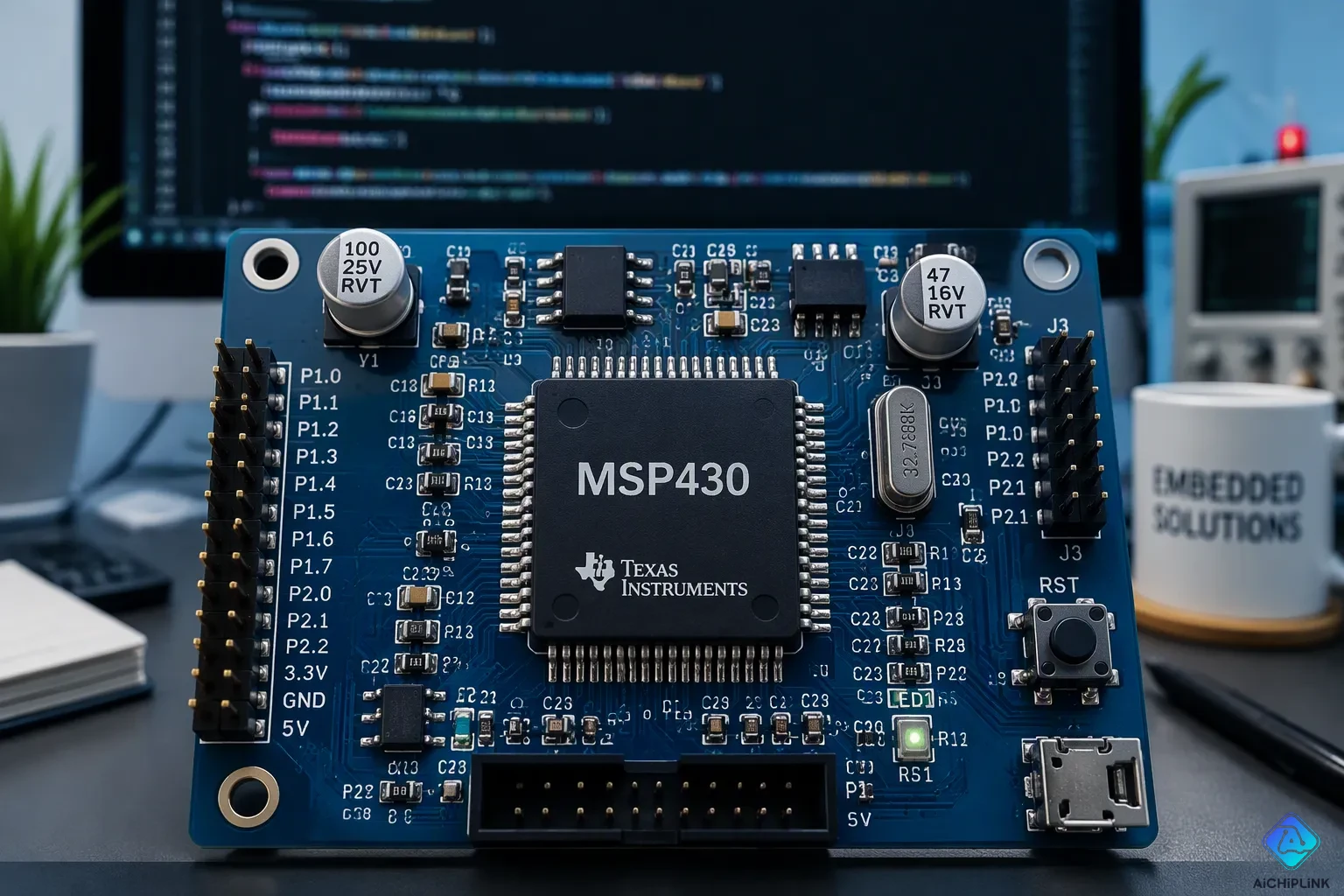
The MSP430 microcontroller is a family of 16-bit, ultra-low-power chips from Texas Instruments. This 16-bit chip is very good at low-power embedded tasks. Its main strength is very low energy use, running from 1.8V to 3.6V while drawing little current. You will find this MSP430 great for battery-powered devices, wearables, remote sensors, and smart meters. These embedded systems need excellent power savings.
| Mode | Typical Current Consumption |
|---|---|
| Active Mode (AM) | 300 µA at 1 MHz, 2 mA at 8 MHz |
| Low Power Modes (LPM0–LPM4) | 0.1 µA to 80 µA (depending on RAM retention and clock state) |
The FRAM series uses only 82 µA/MIPS when active. This very low power use makes the MSP430 a leader among low-power microcontrollers. We will look at its key features, real-world uses, and compare it with other chips to see if it fits your low-power needs.
Key Takeaways
-
The MSP430 microcontroller uses very little power. It can run for years on a small battery.
-
It has many built-in parts. These parts manage timing, talking, and detecting. This saves room and cash.
-
The MSP430 wakes up from sleep really fast. It wakes up in just microseconds. This saves energy.
-
It works well in battery devices. Examples include sensors, wearables, and smart meters.
-
Pick the MSP430 for low-power projects. It is better than other chips at saving energy.
Key Features of the MSP430 Microcontroller
16-Bit RISC Architecture and Integrated Peripherals
The MSP430 family uses a 16-bit RISC CPU core with just 27 instructions. This small set makes code run fast and predictably. The MSP430 supports seven addressing modes that boost code efficiency:
-
Register mode
-
Auto-increment Pointer mode
-
Indexed Pointer mode
-
Register Indirect mode
-
Auto-increment Pointer Indirect mode
-
Indexed Pointer Indirect mode
-
Derived special modes (symbolic, absolute, immediate)
The constant generator (using registers R2 and R3) gives quick access to common values like -1, 0, 1, 2, 4, and 8. This cuts down instruction size. PC-relative addressing allows position-independent code, which helps portability and lowers memory use. The auto-increment mode with PC handles immediate constants without extra memory reads. This design, with limited modes for the second operand, supports 16 registers overall and improves code density and speed. The 16-bit chip benefits from these design choices. Its power efficiency stands out. The constant generator reduces memory loads. This saves power and speeds up execution. PC-relative addressing also helps create relocatable code.
The built-in peripherals boost this chip's abilities. You get many on-chip modules that cut the need for extra parts. The table below lists common peripherals:
| Peripheral Category | Common Integrated Peripherals | Optional/Advanced Peripherals |
|---|---|---|
| Timing & Control | 16-bit timers, watchdog timer, real-time clock (RTC) | High-resolution PWM, backup battery switch |
| Communication | USART, SPI, I²C, UART (via BSL) | USB |
| Analog & Sensing | 10/12/14-bit SAR ADC, analog comparator, temperature sensor | 12-bit DAC, operational amplifiers (op-amps), 16/24-bit delta-sigma ADC |
| Power & Reset | Brown-out reset (BOR), supply voltage supervisor (SVS), power management module (LDO) | - |
| Memory & Processing | Flash/ROM/FRAM, RAM, hardware multiplier (32x32) | DMA controller, LCD driver |
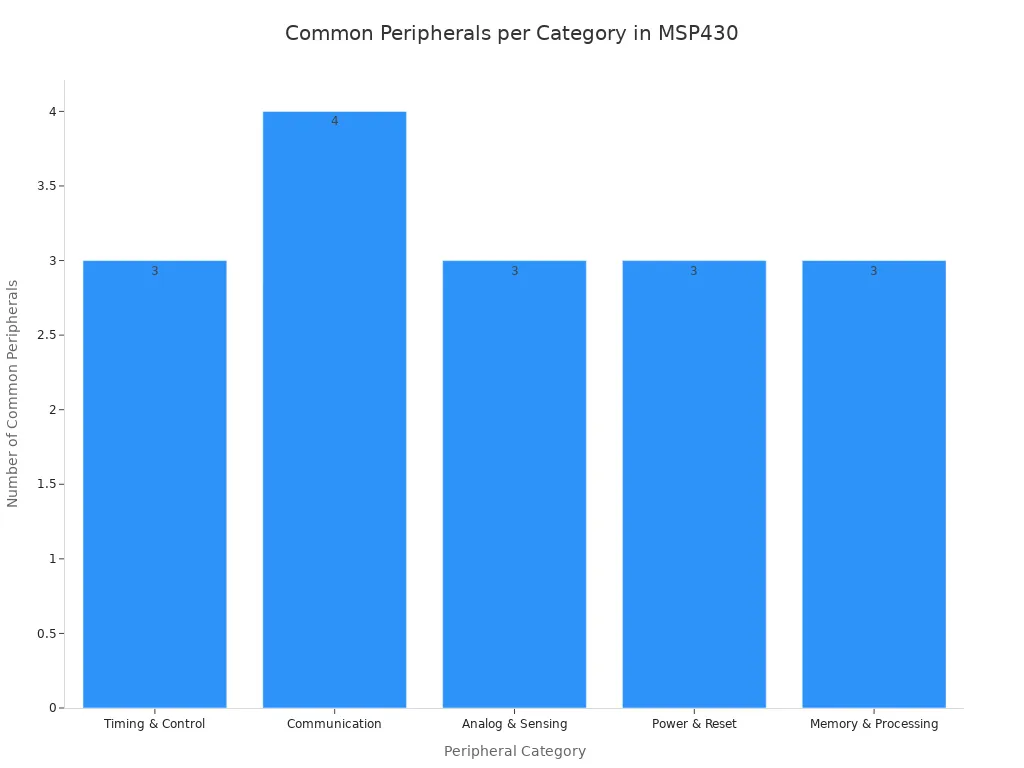
These peripherals let you handle timing, communication, analog sensing, and power management right on the chip. This integration makes system design simpler for many embedded uses. The MSP430's features fit many projects. Its peripherals, listed above, make it a flexible choice for embedded systems. These modules are useful in embedded systems. Having them all on one chip lowers the total system cost.
Ultra-Low Power Modes and Fast Wake-Up
The key to the MSP430's energy savings is its many low-power modes. You can pick from six power-down modes (LPM0 to LPM4) to turn off separate modules as needed. In standby with the real-time clock on, the chip draws only 350 nA. In shutdown, it draws just 45 nA. When active, the FRAM series uses only 3 mA. This tiny power use makes the MSP430 perfect for battery-powered embedded systems. The MSP430 offers very low power use across all modes for many uses. The chip's total consumption stays low in this embedded design.
Active mode current depends on the clock speed:
| Clock Frequency | Active Mode Current Draw |
|---|---|
| 1 MHz | 300 µA |
| 8 MHz | 2 mA |
Wake-up speed is a key feature. The MSP430 can wake from a low-power mode in as little as 6 microseconds. From standby (LPM3) with a 32 kHz crystal, wake-up takes a few tens of microseconds. This fast response lets you stay in low-power modes longer, saving energy. The MSP430's low-power operation is vital for battery life. The energy savings are large.
It will take only a few 10's of micro-seconds – refers to wake-up time from standby mode (LPM3) when using a 32 kHz crystal.
Low-power modes plus fast wake-up give you strong control over power use. You can set up your system to run for years on one coin-cell battery. That's why the MSP430 is a top pick among low-power microcontrollers for energy-sensitive projects. This 16-bit chip offers great performance in its class. The low-power features are key for long life. Fast wake-up lets you enter power-saving modes often without losing response.
MSP430 Applications and Benefits
Extending Battery Life in Portable Devices
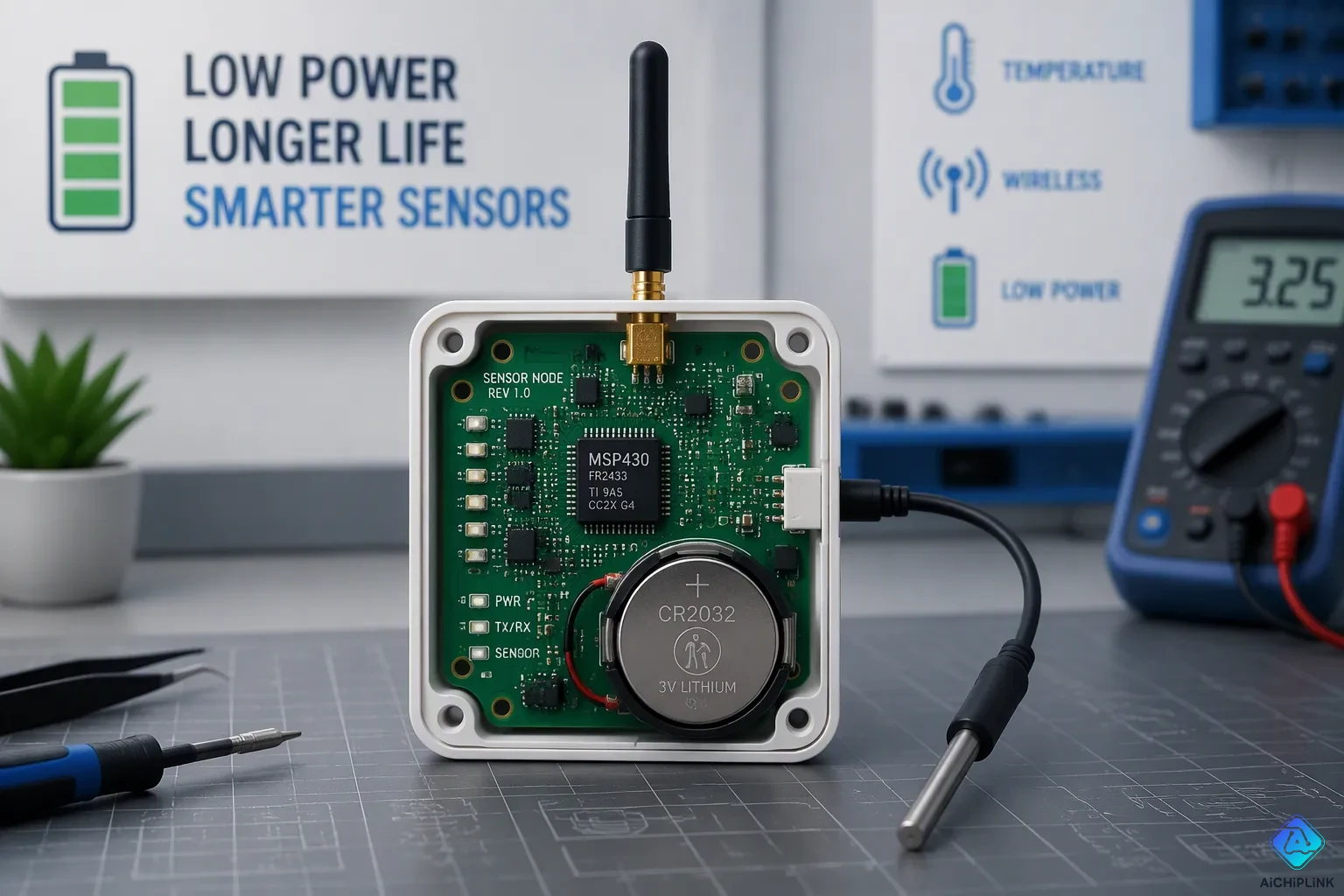
The MSP430's low-power design brings real benefits. You can build devices that run for years on one small coin-cell battery. This works because the chip balances active current and sleep current carefully.
Think about a typical remote sensor in a place with limited power. If you run a sensor that draws 35mA all the time, you need 766Ah to last 2.5 years. That is not practical. Instead, turn the sensor on for only 1/1000 of the time. Wake it for 30ms out of every 30 seconds. Then the battery capacity needed drops to 0.766Ah. That fits inside a larger coin cell. Cut the duty cycle by one-third more, and you can use a standard CR2032 coin cell rated at about 180mAh. The MSP430 makes this easy with its fast wake-up time of less than 5 microseconds. You stay in low-power modes longer and spend less time active.
The MSP430L092 runs at 0.9V without an onboard boost converter. This lowers the whole system's power use. It draws only 45 microamperes in active mode. This true 0.9V operation lets you use battery power efficiently for long periods.
You can use several low-power tricks to extend battery life. Use LPM3 or LPM4 for sleep. The sleep current ranges from 0.1µA to 80µA. Run at the lowest clock speed you need. For example, running at 1MHz draws 300µA versus 2mA at 8MHz. Reduce flash writes. Store data in RAM and write in blocks. The FRAM versions have unlimited endurance. Pick the right battery. Use a CR2032 for low-peak loads. Use an ER14250 for high-peak flash writes. Apply temperature derating. Battery capacity drops to 0.35 at -40°C. Calculate your average current with this formula: I_avg = (I_active × t_active + I_sleep × t_sleep) / (t_active + t_sleep). Estimate battery life with: Battery_Life_hours = (C_battery × DF) / (I_sleep + (I_active × Duty_Cycle) + I_external). These methods help you get multi-year operation on a coin cell. The ultra-low power use of the MSP430 is the base for this efficiency.
This chip also handles mixed signals. You can process analog signals directly without extra parts. This reduces system complexity and power draw.
Real-World Use Cases in Embedded Systems
The MSP430 powers many types of embedded systems. Let us look at specific examples.
Wireless sensor nodes benefit greatly from the MSP430. The microcontroller supports low-power BLE and Zigbee modules. This extends device battery life significantly. The MSP430 is ideal for remote-use applications because of its incredible efficiency. It works well with energy harvesting techniques. One documented embedded system uses the MSP430FR5739 in a phreatimeter sensor. This sensor monitors water level in the phreatic zone, artesian wells, and tanks. A microbial fuel cell powers it. This setup uses LoRa wireless protocol for long-range communication. This shows the low-power operation in action.
Medical wearables represent another major application area. Texas Instruments published a technical article in 2018 titled "Designing a blood glucose meter and pulse oximeter with the MSP430 MCU Smart Analog." This shows how you can use the MSP430 in a blood glucose monitor. These devices require continuous vital-sign tracking without frequent charging. The ultra-low power consumption makes this possible. This microcontroller excels in such low-power applications.
Industrial automation also relies on the MSP430. You can deploy it in remote sensor networks and control projects. The market values its low power and high reliability. You can use it for process control, equipment monitoring, and data logging tasks. The MSP430 handles these tasks with minimal energy draw.
Smart home devices integrate sensors and actuators to manage lighting, temperature, and security. Portable devices like smartwatches, fitness trackers, and calculators also use the MSP430. These embedded systems all benefit from the features of the MSP430 microcontroller. The energy efficiency allows long-term operation. The integrated peripherals reduce external component count. The low-power modes enable flexible power management.
This chip stands out among low-power microcontrollers for these embedded applications. This microcontroller delivers unmatched performance in power-sensitive designs. You can build systems that operate for years without battery changes. That is the real value of this microcontroller in embedded design.
MSP430 vs. Other Microcontrollers
Comparing MSP430 with Arduino and STM32
The MSP430 family focuses on very low power use. Arduino boards use general-purpose ATmega chips. STM32 devices offer more power with 32-bit ARM Cortex cores. Each platform serves different needs in the embedded world.
Power use is the main difference. The table below compares the MSP430FR2433 with the STM32L052C8:
| Metric | MSP430FR2433 | STM32L052C8 |
|---|---|---|
| Sleep Current | 0.4 µA (400 nA) | 500 nA (0.5 µA) |
| Active Power | <100 µA/MHz | 87 µA/MHz |
| Core | 16-bit RISC | ARM Cortex-M0+ |
| Max Clock | 16 MHz | 32 MHz |
The MSP430 uses a bit less sleep current. The STM32 uses less active power per MHz and runs faster. The MSP430 keeps RAM in its low-power modes. The STM32 loses RAM in its lowest power mode. This makes the MSP430 better for battery-powered embedded systems.
Cost also varies. The MSP430 LaunchPad costs $10 and comes with a USB cable and three MSP430G chips. The Arduino Uno costs $25 to $30 and has no USB cable. The STM32 costs less per chip. For 100-piece orders, the STM32 costs $6.37 compared to $12.63 for the MSP430. The STM32 also comes in a smaller 7mm x 7mm package. The MSP430 uses a 10mm x 10mm QFP package. The MSP430 offers better power efficiency for energy-sensitive designs.
Compiler support affects development cost. The IAR compiler for MSP430 costs about $2,500 per license. The STM32 version costs about twice that. TI offers free sample code and phone support. These factors make the MSP430 an attractive option for many low-power applications.
Ease of Use and Development Resources for Beginners
Arduino provides the simplest entry point for new users. The MSP430 offers a better learning path for power-conscious design. You gain valuable skills in energy-efficient programming.
Texas Instruments offers the LaunchPad development board for $9.99. It includes a built-in programmer and two microcontrollers. You have multiple IDE options. Code Composer Studio is the official IDE with an optimizing C/C++ compiler, source code editor, project build environment, debugger, and profiler. Energia is an open-source, Arduino-like environment that makes programming TI microcontrollers easy. You can also use IAR Embedded Workbench or the free MSPGCC tool chain.
Documentation supports your learning. MSP430Ware provides software libraries and design examples. The TI E2E Community Forums have an active MSP430 community. The 43oh.com site offers enthusiast projects and tutorials. Video series from TI Training and Digi-Key guide you through projects. You can also find the MSP430G2553 Datasheet, User's Guide, and compiler guides online.
This ecosystem helps you master embedded systems with the MSP430. The integrated peripherals and low-power features become tools you can use effectively. You build practical skills for energy-sensitive designs.
The MSP430 microcontroller stands as a leader in ultra-low power consumption. Its 16-bit architecture, six low-power modes, and fast wake-up time define its character. Integrated peripherals reduce external parts. These features deliver real benefits.
You gain longer battery life, smaller form factors, and lower system costs. This microcontroller excels in energy efficiency. The MSP430 suits battery-powered embedded systems perfectly. Its low-power modes let you sleep between tasks. This consumption pattern extends device life.
Consider the MSP430 for your next power-critical design. It cannot handle compute-heavy workloads. However, this chip remains unmatched in the ultra-low-power niche. The MSP430 serves embedded applications where energy matters most. This efficiency makes it the go-to choice for remote sensors.
Explore TI's official documentation and LaunchPad kits. Start experimenting with the MSP430 firsthand. You will discover why this microcontroller dominates energy-sensitive systems. The MSP430 delivers what you need for reliable embedded designs. Choose the MSP430 when power matters most.

Written by Jack Elliott from AIChipLink.
AIChipLink, one of the fastest-growing global independent electronic components distributors in the world, offers millions of products from thousands of manufacturers, and many of our in-stock parts is available to ship same day.
We mainly source and distribute integrated circuit (IC) products of brands such as Broadcom, Microchip, Texas Instruments, Infineon, NXP, Analog Devices, Qualcomm, Intel, etc., which are widely used in communication & network, telecom, industrial control, new energy and automotive electronics.
Empowered by AI, Linked to the Future. Get started on AIChipLink and submit your RFQ online today!
Frequently Asked Questions
How much power does the MSP430 actually consume?
The MSP430 uses only 0.1 µA in its lowest power mode. When active at 1 MHz, it uses 300 µA. This low power use makes it perfect for battery-powered devices. You can run it for years on one coin cell.
Is the MSP430 difficult to program?
You can start easily with the $10 LaunchPad board. Energia gives beginners a tool like Arduino. Code Composer Studio is a professional IDE with debugging tools. Texas Instruments offers free sample code and lots of documentation. Most users write their first working program in a few hours.
What is the difference between Flash and FRAM versions?
Flash versions store data well but can only be written so many times. FRAM versions can be written forever and write faster. FRAM also uses less power when writing. Pick FRAM for data logging. Pick Flash for simpler designs where cost is more important.
When should you choose the MSP430 over other microcontrollers?
Choose the MSP430 when energy efficiency is most important. This microcontroller is great for battery-powered devices like remote sensors and wearables. For heavy computing tasks, pick a 32-bit chip. For power-critical designs, the MSP430 is still the best. Its built-in peripherals cut down on extra parts and make your system simpler.
Can the MSP430 handle analog signals without extra parts?
Yes. The MSP430 has built-in ADCs, comparators, and temperature sensors. Some versions also have op-amps and DACs. These built-in parts let you handle analog signals directly. You save board space and lower total system cost. This mixed-signal ability works for many embedded uses.