Water Level Indicator Explained: Definition, Purpose, and Basic Function
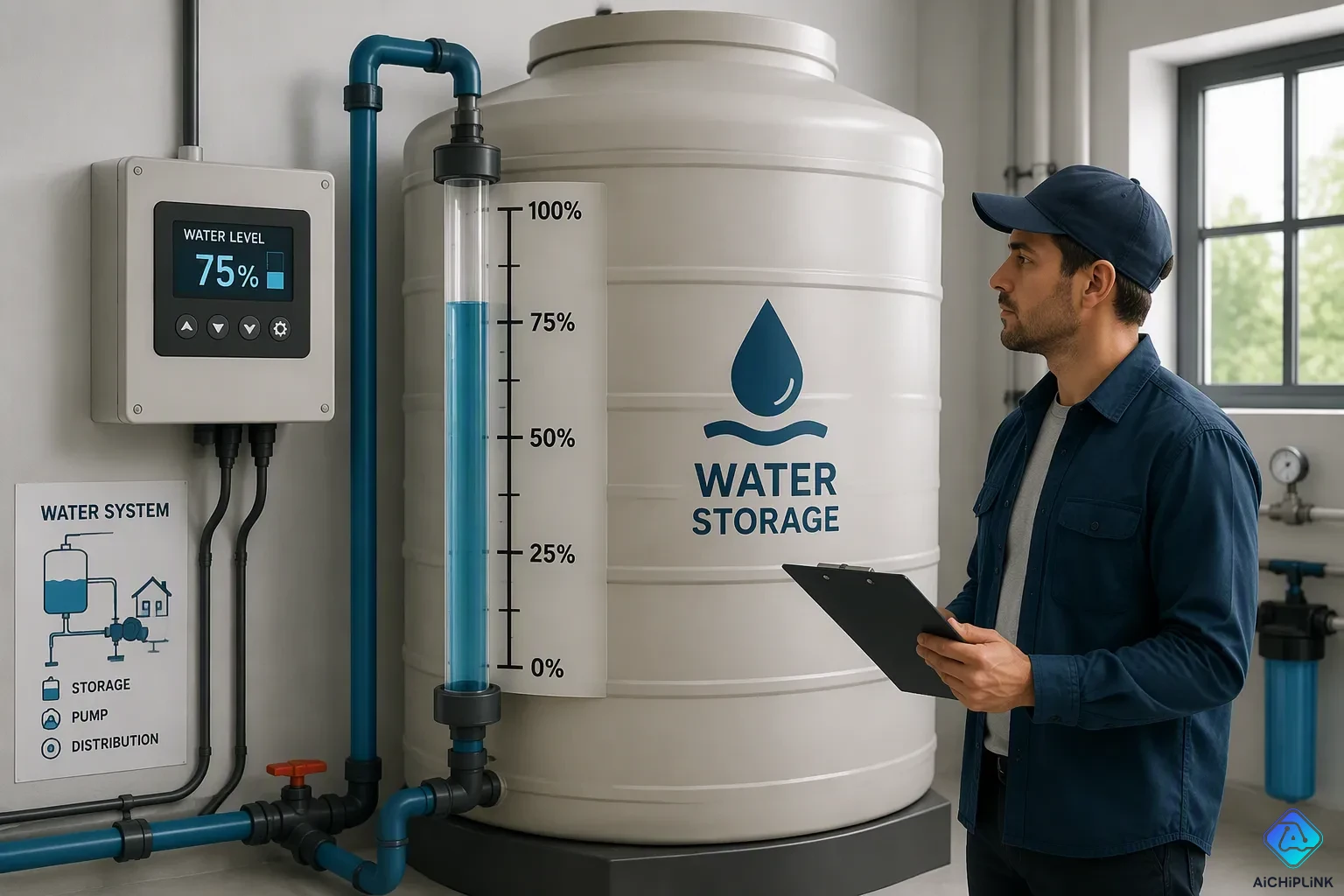
A water level indicator is a device that detects and displays the height of water in a tank or container. You rely on this tool to monitor and control water levels, so your tank never overflows or runs dry. Inside, a sensor reads the water height, and the indicator sends that reading to a display or alarm. Many water level indicators also switch a pump on or off at set points. With the right sensor in place, you protect your pump and save water every day.
Key Takeaways
-
A water level indicator checks how high the water is in tanks. It helps stop overflow and keeps the tank from running dry.
-
It stops pumps from breaking by automatically turning them off when water is too low.
-
The device saves water and money by stopping waste and lowering utility bills.
-
Setting up is simple for home tanks that use float switches or probe sensors.
-
Testing the indicator often makes sure it works right and keeps your water system safe.
What Is a Water Level Indicator?
Core Definition and Components
A water level indicator is a tool that checks how high the water is in a tank or container. It then sends that information to a control panel. This meaning comes from engineering sources. They describe the tool as a system that sends information back to a control panel. This shows whether the water level is high or low in a body of water. You will see that a basic water level indicator has three main parts. The sensor sits inside the tank and finds the water level. The control unit gets the signal from the sensor and processes it. The display or alarm shows you the current reading. It also alerts you when the water hits a set point.
A water level indicator is a system that sends information back to a control panel. It shows whether there is a high or low water level in a body of water. Some water level indicators use a mix of probe sensors or float switches to sense water levels.
The working principle behind every water level gauge is simple. The sensor measures the water level and sends that data to the control unit. The control unit then decides what to do next. It might turn on a pump, sound an alarm, or just show a reading on a screen. For a liquid level sensor in a home tank, this happens on its own. You do not need to climb a ladder to check the water height. The indicator does that job for you.
Understanding Through Analogy
Think about the fuel gauge in your car. That gauge tells you how much gas is left in the tank. You look at it and know whether to stop at a gas station. A water level indicator works the same way for your water tank. The sensor acts like the float in your fuel tank. The control unit acts like the dashboard circuits. The display acts like the needle on your fuel gauge. This comparison helps you understand the basic idea without any technical background.
Now think about what happens when your car runs out of gas. The engine stops. You are stuck on the road. A similar problem happens when a pump runs dry. The pump motor can overheat and fail. A water level indicator stops this problem by warning you before the liquid drops too low. The same logic applies to overflow. When the liquid rises too high, the indicator alerts you or shuts off the inlet valve. You avoid water damage and waste.
Many water level sensors exist for different jobs. Common types include:
-
Pressure transducer (thin wafer type)
-
Vibrating wire piezometer
Other water level sensors fall into two groups:
-
Contact sensors (element submerged): hydrostatic (submersible), float, capacitive
-
Non-contact sensors (no physical contact): ultrasonic, radar, optical
You can also find these specific sensor types on the market:
-
Optical water level sensor
-
Capacitive liquid level sensor
-
Hydrostatic level sensor
-
Diaphragm liquid level sensor
-
Float water level sensor
-
Ultrasonic liquid level sensor
Each sensor type works best for a particular job. A float switch works well in a simple home tank. An ultrasonic sensor fits an industrial sump where touching the liquid is not practical. The choice depends on your tank size, the liquid properties, and your budget. Understanding these options helps you pick the right device for your needs.
Common Purpose of Water Level Indicators
You install water level indicators for three main reasons. These devices check the water level, stop overflow, protect your pump, and run your water system on its own. The indicator also keeps everything working safely.
Preventing Overflow and Waste
A water level indicator stops waste by telling you before your tank gets too full. You can then shut off the water inflow in time. Without the device, you might forget the tank and let it overflow. Each spill wastes water and raises your bill every month. An automatic water level control system works with pumps and valves to stop the flow once the tank fills. This step prevents overflow damage.
Water level indicators stop overflows, keep pumps from burning out by running dry, run filling on their own, and keep your whole operation safe.
The indicator helps you use water wisely. By keeping the water level at the right point, you stop overflow and lower shortage risks. The sensor notices when water reaches a high set point. The control unit then sounds the alarm or closes the inlet valve. You save water and avoid repairs. Overflow damage can crack concrete foundations over time. The indicator removes this risk.
Protecting Pumps from Dry Running
Dry running damages pump motors badly and fast. When the water level in your tank drops too low, the pump runs dry and overheats. Heat can melt seals and warp parts. A water level indicator stops this problem early.
You can pick from several sensor technologies for this job:
-
Float switches or electrode relays find the water level with a sensor and cut the pump circuit when water drops below a safe point.
-
Level probes, such as ultrasonic or conductive types, measure water depth and tell the pump to pause at very low points.
-
Real‑time level sensing systems built into water tanks use a sensor to adjust pump operation and start again only when safe levels return.
Each method uses the sensor to read the falling water level correctly. The control unit processes the signal and cuts power to the pump. The device protects your valuable equipment and avoids costly downtime. You skip pricey motor replacements and emergency calls.
Basic Operation of the Indicator
Sensing the Water Level
Every water level sensor begins by finding the liquid surface in its own way. The basic working principle changes with the sensor type you pick. A pressure transducer sits underwater and measures hydrostatic pressure from the liquid column above it. That pressure follows a known relationship: pressure equals liquid density times gravity times the water column height. A pressure reading of 14715 Pa matches a water level of 1.5 m. Inside the sensor, a pressure-sensitive element deforms and turns that movement into an electrical signal.
An ultrasonic sensor works in a different way. It mounts above the liquid and sends sound waves downward. These waves bounce off the surface and come back. The sensor measures the round-trip travel time and figures out the distance. It then subtracts that distance from its known mounting height to find the actual water level. Ultrasonic sensors never touch the liquid, so they handle corrosive or hot materials well.
A float sensor uses buoyancy. The float rises and falls with the liquid surface. This mechanical movement triggers a switch or sends an electrical signal. Magnetic float sensors use a magnet inside the float to activate reed switches outside the tank. This gives you non-contact detection.
An optical sensor depends on light. An LED sends a beam toward a prism. When the tip sits in air, most light reflects back to a phototransistor. When liquid covers the tip, the light path changes and less light returns. This shift tells the sensor whether liquid is present at that point.
Conductive probe sensors use multiple electrodes at different heights. The liquid completes an electrical circuit when it touches each electrode. This method only works with conductive liquids.
Processing and Signaling
After the sensor detects the water level, the control unit takes over. This unit receives the electrical signal and processes it. The signal may be analog current, such as a 4–20mA loop, or a digital format like RS485 or Modbus RTU. The control unit interprets this data and decides what action to take.
For a simple setup, the controller lights up or beeps as water reaches each sensor level. You match each sensor wire to its terminal using color-coded connections. Red might mean full, yellow for mid, and green for low. The control unit then shows the water level indication on a display or triggers an alarm.
If you connect a pump relay, the system automates your water management. The controller turns the pump on when water runs low and off when the tank fills. A float switch with a Normally Open circuit stays open until the float triggers it to close and send power. A Normally Closed circuit does the opposite.
Output signals vary by application. A 4–20mA signal drives PLCs, displays, and panel meters. Relay outputs handle high-level alarms, low-level alarms, or pump control. Wireless options like LoRa or cellular transmission let you monitor remote tanks.
A high level alarm acts as your final warning. It should be visible locally and reported to a BMS or SCADA system where required. You can test each operating condition to confirm the controller indication and alarm points work as intended. This gives you real-time level indication and protects your entire water system.
Types of Water Level Sensors
Float Switches and Probe Sensors
Today you can find many water level sensor designs for sale. Float-based sensors use a floating part that moves up and down with the liquid. This motion flips a switch at a set point. These sensors cost little, work well, and are easy to set up. They do a good job in open tanks, sumps, and reservoirs. A float-based sensor needs no adjusting and hooks up easily to relays and alarms. Still, this liquid level sensor works best for high or low point detection. It cannot give you exact, steady readings. Foamy or rough liquid can also cause wrong readings.
Conductive probe sensors spot changes in electrical resistance between electrodes. When the liquid connects the electrodes, it completes a circuit and sends a switching signal. This water level sensor needs the liquid to have a minimum conductivity of about 10 µS/cm. Most conductive liquids meet this requirement. You get simple instruments with no moving parts. The electrodes can wear down over time, though. This sensor fits jobs where you need multiple switching points.
Applications in Home and Industry
Different types of water level indicators work in different places. In homes, you see float switches inside overhead water tanks and sumps. An ultrasonic water level sensor fits industrial sumps where touching the liquid is not practical. Ultrasonic sensors send out sound waves and measure echo return time. They never touch the liquid, so they handle corrosive materials well. Radar sensors use microwave signals for accurate readings in extreme conditions. A submersible liquid level sensor measures hydrostatic pressure for deep water storage tanks.
Agriculture depends on level measurement for irrigation systems and drought monitoring. Industrial plants use this measurement for chemical storage, wastewater treatment, and fuel tank monitoring. An ultrasonic and radar-based indicators setup gives you real-time data for remote monitoring. A pressure-based liquid level sensor offers high accuracy in harsh environments. Each water level sensor type fits a specific job. Your choice depends on tank size, liquid properties, and budget. A simple gauge works for a home tank. A radar or ultrasonic water level sensor suits a complex industrial system.
Benefits of Water Level Indicators
Automation and Convenience
You no longer have to climb a ladder or check a tank by hand. A water level sensor keeps an eye on the liquid all day and night. The controller checks each reading against limits you set ahead of time. This automatic logic means no one has to watch it.
Here is how the process works in a typical setup:
-
The sensor keeps checking the liquid in the basin or reservoir.
-
The controller compares the measured level against low and high limits.
-
When the liquid falls below the low limit, the controller opens a valve or turns on a pump.
-
Once the liquid goes back to the right level, the controller shuts off the fill device.
-
The system also stops pumps from running when the water is too low to be safe.
This water level control protects your equipment and cuts down on wear. You save time and avoid emergency calls. A liquid level sensor in a faraway tank gives you the same ease. You check a screen instead of driving to the site.
Water Conservation and Cost Savings
Water level indicators help you save water and money. A sudden drop in the liquid means there is a leak. You can then fix the problem before a lot of water is lost. Smart water level indicators give early leak detection alerts. This cuts down on waste and helps conservation.
An office complex in New York used rainwater harvesting with advanced water level indicators. Real-time data helped improve usage and find leaks. You get the same benefit at home or at work.
Smart water level indicators also check fill levels during rain events. They stop pumps when full and work with automated valves to prevent overflows. This avoids water waste and damage to infrastructure. Your water and electricity bills go down over time. The indicator pays for itself through lower operating costs.
You now understand what a water level indicator is, what it does, and how it works. It finds the water level, then watches and controls it to stop overflow or dry running. The sensor senses, the control unit processes, and the display or alarm signals. Water level indicators protect pumps and reduce waste. They make water management efficient and reliable. Water level indicators give you real-time measurement data for every tank and sump. A single sensor reading can start a pump, an alarm, or a valve. Measuring liquid no longer needs manual checks. Liquid stays at safe points. Liquid loss drops. Liquid overflow stops. Liquid handling becomes automatic. Think about installing one in your own tank, or look into specific sensor types for your next project.

Written by Jack Elliott from AIChipLink.
AIChipLink, one of the fastest-growing global independent electronic components distributors in the world, offers millions of products from thousands of manufacturers, and many of our in-stock parts is available to ship same day.
We mainly source and distribute integrated circuit (IC) products of brands such as Broadcom, Microchip, Texas Instruments, Infineon, NXP, Analog Devices, Qualcomm, Intel, etc., which are widely used in communication & network, telecom, industrial control, new energy and automotive electronics.
Empowered by AI, Linked to the Future. Get started on AIChipLink and submit your RFQ online today!
Frequently Asked Questions
How does a water level indicator prevent overflow?
The sensor notices when the water reaches a high point. The control unit then sounds an alarm or shuts the inlet valve. This stops the water from spilling over. You avoid wasting water and damaging your property.
Can I install a water level indicator in my home tank?
Yes. Float switches and probe sensors work well in home tanks. You connect the sensor to a control unit and display. The system then watches the water automatically. Many homeowners install these to protect their pumps.
What happens when the sensor fails?
A broken sensor cannot sense the water level. The control unit may not sound an alarm or start the pump. You should test your sensor often. Some systems include backup sensors for important jobs.
How accurate is a water level measurement?
How exact the reading is depends on the sensor type. Ultrasonic and radar sensors give very precise readings for industrial use. Float switches work well for simple high or low detection. Your choice depends on what you need.