Understanding UV Sensors Types Principles and Uses
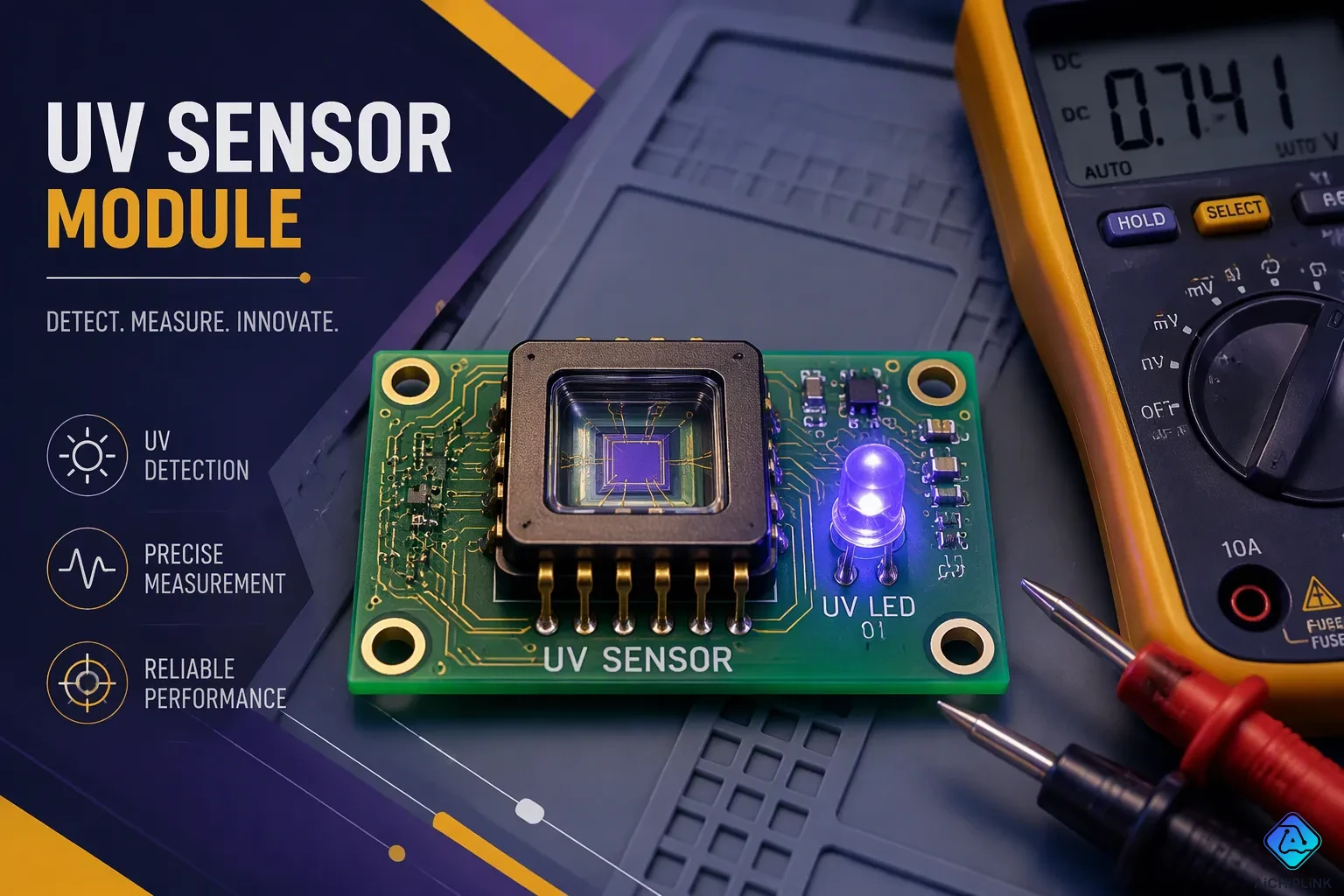
A UV sensor is a device that finds ultraviolet (UV) light. These sensors detect invisible UV rays. They are not affected by sunlight or visible light. You might know UV light from sunburn warnings or water cleaners. UV sensing technology is important in healthcare, industry, and everyday safety. UV sensors let you measure the UV index and protect your skin. They also help with disinfection systems and flame detection. A UV Sensor works behind the scenes in many tools you use. This article explains UV sensor types, principles, and uses in simple language. You will see how UV sensors are part of modern safety and technology.
Key Takeaways
-
UV sensors change invisible ultraviolet rays into a signal you can measure and act on.
-
Picking the right UV band sensor (UVA, UVB, or UVC) fits your exact use.
-
UV sensors help protect your skin by tracking the UV index and sending alerts about sun safety.
-
In factories, UV sensors keep an eye on curing lamps and find hidden residues using fluorescence.
-
UV sensors allow fast flame detection and helpful disinfection to keep you safe.
What Is a UV Sensor
Defining the UV Sensor
A UV sensor is a tool that picks up ultraviolet rays. Your eyes can't see these rays. The sensor blocks out sunlight and visible light, so it only pays attention to the UV part of the spectrum. This skill comes from careful engineering. Silicon takes in UV light right near its surface, but visible and near-infrared light go much deeper. A good uv sensor uses two photodiodes that respond to light in different ways. One diode reacts strongly to UV. The other reacts weakly. Their reactions to visible and near-infrared light are the same. You take the second signal away from the first, and the UV signal shows up while the background cancels out. This method pushes UV internal quantum efficiency above 90 percent. Leftover response to non-UV light stays below 20 percent at 400 nm and falls to 0.6 percent toward near-infrared. That is how an ultraviolet sensor gets strong uv sensitivity without false readings.
Why UV Detection Matters
Measuring uv light keeps people safe every day. You check the UV index before a hike or a beach day. That number comes from a uv sensor. It tells you when uv radiation is high and when your skin needs cover. This matters because ultraviolet radiation harms skin on a large scale. In 2020, doctors found more than 1,500,000 skin cancer cases worldwide. Skin cancer caused more than 120,000 deaths that year. Too much UV exposure led to roughly 1,200,000 new non-melanoma cases and about 325,000 new melanoma cases. Those numbers show why uv detection belongs in weather apps, wearables, and public health tools. A reliable uv sensor turns an invisible threat into a number you can act on. You can limit sun time, wear sunscreen, or find shade when uv intensity climbs.
Classification and Application of UV Sensor by Structure
You can sort uv sensors by their physical shape. This structural classification of uv sensors helps you choose the right device for a certain job. Each shape changes how the sensor gathers ultraviolet light and how much current it can handle.
Spherical, Filamentary, and Flat UV Tubes
The spherical ultraviolet photosensitive tube uses a hemispherical or dot cathode. This design stops the tip effect and keeps photoelectron emission steady. Discharge takes place at the hemispherical vertex near the anode. The tube works at a low working current, usually below 0.3 mA. You get a wide viewing angle and sensitivity that stays fairly even across it. Fire forecasting systems often depend on this shape.
The filamentary type is an early uv sensor structure. It uses two or more symmetrical metal wires, often made of high-purity tungsten or platinum. The parallel lines near the distance make up the working area. This tube depends on photoelectron emission and gas multiplication. It can run in an AC state with a large working current and a simple circuit. However, its viewing-angle sensitivity changes more, and emission may not be even.
The flat tube boosts sensitivity by adding cathode area. A larger cathode raises the chance of catching far-ultraviolet photons. More emitted electrons speed up through the external high-voltage field. They then cause avalanche discharge through gas ionization. This structural classification of uv sensors shows how geometry directly shapes performance.
| Physical structure | Cathode shape | Key characteristics |
|---|---|---|
| Spherical | Hemispherical/dot cathode | Avoids tip effect; stable emission; low current (generally <0.3 mA); wide, uniform viewing angle; used in fire forecasting |
| Filamentary | Two or more symmetrical metal wires | Early design; tungsten or platinum wires; AC operation; large current; simple circuit; uneven emission |
| Flat tube | Flat cathode | Larger cathode area; higher far-UV photon capture; avalanche discharge via gas ionization |
Photoelectric vs. Photographic Detectors
Photoelectric detectors turn uv light into an electrical signal. Photomultiplier tubes (PMTs) are part of this group. A PMT uses a photocathode and a series of dynodes. One uv photon releases an electron. That electron sets off more electrons at each dynode. The result is a current pulse you can measure. PMTs give high gain and fast response. Solid-state detectors are another photoelectric category. They use semiconductor materials to turn ultraviolet straight into current. These devices are compact and tough. They also need a stable power supply.
Photographic detectors take a different path. They capture uv light on a film or imaging plate. You then look at the exposed image to judge uv intensity or distribution. This method fits applications where you need a permanent record instead of a live signal. A uv sensor enhancement effort often aims at improving uv quantum efficiency in photoelectric types. That efficiency measures how many photons become electrons. Higher values mean better sensitivity for your measurement.
The wavelength range you need guides your choice. A PMT may cover a broad range with high gain. A solid-state device may target a narrower band with lower power needs. Photographic detectors serve archival or spatial mapping roles. Each type has a place in the broader family of uv sensors.
Classification by UV Band
You can group uv sensors by the type of ultraviolet they detect. Each band has a different energy level. It affects your skin, materials, and gear in unique ways. The table below shows the standard ranges.
| Type | Wavelength Range |
|---|---|
| UVC | 100–280 nm |
| UVB | 280–315 nm |
| UVA | 315–400 nm |
The uv wavelength range matters a lot. A sensor made for one band might not work for another. So you pick the band first, then choose the detector.
UVA Sensors and Principles
UVA is the band closest to visible light. It passes through glass and reaches deep into your skin. A UVA sensor must detect light from 315 to 400 nm and ignore visible light. Gallium nitride (GaN) photodiodes handle this job well. Their response covers about 220 to 370 nm. For the SD008-2151-012 model, responsivity is near 0.18 A/W at 300 nm. The SD008-2151-185 covers 240 to 370 nm with 0.14 A/W. These wide bandgap semiconductors make a small, tough uv sensor. It does not need high voltage.
UVB and UVC Sensors and Principles
UVB and UVC carry more energy than UVA. UVC light sits between 100 and 280 nm and never reaches Earth's surface from the sun. Artificial sources like germicidal lamps produce it. A UVC sensor such as the SD008-2171-012 covers 210–280 nm with 0.06 A/W responsivity. UVB sensors cover 280–315 nm. The SD008-2161-012 responds from 220–320 nm at 0.12 A/W.
For skin safety, a UVB sensor must match the erythemal action spectrum (McKinlay and Diffey, 1987). This weighting drops by four orders of magnitude from UVB to UVA. A detector that ignores light above 320 nm gives readings closer to erythema-weighted irradiance. Without this match, you cannot turn raw readings into UV Index units. Wide bandgap materials like GaN also enable solar-blind detectors. These devices respond only to ultraviolet and block out the sun's visible background. That property helps improve uv sensors in flame detection and disinfection monitoring.
Key Principles of UV Sensors
Photoelectric and Photovoltaic Effects
The photoelectric effect makes many uv sensors work. A uv photon hits a photocathode made of metal or semiconductor with a low work function. The photon's energy must be higher than that material's work function. Then electrons leave the surface. An electric field pushes those electrons toward an anode. In a photomultiplier tube, dynodes multiply them along the way. The electron flow turns into a current you can measure.
Real devices lose many photons before they become electrons. Some photons bounce off the surface. Others soak in too deep inside the photocathode for the electron to get out. Scattering and the surface potential barrier stop even more electrons. Even clean metals hardly ever go above 30–35% quantum efficiency. Near the threshold, low electron energy and surface effects cause big losses. Your measurable current always stays below the ideal case of one electron per photon. This gap shows why uv sensor enhancement work centers on materials and surface treatment.
Semiconductor and Gas Discharge Mechanisms
Semiconductor detectors turn ultraviolet straight into current. Wide bandgap materials like gallium nitride react only to a narrow wavelength range. That trait supports solar-blind operation. A photodiode array detector adds spatial resolution. Each pixel reports its own signal, so you can map uv intensity across a surface. Fixed wavelength detectors aim at one band. Variable wavelength detectors tune across a wider range. This flexibility counts in uv spectroscopy, where you scan many wavelengths in one sample.
Gas discharge tubes work in a different way. A uv photon frees an electron from the cathode. The high-voltage field speeds it up. The electron hits gas atoms and starts an avalanche. That discharge makes a current pulse you can count. These tubes give strong uv sensitivity and simple circuits. Their response depends on cathode shape and gas fill. A uv sensor built this way fits flame detection and other low-light jobs. Both mechanisms share one goal: turn invisible ultraviolet into a signal you can trust.
Ways UV Sensors Are Used in Industry
UV Curing and Manufacturing
Many factory processes use ultraviolet light to harden inks and coatings. Printing presses use UV light to dry inks right away. Coating machines set a protective layer on wood, metal, or plastic with UV energy. The curing process needs the right dose of UV radiation. A UV sensor checks how strong that light is. You put the sensor close to the curing lamp. It measures the output as it happens. If the lamp gets weak, the sensor sounds an alarm. This stops incomplete curing that could spoil a product. The sensor helps you stay in the right dose range. Without monitoring, you risk sticky surfaces or peeling later. In manufacturing, you also use sensors to track exposure during bonding or sealing. Workpieces move under curing lamps on a conveyor. The sensor makes sure each part gets the same amount of radiation. Steady exposure leads to strong bonds and lasting finishes. A stable light source keeps production quality high and waste low. Some automated lines change lamp power or conveyor speed based on sensor readings. This feedback loop boosts efficiency and cuts energy use. Modern cure systems use LED arrays instead of mercury lamps. Sensors help match the wavelength to the photoinitiator. This improves cure depth and speed. You can also use a UV sensor to check the lamp's spectral output. This makes sure the light matches the chemistry of your coating. The sensor also makes up for lamp aging and dirt buildup on the quartz window. By keeping the right dose, you cut energy waste and boost throughput.
Detecting Fluorescing Substances
Many industrial cleaning and inspection tasks depend on fluorescence. Greases, oils, adhesives, and varnishes glow when you shine ultraviolet light on them. This makes these residues visible even if they are invisible under normal lighting. A detector picks up the faint fluorescent signal and turns it into a measurement. This helps you confirm that a surface is truly clean before painting or bonding. Non-destructive testing (NDT) makes wide use of this principle. In the aviation industry, technicians put a fluorescent dye on engine components. The dye seeps into hairline cracks and other defects. After wiping off the extra dye, they apply a developer that pulls the dye out. When you shine ultraviolet light on the part, the dye glows brightly. A measuring device can capture how strong that glow is. This gives a numeric reading of crack depth or contamination level. You can then decide if the part passes inspection. The principle works because many substances contain aromatic compounds that absorb light and re-emit visible light. A lamp excites these molecules. The detector captures the emitted light. You can block out ambient light by modulating the UV source. The sensor only responds to the fluorescent signal. Beyond aviation, other industries use this method for quality control. Automotive manufacturers inspect engine blocks and transmission parts. Food packaging lines check for leaks by adding fluorescent dye to the product. In cleaning verification, technicians use UV light to find leftover greases and varnishes. A detector can measure the fluorescence from these residues. This gives a quantitative cleanliness level. You can compare the reading against a threshold. You can also calibrate the detector using a standard fluorescent target. This helps ensure consistent results across shifts. In aerospace, even a trace of oil can cause bonding failures. The UV sensor catches these residues before assembly. This method prevents costly rework. By detecting invisible flaws early, you prevent failures. The sensor provides an objective measurement. This speeds up inspection and reduces human error.
Applications of UV Sensors in Health and UV Disinfection
Dermatology and Sun Safety
You check a UV index number before you go outside. That number comes from a uv sensor. The sensor measures ultraviolet radiation from the sun. It tells you when the intensity gets to harmful levels. Dermatologists use this data to help patients. They suggest sunscreen, hats, and less sun time when the index goes above 6. Too much uv radiation causes skin damage and cancer. A 2020 study showed over 1.5 million skin cancer cases worldwide. Many of those cases came from too much sun. With the sensor, you get a real-time reading. You can act before your skin burns. Wearable devices now have small uv sensors. They buzz when you have had too much sun. They track daily exposure and remind you to put on sunscreen again. This technology puts sun safety in your hands. You no longer have to guess about the level. The sensor gives you facts you can trust. In dermatology clinics, sensors help with phototherapy. Doctors use controlled exposure to treat conditions like psoriasis. The sensor measures the dose. This stops burning during treatment.
UV Disinfection and Sterilization
UV disinfection uses uv light to kill germs. Systems use uvc light at 254 nm. This wavelength damages the DNA or RNA of microbes. It stops them from making copies of themselves. You find these systems in hospitals, labs, and water treatment plants. They clean air, surfaces, and drinking water. The dose you need depends on the organism. Here is data for common coronaviruses:
| Virus | UV-C Dose for 99.9% Inactivation (mJ/cm²) |
|---|---|
| HCoV-229E (alpha coronavirus) | 1.7 |
| HCoV-OC43 (beta coronavirus) | 1.2 |
| SARS-CoV-2 | Expected similar (≈1.2–1.7) |
Low doses of 1.7 and 1.2 mJ/cm² killed 99.9% of these viruses. You can see why the method works well. A monitoring unit inside the system checks lamp output. It confirms the dose stays high enough. Water quality monitoring also uses uv sensors. They check that treated water meets safety standards. UV pasteurization is another method. A sensor controls the exposure time. This makes sure disinfection is complete without waste. The applications of uv sensors cover health and safety. They protect you from both the natural kind and artificial sources.
Applications of UV Sensors in Safety and Environment
Flame Detection and Fire Safety
Flame detection ultraviolet sensor technology protects places with high risk. Flames give off ultraviolet light in the 185-260 nm range. A uv sensor can spot a fire in milliseconds. This speed is crucial at fuel storage tanks, chemical plants, and gas turbines. The sensor does not react to sunlight or visible uv light. It only responds to UV coming from the flame. This gives you a dependable alarm with very few false triggers.
The spherical UV tube design works great for this task. It offers a wide viewing angle and steady emission. One sensor can watch over a large area. When it finds a flame, it sets off an alarm or a suppression system. Several sensors cover areas that are hard to see. This setup lowers the chance of missing a fire. Industrial sites put these sensors near hydrogen storage, gas lines, and turbine enclosures. The sensor gives fast fire detection all day and night.
The fuel and gas industry relies on this quick response. A fire can spread in seconds. The sensor reacts before heat builds up. You can shut down equipment or release suppressants in time. This fast action stops small sparks from turning into big disasters.
UV Index and Weather Monitoring
Weather stations use uv sensors to report the UV Index. This number shows how strong solar uv is at ground level. The scale goes from 1 (low) to 11+ (extreme). A reading of 3 to 5 means moderate risk. Values above 8 mean very high risk. At these levels, health agencies suggest sun protection. The sensor measures uv irradiance in real time. The data goes to an app you check before going outside.
Meteorological networks use these readings for daily forecasts. Weather apps mix sensor data with cloud cover and ozone models. This gives you a prediction for later in the day. Some stations link to public health systems. When UV levels go up, the system sends alerts through radio or phone apps. You can change your plans to stay safe.
The sensor needs regular calibration to stay accurate. A clean lens and a stable reference source keep readings correct. Scientists also use this data for long-term UV trend studies. Changes in UV levels may signal shifts in the ozone layer. This information supports climate research. The applications of uv sensors cover both personal safety and global monitoring.
A UV sensor changes invisible ultraviolet rays into a signal you can read. You can group these devices by shape, like spherical, filamentary, and flat tubes, or by band, such as UVA, UVB, and UVC. This range makes uv sensors helpful in many areas. They help with UV curing in factories, skin safety in healthcare, disinfection systems, and flame detection in fire safety.
Materials like gallium nitride and detector types such as photomultiplier tubes and photodiode arrays keep moving UV sensing ahead. As UV technology grows, these sensors will play a larger role in your daily safety and in new tools you will depend on.

Written by Jack Elliott from AIChipLink.
AIChipLink, one of the fastest-growing global independent electronic components distributors in the world, offers millions of products from thousands of manufacturers, and many of our in-stock parts is available to ship same day.
We mainly source and distribute integrated circuit (IC) products of brands such as Broadcom, Microchip, Texas Instruments, Infineon, NXP, Analog Devices, Qualcomm, Intel, etc., which are widely used in communication & network, telecom, industrial control, new energy and automotive electronics.
Empowered by AI, Linked to the Future. Get started on AIChipLink and submit your RFQ online today!
Frequently Asked Questions
What does a UV sensor actually measure?
A UV sensor measures ultraviolet radiation. It does not react to sunlight or visible light. The device changes UV photons into an electrical signal. You read that signal as UV intensity or a UV index number. This helps you track exposure and stay safe.
How do I choose between UVA, UVB, and UVC sensors?
You pick the band that fits your source. UVA sensors cover 315 to 400 nm. UVB sensors cover 280 to 315 nm. UVC sensors cover 100 to 280 nm. Each band affects skin and materials in different ways. Match the sensor to your application.
Why do UV sensors use gallium nitride?
Gallium nitride is a wide bandgap semiconductor. It reacts only to ultraviolet light and blocks visible background. This trait allows solar-blind detection. GaN sensors are small, tough, and need no high voltage. They work well in flame detection and disinfection monitoring.
Can UV sensors work in complete darkness?
Yes. UV sensors detect ultraviolet radiation, not visible light. They work day or night. Flame detection systems depend on this trait. A fire gives off UV rays that the sensor catches in milliseconds. Darkness does not affect performance.
How do UV sensors help with water treatment?
UV disinfection systems use UVC light at 254 nm to kill germs. A UV sensor checks lamp output inside the system. It confirms the dose stays high enough. Low doses of 1.2 to 1.7 mJ/cm² inactivated 99.9% of tested coronaviruses. This keeps water safe.