What Is a Traction Inverter and Why It Matters in EVs
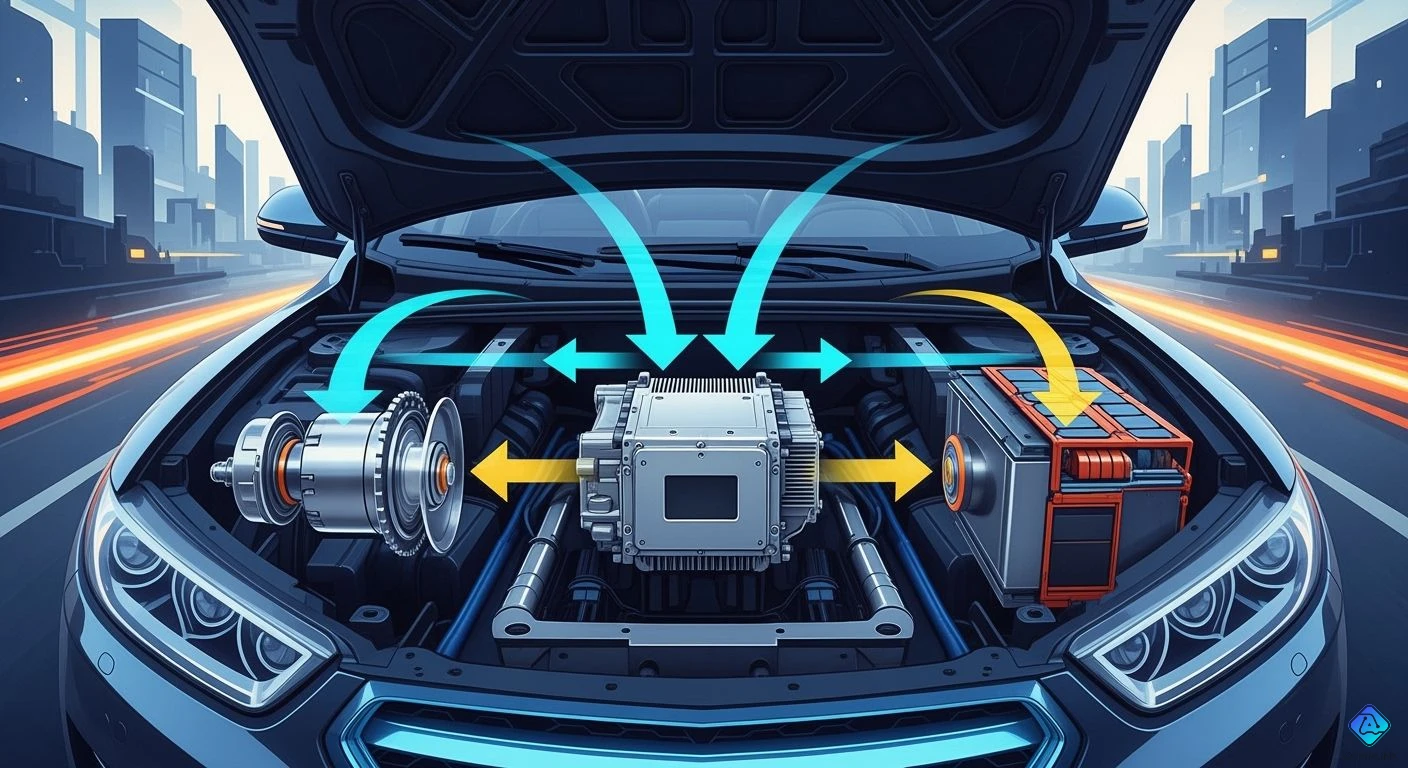
A traction inverter is an important part of your electric car. It gets direct current from the battery. Then it turns it into alternating current for the motor. You depend on the traction inverter to control power to the wheels. This helps your car move smoothly and react fast. It also keeps your car efficient. The inverter helps keep you safe by managing energy flow. It works when you drive and when you brake.
Key Takeaways
-
A traction inverter changes DC from the battery into AC for the motor. This lets the car run smoothly and efficiently.
-
The device controls power to the wheels. It helps the car speed up fast and brake gently. This makes driving safer and more comfortable.
-
Regenerative braking saves energy when the car slows down. It sends this energy back to the battery. This helps the car use less energy and go farther.
-
Traction inverters have safety features that check voltage and temperature. These features keep the car safe from harm and make it reliable.
-
Knowing how traction inverters work helps you see their importance in electric cars. It also helps you make smart choices about owning an EV.
What Is a Traction Inverter
Basic Definition
A traction inverter is a special device in your electric vehicle. You use it to change the type of electricity from the battery. The battery gives direct current, or DC. The traction inverter turns this DC into alternating current, or AC. Your car’s motor needs AC to work. This process lets your car move forward or backward. The inverter also helps you control how much power goes to the wheels. You get smooth and quick responses when you press the pedal.
Think of the traction inverter as the “translator” between your battery and your motor. It makes sure the energy from your battery becomes the right kind of power for your car to drive.
Traction inverters are different from other inverters you might find in cars or factories. You need a traction inverter because it does more than just change DC to AC. It manages how much force, or traction, your car uses. It also helps with braking and keeps your car safe. The traction inverter affects how far you can drive, how fast you can go, and how safe your ride feels. This makes it a key part of your electric vehicle.
Main Role in Electric Vehicles
You rely on the traction inverter for several important jobs in your electric vehicle. Here are the main roles it plays:
-
It changes high-voltage DC from the battery into controlled AC for the traction motor.
-
It manages how much force, or torque, goes to the wheels. This helps you speed up or slow down smoothly.
-
It lets your car use regenerative braking. When you slow down, the traction inverter helps turn the car’s movement back into electricity for the battery.
-
It checks voltage, current, and temperature to keep your car safe and running well.
The traction inverter works all the time while you drive. It makes sure your car uses energy wisely. You get better range and smoother rides because of it. The inverter also protects your car by watching for problems and stopping damage before it happens.
When you drive an electric vehicle, the traction inverter quietly does its job. You feel the results every time you accelerate, brake, or enjoy a safe trip.
How a Traction Inverter Works in an Electric Vehicle
Power Conversion Process
You start your electric vehicle, and the high-voltage battery sends direct current (DC) to the traction inverter. Your car’s motor cannot use DC directly. The inverter must change this DC into three-phase alternating current (AC) so the motor can spin the wheels. Here’s how this process works step by step:
-
The traction inverter receives DC power from the high-voltage battery.
-
It uses a half-bridge circuit to switch the power on and off very quickly, creating a series of pulses.
-
The inverter adjusts the width of these pulses to follow a smooth, wave-like pattern.
-
The motor’s windings help smooth out these pulses into a nearly perfect AC current.
-
The inverter creates three separate AC waveforms, each one starting at a different time, so the motor turns smoothly.
-
The inverter controls the speed and strength of these waves to match how fast and how hard you want the car to move.
The inverter acts like a smart switchboard, making sure your motor gets the right kind of power at the right time.
You should know that this process is not perfect. Some energy gets lost as heat. Most of these losses happen inside the inverter’s electronic parts. These losses come from switching the power on and off and from the current flowing through the parts. Even though these losses exist, the traction inverter still makes your car much more efficient than a gas engine.
Motor Control and Torque Management
When you press the accelerator, you want your car to respond quickly and smoothly. The traction inverter helps you do this by controlling the motor’s speed and the amount of traction sent to the wheels. It does this in real time, adjusting many times every second.
| Aspect | Description |
|---|---|
| Real-time Simulation | The inverter uses real-time data to match your driving needs and road conditions. |
| Control Algorithms | It tests and adjusts how much power and traction the motor delivers, so you get smooth acceleration. |
| Problem Detection | The inverter can spot issues like too much or too little torque and fix them right away. |
You benefit from advanced control systems inside the inverter. These systems let the car adjust the traction instantly. The inverter works at high speed, so you always get the right amount of power and traction for safe and fun driving. This means you can speed up, slow down, or turn with confidence.
-
The inverter manages how much traction goes to each wheel.
-
It makes quick changes to keep your ride smooth and safe.
-
You get better grip and control, even on slippery roads.
Regenerative Braking Function
When you slow down, the traction inverter helps your car recover energy. This process is called regenerative braking. Instead of wasting energy as heat, your car’s motor acts like a generator. The inverter changes the motor’s role so it sends electricity back to the high-voltage battery.
-
During braking, the inverter lets the motor turn mechanical energy into electrical energy.
-
The inverter sends this energy back to the battery, so you can use it again later.
-
Regenerative braking can recover between 30% and 54% of the energy that would otherwise be lost.
With regenerative braking, you get more range and better efficiency. You also help your car’s brakes last longer because the system does some of the work.
The traction inverter makes all these features possible. It helps you drive farther, use less energy, and enjoy a smoother ride every day.
Key Components of a Traction Inverter
Main Parts Overview
If you look inside a traction inverter, you will see many parts. Each part has its own job. These jobs help your electric car work well and stay safe. Here are some main hardware parts you might find:
-
Inverter stage
-
Active discharging
-
Sensing and isolation
-
Gate driver
-
Isolated bias supply
-
Diode
-
MOSFET
-
Circuit protection
-
PWM controller
-
DC/DC converter
-
LDO regulator
-
Ethernet
-
ESD protection
-
CAN and LIN communication
-
Memory
-
Standard logic
-
Voltage reference
-
Voltage supervisors
-
Small signal switching diodes
-
BJTs and BRTs
-
Inductive position sensor
All these parts help the inverter control power, run the motor, and keep your car safe.
Component Functions
You may wonder how these parts work together. The table below shows some main parts and what they do in the inverter:
| Component Type | Functionality |
|---|---|
| IGBTs | Switch power on and off for good operation. |
| SiC Devices | Make the inverter work better and stay cooler. |
| Snubber Capacitors | Stop voltage spikes and protect the circuits. |
| Safety Capacitors | Lower sudden voltage changes for safe use. |
| Bypass Capacitors | Keep the power supply clean for better work. |
| Decoupling Capacitors | Stop voltage changes from hurting sensitive parts. |
| DC-Link Capacitors | Filter voltage spikes and help the inverter stay reliable. |
| Flying Capacitors | Balance voltage and help parts last longer. |
New technology has made traction inverters even better. Silicon carbide devices are now used instead of old transistors. These SiC parts run cooler and use less energy. They also make the inverter smaller and lighter. Your electric car can go farther and work better. Improved microcontrollers and gate drivers help the inverter switch power faster and more safely. This means your car can react quickly and stay safe while driving.
Traction Inverter Benefits in EVs
Performance and Efficiency
You want your electric car to feel fast and smooth. The traction inverter helps your car speed up quickly. It changes battery power into energy for the motor. This lets your car respond fast when you press the pedal. You use less energy because the inverter controls power to the wheels. This smart control helps you drive farther on one charge.
If your traction inverter works well, you get better acceleration and use less battery power. This means you can drive longer and enjoy your ride more.
The traction inverter also helps you drive safely on different roads. You get steady power when you go uphill or drive on slippery roads. The inverter keeps your car at the best speed and torque for each situation. You save energy and protect your battery at the same time.
Thermal management is another big benefit. The traction inverter handles high power without getting too hot. It uses special parts to stay cool and work well, even on long drives. This helps your car stay safe and reliable.
Safety and Reliability
You trust your electric car to keep you safe. The traction inverter has many safety features to protect you and your car. It checks for problems like high current, voltage, or temperature. If something goes wrong, the inverter can stop power to prevent damage.
Here is a table showing some key safety features:
| Safety Feature | Description |
|---|---|
| Fault Protection Mechanisms | Stops faults that could hurt the car or make it unsafe. |
| Sensor Feedback | Watches current, voltage, temperature, and communication for safety. |
| ISO 26262 Compliance | Follows strict car safety rules. |
| Proprietary Isolation | Keeps high-voltage parts safe from the rest of the car. |
The traction inverter also helps your car last longer. It manages heat and energy flow to improve reliability. You get better performance and fewer repairs. The inverter supports regenerative braking, which saves energy and helps your brakes last longer.
When you drive, you can feel good knowing the traction inverter works to keep your car safe, efficient, and reliable every day.
Common Questions and Misconceptions
Inverter vs. Motor Controller
You might think the traction inverter and motor controller are the same. They are not. These two parts work together, but each does something different. The traction inverter changes battery power into the kind of energy the motor needs. The motor controller tells the motor how fast to spin and how much force to use. Look at the table below to see how they are different:
| Component | Function | Notes |
|---|---|---|
| Traction Inverter | Changes DC power from the battery into AC power for the motor. | It mainly focuses on changing the type of power. |
| Motor Controller | Controls how the motor works, including logic and checking for problems. | It does more than just change power, like using software and sensors. |
You need both parts for your car to work well. The traction inverter gives the motor the right power. The motor controller helps your car listen to you and keeps it safe.
Impact on Range and Maintenance
Some people think the traction inverter does not change how far you can drive or how often you fix your car. That is not true. How well the traction inverter works can change your driving range and how much you need to repair your car. For example, a company in Asia-Pacific put new inverter kits in its trucks. The trucks could drive 25% farther. The time spent fixing them dropped by 31% in nine months.
You might hear wrong ideas about traction inverters. These mistakes can make you worry about how good electric cars are. They can also make you unsure about the cost of owning an EV. Here are some common mistakes people make:
-
Some people think traction inverters do not work well.
-
Others believe electric cars break more because of the inverter.
-
Some worry about price because they do not understand traction inverters.
-
Learning about traction inverters helps you make smart choices and makes more people want electric cars.
When you know how the traction inverter works, you can trust your EV to work well and last a long time. 🚗
You count on the traction inverter to keep your electric car safe and strong. This device changes battery power, makes voltage higher, and stops faults from hurting your car.
| Functionality | Description |
|---|---|
| DC to AC Conversion | Gives power to the motor for smooth rides |
| Voltage Boosting | Makes the motor work better |
| Switch Protection | Helps keep your car safe |
| Regenerative Braking | Saves energy when you slow down |
| Galvanic Isolation | Keeps control systems safe |
If you know how this technology works, you can make better choices. You will also see why your EV has cool features.

Written by Jack Elliott from AIChipLink.
AIChipLink, one of the fastest-growing global independent electronic components distributors in the world, offers millions of products from thousands of manufacturers, and many of our in-stock parts is available to ship same day.
We mainly source and distribute integrated circuit (IC) products of brands such as Broadcom, Microchip, Texas Instruments, Infineon, NXP, Analog Devices, Qualcomm, Intel, etc., which are widely used in communication & network, telecom, industrial control, new energy and automotive electronics.
Empowered by AI, Linked to the Future. Get started on AIChipLink and submit your RFQ online today!
Frequently Asked Questions
What happens if your traction inverter fails?
You might lose power to the wheels. Your car could stop moving or stop quickly. The inverter shuts down to protect itself and your car. You need to call a service center right away.
Can you upgrade your traction inverter for better performance?
Some inverters can be upgraded. Upgrading might help your car go faster or farther. Always ask your car maker before you change anything. Upgrades must fit your car’s system.
Does the traction inverter need regular maintenance?
You do not need to fix the inverter often. Most inverters last for many years. You should check for software updates and let a technician look at it during regular service.
How does the traction inverter affect your EV’s range?
The inverter controls how much energy goes to the motor. Efficient inverters help you drive farther on one charge. If the inverter is not efficient, your range can drop.
Is the traction inverter dangerous to touch?
Never touch the traction inverter. It uses high voltage and can hurt you. Only trained technicians should work on it.