Millimeter Wave Radar vs Lidar: Key Differences and Use Cases
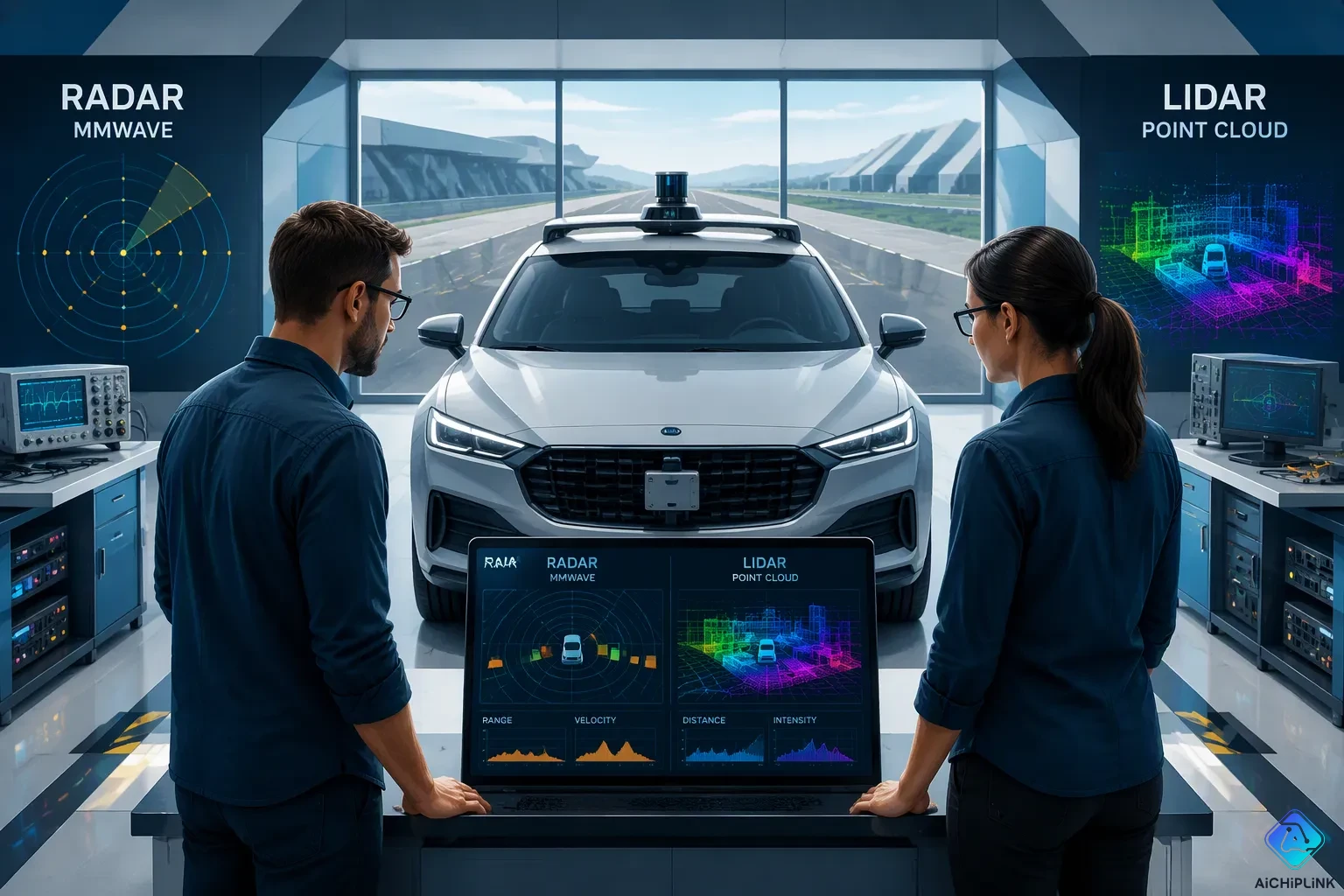
Millimeter wave radar vs lidar comes down to a simple choice: radar uses radio waves to detect things and measure speed in any weather, while lidar uses laser light to make high-resolution 3D maps. Radar works like bat echolocation, sensing objects in any weather. Lidar works like human vision, showing sharp detail but having trouble in fog or rain. Millimeter-wave radar gives reliable all-weather range and direct speed readings. The main purpose of lidar and radar is different: lidar maps scenes, radar tracks movement. Wavelength drives every other trade-off.
In 2024, the Millimeter Wave Radar Market was valued at 3.627 USD Billion.
When should each technology serve, and can they work together?
Key Takeaways
-
Millimeter-wave radar uses radio waves. It finds objects in any weather. It measures speed right away. This makes it dependable for safety systems.
-
Lidar uses laser light. It makes detailed 3D maps. It shows small details. It has trouble in fog, rain, and snow. This makes it great for mapping in clear weather.
-
Wavelength creates trade-offs: radio waves pass through weather, but light waves scatter. Engineers choose between detail and reliability.
-
4D millimeter-wave radar adds height information. This helps it match lidar more closely. It can detect shapes. It can count axles. Lidar still gives centimeter-level detail.
-
Combining sensors gives the best results. Radar, lidar, and cameras cover each other's weak spots. Teams pick sensors that fit what they need. No single sensor is best at everything.
Difference Between Lidar and Radar: Wavelength
The difference between lidar and radar starts with one physical property: wavelength. Radar sends out microwaves that stretch from 3 mm to 30 cm. Lidar fires near-infrared light measured in micrometers. That size gap of about a thousand times explains why the two sensors act so differently in rain, fog, and open highway.
Radar's Millimeter to Centimeter Waves
Automotive radar commonly uses the 24 GHz and 77 GHz millimeter-wave bands. At 77 GHz, the signal wavelength is about 3.9 mm. These waves are tiny compared with a building but huge compared with a dust particle. A bat gives the best mental picture. The bat sends out a broad call and listens for the echo. One shout covers a wide arc, and the returning sound shows distance and motion. Radar works the same way. Its long waves bend around rain droplets and pierce fog, so the sensor keeps tracking objects when visibility drops. The trade-off is resolution. A broad wave cannot paint a sharp picture of a pedestrian's arm or a road sign's letters.
Lidar's Micrometer Light Waves
Lidar works at 905 nm or 1550 nm in the near-infrared. In micrometer terms, those values equal 0.905 µm and 1.55 µm. Human vision is the right comparison here. A person sees fine detail because light travels in a straight, narrow line and bounces off surfaces. Lidar pulses do the same. They send back millions of precise points that form a detailed 3D map. The 1550 nm option brings extra benefits. Silicon detectors ignore that wavelength, so engineers use germanium or InGaAs sensors instead. At the same power, a 1550 nm laser is 40 times safer for the eye. That safety margin lets manufacturers push higher peak power. A typical 905 nm unit reaches about 200 m at 10% reflectivity. A 1550 nm unit often exceeds 500 m at low reflectivity and passes 1000 m on bright targets. The 1550 nm band is Class 1 eye-safe, which allows safe operation near airfields and populated areas.
The main difference between lidar and radar therefore comes from this single number. Wavelength sets accuracy, range, and weather tolerance all at once. A sensor that uses radio waves instead of laser light gains penetration but loses fine detail. A sensor that uses light gains precision but suffers in poor visibility. Engineers who understand this root cause can predict every downstream trade-off before they ever mount a sensor on a vehicle.
| Technology | Typical wavelength or band |
|---|---|
| Automotive lidar | 905 nm or 1550 nm near-infrared |
| Automotive radar | 24 GHz and 77 GHz millimeter-wave bands |
How Millimeter Wave Radar Works
Radio Waves, Speed, and Angle
A millimeter-wave radar sends out a radio signal and listens for the echo that comes back. The sensor figures out distance from how long the signal takes to return. It figures out speed from the Doppler frequency shift. When a target moves closer, the returning frequency is higher than the sent frequency. When it moves away, the returning frequency is lower. The shift is biggest when motion goes straight toward or away from the antenna. It drops to zero when the motion is at a right angle to the beam.
The Doppler frequency shift equals two times the target velocity times the transmitted frequency, divided by the speed of light minus the target velocity. For most real-world uses, target velocity is much smaller than the speed of light, so the bottom number is close to the speed of light. The shortcut becomes two times velocity times transmitted frequency divided by the speed of light. This link gives range, speed, and angle data in one measurement cycle. A Doppler unit only measures the speed part along the beam. If the unit sits too far to the side, the speed shown may read lower than the real speed because of cosine error. So alignment matters just as much as performance.
All-Weather Reliability
Tiny bits in the air like mist, dust, pollen, and snow are hundreds to thousands of nanometers wide. These sizes are close to lidar wavelengths, so thick particles scatter laser signals and make the returns weaker. A millimeter-wave radar sends out millimeter-scale radio waves that barely react with particles in the environment. The longer wavelength goes through particle-heavy spaces with very little interference. This physical difference explains why mmwave radar sensors keep detecting and ranging objects when optical sensors stop working.
Bad weather like fog, rain, or snow causes a lot of signal loss through scattering and absorption. Solid-state lidar performance falls apart in these conditions, and its effective range can drop by 50–80% compared to clear weather. Weather resilience is a key strength of millimeter-wave radar. Radar signals go through fog, rain, and dust with almost no loss. This ability keeps long-range detection reliable no matter what the air is like. For systems that need all-weather conditions and all-day / all-weather uptime, the technology gives the dependable layer. That bad-weather reliability makes it the backbone of safety-critical sensing.
How Lidar Works
Laser Pulses and 3D Mapping
Lidar sends out fast bursts of laser light at things like trees, buildings, and cars. Some of each burst bounces back to the sensor. The system then measures how long each burst took to go and return. This time-of-flight idea relies on light always moving at the same speed. Distance equals the speed of light times flight time, split in two. Half of the round-trip time gives you the one-way distance.
Once a burst comes back, the sensor saves that point's X, Y, and Z coordinates. Those coordinates come from the distance and the angles of the sensor head. Spinning mirrors or MEMS mirrors sweep the beam over the area. This sweeping builds a thick set of millions or billions of single points, called high-resolution 3d point clouds. Every point marks an exact spot in space.
The vehicle or device carrying the lidar sets the map's size. A drone maps a building site. A plane scans land and forest cover. Self-driving cars find lane lines and obstacles.
High Precision in Good Weather
Clear weather lets lidar work at its best. The sensor makes a high-resolution, 3d map with sharp detail. It can pick out a walker's arm or the letters on a road sign. Range depends on how much light bounces back and the wavelength. A 905 nm unit reaches about 200 meters at 10% reflectivity. A 1550 nm unit goes past 500 meters on targets that reflect little light.
Bad weather makes lidar work worse. Raindrops and fog droplets scatter laser bursts before they hit the object. This lowers the point cloud count and makes intensity weaker. The harm gets worse with distance. Objects past 30 meters get hard to see. Dark materials bounce back less light and lose points faster. So lidar works best in clear weather as a precise mapping tool.
Lidar vs. Radar: Key Differences
Accuracy, Range, and Resolution
When you compare lidar and radar, you see big differences in how well they measure things. Lidar is better at showing details. It makes dense 3D point clouds with precision down to the centimeter. That precision helps it recognize complex shapes and sort objects with high accuracy. Radar cannot do this as well. Its lower resolution has trouble with small objects and exact shape mapping. But radar has a natural edge in speed. It measures radial velocity directly using Doppler frequency shifts. Lidar has to figure out speed from point-cloud processing instead.
| Metric | Millimeter-Wave Radar | LiDAR |
|---|---|---|
| Angular resolution | ~1° (high-performance 4D imaging radar); 15°–30° (basic models) | Sub-degree angular precision |
| Range resolution | ~3.75 cm at 77 GHz with 4 GHz bandwidth; ~60 cm for older 24 GHz radars | Centimeter-level distance resolution |
| Range accuracy | Centimeter-level achievable with modern high-integration chips | No explicit numerical value provided |
The difference between lidar and radar in range and accuracy also depends on conditions. Lidar usually detects objects at 100–200 m with much higher close-range precision. Radar reaches farther and works well at high speeds. That makes it good for collision avoidance. These key differences between lidar and radar shape every sensor choice.
Weather, Cost, and Durability
Weather is what separates these two sensors the most. Lidar is sensitive to rain, fog, snow, and dust. These particles scatter or absorb laser pulses and make point-cloud accuracy worse. Radar goes through dust, fog, rain, and snow with stable performance. Its all-weather ability is its biggest strength. This contrast in performance in rain/fog and performance in fog or dust drives real-world reliability decisions.
Compared with LiDAR, cameras and optical sensors, the cost of millimeter-wave radar is low... Moreover, compared to traditional camera imaging systems, millimeter-wave radars are more effective in bad weather conditions (fog and rain) and nonline of sight (NLOS) target detection.
Cost and processing needs are different too. Radar makes efficient data — range, angle, velocity — that needs less processing power. This allows economical large-scale deployment. Lidar creates large data volumes that need powerful processors. That raises system cost and energy use. When engineers weigh cost, accuracy, and environmental conditions together, the trade-off becomes clear.
| Dimension | LiDAR | 4D mmWave Radar |
|---|---|---|
| Environmental performance | Struggles in heavy rain or fog where light waves scatter; dependent on external lighting | Performs better in harsh weather as radio waves penetrate obstacles; less affected by lighting |
| Processing & cost | Large data volume requires powerful processors, raising system cost and energy use | More efficient data needs less processing power, enabling economical large-scale deployment |
Durability favors radar as well. It has no moving parts in solid-state designs and handles vibration and temperature swings. Many lidar units depend on spinning mirrors or MEMS mirrors that add mechanical wear. The millimeter wave radar vs lidar choice therefore balances range, accuracy, and reliability against budget and compute limits.
4D Millimeter-Wave Radar and Lidar
Old radar finds distance, speed, and side-to-side angle. It has no height information at all. To a 3D sensor, a bridge and a roadblock look the same. 4D millimeter-wave radar fixes this by adding height as a fourth dimension. This change shifts how 4d millimeter-wave radar and lidar compare in real systems.
Radar's Rising Capabilities
A 4D radar unit picks up distance, side angle, height, and speed in one cycle. It builds 3D maps while tracking motion. These abilities put 4d millimeter-wave radar and lidar on equal ground.
4D millimeter-wave radar is the next step in radar sensing. Old radars track position and speed (2D or 3D). 4D radars detect distance, angle (side and height), and speed at the same time. They give real-time 3D mapping with motion tracking.
Height sensing tracks object size for drone detection and tunnel clearance. Engineers get these results with cascaded MMIC chips. Stacking chips grows the vertical antenna array. Virtual aperture imaging algorithms multiply virtual antennas. Massive MIMO arrays and digital beamforming sharpen angle resolution. Integrated chip solutions keep power low. These technologies let millimeter-wave radar hit sub-1° angle precision in high-end imaging units.
Detecting Shapes and Counting Axles
The resolution gap between millimeter-wave radar and lidar shrinks fast. 4D radar now makes point clouds like low-beam lidar systems. It tells overpasses apart from roadblocks. It counts vehicle axles and sorts vehicle shapes. This performance matches or beats low-beam systems in many cases. Those jobs once belonged only to lidar.
| Aspect | 4D Millimeter-Wave Radar | Low-Resolution LiDAR |
|---|---|---|
| Point Cloud Density | Comparable to low-beam LiDAR | Lower than high-resolution LiDAR |
| Range Resolution | Superior | Standard |
| Velocity Measurement | Superior capability | Limited |
| Adverse Weather Robustness | Superior | Degraded performance |
Old millimeter-wave radar still has trouble with small objects and exact shape mapping. Lidar still shines at centimeter-level detail. Yet the gap keeps closing. A 4D radar unit costs less than a similar unit. It works through rain, fog, and snow. The comparison between 4d millimeter-wave radar and lidar no longer has one winner. Engineers pick a sensor by weather, budget, and compute power. Speed tracking and all-weather durability favor radar. Fine spatial detail and object recognition favor the laser-based method.
Use Cases Across Industries
Autonomous Driving and ADAS
Self-driving cars use both sensor types together. Lidar builds a detailed 3D map of nearby objects. It tells apart pedestrians, cyclists, and road markings within a centimeter. Millimeter-wave radar is the backup safety system. It tracks distance and speed directly through fog, rain, and snow. The radio-wave sensor reaches farther and handles high speeds well. Together, they keep crash avoidance reliable when visibility drops.
4D millimeter-wave radar now handles jobs once done by laser mapping. It tells an overpass from a roadblock on a highway. It counts truck axles and sorts vehicle shapes. This matters for avoiding crashes at high speed. The sensor measures speed directly using Doppler frequency shifts. Lidar must compute speed from point-cloud processing. Measuring speed directly gives radar an edge in fast-moving traffic.
Camera systems have trouble in low light. Radar fills that gap with reliable all-weather detection. Laser mapping adds detail for city driving where pedestrians gather. Together, the three sensors cover one another's blind spots.
Robotics and Industrial Automation
Robots and factory systems show how lidar and radar are used in different jobs. Warehouse robots need precise navigation in clean indoor spaces. Laser sensors map shelves, pallets, and narrow aisles with dense point clouds. Mobile robots use these maps to plan paths around obstacles.
Factories often have dust, steam, or welding fumes. Radar keeps working in those places, but laser signals scatter. Its radio waves pass through particles that block light. A metal processing plant depends on this ability to watch moving machines. The system spots workers near dangerous zones even when smoke fills the air. This reliability keeps production lines moving without stopping.
The choice between millimeter-wave radar and lidar depends on where they are used. Outdoor vehicles need all-weather range. Indoor robots benefit from detailed maps. Many teams install both and merge data. This backup protects safety systems.
Millimeter-Wave Radar and Lidar: Sensor Fusion
Complementary Strengths
Each type of sensor fails in conditions where another one does well. Lidar gives exact 3D shapes but has trouble in bad weather and at long distances. Cameras give rich meaning but get worse in low light. Radar gives speed and works in all weather but has lower spatial detail. This pattern naturally leads engineers toward fusion.
Fusion mixes radar, camera, lidar, and ultrasound inputs with AI and deep learning. Together these sensors give high-resolution images, 3D mapping, and object sorting. Auburn University said in 2021 that multi-sensor fusion is the only workable path for future self-driving systems. Jiangsu University found that lidar is exact for object position but less exact than radar for speed. Fusing both through an Unscented Kalman Filter achieves high-precision position and speed tracking that neither gives alone.
| Benefit of Fusion | Explanation |
|---|---|
| Greater range resolution | The camera-lidar-radar combination provides resolution at a greater range than individual sensors alone. |
| Precise environmental understanding | Lidar point clouds and depth map information enable precise understanding of surroundings. |
| Improved safety redundancy | Fusing all three sensor types improves the safety redundancy of the overall autonomous system. |
LiDAR is not a magic sensor for autonomous driving. It has value, but so do other sensor mixes. LiDAR, for example, can't read signs, and can't see color.
Choosing the Right Combination
The right mix depends on the place it works and the job. Radar handles weather monitoring, adaptive cruise control, automatic emergency braking, and forward collision warning. It measures speed on its own and goes through rain and snow. Lidar handles 3D mapping, pedestrian detection, warehouse robot navigation, and dense obstacle shapes. Fusion suits self-driving cars at L2+/L3, port and crane automation, and industrial collision avoidance.
Two architectures show how teams combine these inputs. Tongji University built a multi-level feature fusion system in 2024 that fuses camera, millimeter-wave radar, and lidar features at matching detail levels. Suzhou Qingzhou Technology fused sensor-derived feature tensors into a bird's-eye view tensor, which improved long-distance obstacle detection over lidar alone. Centralized fusion processors with AI-driven sparse millimeter-wave radar arrays can also cut reliance on lidar and lower system cost. Teams should match the architecture to weather, accuracy, budget, and compute needs rather than always picking one sensor.
Wavelength shapes everything in the millimeter wave radar vs lidar debate. Radar is great at finding speed over long distances in any weather. Lidar gives the sharpest spatial detail when skies are clear. Each sensor wins where the other one struggles.
The 4d millimeter-wave radar and lidar comparison now shows a shrinking gap. Sensor fusion of millimeter-wave radar and lidar gives the strongest solution. Teams should match technology to weather, accuracy, budget, and compute needs. No single sensor wins every job.

Written by Jack Elliott from AIChipLink.
AIChipLink, one of the fastest-growing global independent electronic components distributors in the world, offers millions of products from thousands of manufacturers, and many of our in-stock parts is available to ship same day.
We mainly source and distribute integrated circuit (IC) products of brands such as Broadcom, Microchip, Texas Instruments, Infineon, NXP, Analog Devices, Qualcomm, Intel, etc., which are widely used in communication & network, telecom, industrial control, new energy and automotive electronics.
Empowered by AI, Linked to the Future. Get started on AIChipLink and submit your RFQ online today!
Frequently Asked Questions
Which sensor works better in rain and fog?
Thick fog cuts lidar's point-cloud count by up to 59%, and dense fog cuts detection distance by 25%. Radar works through fog and rain using millimeter-scale waves. The millimeter wave radar vs lidar choice often comes down to weather reliability.
Does 4D sensing close the gap with lidar?
4D millimeter-wave radar adds height data and creates point clouds like low-beam lidar. It tells overpasses from roadblocks and counts axles. Lidar still gives centimeter-level detail for fine shape recognition. The gap narrows, but laser mapping keeps the edge for precision.
Why does lidar cost more to set up?
Lidar creates massive point clouds that need powerful processors, so system cost and energy use go up. Moving mirrors also wear down. Radar outputs simple range, angle, and velocity data that needs less processing power, so setup costs stay lower.
Why use both sensors instead of picking one?
Each sensor covers the other's weakness. Lidar gives sharp 3D maps in clear weather, while radar tracks speed directly in fog and rain. Fusing both inputs through an Unscented Kalman Filter yields high-precision position and speed tracking. Neither sensor alone can match this result.