LIDAR and Radar ICs in the Semiconductor Stack for Autonomous Driving
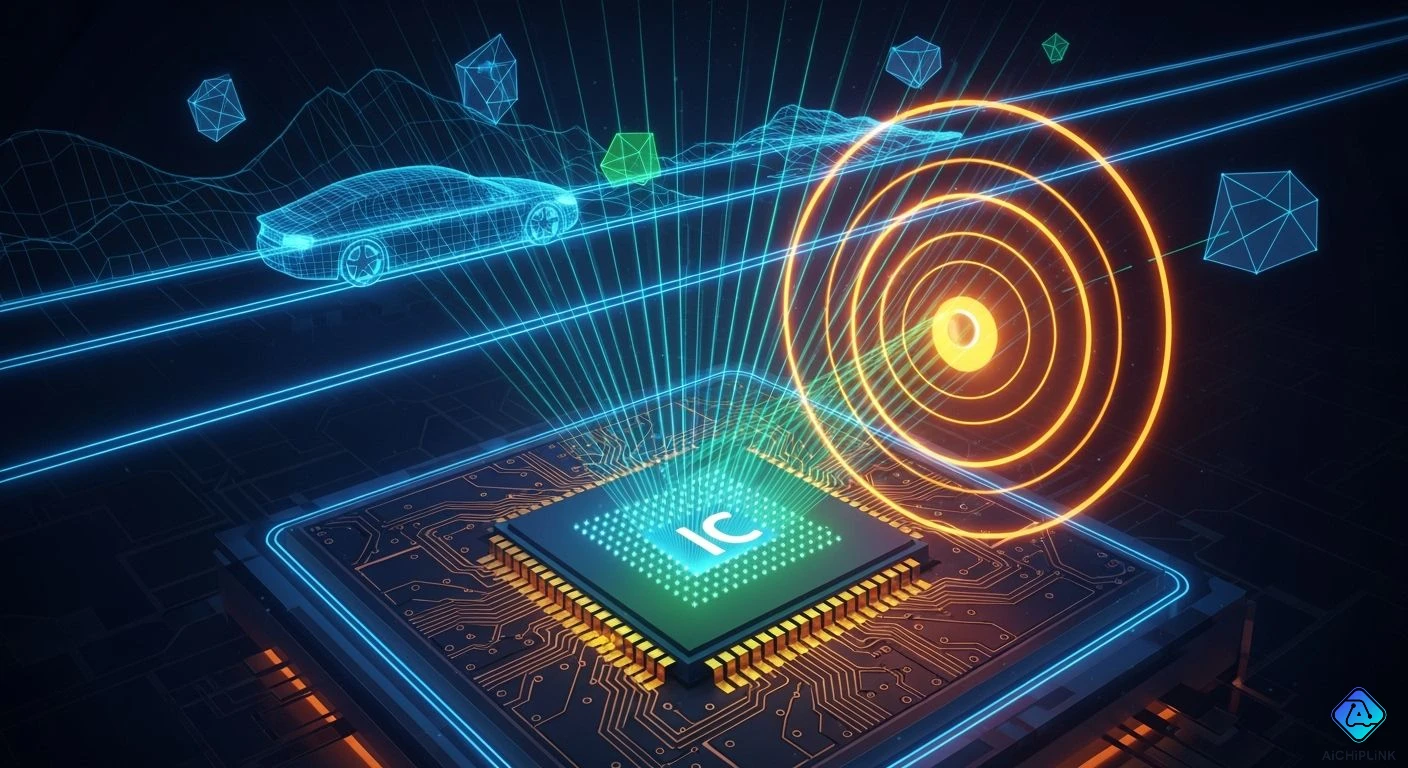
L4 autonomous driving safety demands silicon-level hardware innovations rather than total reliance on vision algorithms. Advanced vision systems fail during extreme weather or dark situations. Therefore, modern adas platforms need integrated radar and lidar units to guarantee operational stability. Next-generation 45nm RFCMOS processes improve high-frequency radar signal processing performance. Meanwhile, digital SPAD arrays and compound semiconductor materials raise photon sensitivity in advanced lidar sensors. These active silicon advances significantly reduce signal processing latency across the automotive perception stack. Hardware architects deploy these dedicated ics inside autonomous vehicles to surpass traditional advanced driver-assistance systems limitations. Robust perception networks deliver continuous environmental awareness, securing vehicle control across complex operational scenarios.
Key Takeaways
-
Modern autonomous cars use high-tech radar and LiDAR chips to travel safely during severe weather and at night.
-
New 4D imaging radar chips measure object height and speed to improve automatic emergency braking.
-
Clever power managers and built-in chips help keep sensors cool and make emergency responses much faster.
-
Special laser and light sensor chips help self-driving cars spot dark objects far away on roads.
-
Built-in digital filters block bright sunlight and heavy rain interference to guarantee clear sensing at all times.
4D Imaging Radar ICs for Autonomous Driving
Self-driving cars today need accurate height and side-to-side data from their vision sensors. Older car radar devices could not measure vertical angles well. Modern 4D imaging radar units can now identify objects using distance, Doppler velocity, side angle, and height. Engineers made this big leap by improving front-end silicon integration inside these chips.
45nm RFCMOS Transceivers for Automotive Radar
Chip factories originally made high-frequency transceivers with Silicon-Germanium (SiGe) BiCMOS tech. SiGe chips provided fast transistor speeds, but they used too much power and took up large space. Chip makers now build fully integrated radar chipsets using smaller 45nm RFCMOS setups. This silicon switch cuts total power use in half while fitting more digital parts together.
| Architecture Metric | Legacy SiGe BiCMOS Transceivers | Advanced 45nm RFCMOS Transceivers |
|---|---|---|
| Channel Integration | Low (1–2 TX, 2–4 RX channels) | High (up to 12 TX, 16 RX channels) |
| On-Chip DSP Coupling | External digital chip | Integrated deep sub-micron digital core |
| Power Dissipation | High thermal profile | Low power operational profile |
Moving to this new design process lowers device phase noise effectively. Lower phase noise improves Doppler resolution, which helps find targets faster for automatic emergency braking safety features. The compact 45nm RFCMOS layout lets engineers put many transmitter and receiver channels on one chip. Connecting these integrated radar chipsets together builds a huge virtual antenna array. As a result, these newer radar systems easily spot still obstacles and moving dangers in heavy traffic.
Antenna-in-Package and High-Frequency Signal Integrity
Running car sensors in high-frequency 77GHz and 79GHz bands creates major signal loss problems. Standard printed circuit boards send millimeter-wave signals over long wire tracks. These long lines create heavy signal drop and weaken the data before it transmits out.
Engineers avoid these high-frequency connection losses by using Antenna-in-Package (AiP) technology. AiP places the sending antennas right inside the main chip box. This setup reduces the actual space between the active RF front-end transceiver and the sending structures.
-
High-frequency signals move straight from the die to redistribution layers using tiny micro-bumps.
-
Short connections lower board-level interference and remove high-frequency line losses completely.
-
Molded dielectric layers defend the small antennas from harsh heat changes and physical shocks.
AiP technology greatly boosts overall signal strength while making the sensor box much smaller. Better signal-to-noise ratios provide clearer target images when finding objects ahead. Improved angle precision helps the sensor separate close targets, like a person next to a road barrier. Modern adas platforms count on these RF improvements to keep drivers safer on roads. Precise radar tracking boosts performance during lane-keep assist actions and emergency braking events. In the end, advanced packaging helps deliver safe self-driving technology for full L4 operation.
Thermal and Compute Optimization in Sensor ICs
Power Management in Multi-Channel Transceivers
Modern 4D radar devices use many active sender and receiver paths. Packing these paths together creates heavy heat inside tiny sensor boxes. To control this heat, engineers use dynamic power tuning inside advanced radar chips. This smart power system turns down unused radio channels on simple roads. Control circuits change power levels instantly to match real-time driving needs.
Too much heat harms delicate chip hardware as time goes on. Special power circuits control electricity flow across active lidar and radar chips. These thermal tools check internal chip heat levels all the time. Good power control prevents dangerous hot spots on sensitive high-frequency parts. As a result, steady hardware keeps adas features working safely in bad weather. Keeping chips cooler also helps sensitive front-end parts last much longer.
On-Chip DSP Engines and Low-Latency GMACs
Handling raw, detailed radar data creates big data traffic jams inside car networks. Built-in digital signal processing engines solve complex math problems right on the sensor chip. Doing math locally reduces processing time inside self-driving car computers. On-chip hardware filters remove clutter and noise before sending radar signals to central processors. Direct digital conversion removes data delays between sensor chips and central computers.
Built-in gigabit network parts speed up real-time data flow across internal vehicle systems. Fast GMAC connection blocks send filtered lidar data over high-speed car ethernet networks. Short wires connect external radar devices directly to main vehicle computer nodes. Modern sensor hardware needs fast data streams to maintain strong everyday performance.
Fast network routing improves emergency braking speeds across active adas safety tools. Built-in chip accelerators process complex lidar data for quick obstacle finding. Next-generation radar chips map out clear target shapes without needing heavy central computers. Synced radar and lidar data give self-driving systems complete operational confidence. Advanced radar sensors protect riders by spotting road hazards fast across all perception tools.
Advanced LiDAR ICs and Photonic Emitters
Digital SPAD Arrays and SiPM Architectures
Modern self-driving car vision platforms need extreme light sensitivity to spot dark targets on roads. Low-reflectivity obstacles return very few light particles to optical hardware receivers. Advanced digital Single-Photon Avalanche Diodes (SPAD) easily solve these severe low-light problems. Digital SPAD arrays run above reverse breakdown voltage in special Geiger mode. This setup logs single incoming light particles with exact picosecond arrival timing. Meanwhile, Silicon Photomultipliers (SiPM) pack microcell sensor arrays onto a single silicon chip. These SiPM setups add together microcell signals to boost light sensitivity on dark targets. High sensitivity helps spot dark cars, tire pieces, and walking people from far away. As a result, digital SPAD arrays replace older analog sensors inside high-tech solid-state lidar modules.
Digital SPAD tools track light arrival timing directly using built-in digital converter chips. Advanced factory processes make 3D stacked chips where digital reading parts sit right under photodetectors. Small micro-bumps send single-photon signals directly to digital counting circuits without long wire tracks. This direct vertical stack removes analog electronic noise and lowers signal delay across dense pixel grids. Better light-gathering ability guarantees clear long-distance object tracking and road mapping without dangerous laser power boosts. Therefore, solid-state lidar units keep accurate spatial precision during heavy fog, thick rain, or direct sunlight.
Indium Phosphide Emitters and FMCW Sensing
Photonic laser emitters set maximum viewing distance limits inside primary optical sensor systems. Legacy lidar setups use short-wavelength surface-emitting laser arrays that run near 905nm bands. However, eye safety laws strictly limit total allowed laser power output at 905nm. Photonic engineers use special Indium Phosphide (InP) materials to build powerful edge-emitting 1550nm lasers. Liquid inside human eyes absorbs 1550nm light before it can hurt sensitive retinal areas. Eye safety rules allow much higher laser power for 1550nm InP light sources. Stronger laser pulses push maximum sight lines past 250 meters for fast highway driving.
Indium Phosphide lasers also enable high-resolution frequency-modulated continuous-wave (FMCW) optical sensing. FMCW systems send steady laser beams with sliding frequency patterns instead of short light pulses. On-chip receivers mix reflected target light with a copy of the outgoing laser beam. This optical blending calculates target distance and speed instantly using Doppler frequency shifts. Coherent FMCW lidar systems block out harsh sunlight and prevent light interference from other car sensors.
Combining FMCW light chips with digital reader engines uses fewer parts and simplifies sensor alignment. Photonic integrated circuits merge laser drivers, light guides, beam splitters, and balance photodetectors on silicon chips. Solid-state lidar designs use optical phased arrays to direct laser beams electronically. Electronic beam steering replaces spinning mechanical mirrors and physical motor parts completely. Because of this, modern lidar boxes handle harsh road bumps and heavy vibration easily. Built-in lidar hardware lowers sensor packaging complexity inside small protective covers. Main lidar sensors feed vital spatial data directly into central self-driving computers. Advanced lidar tech forms the main hardware base for L4 self-driving vehicle platforms.
Hardware Signal Filtering in Extreme Environments
Real-Time Interference Rejection for Solar Radiation
Direct sunlight floods optical sensors with background light particles during daytime driving. Photonic chips use thin color filters to block extra wavelengths. Built-in digital processor cores perform physical detection checks right on the silicon wafer. These active chip filters clean incoming light pulses before sending data to main car computers.
Custom bandpass layers lower background light noise to boost long-range target tracking results.
Silicon logic chips check incoming pulse shapes to block unwanted solar noise. The built-in circuit checks light arrival times against active laser timer clocks. Fast digital circuits block extra solar light while keeping true optical signals. As a result, new lidar chips keep tracking targets clearly during bright summer driving. These protective tools keep self-driving cars safe from sudden optical blinding hazards. Advanced lidar setups improve driving safety across bright highway roads. Main lidar sensors process spatial data smoothly. Custom lidar chips protect car systems in direct sunlight. Built-in lidar receivers keep long-distance optical sensitivity while extra lidar tools isolate true laser bounce peaks.
Backscatter Mitigation in Adverse Weather
Heavy rain, fog, and snow scatter physical signals during bad weather driving. Chip designers put custom signal filtering tools directly inside high-frequency radar chips. Smart digital logic filters clear out close weather noise inside the front-end chip box.
-
High-pass analog filters block low-frequency noise bounces caused by close rain droplets.
-
Timed windowing circuits limit physical vision ranges to clean up far-away targets.
-
Built-in Doppler speed engines separate still weather noise from real moving hazards.
These built-in signal filter tools help split target data clearly during tough weather conditions. The main radar chip tracks far obstacles through thick fog and heavy rain. Meanwhile, multi-frequency lidar units and main lidar arrays change detector sensor gain settings on the fly. Lowering sensor gain stops receiver blinding caused by light bounces off close snow particles. Built-in radar chips keep accurate location tracking during heavy weather drops. Multi-channel radar setups send clear speed data to main sensor networks. Small radar chips improve hardware work during heavy rain events.
Hardware signal filtering improves car safety across harsh outdoor driving conditions. Modern adas setups need these filter tools to keep total safety high. Dedicated radar channels send clean data straight to main vehicle computers. Secondary radar setups clear out close weather noise while built-in radar chips tune front-end parts using smart radar logic. Fast data filtering helps trigger automatic emergency braking quickly during sudden road dangers. Active chip upgrades boost automatic emergency braking speeds and key adas safety tools. In the end, strong lidar sensors offer steady driving control for every built-in lidar box in extreme weather.
Packaging and Silicon Economics for Autonomous Vehicles
Glass-to-Metal Hermetic Seals and Durable Packaging
Rough driving conditions can easily break delicate sensor chips inside self-driving cars. Strong heat swings, heavy road shakes, and wet air ruin cheap plastic chip covers over time. Engineers use glass-to-metal sealed packaging to shield sensitive radar chips and optical lidar parts completely. This special packing method builds a solid physical wall around vital silicon parts inside the sensor box. The tight glass-to-metal seal keeps water out and stops internal metal pins from rusting away.
Strong outer covers soak up hard physical bumps during rough driving trips. The tough outer box shields fragile laser emitters and digital light chips from dangerous heat changes. Steady inner temperatures keep incoming signals clear across front-end radar transceivers. Stopping weather damage helps these sensor systems work safely over long vehicle lifespans. Car makers rely on these tough boxes to maintain long-term system reliability in modern adas platforms.
ASIC Integration versus Discrete Front-Ends
Building hardware for L4 self-driving cars means balancing circuit board space against total build costs. Design teams compare single Application-Specific Integrated Circuit (ASIC) designs against separate multi-chip setups. Single-chip ASIC designs combine radio transceivers, signal converters, and digital processors onto one silicon wafer. Separate chip setups split analog radio parts and digital logic units across different individual chips.
| Architecture Metric | Discrete Front-End Setup | Integrated ASIC Architecture |
|---|---|---|
| Silicon Die Yield | High yield per smaller individual die | Lower monolithic die yield |
| Physical Board Space | Large board footprint | Compact single-chip footprint |
| Assembly Cost | High assembly cost from multiple packages | Low packaging cost per complete module |
Single-chip ASIC designs save precious physical board space inside compact lidar boxes. Using fewer separate parts simplifies overall wire routing for modern radar chipsets. However, large single chips suffer lower factory success rates than smaller separate chips. Defective chip areas force factories to trash entire wafers, raising base chip making costs. Conversely, separate chip setups offer better factory yields per wafer, but they require bigger circuit boards. Chip makers weigh these balance points to serve the growing car market wisely. Engineers optimize single ASIC designs to cut long-term costs while boosting sensor power.
Convergence of RFCMOS radar ICs, InP emitters, and digital SPAD lidar arrays forms a resilient hardware foundation for L4 autonomous driving. Hardware features protect automotive radar units and lidar sensors in harsh driving conditions. Noise filters clean radar signals and lidar data for autonomous vehicles and perception systems. These robust radar circuits and lidar receivers enable high-confidence radar sensor fusion across tracking systems. Engineers deploy next-generation radar chips, active radar arrays, and digital radar blocks alongside compact lidar devices, custom lidar hardware, optical lidar tools, solid-state lidar elements, primary lidar chips, and main lidar modules. Monolithic photonic-electronic integration will dictate the next semiconductor architecture phase for automotive radar systems and safe driving per vehicle.

Written by Jack Elliott from AIChipLink.
AIChipLink, one of the fastest-growing global independent electronic components distributors in the world, offers millions of products from thousands of manufacturers, and many of our in-stock parts is available to ship same day.
We mainly source and distribute integrated circuit (IC) products of brands such as Broadcom, Microchip, Texas Instruments, Infineon, NXP, Analog Devices, Qualcomm, Intel, etc., which are widely used in communication & network, telecom, industrial control, new energy and automotive electronics.
Empowered by AI, Linked to the Future. Get started on AIChipLink and submit your RFQ online today!
Frequently Asked Questions
How do radar and lidar chips enhance adas features?
Radar sensors measure target velocity and distance using radio signals. Primary lidar units provide fine spatial mapping with lasers. Together, these devices power essential adas safety features like automatic emergency braking and lane-keep assist to maximize total driving safety.
Why are semiconductor vendors adopting solid-state lidar technology?
Solid-state lidar removes moving mechanical parts and spinning mirrors. Silicon foundries build photonic arrays directly on semiconductor wafers. This compact layout protects optical paths from severe vehicle vibrations, enabling suppliers to serve the growing automotive market with durable, cost-effective hardware.
How do 45nm RFCMOS process nodes improve radar transceivers?
Modern 45nm RFCMOS nodes integrate radio channels and digital cores onto one die. This design cuts power consumption while reducing phase noise. High channel density allows a multi-channel radar front-end to detect distant objects precisely, creating a strong market opportunity for integrated chipsets.
How do radar and lidar ICs eliminate environmental noise?
On-chip DSP engines filter real-time environmental interference directly inside the sensor package. Integrated radar logic removes rain backscatter during storms. Meanwhile, digital lidar circuits block direct solar radiation during daytime driving, sending filtered environmental maps straight to central adas computing nodes.
How do multi-channel radar and lidar systems ensure L4 reliability?
Complementary sensor networks overcome weather limits. Solid-state lidar provides accurate spatial tracking in dark settings. Meanwhile, long-range radar units penetrate thick fog. Engineers combine front-end radar transceivers and active radar modules with custom lidar receivers, secondary lidar sensors, and primary lidar blocks so that unified radar and lidar hardware delivers reliable tracking.