How Brushless Motor MCU Controllers Work and Their Essential Functions
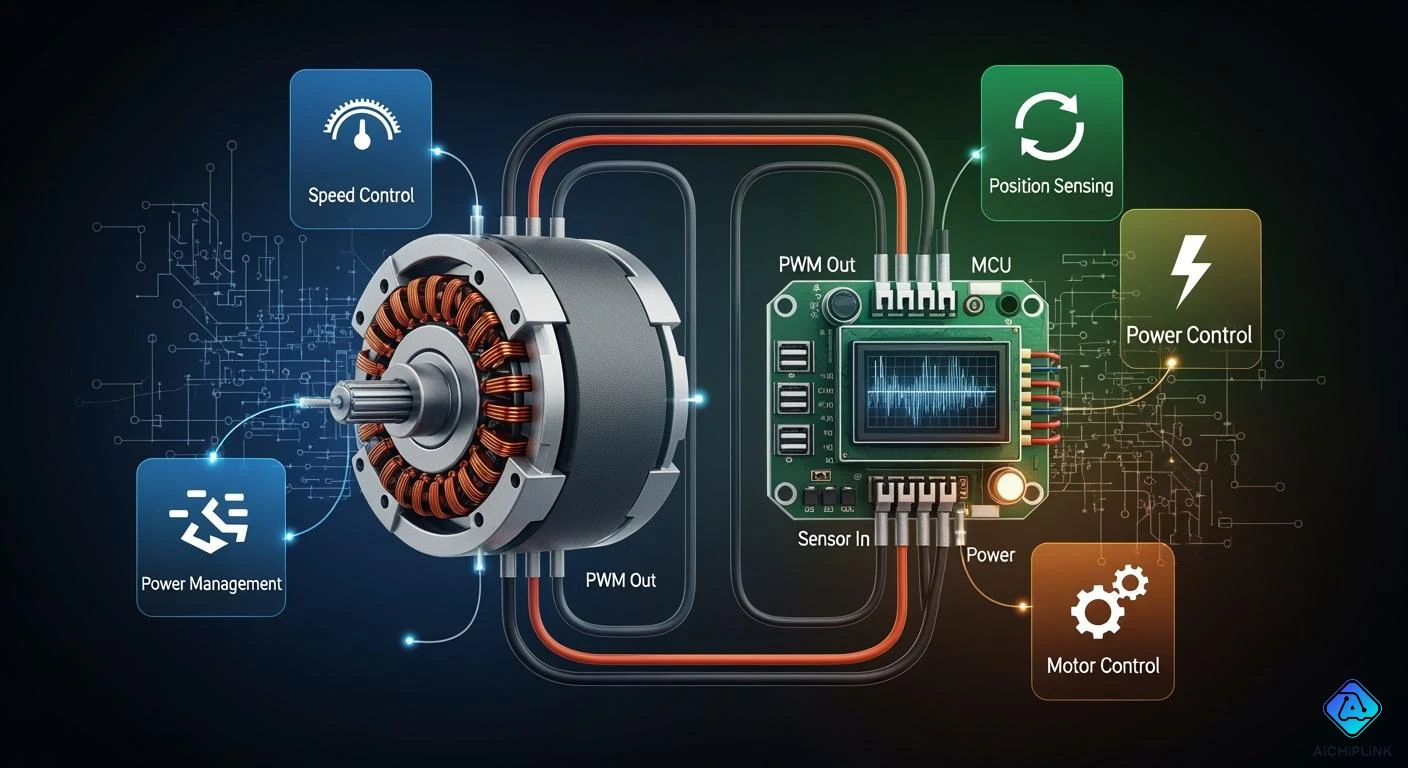
You use a Brushless Motor MCU Controller to control a brushless motor. The Brushless Motor MCU Controller changes the brushless phases at the right time. With the Brushless Motor MCU Controller, you use PWM signals to adjust the voltage and current sent to the brushless windings. The Brushless Motor MCU Controller checks feedback and manages a current loop, which helps the brushless motor run smoothly and efficiently. You rely on the Brushless Motor MCU Controller for steady speed, accurate torque, and safe operation of your brushless motor every time.
Key Takeaways
- Brushless Motor MCU Controllers help motors work better by using PWM signals to manage voltage and current. These controllers give instant feedback for exact speed and torque control, so the motor runs smoothly. Built-in safety features stop damage from too much load or heat, which helps the motor last longer. Picking the best control method, like trapezoidal or field-oriented control, makes the motor work best for certain jobs. Adding sensors helps find the rotor position more accurately, so control and reliability get better.
Brushless Motor Basics
How Brushless Motors Work
Brushless motors are used in many new devices. These motors do not use brushes. They use electronic control instead. The stator makes a magnetic field. The rotor has magnets that spin when the field changes. Solid-state electronics control the current. This gives smooth and efficient motion. There are no mechanical brushes in this design.
Note: Brushless motors last longer. They need less maintenance because there are no brushes to wear out.
Here is a table that shows the main differences between brushed and brushless motors:
| Feature | Brushed Motors | Brushless Motors |
|---|---|---|
| Current Generation | Mechanical via brushes | Electronic control via power electronics |
| Rotor and Stator Configuration | Copper wires on rotor, permanent magnets on stator | Stator windings controlled by motor driver |
| Reliability | Lower due to mechanical wear from brushes | Higher due to lack of brushes |
| Control | Less precise, dependent on mechanical connection | Precise control of torque and speed via motor driver |
| Maintenance | Requires more frequent maintenance due to wear | Requires less maintenance, longer lifespan |
Brushless motors are used in many things. Some examples are:
-
Computer hard drives
-
Drones
-
Electric vehicles
-
Cordless tools
-
Robotics and automation
Why MCU Controllers Are Needed
An MCU controller is needed to run a brushless motor. The controller finds the rotor position. It switches the current between the motor phases. PWM is used to control voltage and current. This helps control speed and torque very well. The controller also keeps the motor safe from overload and overheating.
Here is a table that shows what the MCU controller does for brushless motors:
| Function | Description |
|---|---|
| Rotor position detection | Uses Hall sensor or sensorless technology to determine rotor position. |
| Current switching | Switches current between motor phases using MOSFET or IGBT. |
| Speed and torque control | Controls voltage and current using PWM (pulse width modulation). |
| Protection and monitoring | Monitors for overload, overvoltage, and overheating to protect the motor. |
Brushless motors and MCU controllers give better efficiency and longer life. You also get more control over speed and torque. This is why brushless motors are great for many modern machines.
Brushless Motor MCU Controller Functions
Electronic Commutation
A brushless motor mcu controller does electronic commutation. This replaces the old mechanical commutation in brushed motors. The controller switches current between windings at the right time. You get better efficiency and longer motor life. There are no brushes to wear out. Electronic commutation lowers friction, sparks, and electromagnetic interference. Look at the table below to see the main differences:
| Advantage | Electronic Commutation | Mechanical Commutation |
|---|---|---|
| Friction and Wear | Eliminated, leading to higher efficiency | Present, causing wear and lower efficiency |
| Risk of Sparks | Reduced, enhancing reliability | Present, increasing risk of failure |
| Operational Life | Longer due to no brushes | Shorter due to brush wear |
| Electromagnetic Interference | Lower, improving performance | Higher, causing potential issues |
| Maintenance | Minimal, no need for brush replacement | Regular maintenance required |
| Speed Range | Higher, no limitations from brushes | Limited by brush contact |
You can use different algorithms for electronic commutation. The most common ones are trapezoidal control, sinusoidal control, and field-oriented control. Each method gives a different level of precision and efficiency. Trapezoidal control uses six-step commutation. It works well for many main brushless motor uses. Sinusoidal control gives smoother torque and higher efficiency. Field-oriented control offers the highest precision and efficiency for tough motor drive jobs.
PWM and Current Control Loop
PWM helps you adjust voltage and current sent to the motor. The brushless motor mcu controller uses PWM to change the duty cycle. This changes the average voltage sent to the windings. You can control speed and torque very accurately. PWM also helps limit current and protects the motor from overload.
-
PWM changes the duty cycle, which affects the average voltage sent to the motor.
-
This lets you control speed and torque in brushless motors.
-
PWM helps limit current and protect against overload.
-
PWM allows fast switching of the motor supply, which lowers conduction losses.
-
The average voltage depends on the duty cycle and input supply voltage.
-
Current sensing can be added for better protection and control.
The brushless motor mcu controller uses different current control loop strategies. You can see the main types in the table below:
| Control Strategy | Description |
|---|---|
| Trapezoidal Drive | Uses square wave excitation with 120-degree conduction. |
| Sinusoidal Drive | Changes currents to reduce torque ripple and give smoother operation. |
| Field-Oriented Control | Turns three-phase currents into a rotating d-q reference frame, separating torque and flux. |
| Sliding Mode Control | Works with Model Predictive Control for better performance in changing environments. |
You get high efficiency and smooth operation by picking the right control strategy for your bldc motor drive.
Speed and Torque Regulation
The brushless motor mcu controller helps you control speed and torque in real time. The controller changes the commutation rate and PWM duty cycle to match the load. This gives steady speed and precise torque even if the load changes. The controller uses algorithms like PID to keep the motor at the right speed and torque.
-
The controller focuses on real-time speed control for bldc motors.
-
It makes sure the motor drive works well and commutation is reliable.
-
The system uses microcontroller-based PWM to improve motor control when loads change.
-
Speed control means changing the commutation rate of phase currents.
-
The duty cycle of phase currents is also changed to control speed.
Feedback is important. The controller checks the motor’s status and makes changes to keep the right speed and torque. This feedback loop gives high efficiency and reliable performance in all main brushless motor uses.
Sensor Integration
Sensors help your brushless motor mcu controller work better. Hall effect sensors or rotary encoders give real-time feedback on rotor position. This feedback is needed for accurate commutation and precision control. You get better performance and reliability with sensor-based detection.
-
Sensor-based detection uses Hall effect sensors or rotary encoders to give real-time feedback on rotor position.
-
This feedback is needed for accurate commutation, which improves performance and reliability.
-
Sensorless detection guesses rotor position using back EMF. This can lower costs and improve reliability in some cases.
You can pick sensor-based or sensorless detection depending on your needs. Both ways help you get high efficiency and smooth motor operation.
Protection Features
You keep your motor and controller safe with built-in safety features. The brushless motor mcu controller has current limiting, thermal protection, and overcurrent protection. These features stop damage from overload or overheating.
| Protection Feature | Description |
|---|---|
| Current limiting | Stops ESC or motor damage from too much current. |
| Thermal Protection | Stops overheating by checking ESC temperature and lowering current. |
| Overcurrent Protection | Protects ESC and motor from sudden spikes in current draw. |
The controller can turn off PWM outputs if it finds a fault. This keeps the motor windings and sensitive parts safe. You make your brushless motor last longer and keep your system working well. The protection features in the brushless motor mcu controller help you avoid expensive repairs and downtime.
Tip: Always use a brushless motor mcu controller with strong protection features for your bldc motor drive. This helps you get high efficiency, long life, and safe operation in all your projects.
Brushless Motor Control Methods
Trapezoidal Control
Trapezoidal control is a simple way to run a brushless motor. It splits each electrical cycle into six equal parts called sectors. In each sector, two stator phases get power while one does not. The MCU controller switches the phases at the right time. This makes a magnetic field that moves the rotor. The current shape looks like a trapezoid, which is why it is called trapezoidal control.
-
Trapezoidal control uses six-step commutation.
-
The control logic is easy and needs little processing power.
-
You may notice some torque ripple and more electrical noise.
-
This method works well for white goods, compressors, HVAC blowers, condensers, industrial drives, pumps, and robotics.
You can pick trapezoidal control if you want a low-cost and reliable way to run your brushless motor.
Sinusoidal Control
Sinusoidal control helps your brushless motor run smoother and quieter. The MCU controller sends current to the windings in a wave-like pattern. This matches how the rotor magnets move. Sinusoidal control lowers torque ripple, so there is less vibration and noise. You get better efficiency than with trapezoidal control.
Sinusoidal control is good when you need precise speed and torque. The MCU controller changes the current in real time. Your brushless motor runs smoothly even if the load changes. Sinusoidal control is used in fans, pumps, and industrial automation where quiet and efficient operation is important.
Field-Oriented Control (FOC)
Field-oriented control is the most advanced way to control a brushless motor. You use FOC for high efficiency and great torque control. The MCU controller uses real-time feedback to adjust current in two directions: one for torque and one for the magnetic field. This method can reach up to 97% efficiency in some cases.
Field-oriented control gives fast acceleration, smooth operation, and a wide speed range. You can use it for motors that need quick changes in speed and direction.
The MCU controller works with a three-phase power inverter, gate drivers, and sensors to measure dc bus voltage and phase currents. You get precise control over your brushless motor. FOC is great for robotics, electric vehicles, and advanced industrial automation.
You need brushless motor MCU controllers to help your motor work well and stay safe. These controllers do many jobs that make motors better and more reliable.
-
They use PWM to make gate signals for inverter switches.
-
They watch the rotor position to manage commutation.
-
They control current to keep torque steady and protect the motor from problems.
-
They check voltage and power to keep the system safe.
-
They talk to other systems so everything works together.
Brushless motors do their best when you pick the right controller. You will see better efficiency and your motor will last longer. You can use these controllers in lots of different things.
| Control Method | Applications | Benefits |
|---|---|---|
| Trapezoidal Control | Fans, water pumps, power tools | Easy to set up, works well for many uses |
| Sinusoidal Control | Low-noise fans, medical devices, appliances | Makes less noise, smooth torque, good efficiency |
| Field-Oriented Control | Robots, electric vehicles, drones | Strong torque control, very efficient |
You get the best results when you pick the right control method for your motor. Brushless motors with MCU controllers help you make machines that work well and last a long time for all kinds of jobs.

Written by Jack Elliott from AIChipLink.
AIChipLink, one of the fastest-growing global independent electronic components distributors in the world, offers millions of products from thousands of manufacturers, and many of our in-stock parts is available to ship same day.
We mainly source and distribute integrated circuit (IC) products of brands such as Broadcom, Microchip, Texas Instruments, Infineon, NXP, Analog Devices, Qualcomm, Intel, etc., which are widely used in communication & network, telecom, industrial control, new energy and automotive electronics.
Empowered by AI, Linked to the Future. Get started on AIChipLink and submit your RFQ online today!
Frequently Asked Questions
What does an MCU controller do in a brushless motor?
You use an MCU controller to control when and how much power goes to each phase. This makes the motor run well and saves energy. The controller also keeps the motor safe from getting too hot or having too much power.
How do sensors help with brushless motor control?
Sensors tell the controller where the rotor is right now. This helps the controller know when to switch the phases. You get good control of speed and torque.
Can you use sensorless control for brushless motors?
Yes, you can use sensorless control. The controller guesses the rotor’s position by looking at back EMF. This way, you spend less money and the system is simpler, but it may not be as exact.
Why is PWM important for brushless motor operation?
PWM lets you change the voltage and current that go to the windings. This makes it easy to change speed and torque. PWM also helps keep the motor safe from too much current.