Decoding AEC-Q100: A Sourcing Guide to Automotive Grade Semiconductors

Decoding AEC-Q100 is essential when buying parts for modern cars. The Automotive Electronics Council made the AEC-Q100 stress-test standard for automotive-grade ICs. Different AEC-Q rules group different car parts: AEC-Q100 tests integrated circuits, AEC-Q101 covers discretes, and AEC-Q200 checks passives. Today, the growing automotive IC market needs an automotive grade semiconductor with zero flaws over its whole working life. You cannot trust a regular part in critical car designs. This buying guide gives you a clear plan for getting automotive-grade semiconductors. You will check every automotive-grade integrated circuit, manage wait times, protect your supply chain, and lower big buying risks while picking automotive-grade ICs.
Key Takeaways
-
AEC-Q100 standards group car chips by temperature ratings to ensure top safety under extreme driving heat.
-
Companies claim their own parts follow the rules, so you must ask for full PPAP Level 3 official documents to check their true quality.
-
Car computer chips aim for zero mistakes and provide fifteen years of reliable working life.
-
Standard factory parts break down much quicker than automotive-grade microchips when exposed to extreme car heat and strong vibrations.
-
Buy components from approved vendors early to prevent fake microchips and handle long production delays.
Decoding AEC-Q100 Temperature Grades
Overview of AEC-Q Standards
The Automotive Electronics Council created AEC-Q standards to set stress testing rules for vehicle electronics. When decoding AEC-Q100, you learn how this standard tests automotive integrated circuits. The system groups parts by technology type to ensure correct testing. The standard covers integrated circuits, AEC-Q101 tests discrete semiconductors, and AEC-Q200 checks passive components.
Engineers choose qualified components to ensure good performance under tough driving conditions. You need parts that provide proven reliability because modern automotive applications put an ic under severe heat stress. The full AEC-Q100 qualification process ensures long-term strength for every integrated chip working inside an automotive environment.
Temperature Grade Mappings and Vehicle Placement
You must pair chip ratings with specific vehicle areas to keep everything working safely. Under-hood engine control modules need high heat resistance because the engine creates intense heat. Meanwhile, cabin electronics handle lower amounts of surrounding heat. Choosing automotive-grade ICs that fit the right vehicle area prevents part failures and keeps the car safe.
| AEC-Q100 Grade | Maximum Ambient Operating Temperature | Vehicle Placement |
|---|---|---|
| Grade 0 | +150°C | Under-hood and powertrain ICs |
| Grade 1 | +125°C | Traditional under-hood control electronics |
| Grade 2 | +105°C | General automotive applications |
| Grade 3 | +85°C | Cabin and infotainment systems |
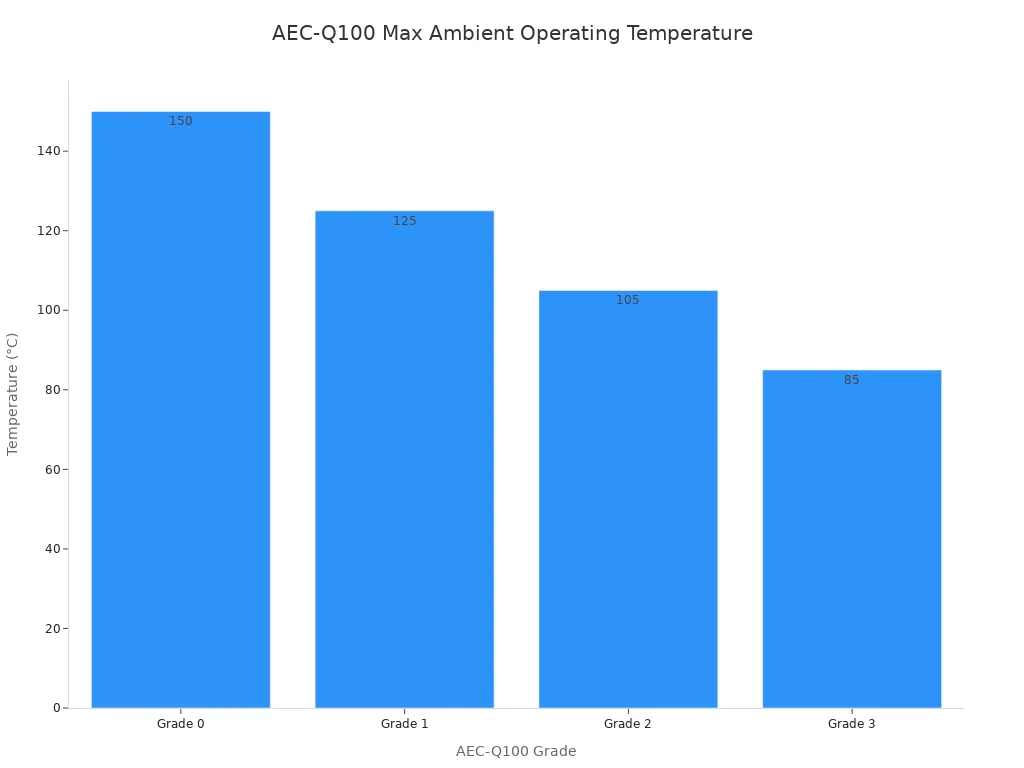
Good heat management protects each semiconductor component inside electronic control units. High internal power use raises chip junction temperature above ambient temperature, which lowers overall system performance. Designers calculate thermal dissipation risks to keep performance steady under heavy use. Decoding AEC-Q100 temperature grades helps you choose automotive-grade ICs that handle intense heat inside harsh automotive environments. You keep components reliable by selecting parts rated for real driving conditions. Careful testing leads to better buying decisions when getting automotive-grade ICs.
AEC-Q100 Test Mechanisms and Compliance
AEC-Q100 Stress Testing Mechanisms
You must verify AEC-Q100 test mechanisms to ensure product quality. Semiconductor manufacturers run rigorous stress testing on high-temperature operating life to detect early device failures. Testing boosts product reliability under stress. Chips endure extreme heat inside testing chambers. Engineers apply highly accelerated stress testing to push moisture into packaging. This method uncovers weak points before full automotive production starts. You need automotive-grade ics to protect vehicle control units.
Electrostatic discharge testing protects delicate microchips against electric surges. These rigorous stress testing procedures ensure superior reliability in demanding driving conditions. Every single ic inside a vehicle system must maintain peak performance across years of daily operation. Standard devices fail early under heat pressure. Proper qualification guarantees long-term durability across the operational life. You protect vehicle designs when you select verified automotive-grade ics for every harsh automotive environment.
PPAP Level 3 and Vendor Self-Declaration
The Automotive Electronics Council does not grant an official certification. No central certification body audits these chips. Instead, AEC-Q100 relies on vendor self-declaration. You must request a complete Production Part Approval Process Level 3 package to verify component performance. Engineers select automotive-grade ics to prevent unexpected system failures. Level 3 requires a signed Part Submission Warrant along with eighteen supporting data elements. This package includes material test results, initial process capability studies, and qualified laboratory documentation.
| Element | Required Evidence |
|---|---|
| Process FMEA | Process failure analysis |
| Control Plan | Manufacturing controls |
| Performance Test Results | AEC-Q100 test data |
| Part Submission Warrant | Compliance declaration |
A valid AEC-Q100 qualification proves that parts withstand a tough automotive environment. You preserve functional safety by enforcing strict process change notifications and fixed bill of materials. Automotive suppliers cannot alter manufacturing steps without your prior written approval. These procedures support high automotive safety integrity level targets in modern vehicles. Buyers who demand full qualification packages secure better reliability and maintain functional safety across all automotive-grade ics.
Automotive Grade Semiconductor vs Industrial ICs
Defect Rates and Lifetime Expectations
Factory parts operate fine inside plants, but vehicle environments demand tougher chips. To achieve zero-defect performance, you must pick an automotive grade semiconductor. Chipmakers target zero defects per million items when producing automotive-grade ics. Industrial parts accept higher failure counts throughout early use. Tough quality checks shield vehicle systems from early breakdowns. Checking parts thoroughly stops expensive product recalls down the line.
Fast growth in the automotive ic market pushes makers to craft durable chips. Vehicles need fifteen full years of service while facing harsh driving environments. Industrial chips often last for five to ten operating years. Vehicle usage creates severe mechanical shaking alongside extreme thermal stress. Automotive-grade ics offer steady operation over long service lives. Engineers perform detailed testing to guarantee dependable performance over time.
Substitution Liability and Risk Mitigation
Swapping standard chips with cheap consumer options brings major legal hazards to your firm. Buying right lowers design dangers. Placing non-qualified parts inside key control modules reduces total system safety. Unapproved items degrade system reliability. Low reliability causes sudden electrical breakdowns while driving. Using uncertified parts risks large financial losses for your production business.
| Feature Category | Industrial ICs | Automotive Grade ICs |
|---|---|---|
| Target Defect Rate | Low PPM | Zero PPM Target (<1 PPM) |
| Standard Qualification | JEDEC JESD47 | AEC-Q100 |
| Production Life | 5 to 10 Years | 15+ Years |
Smart buyers use strict purchasing rules when picking supply vendors. You must confirm complete compliance with the aec-q100 stress-test standard before buying. Careful checks shield your designs during tough ISO 26262 safety audits. This step helps hit top automotive safety targets. Qualified automotive-grade ics run well and protect every passenger. Ordering verified AEC-Q100 items guards supply lines and raises component quality. Proper records prevent costly safety disputes.
Sourcing AEC-Q Components and Risk Mitigation
Validating Part Numbers and Documentation
You need a clear checking plan when buying car-grade parts for key vehicle systems. Unauthorized independent sellers bring real risks like fake parts and incorrect AEC-Q100 details.
Follow these four simple steps to check your part orders carefully:
-
Match the full part number code with the official factory datasheet.
-
Ask for a complete PPAP Level 3 packet to check plant records and tests.
-
Demand AS6081 test papers and full history records for unauthorized parts.
-
Get written notes on process updates before you approve any final purchase.
Buying automotive-grade ICs from unauthorized sellers breaks part history tracking. Independent brokers often lack documented design updates and full qualification test data. Standard replacement chips rarely meet all tough car safety test standards. You avoid costly product recalls by getting real test papers from authorized sellers.
Lead Time Strategies for AEC-Q Sourcing
The fast-growing car chip market causes heavy fighting for factory wafer output. Normal delivery times now range from 16 to 32 weeks for standard vehicle processors. Popular parts like TI TMS570 face long wait times between 18 and 40 weeks. NXP S32K chips show typical wait times near 16 weeks. Big chip factories move old production lines toward new artificial intelligence products. This shift cuts down available supplies for older car microchips.
You must build active buying plans to shield your factory assembly lines. Relying on sudden open-market sales raises big money risks.
-
Secure direct factory supply promises for main vehicle control microchips.
-
Test alternative car-grade chips early during initial circuit board design steps.
-
Set up backup chip choices for central controllers to hold pricing power.
-
Watch supplier factory news to spot future stock shifts early on.
Smart buying plans protect your assembly lines from sudden factory delays. Using two suppliers gives your buying team strong power during tight supply periods. You get vital car-grade chips and keep assembly moving by securing direct factory supply lines. You manage AEC-Q100 parts with confidence when you build proper sourcing checks and pick tested car ICs.
Mastering decoding AEC-Q100 helps your team buy reliable automotive semiconductors. Good purchasing takes real discipline across your whole supply chain. You avoid compliance risks by asking for full PPAP Level 3 paperwork. Matching part numbers with original factory reports protects you from costly legal issues. Never take incomplete paperwork or unverified replacement chips. Steady car part supplies depend on thorough vendor checks. Smart buying strategies protect your factory build schedules. Procurement leaders must check supplier compliance policies before signing final agreements today. Every verified AEC-Q100 integrated circuit protects critical systems and keeps passengers safe.

Written by Jack Elliott from AIChipLink.
AIChipLink, one of the fastest-growing global independent electronic components distributors in the world, offers millions of products from thousands of manufacturers, and many of our in-stock parts is available to ship same day.
We mainly source and distribute integrated circuit (IC) products of brands such as Broadcom, Microchip, Texas Instruments, Infineon, NXP, Analog Devices, Qualcomm, Intel, etc., which are widely used in communication & network, telecom, industrial control, new energy and automotive electronics.
Empowered by AI, Linked to the Future. Get started on AIChipLink and submit your RFQ online today!
Frequently Asked Questions
What is the main difference between AEC-Q100 and standard industrial ICs?
Industrial parts follow basic JEDEC rules. These chips suffer from higher failure rates during normal use. Car parts pass tough AEC-Q100 checks instead. Their goal is zero defects per million pieces. Using car-grade parts makes your systems run better and last longer.
Does the Automotive Electronics Council issue an official certification for AEC-Q100?
No single group awards official certificates for these chips. Manufacturers use self-declaration methods instead. You must ask suppliers for full PPAP Level 3 files. These papers prove a chip meets safety standards and endures harsh conditions.
Which AEC-Q100 temperature grade do you need for powertrain components?
You need Grade 0 parts for powertrain systems. These microchips withstand hot outside temperatures reaching +150°C. Engine control setups produce lots of heat. Choosing Grade 0 components protects system safety and preserves strong chip performance under high stress.
Why must you avoid using uncertified consumer chips in car designs?
Unapproved parts break quickly from strong vibrations and severe heat. Using wrong parts brings serious legal risks during ISO 26262 safety checks. Buying real automotive components secures your supply chain and keeps work moving without stops.