Comparing Different Types of Current Sensors for EV Applications
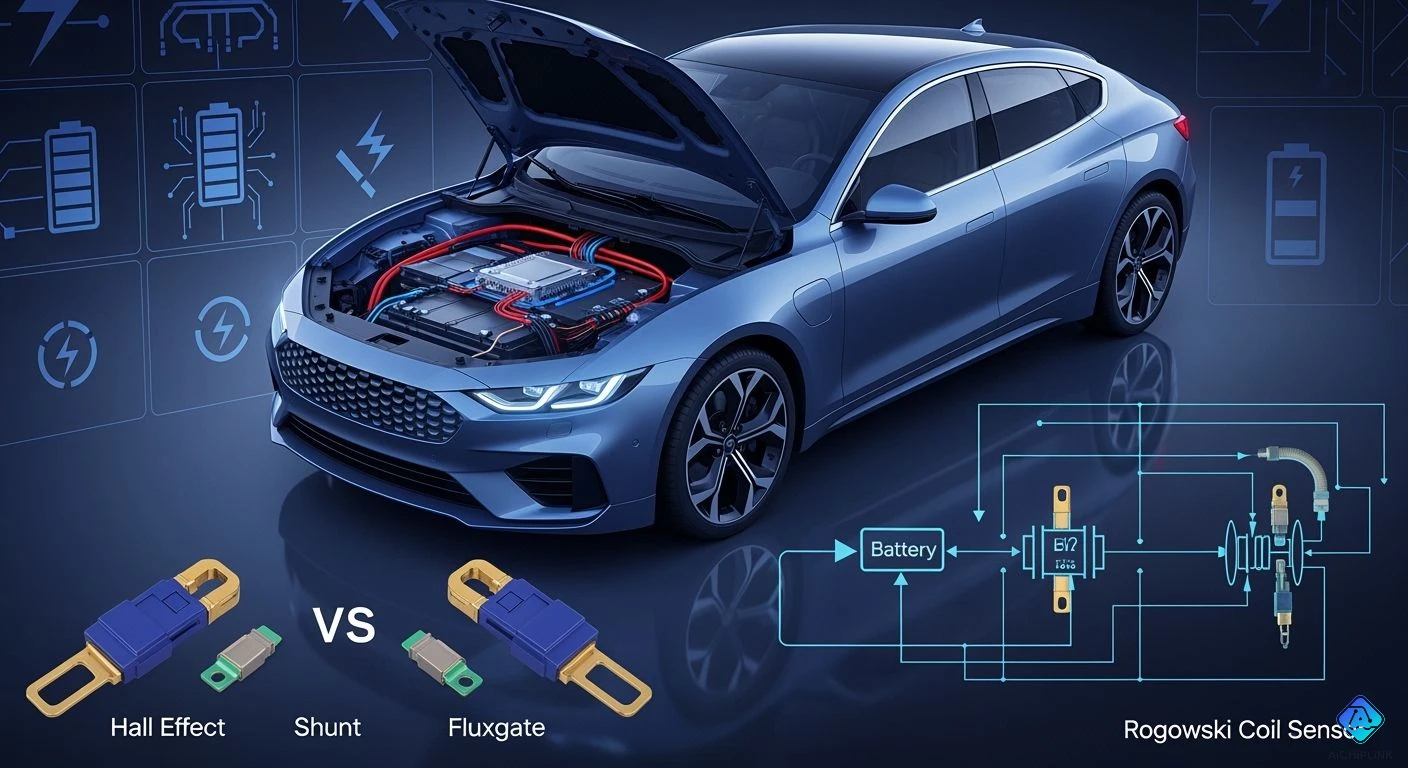
If you want your electric car to work well, you must focus on the Current Sensor Selection for EVs. Contact-based sensors like shunt and closed-loop sensors are popular because they are very accurate and reliable. These sensors are used in battery monitoring and motor control systems. Accurate current sensing keeps your EV safe, helps it use energy better, and makes driving safer. When making the Current Sensor Selection for EVs, you should think about how sensors help manage power safely and efficiently.
Key Takeaways
-
Current sensors are important for electric cars. They help keep batteries safe. They make sure energy is used well. They help motors work right.
-
Shunt sensors do not cost much. They are good at checking batteries. They help see if the battery is healthy. They help check how much charge is left.
-
Closed-loop sensors are very accurate. They react quickly. They are good for motor control. They are good for safety jobs.
-
Flux gate sensors are the most accurate. They stay stable over time. They work well in high-voltage circuits. They are great for battery management systems.
-
When picking a current sensor, think about accuracy. Think about bandwidth. Think about how long it lasts. Think about isolation. Think about cost. This helps your electric car work its best.
Why Current Sensing Is Critical in EVs
Battery Management Role
Current sensors help keep your EV battery safe and healthy. They check how much current goes in and out of the battery. This helps you know the state of charge and health. Good current sensing stops overcharging or deep discharge. This keeps your battery from getting damaged and helps it last longer. Battery management systems use these sensors to keep the battery safe. You also get better thermal management, so the battery does not get too hot.
Tip: Watching the battery closely saves money and makes your EV work better.
-
Current sensors help with:
-
Watching battery current all the time
-
Figuring out state of charge and health
-
Keeping the battery safe and lasting longer
-
Stopping dangerous charging problems
-
Making sure everything works well
-
Motor Control and Safety
Your EV needs good current sensing for motor control. The motor uses this data to run well. Sensors check the current in the motor and help the inverter send the right amount. This makes sure your EV has the right speed and torque. Watching the current also keeps your system safe. If the current is too high, the system can turn off or warn you before damage happens.
-
In many cases, current sensors:
-
Make motor control more accurate
-
Help watch for safety problems right away
-
Stop hardware from getting hurt by current spikes
-
Let systems act fast if there is danger
-
Charging and Efficiency
You want your EV to charge safely and work well. Current sensors are important for charging because they check current in real time. This helps the charger control heat and stop overheating. Good current sensing also finds problems early, so you can fix them fast. With the right sensors, your power electronics work better and last longer.
-
For charging, current sensors:
-
Make power conversion more accurate
-
Help control heat
-
Find faults early
-
Make charging safer and more efficient
-
Overview of Current Sensor Types in EVs
Electric vehicles use different current sensors to check power flow. Each sensor works in its own way. Each one is good for a special job in your EV. You can find shunt, open-loop, closed-loop, and flux gate sensors in new electric cars. These sensors help you get good measurements, keep things safe, and save energy. You need to know how each sensor works to pick the best one.
Shunt Sensors
Shunt sensors use a simple idea. You put a resistor in the path of the current. When current moves, the resistor makes a small voltage drop. You measure this voltage to find the current using Ohm’s Law (V = I × R). This works for both AC and DC currents. Shunt sensors are cheap and very accurate. You see them a lot in battery checks and power electronics.
Note: Shunt sensors need amplifiers because the voltage drop is tiny. You also have to think about the resistor’s value, power, and heat.
-
Key points about shunt sensors:
-
They cost less and are very accurate
-
You can use them for AC and DC
-
They need amplifiers for small signals
-
They stay accurate for a long time
-
They react fast to problems
-
Open-Loop Sensors
Open-loop sensors use the Hall effect to check current. When current goes through a wire, it makes a magnetic field. The sensor finds this field and turns it into a voltage. You get galvanic isolation, so high voltages stay away from sensitive parts. Open-loop sensors are small and easy to use. Their accuracy can change with heat and other magnets.
| Specification | Value |
|---|---|
| Bandwidth | DC to 50–120 kHz |
| Current Range | A few amperes to several kiloamperes |
| Accuracy | ±2–10% |
| Temperature Drift | Affected by temperature and external magnetic fields |
| Isolation | Galvanic isolation |
You can use open-loop sensors when you care more about price and size than perfect accuracy.
Closed-Loop Sensors
Closed-loop sensors also use the Hall effect but add feedback. The sensor balances the magnetic field with a second current. This makes them more accurate and faster. You get better results and less drift over time. Closed-loop sensors give strong isolation and quick problem detection. They are great for motor control and safety.
| Characteristic | Value |
|---|---|
| Accuracy | ±1% (excluding offset voltage) |
| Linearity Error | ≤±0.5% IPN |
| Response Time | ≤5μs |
| Bandwidth | Up to 50kHz (-3dB) |
| AC Isolation Voltage | 3.6kV (50Hz, 1min) |
| Transient Withstand Voltage | 6.6kV (1.2/50μs) |
| Creepage Distance | 12.5mm |
| Clearance | 11.0mm |
You often see closed-loop sensors in traction inverters and high-voltage batteries.
Flux Gate Sensors
Flux gate sensors use a special magnetic core to sense current. They push the core into saturation and measure the voltage in a pickup coil. This gives very high accuracy and little drift, even in hot or cold weather. Flux gate sensors can find big and tiny currents. This helps protect your battery and electronics.
| Parameters | CHIPSENSEFR1C 300 H00 | CHIPSENSEFR1C 500 H00 | Test Conditions |
|---|---|---|---|
| Sensitivity error | ±0.5% | ±0.5% | Full Scale |
| Linearity Error | ±0.1% | ±0.1% | 0 to IPN |
| Accuracy @ IPN | ±0.3% | ±0.3% | 25°C |
| Accuracy @Temperature | ±0.5% | ±0.5% | -40°C to 85°C |
| Offset Current | ±10mA | ±10mA | Static |
-
Flux gate sensors:
-
Give very good accuracy for checks and tests
-
Stay accurate over time and in any weather
-
Find both big and tiny leakage currents
-
Tip: Use flux gate sensors in battery systems when you need the best accuracy and stability.
Why Multiple Sensor Types Exist
There are different current sensors in EVs because each solves a special problem. Shunt sensors are cheap and accurate for simple jobs. Open-loop sensors are small and keep things safe for general checks. Closed-loop sensors are fast and exact for motor control and safety. Flux gate sensors are the best for battery checks and protection. If you know these differences, you can pick the right sensor for each part of your EV.
Shunt Sensor Details
How Shunt Sensors Work
A shunt resistor current sensor helps measure electric current in your EV. It works by putting a small resistor in the current’s path. When current goes through the resistor, a tiny voltage drop happens. You measure this voltage drop to see how much current flows. The shunt resistor current sensor gives a fast and direct reading. You do not need magnetic current sensors for this method. You can use this sensor for AC and DC currents. Engineers like the shunt resistor current sensor because it is simple and does not need complex electronics.
Tip: Make sure the resistor value fits your system. If resistance is too high, energy gets wasted.
Advantages and Disadvantages
You should know the good and bad sides of the shunt resistor current sensor before using it. The table below shows the main points:
| Advantages | Disadvantages |
|---|---|
| Measures current right away | Makes more heat |
| Simple and costs less | Causes power loss in the circuit |
| Very accurate for many jobs | Wastes some energy |
The shunt resistor current sensor gives quick and accurate results. You can trust it for many EV jobs. But it can get hot and waste a bit of energy. Unlike magnetic current sensors, it does not keep high voltage away from other parts.
EV Use Cases
You mostly find the shunt resistor current sensor in battery management systems. This sensor helps check battery health, charge, and function. You can use it to keep your battery safe and lasting longer. The shunt resistor current sensor is popular because it is simple and cheap. You get exact current readings, which are important for battery safety. Magnetic current sensors are used in other parts of the EV, but the shunt resistor current sensor is best for battery monitoring. You can count on it to help your EV work well and stay safe.
Open-Loop Sensor Details
How Open-Loop Sensors Work
Open-loop sensors can measure current without touching it. They use the Hall effect to do this job. When current moves through a wire, it makes a magnetic field. The sensor finds this field and turns it into a voltage signal. This gives electrical isolation, so high voltages stay away from sensitive parts. Open-loop sensors work for both AC and DC currents. You often see them where safety and easy setup are important.
Tip: Open-loop sensors do not touch the current, so they last longer and are safer.
Pros and Cons
Open-loop sensors have good points and some limits. You should know both before you pick them for your EV.
Pros:
-
Give electrical isolation to keep things safe
-
Work with both AC and DC currents
-
Small size fits in tight spots
-
Respond fast to changes
-
Cost less than closed-loop sensors
Cons:
-
Accuracy changes if temperature changes
-
Sensitive to strong magnetic fields close by
-
Not as exact as closed-loop or flux gate sensors
-
Not very accurate for very low currents
Note: You may need to check calibration often if your EV gets hot or cold.
EV Applications
You can find open-loop sensors in many electric vehicle systems. These sensors help measure current safely and quickly. They fit well where you need isolation and okay accuracy. The table below shows where you can use open-loop sensors and why they work well.
| Electric Vehicle Systems | Reasons for Selection |
|---|---|
| EV traction inverters | Need strong isolation, handle high overload, and respond fast |
| Solar inverters | Give electrical isolation and okay accuracy |
| Battery energy storage systems | Use little power and cost less |
| Motor drives | Measure both AC and DC currents with isolation |
| Robotics | Small size and work well |
| UPS systems | Give reliable current sensing |
| Industrial automation equipment | Used a lot for current sensing |
You can trust open-loop sensors for many EV jobs. They give a good mix of safety, speed, and price. If you need better accuracy, try closed-loop or flux gate sensors.
Closed-Loop Sensor Details
How Closed-Loop Sensors Work
Closed-loop sensors use the Hall effect like open-loop sensors. You put a conductor inside the sensor. When current moves through the conductor, it makes a magnetic field. The Hall element finds this field. A feedback coil then cancels out the magnetic field. This keeps the sensor balanced all the time. The feedback coil’s current matches the conductor’s current. The sensor checks this feedback current for a very accurate result.
Tip: Closed-loop sensors give quick and steady readings, even if it gets hot or cold.
Pros and Cons
Closed-loop sensors have many good points, but also some downsides. Here is a simple list:
| Pros | Cons |
|---|---|
| Very accurate and stable | Costs more than shunt or open-loop |
| Responds quickly | Bigger in size |
| Works for AC and DC | Uses more power |
| Gives strong electrical isolation | Circuit is more complex |
| Stays accurate over time |
You can count on closed-loop sensors for good results. They work well even in hard places. They are trusted for important EV parts.
EV Applications
Closed-loop sensors are used in electric vehicles where you need exact current checks. Battery Management Systems use them for high accuracy and steady readings. This helps watch the battery’s charge and health. These things keep your battery safe and help it last longer. You also find closed-loop sensors in traction inverters and motor controllers. They help control speed and torque very well. You can use them in charging systems to spot problems fast and keep your EV safe.
Note: If you want top safety and performance, closed-loop sensors are a smart pick for key EV systems.
Flux Gate Sensor Details
How Flux Gate Sensors Work
Flux gate sensors measure electric current very accurately. They have a special magnetic core inside. When current moves through a wire, it makes a magnetic field. The sensor sends signals to push the core into saturation. A pickup coil finds changes in the magnetic field. This lets you measure both small and big currents. The readings stay steady even if the temperature changes. Flux gate sensors do not touch the current directly. This gives strong electrical isolation. You can trust these sensors for exact current checks in your EV.
Tip: Flux gate sensors work well in tough places. They resist changes from heat and electrical noise.
Pros and Cons
Flux gate sensors have good points and some limits. The table below shows the main pros and cons for EV use:
| Pros | Cons |
|---|---|
| Not affected much by traffic stress like loop sensors. | Need pavement cuts or boring to install. |
| Smaller area cut in pavement, so less damage. | Cannot usually find stopped vehicles. |
| Wireless data means no need for pavement cuts. | Some models only sense in small zones. |
Flux gate sensors give high accuracy and steady performance. They do not drift much as time passes. You also get strong electrical isolation. But you may have trouble with setup and detection zones. Some models need special installation, which takes more time.
EV Applications
Flux gate sensors are used in many important EV systems. Battery management systems use them to check big and small currents. This keeps your battery safe from harm. You also see these sensors in high-voltage circuits where safety is very important. Engineers use flux gate sensors to find leakage currents and stop faults. You can count on them for exact checks in charging stations and power electronics. Their steady readings and accuracy make them a top pick for key EV parts.
Note: If you want the best accuracy and steady results, use flux gate sensors for your EV’s battery and safety systems.
Side-by-Side Comparison of Sensor Types
Performance Table: Accuracy, Bandwidth, Cost, Lifetime
You want to pick the best current sensor for your electric car. The table below helps you compare each sensor type. It shows how they are different in accuracy, bandwidth, cost, and how long they last.
| Sensor Type | Bandwidth | Accuracy | Relative Cost | Product Lifetime |
|---|---|---|---|---|
| Shunt | DC | High | Low | Long |
| Open-loop Hall Effect | kHz | Moderate | Moderate | Long |
| Closed-loop Hall Effect | kHz | High | Moderate | Long |
| Fluxgate | kHz | Very High | High | Very Long |
Note: Bandwidth means how quickly a sensor can react. If the bandwidth is higher, the sensor works better for fast systems.
Flux gate sensors have the best accuracy and last the longest. Shunt sensors are cheap and work well, but only for DC. Open-loop sensors are okay for accuracy and speed. Closed-loop sensors are good for both AC and DC, and they are very accurate.
Key Differences Summary
You should pick a sensor that fits your EV’s needs. Here are the main things to remember:
-
Shunt sensors are great for battery checks. They are cheap and accurate, but only for DC.
-
Open-loop sensors are easy to use and cost less. They do not give the best accuracy.
-
Closed-loop sensors are very accurate for both AC and DC. They are good for motor control and safety.
-
Flux gate sensors are the most accurate and last the longest. They work well even in hard places.
Tip: Always think about what your EV system needs before picking a sensor. The right sensor makes your car safer, more efficient, and last longer.
Current Sensor Selection for EVs
Selection Criteria
When you pick a current sensor for your electric vehicle, you must think about a few key things. The right current sensor selection for evs helps your car work well and stay safe. You want your sensor to give accurate and steady readings in every situation. Here are the main points to check:
-
Accuracy: You need high accuracy for battery management and motor control. If your sensor is not exact, your systems might not work right. Some jobs, like checking battery health, need the best accuracy.
-
Bandwidth: Fast-changing currents need sensors with high bandwidth. Motor drive systems and charging stations often need quick measurement. If your sensor is slow, you could miss important changes.
-
Product Lifetime: You want sensors that last as long as your EV. Long product lifetime means less fixing and fewer replacements.
-
Isolation: Electrical isolation keeps your sensitive electronics safe. Many jobs need sensors that keep high voltage away from control circuits.
-
Cost: You must balance performance with price. Some sensors cost more but give better measurement and last longer.
New technology in current transformer and current transducer has changed how you pick current sensor selection for evs. Now you can use contactless sensors, smaller sensors, and smart features like IoT and AI. These upgrades make sensors more accurate, efficient, and easy to use. Electric vehicles need exact measurement for power management. You can now find sensors that fit in small spaces and work with advanced systems.
Tip: Always match your sensor’s features to your EV’s needs. Do not pick a sensor just because it is popular.
You now know that current sensors keep your EV safe and working. These sensors watch charging, motor control, and battery health. They give you key data for energy use and finding problems. When picking a sensor, think about accuracy, speed, and how long it lasts. Make sure the sensor fits what your EV needs. For harder projects, check rules like ISO 26262. You should also look at tips from IEEE, IEC, and SAE. You can ask experts in the market for help too.

Written by Jack Elliott from AIChipLink.
AIChipLink, one of the fastest-growing global independent electronic components distributors in the world, offers millions of products from thousands of manufacturers, and many of our in-stock parts is available to ship same day.
We mainly source and distribute integrated circuit (IC) products of brands such as Broadcom, Microchip, Texas Instruments, Infineon, NXP, Analog Devices, Qualcomm, Intel, etc., which are widely used in communication & network, telecom, industrial control, new energy and automotive electronics.
Empowered by AI, Linked to the Future. Get started on AIChipLink and submit your RFQ online today!
Frequently Asked Questions
What is the main purpose of current measurement devices in EVs?
You use current measurement devices to see how much electric current moves in your EV. These devices help protect your battery and make sure your motor runs right.
How do current sensing technologies improve detection accuracy?
You get better accuracy with advanced current sensing technologies. These technologies let you find changes in current fast and help you avoid mistakes.
Where can you find current measurement applications in electric vehicles?
You find current measurement in battery management, motor control, and charging systems. These uses help you watch energy use and keep your EV safe.
What makes current transducer applications important for EVs?
You need current transducer applications to turn current signals into data you can read. This helps you control your EV’s systems and find problems early.
Can you use different sensors for each application in your EV?
You can use different sensors for each job. Shunt sensors are good for batteries. Closed-loop sensors work for motor control. Flux gate sensors give high accuracy for safety checks.