What is a Tactile Sensor? A Complete Guide to Types and Uses
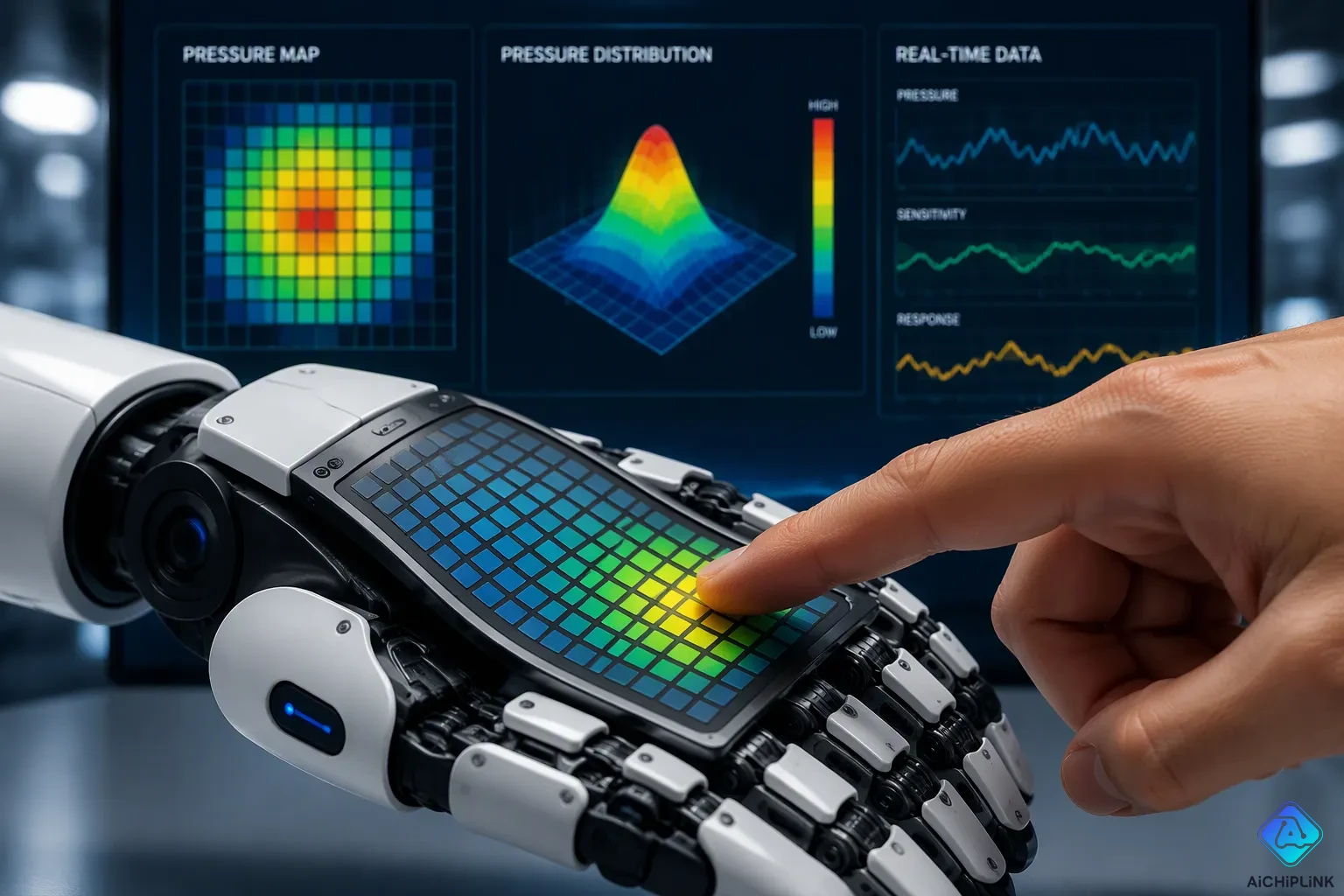
A tactile sensor is a device that detects physical contact and turns it into data about force, pressure, contact location, texture, or temperature. These devices copy the human sense of touch. Engineers model them after biological skin, which helps machines sense what is around them. The global tactile sensor market reached US $16.13 billion in 2024, according to market research. This growth shows how important this technology has become. Different types of tactile sensors serve different purposes, from robotic fingertips to medical devices. These sensors offer special strengths for specific tasks. Each design works best in certain environments. Understanding these differences helps engineers choose the right option.
Key Takeaways
-
A tactile sensor picks up physical touch and changes it into data about force, pressure, location, texture, or temperature.
-
Capacitive, resistive, piezoelectric, and optical designs each work best for different tasks.
-
Tactile sensors can measure force, pressure, location, and how a surface feels, while touch sensors can only tell if something is making contact.
-
Robots use tactile sensors to sense when they hit something, hold objects without damage, and work safely with people.
-
Tactile sensors make healthcare, factory automation, and car safety better by giving exact touch feedback.
How a Tactile Sensor Works
From Contact to Electrical Signal
A tactile sensor measures certain features of an object by touching it directly. When the sensor surface pushes against something, it picks up details about force, texture, or temperature. The device then turns this physical input into electrical signals that machines can read and understand.
This conversion depends on a few physical principles. Resistance change happens when mechanical stress shifts the electrical resistance of a conductive material. This shift follows a steady pattern as force goes up. Capacitance variation occurs when pressure changes the gap between conductive plates separated by a dielectric. This capacitance change creates a signal that can be measured. Piezoelectric materials make an electrical charge when mechanical stress is applied. Optical displacement methods change the light path inside a clear medium. Magnetic field variation uses the movement of a magnetic object to cause a field change measured by a Hall-effect sensor.
One real-world example uses a Force Sensing Resistor or FSR. This thin-film device turns applied pressure into a change in electrical resistance. As the load goes up, resistance goes down in a predictable way. The FSR outputs a resistance value, not a voltage directly. To get a signal that can be measured, the FSR sits in a voltage divider circuit connected with a fixed resistor. As the load changes the resistance, the voltage across the fixed resistor shifts in proportion. This changing voltage goes to an analog-to-digital converter. The converter turns the analog voltage into a digital value for microcontrollers.
Tactile sensors have been built using many physical principles. Capacitive and piezoresistive methods are still the most common. Capacitive devices store electric charge between two electrodes separated by an elastic insulator. When touch happens, the capacitance change is measured and sent out. These sensors can detect normal touch and shear direction. They resist temperature changes and use less power. Piezoresistive sensors detect changes in electrical resistance when materials touch each other. They use conductive rubber, ink, silicone, or foam. They offer low cost and quick response but suffer from signal drift.
Baseline tactile sensors detect forces from 0.1 to 10 Newtons with spatial resolution of 1 to 5 millimeters. Enhanced technologies target sub-milliNewton sensitivity and thickness under 100 micrometers.
Materials and Signal Processing
The materials in sensing layers decide how a tactile sensor performs. Conductive elastomers allow high flexibility while keeping electrical conductivity. They handle repeated bending and keep a steady response. Nanostructured materials like carbon nanotubes boost sensitivity through high surface area. Polymer composites mix flexible polymers with reinforcing agents for mechanical durability. Multilayer structures combine protective outer layers with sensitive inner layers. Self-healing materials use reversible chemical bonds to fix micro-damage and extend the lifespan of the sensor over many cycles.
Conductive cloth uses metal-plated fibers such as nickel or copper. It operates from -20°C to 100°C with a range of 1 to 80 psi. Flex circuits made from polyimide film withstand up to 200°C and 2000 psi. Conductive Lycra stretches up to 10 percent deformation.
Signal processing turns raw data into usable tactile information. The process starts with preprocessing steps like noise reduction and signal amplification. Raw signals contain electrical noise that must be filtered out before analysis. Feature extraction follows using frequency analysis or wavelet transforms. These methods spot patterns that match specific touch events. Machine learning models then map signals to force vectors based on training data from known physical interactions.
Digital filtering removes noise through adaptive methods like statistical reduction. Pattern recognition uses time-domain and frequency-domain analysis with neural networks. Real-time processing runs on microcontrollers and FPGAs for immediate feedback. Multi-channel array processing uses multiplexing for map reconstruction. These techniques allow detailed analysis of touch distribution across the sensor array.
This device measures information arising from physical interaction with its environment. The combination of smart materials and intelligent signal processing makes modern sensing possible.
Tactile Sensor vs. Touch Sensor
Key Differences in Scope and Function
People often use these two terms like they mean the same thing. But they do not. A touch sensor answers just one simple question: did contact happen? It gives back only an on or off result. A tactile sensor does much more. It measures the contact pressure or force between two surfaces and reports how strong that force is, where it landed, and what the surface feels like.
That gap in ability shows up in the numbers. A tactile sensor can detect forces below 5 mN and displacements below 50 μm. Its force range reaches about 128 mN, and its displacement range spans 0 to 1.5 mm. Localization error stays below 0.05 mm. These numbers are close to human mechanoreceptor thresholds. A binary touch sensor cannot report any of them.
Lack of resolution is the main disadvantage of binary touch sensor technology, limiting its applications to problems such as contact or collision detection. In contrast, human haptic touch is rich in information for interaction, exploration, manipulation, and extraction of object properties such as texture, shape, hardness, and temperature.
When the Terms Overlap
The overlap happens in casual speech. A phone screen uses touch sensing to register a finger tap. That same screen does not measure how hard the finger presses. Engineers call the richer device a tactile force sensor. It is a digital instrument for measuring pressure, and it captures the presence and magnitude of touch rather than mere contact.
This distinction matters in real deployments. Tactile sensing systems are preferred in applications requiring direct physical contact between humans and robots. They enable detection of contact forces, pressure distributions, and surface textures. These capabilities are essential for safe collaborative tasks. In manufacturing environments where humans and robots work side by side, tactile feedback allows robots to adjust grip strength and movement in real time, reducing injury risk and improving precision. A simple touch or pressure switch could never support that kind of control.
Main Tactile Sensor Technologies
Capacitive, Resistive, and Piezoelectric
Engineers group tactile sensor technologies by how they turn physical touch into electrical signals. The table below sorts the main ways these sensors work.
| Primary Transduction Principle | Definition | Subtype | Subtype Mechanism |
|---|---|---|---|
| Marker-Based Transduction (MBT) | Finds tactile information by spotting marker movement and changes in marker density | Simple Marker-Based (SMB) | Uses separate markers whose movement directly shows surface deformation |
| Marker-Based Transduction (MBT) | Finds tactile information by spotting marker movement and changes in marker density | Morphological Marker-Based (MMB) | Puts markers together with special shapes or biomimetic structures to mechanically boost deformations |
| Intensity-Based Transduction (IBT) | Maps outside disturbances through changes in pixel values | Reflective Layer-Based (RLB) | Uses an inner reflective layer with controlled lighting to make intensity changes during contact |
| Intensity-Based Transduction (IBT) | Maps outside disturbances through changes in pixel values | Transparent Layer-Based (TLB) | Uses a clear outer skin to catch outside light, letting it gather tactile and visual information at the same time |
A capacitive tactile sensor leads in consumer electronics like smartphones and tablets for multi-touch uses. It gives high sensitivity, spatial resolution up to 1 mm, response time under 10 ms, and support for up to 10-point touch. Projected capacitive technology runs these devices. In robotics, a capacitive tactile sensor gives high dynamic range and temperature independence. Its downsides include stray capacitance, complex measurement circuits, cross-talk, noise, and hysteresis. A capacitive tactile sensor stretches more than a piezoresistive tactile sensor and reacts less to temperature changes.
A piezoresistive tactile sensor shows up in industrial, medical, and automotive interfaces where durability and cost matter. It works from -40°C to +85°C, lasts over 35 million touches, and keeps positional accuracy within 1.5 mm. It stands up to liquids and dust. Its construction is simple, its spatial resolution is high, and its cost is low. A piezoresistive tactile sensor also deals with hysteresis, high power consumption, and lack of reproducibility.
Piezoelectric sensors give high frequency response, high accuracy, high sensitivity, and high dynamic range. They fit dynamic sensing tasks. Their weak points include poor spatial resolution, charge leakage, and dynamic-only operation.
Optical, Pressure, and Camera-Based
An optical tactile sensor uses vision-based methods with a camera, a light source, and a soft silicone surface layer. When force hits the cap, the silicone deforms and changes internal light patterns. The camera catches these changes and turns them into tactile information. This design detects contact, pressure, and even force direction. DenseTact uses a hemispherical silicone fingertip and a camera to measure surface shape and forces. When the fingertip touches an object, reflective boundaries change, and the camera sees these alterations. Calibration data from known objects builds a machine-learning model for interpreting contact information.
An optical tactile sensor can also use light intensity modulation, reflective touch sensing, fibre-pair reflective sensing in elastomer, matrix arrangement, or photoelasticity. Photoelasticity causes birefringence in transparent materials under stress, which helps with slip measurement.
Camera-based tactile sensors beat traditional arrayed pressure sensors in several ways. Image sensors offer several to 10+ megapixels with pixel pitch in the μm range. Resolution on the sensor surface is tunable via the imaging lens. Measurement area adjusts by choosing an appropriate imaging lens. The sensor surface stays physically separated from the camera, giving robustness and design flexibility. Standard image sensor readout handles millions of pixels without complex scanner circuits. Computer vision libraries and machine learning frameworks extract complex tactile information. A multimodal tactile sensor combines these approaches for richer data.
Tactile Sensors vs. Force-Torque Sensors
What Each Sensor Measures
These two devices do different jobs, and engineers should not use them as if they were the same. A force-torque sensor measures all the forces and torques acting on a robot or end-effector. For example, a six-axis force/torque sensor mounted on a wrist detects a changing external wrench across the whole object. A tactile sensor works in another way. It captures how forces are spread out across a set sensory area, then makes sense of that spatial information. Its view stays limited to a small, defined contact region, like a coordinated array of touch sensors on a fingertip or palm.
| Sensor Type | Measured Variable | Scope of Measurement |
|---|---|---|
| Tactile sensor | Spatial distribution of forces perpendicular to a predetermined sensory area, plus interpretation of that spatial information | Confined to a small, defined contact region |
| Force-torque sensor | Total forces applied to an object | Whole-object or global force measurement |
A tactile sensor also picks up things that a force-torque sensor cannot. It estimates how contact pressure is spread out and rebuilds both the location and size of the contact region from Hall-effect readings. Optical measurement through a deformable contact pad gives planar sliding velocity. Contact shape and size affect the center of rotation and set the limit surface and frictional torque. Force-torque sensing captures none of these localized details.
Choosing the Right Sensor
The right choice depends on the task. Engineers prefer force-torque sensors when they need global force and torque data for a whole arm or end-effector, such as checking payload weight or spotting an external push on a manipulator. They prefer tactile sensors when the application needs localized pressure maps, texture data, or slip detection at a fingertip.
Robotics and industrial settings show this split clearly. A robot arm lifting a heavy part gains from a force-torque sensor at the wrist. A robotic hand judging firmness, texture, or shear needs tactile arrays on its fingers. Mounting location also shapes the decision. Force-torque sensors sit at joints or wrists, while tactile sensors sit at the point of contact. Teams that mix up the two often overspend on the wrong device or miss critical data.
Applications of Tactile Sensors
Tactile sensor technologies help many industries today. The table below shows how different sectors use these tools.
| Industry | Primary Use Cases |
|---|---|
| Healthcare | Surgical robotics, training simulators, rehabilitation devices |
| Industrial automation | Precise manipulation, safe collaboration, quality control |
| Robotics | Collision detection, grasping control, slip detection |
| Automotive | Seat pressure mapping, driver interfaces, safety systems |
Medical, Industrial, and Robotics
Robotics is a big market for tactile sensors. Robot skin with pressure sensors covers the robot's surface. The system feels mechanical contact and knows where it happens. This sensor can detect contact forces as low as 1 Newton. Each sensor in the array gives local data. A safety circuit checks every sensor cell. When a collision occurs, the system stops the robot in under 10 milliseconds. This meets the Power and Force Limiting standard under ISO/TS 15066. Soft, shock-absorbing materials lower injury risk. Durability tests show over 50 million switching cycles.
Robotic hands or grippers use tactile sensors to feel how hard, smooth, or shaped an object is. They change their grip based on the object's traits. Factory automation uses sensing for putting parts together. The system can find where an object is in the hand and how it is turned. In warehouses, the sensor controls grip based on weight and hardness. Detecting slip during moving items makes them safer. In farming, a pressure sensor lets robots pick fruit without damage. The system handles different levels of ripeness and firmness.
Healthcare uses are growing. Surgical robots use these sensors to watch how hard they grip. The sensors measure push, pull, grip, and texture instantly. Active feedback lets surgeons feel resistance when cutting and stitching. Studies show this feedback lowers the force on tissue by up to 43 percent. AI-augmented haptics study large amounts of load data. The system suggests best load levels and warns about risks.
Automotive and Research
Cars use tactile sensors for safety and for drivers to interact with the car. Seat occupancy detection relies on tactile sensors. Pressure mapping on seats, armrests, and steering wheels helps make them more comfortable. Collision avoidance systems and ADAS benefit from tactile feedback. Parking assistance uses sensors for reliable detection. Self-driving cars use haptic feedback to alert drivers. They capture and understand touch data that cameras alone cannot provide.
Research uses tactile sensors for testing materials and studying how humans and robots interact. Different sensors go in different places. Arrays on fingertips catch small details. Larger arrays on robot arms detect bigger collisions. Each location has its own job.
A tactile sensor picks up physical touch and turns it into data about force, pressure, location, texture, or temperature. These devices copy the human sense of touch. Capacitive, resistive, piezoelectric, and optical designs each work best for different jobs. Capacitive sensors stretch well and do not react much to temperature changes. Piezoresistive sensors are tough and cost little. Optical sensors use cameras to capture rich contact details. Tactile sensing now plays a key role in robotics, healthcare, and automation. Robots use tactile sensors to detect collisions and interact safely with people. Surgical systems depend on tactile sensors for precise grip control. Factories use them for quality checks and assembly. Researchers are working toward thinner designs. Future tactile sensor technologies will lead to smarter machines.

Written by Jack Elliott from AIChipLink.
AIChipLink, one of the fastest-growing global independent electronic components distributors in the world, offers millions of products from thousands of manufacturers, and many of our in-stock parts is available to ship same day.
We mainly source and distribute integrated circuit (IC) products of brands such as Broadcom, Microchip, Texas Instruments, Infineon, NXP, Analog Devices, Qualcomm, Intel, etc., which are widely used in communication & network, telecom, industrial control, new energy and automotive electronics.
Empowered by AI, Linked to the Future. Get started on AIChipLink and submit your RFQ online today!
Frequently Asked Questions
What makes a tactile sensor different from a touch sensor?
A binary touch sensor only knows if something touched it. A tactile sensor measures force, pressure, location, and texture. Touch sensors give just one on-or-off answer. Tactile sensors gather rich details about surfaces and how contact spreads out.
How do tactile sensors help robots?
Tactile sensors let robots feel contact and measure how hard they grip. These sensors turn physical touch into electrical signals. Robots use this information to work safely and handle objects with care.
Which tactile technology works best for industrial settings?
Piezoresistive tactile designs are tough and cost little. Capacitive tactile types are more sensitive. These sensors also handle temperature changes well.
What industries use these tactile devices most?
Robotics and healthcare use these devices a lot. Surgical systems use pressure sensors to control grip. The sensor makes operations safer.