What Are SerDes Chips and Their Role in ADAS Cameras?
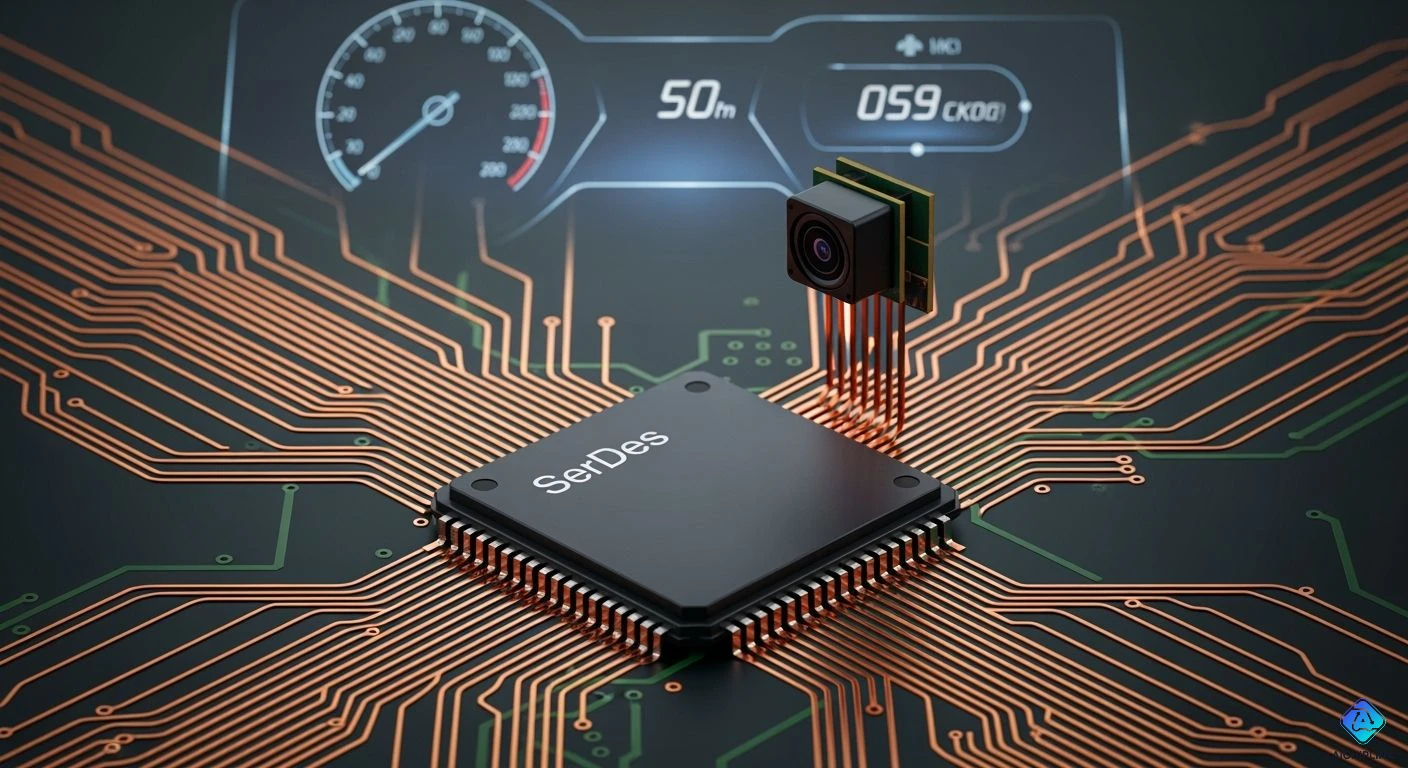
You use serdes chips to change camera data formats. Serdes changes data from parallel to serial and back. This helps car cameras send video data very fast. The data can travel far with only a few wires. These chips let cameras talk to other car parts quickly. This is important for advanced driver help systems and adas features. Serdes lets you send lots of data fast. It also uses less wiring and gives more bandwidth. Serdes technology cuts down on noise and power use. It also makes cables smaller. This helps cameras stay small and work well. The best SerDes Chips for ADAS Cameras work strong in tough car conditions.
Key Takeaways
- SerDes chips change camera data from parallel to serial. This lets data move fast and uses fewer wires. These chips help ADAS cameras work better. They make sure data moves quickly, which is important for safety features like emergency braking. SerDes technology cuts down on electromagnetic interference. This keeps signals strong and clear, even when there is a lot of noise. Picking the right SerDes chip makes signals better and more reliable. This helps your camera system work well in any situation. Protocols like FPD-Link and GMSL are needed for fast and steady data transfer in ADAS camera systems.
SerDes Basics in Automotive Cameras
What Is SerDes?
You hear serdes a lot when learning about car cameras. Serdes means serializer deserializer. It changes data from parallel to serial and back. A serializer takes wide data from a camera. It turns it into one stream. A deserializer gets this stream. It changes it back to the original format. This helps send lots of data fast with fewer wires.
You need serdes in car cameras. These systems send good video to a central processor. The processor uses this to help the car stay safe. Serdes chips make sure data moves fast and stays clear. This works even if the camera is far from the main computer.
Tip: Serdes keeps your camera system simple and reliable. You use fewer wires. This means less weight and fewer problems.
How SerDes Works
Serdes chips change wide, parallel data from cameras into a narrow, serial stream. This stream goes through one cable to the main unit. The deserializer changes the serial data back to parallel form. This lets you send video and sensor data far without losing quality.
Fast data transmission is important for ADAS camera performance. You want cameras to send clear images quickly. This speed helps the car spot things and react fast. For example, adaptive cruise control and emergency braking need instant data to keep you safe.
ADAS cameras often need data rates around 1.5 Gbps for 1080p video at 30 frames per second with 24-bit color. Some cameras need up to 3.5 Gbps. Serdes technology supports these high data rates. Standards like MIPI A-PHY and ASA-ML can handle up to 16 Gbps downlink and 4 Gbps uplink. This means you can use many cameras and sensors at the same time.
Serdes also helps fight signal problems. Long cables in cars can pick up noise from other electronics. Serdes chips use error correction to keep your data clean. They also keep latency low so your system reacts fast. You can connect many sensors over long distances and still get strong signals.
-
Serdes lets you serialize and deserialize data streams easily.
-
You can connect many cameras and sensors over long distances.
-
Serdes supports features like daisy-chaining and safety compliance.
With serdes, you get fast, long-distance, and EMI-resistant transmission. This makes your ADAS cameras work better and keeps you safer on the road.
Data Transmission Challenges in ADAS
High-Speed and Long-Distance Needs
ADAS cameras help you see the road clearly. They must send lots of data fast to the main computer. Fast data is needed for safety features to work right away. In big cars, cameras and computers are far apart. Regular cables often cannot send data that far. You might get weak signals or blurry pictures with the wrong cables. MIPI cables are good for short distances but not for big cars. GMSL cables can go up to 15 meters and still work fast. Serdes technology helps fix these problems. The serializer changes wide data into a quick serial stream. This stream can travel far with little loss. The deserializer turns it back to the original data. You get fast and steady data, which is important for things like lane keeping and emergency braking.
Note: Good long-distance data keeps your ADAS cameras working well, even in big cars.
EMI and Signal Integrity Issues
Cars today have many electronic parts. These parts can make electromagnetic interference, called EMI. Sending digital data makes high-frequency noise. Wires and circuits can spread this noise like antennas. EMI can mess up camera signals and other electronics. Sometimes, both wires in a pair get hit by noise. This is called common mode interference. It makes it harder to keep data clean.
Serdes technology uses different ways to protect your data from EMI and keep signals strong:
| Mechanism | Description |
|---|---|
| Differential Signaling | Sends equal but opposite signals on two wires. This cancels out noise and lowers EMI. |
| Embedded Clock Technology | Puts clock info into the data stream. This means you do not need extra clock wires and it spreads energy, so EMI risk is lower. |
| Pre-Emphasis & Equalization | Fixes weak signals and distortion. This helps your system read signals better, even with less power, and lowers radiated energy. |
You can count on serdes to keep your fast data steady. These features help your ADAS cameras give clear pictures and quick actions, even in hard conditions.
SerDes Integration in ADAS Camera Systems
System Architecture Overview
Serdes chips are very important in many ADAS camera systems. These chips help cameras and sensors talk to the main computer. The system must move data quickly with little delay. This helps safety features work fast and well.
Usually, each camera has its own serializer chip. The serializer changes the camera’s wide data into a serial stream. A deserializer chip gets this stream and turns it back to wide data. One deserializer chip can handle streams from four cameras. This makes it easy to add more cameras without using lots of wires.
-
Intelligent driving systems use serdes to connect cameras and sensors to processors.
-
Each camera uses a serializer, and one deserializer can work with many cameras.
-
This setup lets you use high-resolution video and keeps things simple.
Tip: Serdes chips let you send clear, high-resolution video over long distances in cars. This keeps your pictures sharp and your system strong.
Common Protocols (FPD-Link, GMSL)
There are different serdes protocols for ADAS camera systems. The most used ones are FPD-Link and GMSL. These protocols move data fast and are very reliable.
| Protocol | Description | Applications |
|---|---|---|
| FPD-Link | Made by Texas Instruments. Works up to 15 meters. Used in ADAS and security. | Robots, farm vehicles, self-checkout, vehicles |
| GMSL | Made by Maxim Integrated. GMSL2 is popular in vehicles. | Robots, trucks, mining vehicles, autonomous cars |
Both FPD-Link and GMSL move data quickly and with little delay. They also meet tough car safety rules. You can trust these protocols to keep your camera system working, even in hard places.
| SerDes Protocol | Data Rate (Gbps) | Reliability Features |
|---|---|---|
| LVDS | Multiple Gbps | Ultra-low bit error rates, functional safety |
| FPD-Link II/III | Meets AEC-Q100 | Automotive reliability standard |
| GMSL | Daisy-chain | Connects multiple camera modules |
Serdes technology helps your ADAS cameras stay fast and safe in all kinds of cars.
Best SerDes Chips for ADAS Cameras
Key Features to Consider
When picking the best serdes chips for adas cameras, you should look at some important features. These features help your car cameras send clear video and strong signals. Here are the main things to check:
-
Signal integrity: Your data needs to stay clean and strong, even when moving fast.
-
Clocking strategy: Good clocking keeps your data in sync and stops errors.
-
Functional blocks: The chip must have all parts for fast and safe data conversion.
-
Parallel interfaces: You need a chip that handles both parallel and serial data without losing information.
You also need to think about data rate, EMI resistance, and reliability. High-speed chips let cameras send more data quickly. EMI resistance keeps your data safe from noise in cars. Reliability means your system works well in all conditions.
| Feature | Description |
|---|---|
| Power Efficiency | Uses smart equalization and clocking to lower power use while keeping performance high. |
| Integration Flexibility | Works with different types of vehicles and meets strict automotive safety standards. |
| Custom Development | Some companies make special chips to get the best low latency and avoid extra design costs. |
Performance and Reliability Benefits
The best serdes chips for adas cameras give you many benefits. You get fast communication, which is important for advanced driver help systems. These chips support data rates from 2 to 16 Gbps. New designs may reach up to 100 Gbps soon. This helps your car use more cameras and sensors without slowing down.
You also get low latency, so your system reacts fast. This is important for safety features like emergency braking. The chips keep your data safe from interference, even when your car has lots of electronics. You can trust your communication to work in tough places.
Real-world use shows these chips help connect image sensors to processors over long distances. You can stream video from many cameras to a central unit. This reduces cable bulk and keeps signal quality high. For example, FPD-Link III and GMSL2 are popular interface choices for car cameras. They let you sync many camera streams and keep your data clear.
Cars now have more cameras and displays than before. The best serdes chips for adas cameras make sure your communication stays strong, your data moves fast, and your safety features work every time.
You now know that SerDes chips help send clear images from cameras to your car’s main computer. Picking the right technology gives you good image quality and quick response. Fast image transfer is needed for safety and smart driving.
-
SerDes chips handle fast image rates and keep signals strong.
-
More than 64% of ADAS systems use fast image connections.
-
The Automotive SerDes Alliance shares tips on using images.
| Technology | Key Features | Applications |
|---|---|---|
| ASA-MLE | Sends images very fast | New ADAS, smart cars |
| OpenGMSL | Moves images with little delay | Self-driving, ADAS |
You can look for new ways to make image processing better in future cars.

Written by Jack Elliott from AIChipLink.
AIChipLink, one of the fastest-growing global independent electronic components distributors in the world, offers millions of products from thousands of manufacturers, and many of our in-stock parts is available to ship same day.
We mainly source and distribute integrated circuit (IC) products of brands such as Broadcom, Microchip, Texas Instruments, Infineon, NXP, Analog Devices, Qualcomm, Intel, etc., which are widely used in communication & network, telecom, industrial control, new energy and automotive electronics.
Empowered by AI, Linked to the Future. Get started on AIChipLink and submit your RFQ online today!
Frequently Asked Questions
What does SerDes stand for?
SerDes stands for Serializer/Deserializer. You use it to change wide, parallel data into a single serial stream and then back again. This helps you send data quickly and clearly in your car’s camera system.
Why do ADAS cameras need SerDes chips?
You need SerDes chips to send high-quality video from cameras to your car’s main computer. These chips help you move data fast, keep signals strong, and reduce the number of wires in your car.
Can SerDes chips reduce cable size in cars?
Yes! SerDes chips let you use fewer and thinner cables. You send data as a serial stream, so you do not need many wires. This makes your car lighter and your camera system simpler.
What protocols do SerDes chips use in ADAS?
You often see FPD-Link and GMSL protocols in ADAS camera systems. These protocols help you send video and sensor data quickly and safely over long distances.
How do SerDes chips handle interference?
SerDes chips use differential signaling and error correction. These features help you keep your data clean, even when your car has lots of electronic noise.