Understanding NEC Requirements for Electrical Panelboards in 2026
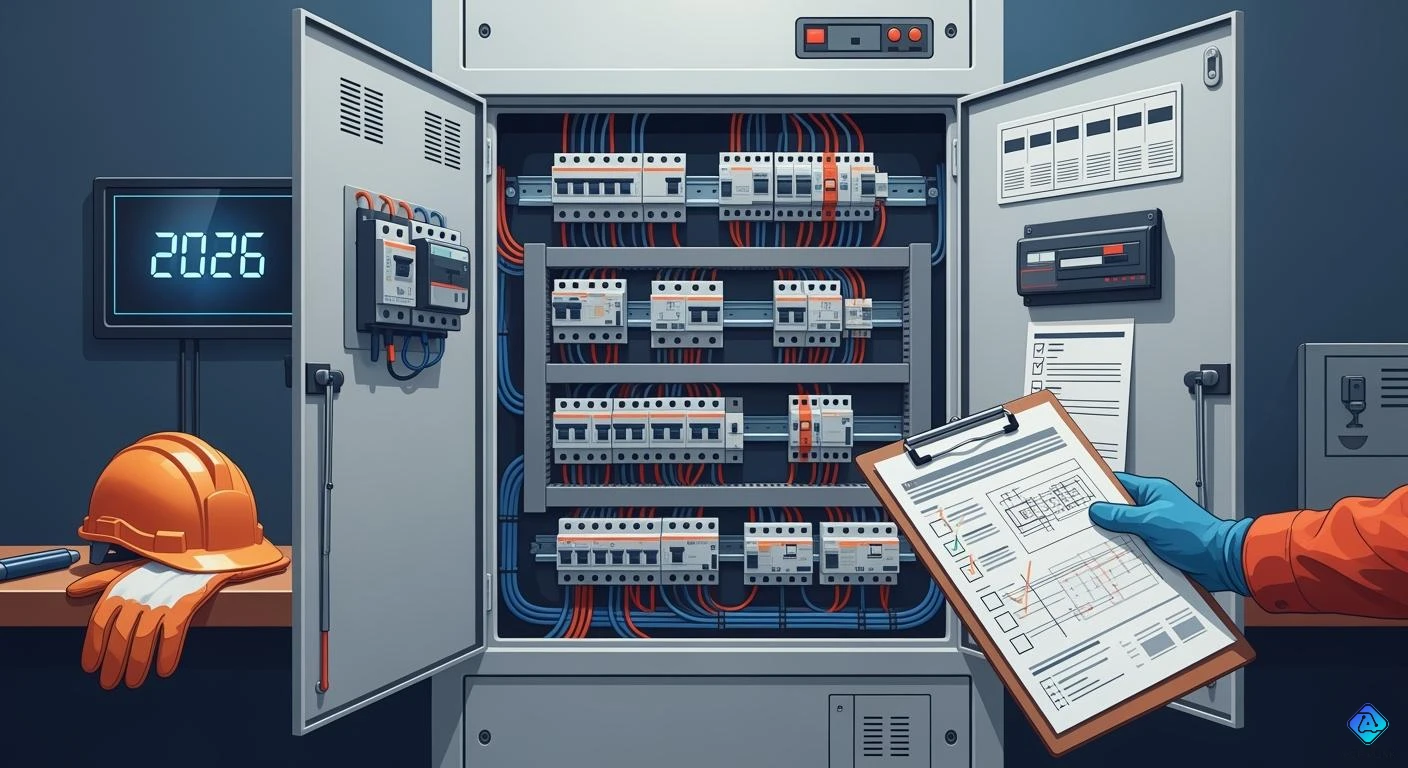
You must follow NEC requirements for electrical panel setups to keep things safe. Safety is most important when picking a spot, measuring space, or choosing gear. The NEC establishes strong safety rules to protect people and property. You need to check each setup for safety and to ensure it complies with the NEC requirements. By adhering to these rules, you reduce risks and help prevent accidents during installation and afterward.
Key Takeaways
-
Always follow NEC rules to keep electrical panels safe. This helps stop dangers and keeps people from getting hurt.
-
Make sure you can get to electrical panels easily. You need at least 30 inches wide and 36 inches deep for safe space.
-
Put clear labels on every electrical panel. Good labels help keep people safe and make fixing problems faster in emergencies.
-
Pick the right circuit breakers for your total electrical load. This stops too much power and keeps things safe.
-
Check your electrical panel often and take care of it. Look for loose wires, clear labels, and working safety devices to follow the rules.
NEC Requirements Overview
Panelboard Basics
An electrical panel helps control and send power in a building. It is the main place for circuits, breakers, and safety devices. You can find panelboards in homes, schools, and businesses. Breakers in the panel stop circuits from getting too much power or having faults. Some panels have special switches for optional standby systems. Always check if your panel has a mark showing it meets NEC standards. This mark means the panel follows all safety rules and the newest guidelines.
Panelboards do many important jobs:
-
They send power to different parts of a building.
-
They keep circuits safe with breakers or fuses.
-
They let you turn off power safely for repairs or emergencies.
-
Some have extra features for standby power systems.
You must put in your panel the way its listing says. NEC Article 408 tells you the safety rules for main service panels and subpanels. Always look at these rules before you start any work.
NEC Requirements for Installation
You need to follow certain NEC rules when you put in an electrical panel. These rules help keep people safe and make sure you follow NEC guidelines. The 2026 code update brings some big changes you should know:
-
Arc flash hazard monitoring now needs more labels and clearer spots for them.
-
Working space rules say you need a 24-inch path when the panel door opens 90 degrees. This changes how you plan your electrical room.
-
GFCI protection now covers more places that are not homes and adds new GFCI types.
-
Medium-voltage systems over 1000 Volts AC or 1500 Volts DC have new rules. You must be careful with these when you design.
You should also know the most common NEC articles for panel installation:
-
Article 90 tells what the code covers.
-
Article 100 gives important words and meanings.
-
Article 110 lists rules for electrical work.
-
Article 210 explains branch circuits.
-
Article 220/120 helps you figure out loads for circuits, feeders, and services.
-
Article 230 covers services.
-
Article 240 is about overcurrent protection.
-
Article 250 explains grounding and bonding.
-
Article 300 gives general wiring rules.
-
Article 310 covers wires for general wiring.
The table below shows the least you must do for NEC when putting in panelboards in homes and businesses:
| Requirement Type | Details |
|---|---|
| Clearance Requirements | You need at least 3 feet in front and a workspace that is 30 inches wide or as wide as the panel, whichever is bigger. |
| Safety Devices | GFCIs protect from ground faults and AFCIs stop arc faults. These are needed for safety. |
| Labeling Standards | Good labels are very important for safety and following rules. They stop confusion and help with repairs. |
| Grounding and Bonding | These are needed to stop electrical faults and keep things safe. Grounding sends away surges, bonding links metal parts. |
| Accessibility | Panels must be easy to get to. Do not put them in tight spaces like bathrooms or closets. |
Tip: Always look at the newest NEC rules before you start your work. This helps you avoid mistakes and keeps your project following NEC rules.
You must follow these rules to meet NEC and keep everyone safe in your building. Good work and regular checks help you meet safety rules and avoid problems. By learning these rules, you make your building safer and your electrical system works right.
NEC Electrical Panel Clearance Requirements
Electrical Panel Clearance Dimensions
You must follow strict electrical panel clearance rules to meet NEC electrical panel clearance requirements. These rules help you keep people safe and make sure your installation meets all standards. The NEC sets clear guidelines for the space around every panel. You need enough room to work safely and avoid accidents.
Here is a table that shows the main clearance dimensions you must follow:
| Requirement | Dimension |
|---|---|
| Working Space Height | At least 78 inches (6′ 6″) |
| Top Breaker Height | No more than 79 inches (6′ 7″) |
| Working Space Width | At least 30 inches or width of the panel |
| Working Space Depth | 36" (non-electrical wall), 42" (grounded surface), 48" (another panel/equipment) |
You must keep at least 30 inches of working space width or the width of the panel, whichever is greater. The working space depth changes based on what is in front of the panel. If you face a non-electrical wall, you need 36 inches. If you face a grounded surface, you need 42 inches. If you face another panel or equipment, you need 48 inches. The working space height must be at least 78 inches. The top breaker cannot be higher than 79 inches from the floor.
These dimensions are not just numbers. They are part of electrical panel safety standards. You need to follow them for compliance with NEC and to protect everyone who works near the panel.
Working Space and Access
You need clear access to every panel at all times. The NEC electrical panel clearance requirements say you cannot block the panel with pipes, cabinets, or other equipment. You must keep the area in front of the panel free from obstructions. This helps you work safely and makes emergency repairs easier.
-
Working space width: At least 30 inches or the width of the panel.
-
Working space depth: 36 inches, 42 inches, or 48 inches, depending on what is in front.
-
Working space height: At least 78 inches from the floor.
You must not put anything in front of the panel that sticks out more than 6 inches. You also cannot install panels in bathrooms, closets, or above shelves. These guidelines help you avoid common hazards.
Note: If you do not follow these guidelines, you risk electrical shock, fires, and damage to equipment. Tight spaces make it hard to do maintenance. You could face legal problems if someone gets hurt because you did not follow the rules.
Height and Door Opening Rules
The NEC electrical panel clearance requirements also cover the height of the panel and how the door opens. The working space must go from the floor up to at least 6 feet 6 inches or the height of the equipment, whichever is greater. The top breaker cannot be higher than 6 feet 7 inches from the floor.
The panel door must open at least 90 degrees. Nothing should block the door, not even walls or pipes. This rule helps you get quick access to the panel during emergencies. It also lets you work safely and comfortably.
-
The door must open fully to 90 degrees.
-
No equipment or wall should block the door.
-
You need a clear path for safe evacuation if the panel is near an exit.
These requirements are part of NEC guidelines for electrical panel safety standards. They help you avoid accidents and make sure you meet compliance with NEC. When you follow these rules, you protect yourself and others from harm.
Tip: Always check the latest NEC requirements before you start any installation. Good planning helps you meet all standards and keeps your building safe.
Panelboard Location Rules
Allowed Locations
You need to pick a good spot for your electrical panel. The NEC requirements say the panel should be easy to reach. It must also be safe for anyone who works on it. Good spots help you stay away from danger and make repairs easier. The table below shows where you can and cannot put your panel:
| Permitted Locations | Restricted Locations |
|---|---|
| Utility rooms | Bathrooms |
| Garages | Closets |
| Clean and well-ventilated areas | Damp areas |
Utility rooms and garages give you enough space. They also keep the panel away from water. Clean, dry, and airy places protect the electrical system from dust and wetness. These spots follow electrical panel location rules and help you meet NEC.
Prohibited Locations
You cannot put an electrical panel in some places because it is not safe. The NEC guidelines make these rules to keep you safe from electrical problems. You must not use these spots:
-
Electrical panels are not allowed in bathrooms.
-
Electrical panels are not allowed in closets.
-
Electrical panels are not allowed in damp areas because of more risk.
Bathrooms and closets do not meet safety rules. Damp places can cause rust and make shock or fire more likely. The table below lists common places you cannot use and the NEC rule for each:
| Prohibited Locations | NEC Reference |
|---|---|
| Bathrooms | 240.24 – E |
| Closets | 240.24 – D |
| Damp Areas | N/A |
Following these rules helps you follow the law and avoid big mistakes.
Outdoor Panel Weatherproofing
If you put an electrical panel outside, you must follow weatherproofing rules. The NEC says you need boxes that keep out rain, sleet, and rust. Weatherproofing stops water and rust, which can cause electrical problems. You should use NEMA 3R boxes for rain or NEMA 4X for more rust protection.
-
Outdoor electrical panels must be weatherproof and made for outside.
-
Use the right boxes with covers that keep out water.
-
For flush panels, make sure gaps are not bigger than 3mm (1/8 inch).
-
In wet places, keep a 6mm (1/4 inch) air gap between the wall and the box.
-
Noncombustible materials should not stick out more than 6mm (1/4 inch).
These rules help you meet NEC and keep your electrical system safe. Always check the newest NEC rules before you start. This makes sure you follow the law and keep everyone safe in the building.
Grounding and Bonding
NEC Grounding Standards
You must follow grounding and bonding requirements to keep your electrical panel safe. Proper grounding protects you from shocks and helps your system work right. The NEC gives clear rules for grounding and bonding in every electrical installation. You need to check these rules before you start work.
Here is a table that shows the main NEC grounding standards for electrical panels:
| NEC Code | Requirement |
|---|---|
| NEC 408.40 | Electrical panels must be properly grounded and bonded for safety. |
| NEC 250.24 | In sub-panels, you must separate the neutral and ground bars. |
| NEC 408.41 | Only one grounded conductor per terminal is allowed. |
You must use proper grounding for every panel. This means you connect the panel to a grounding electrode, like a ground rod. You also need to keep the neutral and ground separate in sub-panels. This stops current from taking unsafe paths. Good grounding and bonding keep your electrical system safe and help you meet compliance with the NEC.
Tip: Always check that your panel has a clear path to ground. This step is key for safety and for following grounding and bonding requirements.
Bonding Methods
You need to use the right bonding methods for your electrical panel. Bonding links all metal parts together. This step makes sure any fault current goes safely to ground. You must use proper grounding and bonding for every installation.
Here are approved bonding methods for electrical panels:
-
Factory bonded neutrals: Some panels come with the neutral already bonded. You do not need to add a neutral support base.
-
Equipment grounding terminal bar: Use this bar when you install panels with nonmetallic raceways or cables. The bar must be marked and come with instructions.
-
Neutral and ground separation: In sub-panels, you must keep the neutral and ground separate. You only bond them at the main service panel.
You must use proper grounding for every panel. This means you connect the panel to a grounding electrode with a grounding conductor. You also need to follow all grounding and bonding requirements for safety.
Note: Good grounding and bonding protect you from electrical faults. They also help your panel pass inspection and keep your building safe.
Breaker Selection & Panel Ratings
Choosing Circuit Breakers
You need to pick the right circuit breakers for your panel. This keeps your electrical system safe. First, make a list of all appliances and devices you will use. Add up their wattage to get your total electrical load. Then, change this load into amperage. This helps you know how much current your panel needs.
Choose a panel rating that meets or is higher than your load. Always plan for future needs by picking a panel with extra space. This helps you avoid expensive upgrades later. Match each circuit breaker to the load and wire size. This stops overloading and keeps your system safe.
-
Make sure every circuit breaker fits its circuit.
-
Check that all breakers follow NEC 408 standards for load protection.
-
Use only breakers that match the panel and installation type.
Properly rated circuit breakers are very important for safety and efficiency. Following NEC standards makes sure your electrical setup can handle the load. This helps prevent overheating or fire hazards.
Panelboard Ampacity
You must check the ampacity rating of your panel before finishing your installation. The ampacity rating shows the most current your panel can handle all the time. If you use a panel with low ampacity, you might trip breakers or cause electrical hazards.
The table below shows common ampacity ratings for panelboards:
| Ampacity Rating (Amperes) | Description |
|---|---|
| 15, 20, 25, 30, 35, 40, 45, 50, 60, 70, 80, 90, 100, 110, 125, 150, 175, 200, 225, 250, 300, 350, 400, 450, 500, 600 | Standard ampere ratings for fuses and circuit breakers as listed in NEC Article 240. |
Overcurrent protection devices should not go over 80% of their rating unless marked for 100% use. This rule helps stop nuisance tripping and keeps your system safe. Always check that your panel and breakers meet NEC and local codes. Good planning and proper selection protect your building and everyone inside.
Labeling and Identification
NEC Labeling Rules
You must put clear labels on every electrical panel. This helps you follow nec requirements and keeps people safe. Labels show what each part of the panel does. Inspectors now check for arc flash labels on all electrical equipment. This includes panelboards and motor control centers. Arc flash labels warn you about dangers and tell you what gear to wear.
Here is a table with the main labeling rules for 2026:
| Requirement | Description |
|---|---|
| Arc Flash Labels | Inspectors check these on all panels and equipment. |
| Required Data Points | Labels must show voltage, arc flash boundary, PPE level, and date checked. |
| No 1,000A Threshold | All non-dwelling panels need labels, no matter their size. |
| Labeling Failures | Missing info, old dates, or vague warnings are not allowed. |
You must also follow these rules:
-
NEC 110.16: Inspectors look for arc flash labels.
-
NEC 408.4(A): Each circuit in the panel needs a clear label.
-
NEC 110.22(A): Mark disconnects to show what they do.
Good labels keep you safe and help you follow the rules. They also make repairs and emergencies easier.
Circuit Directory
A circuit directory is a list that shows what each breaker or fuse controls. You must keep this list up to date and easy to read. The nec says you need to describe every circuit clearly. This helps you avoid mistakes and keeps everyone safe.
Here is a table with the main circuit directory rules:
| Requirement | Description |
|---|---|
| Circuit Identification | Each circuit must have a clear description of its use. |
| Spare Positions | Mark unused spots as 'spare.' Do not leave them blank. |
| No Transient Labels | Use labels that match the real circuit destination. |
| Directory Location | Put the directory on the panel face, inside the door, or close by. |
| Distinguishable Labels | Make each label different so you do not mix up circuits. |
Tip: Always update your circuit directory when you change anything. This keeps your electrical system safe and helps you pass inspections.
Clear labels and a good circuit directory are important for electrical safety. They help you follow the rules and protect everyone who uses or works on the panel.
Safety Devices and Protection
GFCI and AFCI Requirements
You need safety devices in your electrical panel to keep people safe. The NEC says you must use both GFCI and AFCI protection in main panels for homes and businesses. GFCI devices stop shocks by turning off power if they sense a ground fault. You must use GFCI protection for outlets in kitchens, bathrooms, and outside. The 2026 NEC update adds GFCI protection for outdoor outlets up to 60 amps. You also need special GFCI and high-frequency GFCI for places with high-frequency leakage.
AFCI devices protect against arc faults, which can cause fires. You must use AFCI protection for most circuits in homes, like bedrooms and living rooms. NEC 210.12 and 210.8 say you must use both AFCI and GFCI in your panel to keep devices and people safe.
Tip: Always check your panel for the right safety devices before you finish your installation. This helps you follow the rules and keeps your electrical system safe.
Overcurrent Protection
You must use overcurrent protection to stop fires and damage. Overcurrent protection devices, like circuit breakers and fuses, turn off power if too much current flows. The NEC gives rules for how far your panel can be from the main protection device.
Here is a table that shows the NEC standards for overcurrent protection in electrical panelboards:
| Condition | Protection Type | Max Panel Distance | NEC 240.21 Section |
|---|---|---|---|
| MLO (Main Lugs Only) Panel | Circuit Breaker or Fuse | 10 feet | 240.21(B)(1) |
| OCPD on Transformer Secondary | Special Conditions | 25 feet+ | 240.21(B)(2) |
| MCB (Main Circuit Breaker) Panel | Main Circuit Breaker | 25 feet | 240.21(B)(3) |
You must follow these rules to keep your electrical panel safe and meet NEC standards. Good overcurrent protection helps you avoid dangers and keeps your building safe.
Note: Always use the right safety devices and follow NEC rules for your panel. This helps you protect everyone and makes sure you follow the law.
Common Violations of NEC Electrical Panel Clearance Requirements
Typical Clearance Violations
Many people make mistakes with panel clearance during inspections. These mistakes break NEC rules and can be dangerous. Some people put boxes or stuff in front of the panel. This blocks the 36-inch deep and 30-inch wide space you need. Sometimes, the panel is put too high. The top breaker is above 79 inches, which is not allowed. Walkways to the panel can get blocked, so you cannot reach it fast. Some panels are squeezed too close to walls or other equipment. This leaves little room to work safely.
-
Putting things in front of the panel blocks the space.
-
A panel that is too high breaks the height rule.
-
Blocked paths make it hard to get to the panel.
-
Not enough space around the panel is unsafe.
You should check these things before you finish your work. Keeping the area clear helps you follow the rules and keeps everyone safe.
Hazards from Non-Compliance
Not following NEC clearance rules can cause big safety problems. If you block the panel, it is hard to fix problems fast. You could get shocked, start a fire, or get hurt. Insurance might not pay if you do not follow the rules. If you fail an inspection, your project could be delayed or stopped. You might have to pay a lot of money in fines.
| Violation Type | Maximum Penalty |
|---|---|
| Serious | $16,550 per violation |
| Willful or Repeated | $165,514 per violation |
You could also lose your permit, have to wait longer, or get in trouble if someone gets hurt or something is damaged. Following NEC clearance rules keeps your electrical system and building safe. Always check your panel to make sure there is enough space and you can get to it. Good safety habits help you avoid fines and keep your project on track.
Remember: When you follow NEC rules for panel clearance, you keep yourself and others safe. Safety and following the rules always go together.
Maintenance, Inspection, and Compliance
Inspection Tips
You should check your electrical panel often to keep it safe. Make sure all labels are easy to see and read. Use good labels so they do not fade or fall off. Check that the panel directory matches the circuits you have now. Look for any labels that are missing or wrong. Make sure nothing is in front of the panel. You need enough space to work around it. Always check that the panel door opens all the way. You should be able to reach every circuit breaker fast.
Tip: Use a checklist when you inspect your panel. This helps you remember every step for safety and following the rules.
Maintenance Best Practices
Taking care of your electrical panel helps keep it safe. It also helps you follow NEC rules. Here are some good tips:
-
Keep the area around the panel clean and free of dust.
-
Use strong labels and change them when you change circuits.
-
Look for loose wires or signs of overheating.
-
Make sure all circuit breakers fit and match the load.
-
Test GFCI and AFCI devices often to make sure they work.
Do not put too many breakers in the panel. Follow the maker’s rules for how many you can use. Always connect neutral and ground wires the right way. This helps you meet grounding and bonding rules. These steps help you follow NEC and keep everyone safe in the building.
Ensuring Ongoing Compliance
You need to follow clear steps to keep your panel safe and up to code:
-
Write down all appliances and how many watts they use.
-
Change the total watts to amps to match the panel size.
-
Pick a panel that can handle your total load or more.
-
Leave extra space for new circuits you might add later.
-
Choose the right size breaker for each circuit and wire.
-
Check that all parts meet NEC and work well together.
Doing regular checks and care helps you keep up with new rules. By following these steps, you help keep your building safe and follow the rules.
You keep your building safe by following nec rules for electrical panelboards. The most important rules help keep people safe. These rules include having enough space, picking the right spot, and using clear labels. Use this checklist to help you remember what to do:
| Requirement Type | Description |
|---|---|
| Emergency Power Systems | Stronger rules for backup and standby power systems. |
| Fire-Rated Feeder Protection | Thicker fire barriers for feeder cables. |
| Arc-Flash Labeling | Labels with clear safety information on all equipment. |
| Ground-Fault Protection | Special GFCIs to prevent nuisance tripping and improve safety. |
If you do not follow these rules, you could cause electrical fires. You might fail inspections and pay more money. You also make the building less safe for everyone. Regular checks and help from experts make things safer and help you follow the rules. Always use your checklist to keep people and property safe.

Written by Jack Elliott from AIChipLink.
AIChipLink, one of the fastest-growing global independent electronic components distributors in the world, offers millions of products from thousands of manufacturers, and many of our in-stock parts is available to ship same day.
We mainly source and distribute integrated circuit (IC) products of brands such as Broadcom, Microchip, Texas Instruments, Infineon, NXP, Analog Devices, Qualcomm, Intel, etc., which are widely used in communication & network, telecom, industrial control, new energy and automotive electronics.
Empowered by AI, Linked to the Future. Get started on AIChipLink and submit your RFQ online today!
Frequently Asked Questions
What is the minimum clearance required for an electrical panel?
You need at least 30 inches of width, 36 inches of depth, and 78 inches of height for safe working space. This space must stay clear at all times.
Can you install an electrical panel in a bathroom or closet?
No, you cannot. The NEC does not allow electrical panels in bathrooms or closets. These locations are unsafe and do not meet code.
How often should you inspect your electrical panel?
You should check your panel at least once a year. Look for loose wires, clear labels, and working safety devices. Regular checks help you find problems early.
What does a circuit directory do?
A circuit directory lists what each breaker controls. You use it to find the right breaker fast. Always keep it updated and easy to read.