Introduction
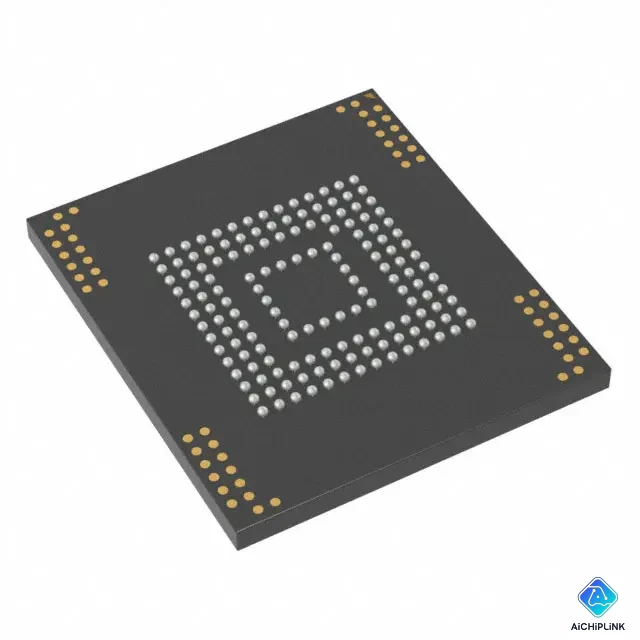
The THGAMVG7T13BAIL is a 512GB UFS 3.1 (Universal Flash Storage) embedded memory module manufactured by Kioxia (formerly Toshiba Memory), delivering high-performance flash storage with sequential read speeds up to 2100 MB/s, write speeds up to 1200 MB/s, and advanced features for flagship smartphones, tablets, automotive infotainment, and embedded systems requiring fast, reliable solid-state storage in compact BGA package.
Technical Overview
Core Specifications
| Parameter | Specification |
|---|---|
| Capacity | 512GB (465 GiB usable) |
| Interface | UFS 3.1 (HS-G4, 2-lane) |
| Sequential Read | Up to 2100 MB/s |
| Sequential Write | Up to 1200 MB/s |
| Random Read | 70,000+ IOPS |
| Random Write | 60,000+ IOPS |
| Voltage | 2.7V - 3.6V (VCCQ: 1.2V/1.8V) |
| Package | 153-ball FBGA (11.5×13mm) |
| Operating Temp | -25°C to +85°C |
Part Number Decoder
THGAMVG7T13BAIL:
- TH = Toshiba/Kioxia
- GA = UFS product family
- MVG7 = Generation/technology code
- T13 = 512GB capacity variant
- BAIL = Package/grade/configuration
Key Features
UFS 3.1 Performance:
- HS-Gear4 (HS-G4): 11.6 Gbps per lane
- 2-lane configuration: 23.2 Gbps aggregate
- MIPI M-PHY interface
- Command Queuing (up to 32 commands)
Advanced NAND Technology:
- 3D BiCS FLASH (vertical stacking)
- TLC (Triple-Level Cell) NAND
- Wear leveling and bad block management
- Power-loss protection
Power Efficiency:
- Active: ~500-800 mW
- Idle: <5 mW
- Deep sleep: <1 mW
- Power state management (UFS power modes)
Complete Specifications
Performance Metrics
| Operation | Performance |
|---|---|
| Sequential Read | 2100 MB/s (typical) |
| Sequential Write | 1200 MB/s (typical) |
| Random Read (4KB) | 70,000 IOPS |
| Random Write (4KB) | 60,000 IOPS |
| Latency (Read) | <1 ms (typical) |
Capacity & Organization
| Parameter | Value |
|---|---|
| Raw Capacity | 512GB |
| User Area | ~465 GiB (after formatting) |
| RPMB | 16 MB (Replay Protected Memory Block) |
| Boot LU | 2× 4 MB |
| Block Size | 4KB logical |
Endurance & Reliability
| Parameter | Specification |
|---|---|
| Endurance (TBW) | ~200-300 TB (typical for 512GB) |
| Data Retention | 1 year @ 25°C (powered off) |
| UBER | <10^-17 (Uncorrectable Bit Error Rate) |
| MTBF | >1.5 million hours |
| ECC | Advanced LDPC (Low-Density Parity Check) |
Electrical Specifications
| Parameter | Min | Typ | Max | Unit |
|---|---|---|---|---|
| VCC (Supply) | 2.7 | 3.3 | 3.6 | V |
| VCCQ (I/O) | 1.14/1.7 | 1.2/1.8 | 1.26/1.89 | V |
| Active Power | - | 600 | 800 | mW |
| Idle Power | - | 3 | 5 | mW |
Applications
Flagship Smartphones
Premium Mobile Devices:
- Samsung Galaxy S/Note series
- OnePlus flagship models
- Xiaomi Mi/Redmi Pro series
- OPPO Find X series
Benefits:
- 512GB storage for photos, videos, apps
- 2100 MB/s enables 4K/8K video recording
- Fast app loading and multitasking
- Gaming performance (asset streaming)
High-End Tablets
Premium Tablets:
- iPad Pro alternatives (Android)
- Samsung Galaxy Tab S series
- Microsoft Surface Pro alternatives
- Professional content creation tablets
Use Cases:
- 4K video editing
- Large file storage (RAW photos, projects)
- High-performance productivity apps
Automotive Infotainment
In-Vehicle Systems:
- Navigation map storage (high-resolution)
- Media library (music, videos)
- System firmware and updates
- ADAS data recording (dashcam, sensors)
Advantages:
- -25 to +85°C operation (automotive temp)
- High reliability (MTBF >1.5M hours)
- Fast boot times (<5 seconds)
Embedded Computing
Industrial/Edge Devices:
- Single-board computers (high-performance SBCs)
- Medical imaging equipment
- Digital signage players
- Industrial IoT gateways
Performance Analysis
vs Previous Generation (UFS 3.0)
| Feature | THGAMVG7T13BAIL (UFS 3.1) | UFS 3.0 |
|---|---|---|
| Sequential Read | 2100 MB/s | 2100 MB/s |
| Sequential Write | 1200 MB/s | 1200 MB/s |
| Write Booster | ✅ Enhanced | Basic |
| Deep Sleep | ✅ Improved | Standard |
| Host Performance Booster | ✅ Yes | ❌ No |
Key UFS 3.1 Improvements:
- Write Booster 2.0 (dynamic SLC cache)
- Host Performance Booster (HPB) reduces latency
- Enhanced power management
- Temperature notification (thermal throttling)
Real-World Performance
4K Video Recording:
- Sustained write: ~400-600 MB/s (30 minutes continuous)
- Burst write: 1200 MB/s (short clips)
- Sufficient for 8K/30fps video (~700 MB/s bitrate)
App Launch Time:
- Large apps (1GB+): 2-3 seconds
- Small apps (<100MB): <1 second
- Background app refresh: Negligible impact
Gaming Performance:
- Asset loading: 70,000 IOPS enables smooth streaming
- Game install: 512GB = 100+ AAA mobile games
- Texture loading: No stuttering in open-world games
vs eMMC 5.1
| Metric | UFS 3.1 (THGAMVG7T13BAIL) | eMMC 5.1 |
|---|---|---|
| Sequential Read | 2100 MB/s | 250 MB/s |
| Random Read | 70,000 IOPS | 8,000 IOPS |
| Interface | Full-duplex | Half-duplex |
| Performance Advantage | 8-10× faster | Baseline |
Integration Considerations
Host Controller Requirements
SoC Compatibility:
- Qualcomm Snapdragon 865+ (UFS 3.1 support)
- MediaTek Dimensity 1000+ series
- Samsung Exynos 990+
- Apple A14+ (custom NVMe, not UFS)
MIPI M-PHY:
- HS-Gear4 (11.6 Gbps/lane) support required
- 2-lane differential signaling
- Impedance matching: 100Ω differential
Thermal Management
Operating Temperature:
- Normal operation: 0-70°C
- Extended range: -25 to +85°C (automotive)
- Thermal throttling: Reduces performance >75°C
Cooling Solutions:
- Smartphone: Graphite thermal pads + vapor chamber
- Tablet: Heat spreader + aluminum chassis
- Automotive: Active cooling (forced air)
Power Supply Design
Voltage Rails:
- VCC (3.3V): High current (peak 500mA), low ripple (<50mV)
- VCCQ (1.2V/1.8V): I/O voltage, stable regulation
- Decoupling: 10µF + 1µF + 0.1µF per rail
Conclusion
The THGAMVG7T13BAIL delivers flagship-grade UFS 3.1 storage performance with 512GB capacity, 2100 MB/s sequential read, 1200 MB/s write, and 70,000+ IOPS random performance, providing fast, reliable embedded flash storage for premium smartphones, tablets, automotive systems, and industrial applications requiring high-speed solid-state storage in compact 11.5×13mm BGA package.
Key Advantages:
✅ 512GB Capacity: Ample storage for media and apps
✅ UFS 3.1 Performance: 2100 MB/s read, 1200 MB/s write
✅ High IOPS: 70,000+ random read for smooth multitasking
✅ Write Booster: Sustained performance when full
✅ Low Power: <5 mW idle, <800 mW active
✅ Automotive Grade: -25 to +85°C operation
✅ Proven Reliability: MTBF >1.5M hours, advanced ECC
Designing mobile/embedded systems? Visit AiChipLink.com for UFS storage sourcing and embedded system design consultation.

Written by Jack Elliott from AIChipLink.
AIChipLink, one of the fastest-growing global independent electronic components distributors in the world, offers millions of products from thousands of manufacturers, and many of our in-stock parts is available to ship same day.
We mainly source and distribute integrated circuit (IC) products of brands such as Broadcom, Microchip, Texas Instruments, Infineon, NXP, Analog Devices, Qualcomm, Intel, etc., which are widely used in communication & network, telecom, industrial control, new energy and automotive electronics.
Empowered by AI, Linked to the Future. Get started on AIChipLink.com and submit your RFQ online today!
Frequently Asked Questions
What smartphones use THGAMVG7T13BAIL?
The THGAMVG7T13BAIL is used in flagship smartphones that require high-speed 512GB storage, including models from brands like Samsung Electronics, OnePlus, Xiaomi, and OPPO. Because OEMs often multi-source storage, exact usage varies by region and production batch.
How fast is THGAMVG7T13BAIL compared to eMMC?
The THGAMVG7T13BAIL delivers up to 2100 MB/s sequential read speeds, making it about 8× faster than eMMC 5.1, along with significantly higher random IOPS. This results in noticeably faster app launches, smoother 4K video recording, and improved overall system responsiveness.
What is UFS 3.1 Write Booster?
Write Booster in UFS 3.1 dynamically uses part of the NAND as SLC cache, enabling sustained high write speeds (~1200 MB/s) even when storage is nearly full. It improves performance during tasks like large file transfers, app installs, and video recording.
Can THGAMVG7T13BAIL be used as SSD replacement?
No, it cannot directly replace a PC SSD. The THGAMVG7T13BAIL uses a UFS interface and BGA package, while SSDs use NVMe (PCIe) or SATA interfaces with removable form factors like M.2. It’s designed for embedded/mobile systems rather than desktop or laptop upgrades.
What is the endurance of 512GB UFS storage?
The THGAMVG7T13BAIL offers an estimated 200–300 TBW (Total Bytes Written), which is more than sufficient for 5–10 years of typical smartphone usage thanks to advanced wear leveling and controller management.