Introduction
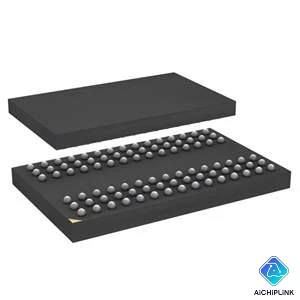
The H5AG38EXNDX026N is a 24GB High Bandwidth Memory 2E (HBM2E) stack manufactured by SK Hynix, featuring 12-high (12H) vertically-stacked DRAM dies delivering 1.15 TB/s bandwidth through 1024-bit interface, designed for flagship AI accelerators, high-end GPUs, and HPC systems requiring maximum memory capacity per stack with extreme bandwidth.
Technical Overview
Core Specifications
| Parameter | Specification |
|---|---|
| Capacity | 24GB per stack |
| Stack Height | 12-High (12H) |
| Interface Width | 1024-bit |
| Data Rate | 9.2 Gbps per pin |
| Bandwidth | 1.15 TB/s per stack |
| Voltage | 1.1V |
| Channels | 16 channels × 64-bit |
| Process Node | 1α/1β nm |
| Operating Temp | 0°C to +95°C |
Key Features
Maximum Capacity (12H):
- 24GB per stack (50% more than 16GB HBM2E)
- 12 DRAM dies stacked vertically
- Enables ultra-high-capacity GPU configurations
- Critical for large AI model training
Extreme Bandwidth:
- 1.15 TB/s per stack (1,150 GB/s)
- 9.2 Gbps per pin signaling
- Aggregate bandwidth: 4.6-9.2 TB/s (4-8 stacks)
- 40% higher than standard HBM2E (819 GB/s)
Advanced 3D Stacking:
- TSV (Through-Silicon Via) technology
- 12-layer vertical integration
- Optimized thermal design
- Enhanced reliability features
Complete Specifications
Memory Organization
| Parameter | Value |
|---|---|
| Total Capacity | 24GB (192 Gb) |
| Stack Configuration | 12-High (12 dies) |
| Capacity per Die | 2GB (16 Gb) |
| Channels | 16 independent |
| Interface Width | 1024-bit (16 × 64-bit) |
| Banks | 16 banks per channel |
Performance Specifications
| Parameter | Typical | Unit |
|---|---|---|
| Bandwidth per Stack | 1,150 | GB/s |
| Data Rate | 9.2 | Gbps |
| Access Latency | 100-120 | ns |
| Power per Stack | 14-17 | W |
| Power Efficiency | ~75 | GB/s/W |
Thermal & Power
| Parameter | Value |
|---|---|
| Operating Voltage | 1.1V |
| Typical Power | 14-17W per stack |
| Peak Power | ~20W per stack |
| Thermal Design | Enhanced for 12H stacking |
| Recommended Cooling | Active (heatsink + airflow) |
Applications
Flagship AI Accelerators
Current Deployment:
- NVIDIA H200: 6× 24GB HBM2E = 141GB total
- AMD MI300X: 8× 24GB HBM2E = 192GB total
- Intel Gaudi 3: Multiple 24GB stacks
Use Cases:
- Large Language Model (LLM) training (GPT-4, PaLM 2)
- Computer vision model training (Stable Diffusion 3)
- Multimodal AI (text + image + video)
- Reinforcement learning (AlphaGo-scale)
High-End Professional GPUs
Graphics Workloads:
- 8K/16K content creation
- Real-time ray tracing (complex scenes)
- VFX rendering (film production)
- Scientific visualization
Configuration:
- 4× H5AG38EXNDX026N = 96GB GPU
- 6× H5AG38EXNDX026N = 144GB GPU
- Sufficient for ultra-high-resolution workflows
HPC & Supercomputing
Scientific Computing:
- Computational Fluid Dynamics (CFD)
- Molecular dynamics (billion-atom simulations)
- Climate modeling
- Quantum chemistry calculations
Benefits:
- Large datasets in-memory
- 1.15 TB/s sustains computation
- Reduced memory bottlenecks
AI Inference at Scale
Cloud AI Serving:
- GPT-4 scale model inference
- DALL-E/Stable Diffusion serving
- Real-time video analytics
- Multi-tenant inference platforms
Capacity Advantage:
- 24GB per stack fits larger models
- Batch processing efficiency
- Reduced model parallelism complexity
Implementation Considerations
Multi-Stack Configurations
4-Stack System (96GB):
- Total bandwidth: 4.6 TB/s
- Total power: 56-68W (memory only)
- Application: High-end professional GPU
6-Stack System (144GB):
- Total bandwidth: 6.9 TB/s
- Total power: 84-102W (memory only)
- Application: NVIDIA H200 configuration
8-Stack System (192GB):
- Total bandwidth: 9.2 TB/s
- Total power: 112-136W (memory only)
- Application: AMD MI300X configuration
Thermal Management
Challenges:
- 12H stacking generates significant heat
- 14-17W per stack requires active cooling
- 8-stack system: 112-136W memory thermal load
Solutions:
- Vapor chamber heat spreaders
- Direct liquid cooling (water blocks)
- High-performance thermal interface materials
- Optimized airflow design
Platform Integration
Silicon Interposer:
- Routes 1024 signals per stack
- Enables multiple HBM stacks adjacent to GPU die
- CoWoS (Chip-on-Wafer-on-Substrate) packaging
- Advanced 2.5D integration
Power Delivery:
- Clean, low-noise 1.1V supply
- High current capacity (12-15A per stack)
- 8 stacks: 96-120A total current requirement
- Low-impedance power distribution
Comparison
vs 16GB HBM2E (8H)
| Feature | 24GB (H5AG38EXNDX026N) | 16GB (8H) |
|---|---|---|
| Capacity | 24GB | 16GB |
| Stack Height | 12H | 8H |
| Bandwidth | 1.15 TB/s | 1.15 TB/s |
| Power | 14-17W | 12-15W |
| Thermal Challenge | Higher | Moderate |
| Best For | Maximum capacity | Balanced |
Trade-off: Same bandwidth, 50% more capacity, slightly higher power.
vs 36GB HBM2E (18H)
| Feature | 24GB (H5AG38EXNDX026N) | 36GB (18H) |
|---|---|---|
| Capacity | 24GB | 36GB |
| Stack Height | 12H | 18H |
| Availability | Volume production | Limited |
| Cost | Moderate | Premium |
| Thermal | Manageable | Challenging |
Note: 36GB stacks rare, primarily custom designs.
System-Level Impact
6-Stack GPU (NVIDIA H200 equivalent):
- 24GB stacks: 144GB total
- 16GB stacks: 96GB total
- Benefit: 50% more capacity, fits larger AI models
Conclusion
The H5AG38EXNDX026N delivers maximum HBM2E capacity with 24GB per stack through 12-high die stacking, maintaining flagship 1.15 TB/s bandwidth while enabling ultra-high-capacity configurations (144GB-192GB) for GPT-4 scale AI training, professional 8K/16K graphics, and memory-intensive HPC applications. As the current capacity leader in production HBM2E, it powers flagship accelerators like NVIDIA H200 and AMD MI300X.
Key Advantages:
✅ 24GB Capacity: 50% more than 16GB HBM2E
✅ 1.15 TB/s Bandwidth: Extreme memory throughput
✅ 12H Stacking: Advanced 3D integration
✅ Flagship Deployment: H200, MI300X proven
✅ AI Optimized: GPT-4+ scale model training
✅ SK Hynix Quality: Industry-leading HBM manufacturer
Designing next-gen AI systems? Visit AiChipLink.com for HBM sourcing and architecture consultation.

Written by Jack Elliott from AIChipLink.
AIChipLink, one of the fastest-growing global independent electronic components distributors in the world, offers millions of products from thousands of manufacturers, and many of our in-stock parts is available to ship same day.
We mainly source and distribute integrated circuit (IC) products of brands such as Broadcom, Microchip, Texas Instruments, Infineon, NXP, Analog Devices, Qualcomm, Intel, etc., which are widely used in communication & network, telecom, industrial control, new energy and automotive electronics.
Empowered by AI, Linked to the Future. Get started on AIChipLink.com and submit your RFQ online today!
Frequently Asked Questions
What is H5AG38EXNDX026N?
The H5AG38EXNDX026N is a 24GB HBM2E memory stack manufactured by SK Hynix. It uses 12-high stacked DRAM dies with a 1024-bit interface and delivers up to 1.15 TB/s memory bandwidth, making it suitable for AI accelerators, data-center GPUs, and high-performance computing systems.
Which GPUs use H5AG38EXNDX026N?
Memory stacks like H5AG38EXNDX026N are used in high-end AI accelerators such as the NVIDIA H200, AMD Instinct MI300X, and Intel Gaudi 3, where extremely high memory bandwidth and capacity are required.
How does the 24GB stack differ from a 16GB HBM2E stack?
A 24GB stack like the H5AG38EXNDX026N uses 12 stacked memory dies, while typical 16GB HBM2E stacks use 8 dies. The bandwidth remains similar, but the extra dies increase total capacity by about 50%, allowing larger AI models and datasets to fit directly in GPU memory.
What is the power consumption of H5AG38EXNDX026N?
The H5AG38EXNDX026N typically consumes around 14–17 watts per memory stack during active operation. Because multiple stacks are used in a single GPU, advanced cooling solutions such as vapor chambers or liquid cooling are usually required in data-center systems.
Is 24GB HBM2E better than 16GB?
A 24GB HBM2E stack mainly offers higher memory capacity, not higher bandwidth. It is advantageous for workloads that require large in-memory datasets, such as AI model training, large simulations, and high-resolution graphics, while 16GB stacks may remain more cost-efficient for applications with lower memory requirements.