Solid-State LiDAR Chips Versus Traditional LiDAR Chips
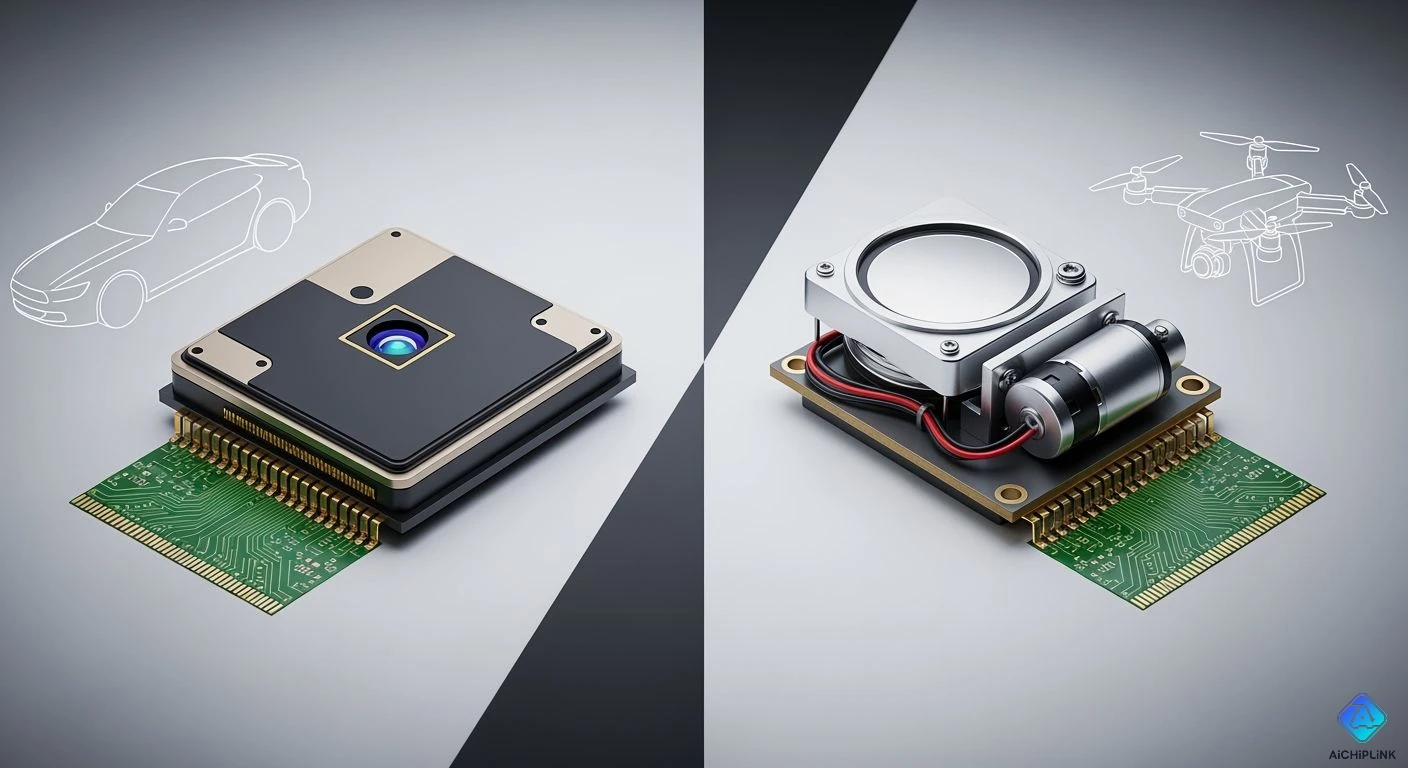
You can notice big differences between solid-state and traditional lidar chips. Solid-state chips scan the area using electronic ways. Traditional chips use moving parts to do this. Lidar technology changes things for self-driving cars, robots, and smart cities. It helps electric cars stay safe and makes smart infrastructure better. The market for light detection and ranging is getting bigger as safety and efficiency matter more.
Lidar lets cars make maps in real time, so they can see objects and stop crashes.
| Aspect | Description |
|---|---|
| Market Size | Could reach $15.2 Billion by 2030 |
| Growth Drivers | Rules help self-driving cars and more sensors are needed |
| Impact on EVs | Lidar makes electric cars safer and helps with self-driving |
| Smart Cities | More money for self-driving transport means more lidar is used |
Key Takeaways
-
Solid-state lidar chips are small and light. They are also more dependable than traditional mechanical lidar chips. This makes them great for new uses.
-
Mechanical lidar can see all around in a circle. But it has moving parts that can break over time. Solid-state lidar usually cannot see as much area. It may need extra sensors to help.
-
Solid-state lidar is a good deal because it costs less to make and fix. Mechanical lidar costs more to use and keep working.
-
Solid-state lidar is getting better very fast. It now gives clearer and more exact results. This makes it good for self-driving cars, drones, and smart cities.
-
When picking a lidar chip, think about what you need it for. Look at how far it can see, how clear the image is, and the weather it will face. This helps you get the best results.
Lidar Chip Technologies Compared
Mechanical Lidar Overview
Mechanical lidar is used in many early self-driving cars and robots. This kind of lidar chip has moving parts that help it scan the area. The system spins or turns and sends out laser beams everywhere. These beams hit objects and bounce back to the sensor. The device gives a full 360-degree view because it keeps turning. Traditional mechanical systems use mirrors or spinning platforms. These moving parts can break down after a while. Mechanical lidar often needs more power and is heavier than other types.
Here is a quick look at how mechanical and solid-state lidar work:
| Type of Lidar | Core Operating Principles |
|---|---|
| Mechanical Lidar | Uses moving parts to point the beam and keep it steady. It needs to spin for scanning, so it uses a lot of power. |
| Has a MEMS mirror for scanning, which moves back and forth in different ways. | |
| Solid-State Lidar | Has Flash Lidar and Optical Phased Array (OPA) Lidar, using VCSELs and SiPM arrays to find things. |
| Scans with a chip using silicon photonics, like phased array antennas. |
Solid-State Lidar Overview
Solid-state lidar works in a new way for light detection and ranging. There are no big spinning parts you can see. The system uses electronics and small chips to scan the area. Solid-state lidar comes in a few types. MEMS lidar has tiny mirrors that move, but they are much smaller and lighter than the old kind. OPA lidar uses lots of tiny emitters to move laser beams without any moving parts. Flash lidar sends out a wide laser pulse to light up everything at once, like a camera.
You can compare the main solid-state lidar types in this table:
| Technology | Design Features | Operation Characteristics |
|---|---|---|
| MEMS | Has small silicon mirrors that move in two directions for scanning. There are coaxial and non-coaxial designs. | Has fewer moving parts, scans fast, and the mirror size matters in coaxial designs. |
| OPA | Uses many emitters to steer beams with no moving parts. | Needs careful phase control and can steer in one or two directions. |
| Flash LiDAR | Sends out wide laser pulses to light up the whole area at once. | Uses VCSEL arrays for wide views and works like a camera that makes its own light. |
Solid-state lidar is more reliable and needs less fixing. OPA and Flash lidar do not have any moving parts. MEMS lidar has very small moving mirrors, but they are not like the big parts in old systems. Solid-state lidar is lighter, uses less power, and fits in small spaces. You see it more in new cars, drones, and smart devices.
Key Differences: Field of View, Reliability, and Cost
Field of View: 360° vs. 120°
Mechanical lidar can see all around. It gives a 360-degree view. This helps cars and robots scan everything nearby. Solid-state lidar sees less, usually about 120 degrees. You need more sensors to cover the same area. Electronic beam steering can make the vertical view wide. But blind spots can happen.
| Type of LiDAR | Horizontal Field of View | Vertical Field of View |
|---|---|---|
| Mechanical LiDAR | 360 degrees | Limited |
| Solid-State LiDAR | Limited | Wide (via electronic beam steering) |
You should think about these limits. Using solid-state lidar means you may need extra sensors. Blind spots can make it harder to notice things in busy places. This can change how well the system works.
| Limitation | Implication |
|---|---|
| Limited field of view | Requires multiple sensors for complete coverage |
| Blind spots | Reduces situational awareness in various environments |
Mechanical lidar is good for mapping and finding paths. It scans in every direction. Solid-state lidar is better for small devices and uses less power. You need to balance field of view with accuracy and resolution.
Reliability and Durability
Reliability is important when picking a lidar chip. Mechanical lidar has spinning parts and mirrors. These parts can break or wear out. You need to fix and check them often. Solid-state lidar has fewer moving parts or none at all. This makes it last longer and work better.
Reliability for cars over 15 years is hard for mechanical lidar. Solid-state lidar is seen as the answer, but it can still have problems. Micro-mechanical parts and heat can affect how long LEDs last.
Mechanical lidar chips can wear out and lose alignment. Solid-state lidar chips are usually tougher. You spend less time and money fixing them. Solid-state lidar works well in tough places, but you should watch for chip problems.
| Aspect | Mechanical Lidar Chips | Solid-State Lidar Chips |
|---|---|---|
| Durability | Moving parts can wear out or lose alignment. | More durable, fewer parts that can break. |
| Maintenance Requirements | Needs lots of fixing and checking. | Needs less fixing because there are fewer moving parts. |
| Environmental Resistance | Can break in heat, shaking, or dusty places. | Works better in tough places, but chips can still fail. |
Think about reliability and durability for performance and cost. Solid-state lidar lasts longer and needs less fixing. Mechanical lidar needs more care and repairs.
Cost and Scalability
Cost is a big factor in choosing lidar chips. Mechanical lidar costs more because it has moving parts. You pay more for fixing and replacing them. You also need special workers to repair them. Solid-state lidar costs less to make. It is easier to use and replace.
| Factor | Mechanical Lidar | Solid-State Lidar |
|---|---|---|
| Maintenance Costs | High because of moving parts | Low because there are few moving parts |
| Operational Complexity | High, needs special workers | Low, easier to use |
| Reliability | Lower MTBF (1,000 - 5,000 hours) | Higher MTBF (50,000+ hours) |
| Replacement Costs | High, needs more replacements | Low, fewer replacements needed |
| Manufacturing Costs | High, complex design | Less than $1,000 when made in large numbers |
| Scalability | Hard to make lots of them | Easy to make many at once |
Solid-state lidar chips are easier to make in big amounts. Car makers like solid-state lidar because it is cheap and reliable. It does not have moving parts, so it is good for making lots of chips. You save money and get better prices. Putting parts on chips makes them smaller and uses old factories. This can cut costs by 10 to 100 times. Mechanical lidar needs careful building and lining up parts, so it is not good for making lots at once.
You should check cost-effectiveness when picking a lidar chip. Solid-state lidar gives better performance, higher resolution, and lower costs. It meets market needs and helps you save money.
Performance Factors in Lidar Chips
Range and Resolution
When you compare lidar chips, you should check range and resolution. Mechanical lidar is known for good range and clear images. Solid-state lidar now works just as well or even better in some ways. It gives cleaner point clouds, so you see things more clearly. This helps you measure depth better and avoid mistakes. Dazzle and jammer resilience means it works in bright light or hard lighting. Polarization intelligence helps you see real objects and ignore glare. Solid-state lidar uses smaller and lighter optics. This makes it easy to put in robots and drones. Multi-sensor harmony means sensors can work together without problems.
New solid-state lidar is getting better all the time. Non-mechanical beam steering lets it scan exactly without moving parts. Better time-of-flight methods help measure distance more exactly. Advanced timing and signal processing give very fine resolution. Flash lidar lights up a whole scene in one quick burst. Optical phased array lidar uses tiny emitters and detectors on a chip. Metasurface beam-steering moves laser beams with electronics. Chip-scale integration makes everything smaller and uses less power. This also lowers costs. You save money and get better value for your lidar.
Accuracy and Detection
You want your lidar to be accurate and find things well. Solid-state lidar chips now work very well in tests. You can see how they compare in this table:
| Measurement Type | Solid-State LiDAR | Mechanical LiDAR |
|---|---|---|
| Distance Accuracy (at 100cm) | -0.5cm | N/A |
| Deviation Value (at various distances) | +1.5cm to -4.5cm | N/A |
| Angular Resolution | 0.225° | N/A |
| Field of View | Limited | 360° |
Solid-state lidar gives high resolution and good accuracy. Mechanical lidar can see all around, but solid-state lidar is still very reliable. It measures things well and does not cost as much. These new features make solid-state lidar a good choice for many uses.
Types of Solid-State Lidar
MEMS Lidar
MEMS lidar is in many new gadgets. It uses tiny mirrors that move very fast to scan. MEMS means Micro-Electro-Mechanical Systems. These mirrors are much smaller than in mechanical lidar. MEMS lidar is small and scans quickly. It works well even in tough places and is more reliable. You can make lots of MEMS lidar chips at once, so they cost less. Repairs and replacements are cheaper too. MEMS lidar is good for making many at a time and fits in tight spots. This makes it great for cars, drones, and robots.
MEMS lidar gives you good value, small size, and works well. It costs less and performs better than mechanical lidar.
OPA Lidar
OPA lidar means Optical Phased Array lidar. This type has no moving parts at all. OPA lidar uses electric signals to move the laser beam. This makes it smaller and easier to build. It lasts longer and is more reliable. OPA lidar saves money because it needs fewer lasers and less fixing. But OPA lidar can have trouble with the beam at wide angles. This can make range and detail worse. Heat or small chip changes can cause phase errors. These problems can hurt how well it works.
-
OPA lidar gives you:
-
A design with no moving parts
-
Small size and lower price
-
Strong performance in a tiny package
-
Flash Lidar
Flash lidar works like a camera that lights up everything at once. It does not use any moving parts. Flash lidar sends out a wide laser pulse and gets millions of points each second. This gives fast and clear 3D pictures. Flash lidar is good for cars and mapping from above. It works fast and gives strong results. Flash lidar is easy to make and put in, so it costs less. But it may not be as strong, so it cannot see as far as mechanical lidar.
| Lidar Type | Unique Features | Operational Advantages |
|---|---|---|
| MEMS Lidar | Tiny moving mirrors, compact, mass production | Tough, saves money, easy to make, scans fast |
| OPA Lidar | No moving parts, beam steering by electronics | Reliable, small, cheaper, but range can be short |
| Flash Lidar | Wide laser pulse, no moving parts, fast imaging | Lots of data, easy to use, quick results |
Pick the solid-state lidar chip that fits your needs best. Each type has special features for different jobs.
Application Scenarios for Lidar Chips
Automotive and Autonomous Vehicles
Lidar chips are important in cars and adas systems. Many car makers now pick solid-state lidar for self-driving cars. This is because solid-state lidar is smaller and costs less. It also fits better inside cars. Solid-state lidar helps cars see things and drive by themselves. Mechanical lidar can see all around, but it is big and hard to use in cars. Solid-state lidar needs more sensors to see every angle. But car makers like it because it is reliable and not expensive.
Tip: Solid-state lidar is the best pick for new cars and adas because it is safe and not costly.
| LiDAR Type | Best Use in Automotive | Market Impact |
|---|---|---|
| Mechanical LiDAR | Used in early tests | Big and not wanted much |
| Solid-State LiDAR | Used in many new cars | High demand and growing fast |
| Flash LiDAR | Good for wide views, parking | More used in new cars |
| MEMS LiDAR | Fits small cars and adas | Meets what the market wants |
Robotics and Drones
Lidar helps robots and drones move and avoid things. Solid-state lidar gives good accuracy and works well in hard places. Drones need sensors that work in bright light and far away. dToF lidar chips help drones fly longer by using less power. iToF lidar is good for seeing details and knowing objects. Solid-state lidar is light and fits in small robots. This makes it great for robots and drones.
-
What robots and drones need:
-
Good accuracy for safe moves
-
Long range for mapping and checking places
-
Works well in all kinds of light
-
Industrial and Infrastructure
Lidar is used in factories, warehouses, and city plans. Solid-state lidar chips help with mapping, watching traffic, and running city systems. These chips last long and do not break often, so they save money. More companies want smart systems, so the market grows. Solid-state lidar gives real-time data for building, mining, and smart cities. People want chips that work well and do not cost much.
Note: Solid-state lidar is good for industry because it lasts long and needs little fixing.
Pick the lidar chip that fits your job. Solid-state lidar is right for most new uses because it is cheap, strong, and works well.
Choosing the Right Lidar Chip
Application Needs
You have to pick the lidar chip that fits your job. Every use is different and needs special things. For example, drones, robots, and cars all need different sensors. The best chip depends on what you want and where you use it.
| Criteria | Description |
|---|---|
| Flight Altitude | Choose a sensor for how high your device goes. Tactical, mid-range, and long-range all need different chips. |
| Resolution | Check how sharp the laser beam is. This depends on how fast it scans, how small the angles are, and how high it flies. |
| Application | Each job needs its own level of accuracy and trust. |
You should also think about these things: If you use more power, you can see obstacles better, but it costs more and uses more energy. Faster data helps you get information quickly, which is good for things that need fast answers. Smaller and lighter chips are easier to fit in small spaces and cost less.
OPA lidar gives clear 3D pictures and does not have moving parts. This makes it strong and good for many jobs. Flash lidar gets lots of data fast, so it works well for robots and self-driving cars. You must line up the lens and chip just right. If you do not, the system might miss things, and that can be unsafe.
Future Trends
The lidar chip market is getting bigger because more people want it for cars and other things. Chips will get smaller and easier to put in new devices. More uses will come, especially for self-driving cars and smart cities.
-
Lidar will help keep things safe by working with cameras and radar.
-
Car companies spend a lot of money, so new ideas come out and prices go down.
-
There are still some problems, like getting parts and high starting prices.
-
Chips will keep getting better at seeing far, being clear, and being right.
New ways to make chips and better materials help solid-state lidar last longer and cost less. In China, the market grows fast because of smart roads and digital cities. New tiny lidar chips use special light circuits to be small and strong. Better ways to handle signals and set up chips make them more exact. You will get chips that last longer, need less fixing, and cost less as the technology gets better.
You can easily spot the differences between solid-state and mechanical lidar chips. The table below shows these differences:
| Feature | Solid-State LiDAR | Mechanical LiDAR |
|---|---|---|
| Scanning Method | Electronic, no moving parts | Rotating motors or mirrors |
| Size | Compact and lightweight | Larger and heavier |
| Durability | Less prone to wear | More prone to failure |
When picking a lidar chip, think about how wide it can see, how long it lasts, how much it costs, and what you need it for. The market keeps getting bigger because new technology makes sensors smaller, cheaper, and stronger. Lidar will be used in more ways as the market grows and new ideas come out.

Written by Jack Elliott from AIChipLink.
AIChipLink, one of the fastest-growing global independent electronic components distributors in the world, offers millions of products from thousands of manufacturers, and many of our in-stock parts is available to ship same day.
We mainly source and distribute integrated circuit (IC) products of brands such as Broadcom, Microchip, Texas Instruments, Infineon, NXP, Analog Devices, Qualcomm, Intel, etc., which are widely used in communication & network, telecom, industrial control, new energy and automotive electronics.
Empowered by AI, Linked to the Future. Get started on AIChipLink and submit your RFQ online today!
Frequently Asked Questions
Why are solid-state lidar chips more reliable than mechanical lidar chips?
Solid-state chips have fewer moving parts. This makes them break less often. Mechanical chips use motors and mirrors. These parts can break or wear out. Solid-state chips last longer and need less fixing.
Can solid-state lidar chips work in harsh environments?
Yes, solid-state lidar chips work well in tough places. They handle dust, heat, and shaking better than mechanical chips. You see fewer problems and longer chip life.
How does field of view change your lidar choice?
Field of view shows how much your sensor can see. Mechanical lidar sees all around, giving 360° coverage. Solid-state lidar sees less, so you may need more sensors.
Are solid-state lidar chips cheaper to make?
Solid-state lidar chips cost less to produce. You can make lots of them in chip factories. Mechanical lidar needs careful building, which makes it cost more.