Why Operational Transconductance Amplifiers matter in modern gadgets
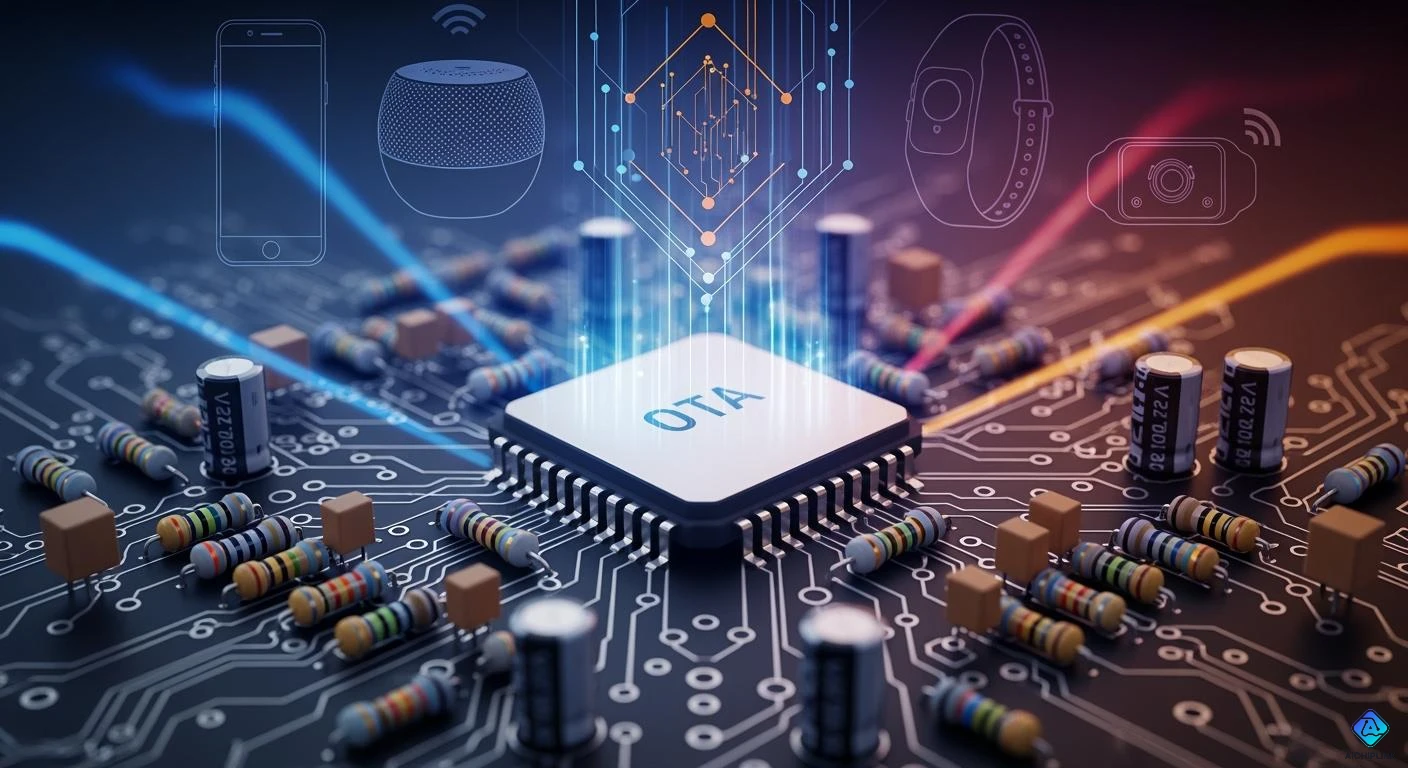
Imagine holding a smartphone that is light and lasts all day. It gives you clear sound. You cannot see the tiny parts inside. Operational Transconductance Amplifiers help make these things happen. They work like skilled traffic controllers. They guide electrical signals to the right place. When you use a fitness tracker or listen to music, OTAs help your device work well. You get more power and better performance. Your gadgets are smarter because of what OTAs can do.
Key Takeaways
-
Operational Transconductance Amplifiers (OTAs) change input voltage into output current. This makes them different from regular amplifiers.
-
OTAs help gadgets stay small and work well. They do not need big output drivers. This lets devices have more features in less space.
-
Using OTAs can make batteries last much longer. They work at low voltages and use very little power.
-
OTAs are useful in many types of circuits. They can be used for lots of things, like audio processing and wearable technology.
-
Adding OTAs to devices makes them work better. They improve sound quality and lower distortion. This gives users a better experience.
What Are Operational Transconductance Amplifiers?
Core Function and Structure
Operational Transconductance Amplifiers are special tools in gadgets. They help your device handle signals in a smart way. These amplifiers look at two input voltages. They use the difference to make an output current. If you change the input voltage, the output current changes too. The output current is the transconductance (gm) times the input voltage difference. This makes OTAs different from other amplifiers. Most amplifiers give you an output voltage, not current.
The OTA has three main parts inside:
| Component | Function |
|---|---|
| Input Transistors | Control the output current based on the input voltage through transconductance. |
| Differential Pairs | Boost the input stage performance and help block unwanted signals. |
| Current Mirrors | Keep the current steady for stable operation. |
These parts work together as a team. They make sure your device gets the right current when needed. Input transistors decide how much current comes out. Differential pairs make the signal stronger and cleaner. Current mirrors keep the current steady. This helps your gadget work well.
OTA vs. OpAmp: Key Differences
You may wonder how OTAs are different from OpAmps. The biggest difference is what comes out. OTAs give you current at the output. OpAmps give you voltage at the output. This leads to other important differences.
Here is a simple table to show the differences:
| Feature | OTA (Operational Transconductance Amplifier) | OpAmp (Operational Amplifier) |
|---|---|---|
| Basic Function | Converts input voltage into output current | Converts input voltage into output voltage |
| Output Type | Current output | Voltage output |
| Gain Control | Controlled by bias current (gm) | Controlled by feedback resistors |
| Output Impedance | High | Low |
| Flexibility | Easily tunable | Needs new parts to tune |
| Common Use | Filters, oscillators, tunable circuits | Signal amplification, comparators |
You can change the gain of an OTA by changing the bias current. This makes OTAs very flexible for many uses. OpAmps need you to swap out resistors or other parts to change gain. OTAs have high output impedance. This means they do not affect the next part of the circuit much. OpAmps have low output impedance. That is better for driving loads right away.
Tip: If you want to build circuits that can change, like filters or oscillators, OTAs are very helpful. You can adjust them easily without changing parts.
Operational Transconductance Amplifiers are important in analog and mixed-signal circuits. You find them in many modern gadgets. They help designers make devices smaller, more efficient, and more flexible.
Why OTAs Matter in Gadgets
Miniaturization Benefits
People want gadgets to be small and light. Operational Transconductance Amplifiers help make this happen. They do not need big output driver circuits like other amplifiers. This lets designers add more features in less space. OTAs can work in devices that use very low voltages, even under 2.5 volts. Some OTAs work well in systems with less than 3 volts. This is great for tiny gadgets like smartwatches and wireless earbuds.
-
OTAs do not need large output drivers, so they save space.
-
You can use them in circuits with very low voltage.
-
Good design lets OTAs use less current and make less noise.
Using OTAs helps keep devices small and efficient. That is why you find them in many modern gadgets.
Power Efficiency
People want their devices to last longer on one charge. OTAs help with this goal. They work well at low voltages, sometimes as low as ±0.5 volts. OTAs use very little power, sometimes only micro- or nano-watts. This means your fitness tracker or smart ring can run longer without charging. OTAs also handle weak signals, like your heartbeat, without wasting energy.
-
OTAs use very little power.
-
They work at low voltages.
-
They help your device last longer between charges.
If you care about battery life, OTAs are a good choice for gadgets.
Versatility in Circuits
People want their devices to do many things. Operational Transconductance Amplifiers make this possible. You can find them in many types of circuits:
-
Amplifiers
-
Filters
-
Oscillators
-
Signal processing circuits
OTAs work in both simple and complex designs. They are used in audio devices, communication systems, and medical gadgets. This flexibility lets you put many features into one small device.
Tip: If you want to design a gadget that can change how it works, like a tunable filter or a smart sensor, OTAs can help you do that.
Performance Enhancement
People want their devices to sound better and work faster. OTAs help with these things. They let you control signals right away. You can use them in audio processing to keep sound levels steady. They also work in automatic gain control circuits to handle signals that change a lot.
Here is a table that shows how OTAs help in different uses:
| Application | Benefit |
|---|---|
| Audio Processing | Lets you control sound for smooth and steady volume. |
| Automatic Gain Control (AGC) | Keeps output levels steady, even when input signals change. |
| Signal Level Control | Makes music and voice clearer by reducing distortion. |
When you use OTAs, you get better sound, smoother control, and less distortion. This means your gadgets work better and give you a nicer experience.
OTAs in Devices
Smartphones and Tablets
You use your phone or tablet every day. These devices need clear sound and quick response. They also need batteries that last a long time. Operational Transconductance Amplifiers help make this happen. They help your device handle audio signals with high accuracy. They also keep noise low. You hear music and calls that sound sharp and clear. OTAs work well with the small batteries in your phone. This means your device can stay light and small. You do not lose power or sound quality.
Here are ways OTAs make your mobile better:
-
Less noise and more accuracy for good audio.
-
Cleaner sound for music and calls.
-
Support for small batteries, so devices are compact.
-
Adjustable gain for exact audio control.
-
Used in audio systems like equalizers and synthesizers.
Note: OTAs are small and use less power, so your device can do more without using up the battery.
Wearables and Trackers
Wearable devices like fitness trackers and smartwatches need to handle tiny signals. OTAs help these gadgets pick up your heartbeat and steps with great accuracy. They use very little power. You can wear your device all day without charging it often. OTAs keep the signals clean. Your health data stays reliable.
| Feature | Description |
|---|---|
| High Transconductance | Makes weak signals from sensors stronger. |
| Low Power Consumption | Uses little energy, great for wearables. |
| Improved CMRR | Blocks unwanted signals for better accuracy. |
| Noise Minimization | Keeps sensor data clear and easy to read. |
| Flexibility and Size | Fits into small devices without losing performance. |
| Application in Wearables | Used in devices like EEG and ECG patches for health monitoring. |
Tip: OTAs help your fitness tracker give you accurate results, even from tiny signals.
Audio and Signal Processing
You want your music and calls to sound great. OTAs help make this happen in audio devices and signal processors. They give you good sound with low distortion. You can find OTAs in analog synthesizers and audio equalizers. These circuits change and shape sound signals in real time.
| Advantage | Description |
|---|---|
| Flexibility | Works for many audio and signal needs. |
| Audio Quality | Gives high quality and low distortion for better sound. |
| Suitability | Works well in synthesizers and equalizers for rich audio output. |
When you listen to music or use voice features, OTAs help keep the sound clear and enjoyable.
Future of Operational Transconductance Amplifiers
Device Design Trends
New trends are changing how engineers build amplifiers for gadgets. Designers want devices to use less power and be smarter. They use adaptive biasing to help amplifiers react better to signals. Nested local feedback also helps amplifiers work faster and more accurately. Some new circuits, like the recycling folded cascode, make amplifiers quicker and more precise without using extra energy.
Today, device design trends focus on saving power and making OTAs better. Adaptive biasing and nested feedback help OTAs respond well. The recycling folded cascode makes gain-bandwidth and slew rate higher without needing more power. Current shunt and multi-path recycling are important new ideas in OTA design.
Semiconductor technology is getting better all the time. This lets engineers build smaller and stronger circuits. Here are some ways this helps you:
-
New semiconductor tech makes circuits smaller and easier to fit.
-
Devices get better bandwidth, use less power, and stay stable.
-
OTAs can go into tiny gadgets and still work with high accuracy.
These changes mean your gadgets will be smaller, faster, and more dependable.
Emerging Applications
Operational Transconductance Amplifiers are showing up in new places. Engineers use them in smart health devices like ECG monitors you can wear. These amplifiers pick up tiny signals from your body and keep the data clear. They use very little power, so your device lasts longer.
| Feature | Specification |
|---|---|
| DC Gain | 80.5 dB |
| Unity Gain Bandwidth | 101 MHz |
| Phase Margin | 64° |
| Output Swing | 1.45 V |
| Power Consumption | 72 μW |
| Compensation Technique | Miller compensation |
| Application | Portable and battery-powered IoT devices |
You will also see OTAs in Internet of Things gadgets. They help smart home devices and sensors work better and use less energy. As technology improves, OTAs will be used in medical monitors, smart wearables, and environmental sensors. Your devices will keep getting smarter and more efficient.
You use Operational Transconductance Amplifiers every day. You may not notice them inside your gadgets. OTAs help keep your devices small and strong. They make gadgets work well and use less energy. OTAs let devices change how they work easily. They also help electronics run fast. Here is a table that shows what OTAs do:
| Performance Metric | Benefit for Devices |
|---|---|
| Tunability | Works for many different jobs |
| High-Frequency Operation | Makes electronics run quickly |
| Reduced Parasitics | Helps circuits work better |
As technology gets better, OTAs will help your gadgets become smarter and more dependable.

Written by Jack Elliott from AIChipLink.
AIChipLink, one of the fastest-growing global independent electronic components distributors in the world, offers millions of products from thousands of manufacturers, and many of our in-stock parts is available to ship same day.
We mainly source and distribute integrated circuit (IC) products of brands such as Broadcom, Microchip, Texas Instruments, Infineon, NXP, Analog Devices, Qualcomm, Intel, etc., which are widely used in communication & network, telecom, industrial control, new energy and automotive electronics.
Empowered by AI, Linked to the Future. Get started on AIChipLink and submit your RFQ online today!
Frequently Asked Questions
What does an OTA do in my gadget?
You find OTAs inside many gadgets. They help control signals and make sure your device works well. OTAs keep sound clear, save battery, and help your device stay small.
How do OTAs help save battery life?
OTAs use very little power. You get longer battery life in your smartwatch or phone. They work well even when your device uses a small battery.
Can OTAs make my music sound better?
Yes! OTAs help control sound levels and reduce noise. You hear music and calls that are clear and smooth.
Where else do I find OTAs?
You see OTAs in fitness trackers, medical devices, and smart home sensors. They help these gadgets pick up tiny signals and work with low power.