How to select semiconductors for on-board chargers
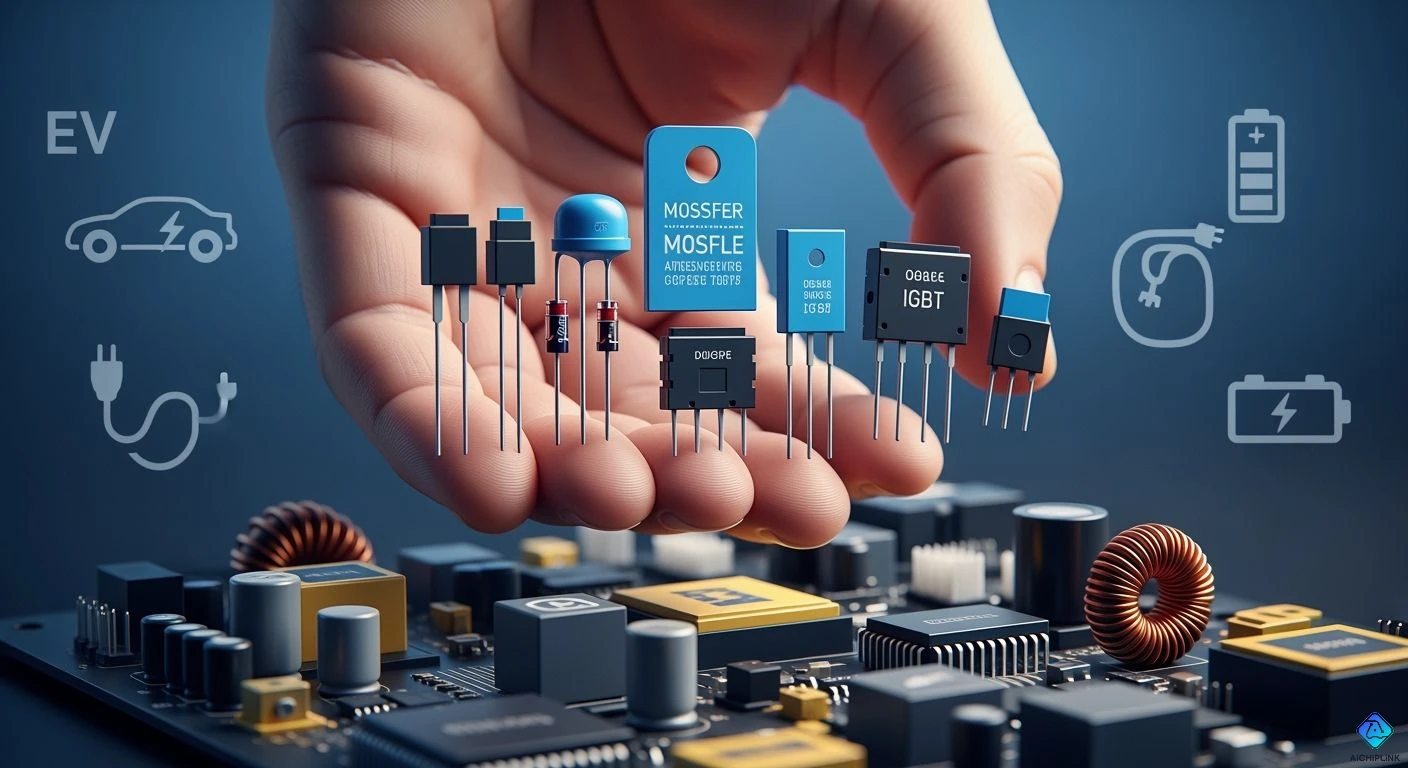
You pick semiconductors for an on-board charger by matching their features to what your system needs. Better efficiency helps the charger work faster, makes less heat, and helps the battery last longer. New materials like silicon carbide make things work better but cost more money. High power density lets the design be smaller, so it fits in new electric cars. Reliability means the charger works well all the time, even when it gets very hot or cold. EliteSiC and Super-Junction MOSFETs are top choices. The On-Board Charger Semiconductor Selection Guide shows how these things affect how the system works.
Key Takeaways
-
Pick semiconductors by looking at efficiency, cost, and power density. This helps your on-board charger work better.
-
Use good parts like EliteSiC and Super-Junction MOSFETs. These make your charger perform well and last longer.
-
Make sure your charger follows local grid rules. This keeps it safe and working right.
-
Focus on thermal management to stop overheating. This helps your charger last a long time.
-
Check voltage and current ratings every time. This makes sure the semiconductors match your system needs.
On-board charger semiconductor selection guide
Key criteria: efficiency, cost, power density
When you use the on-board charger semiconductor selection guide, you need to think about a few main things. Efficiency is very important. If your charger is more efficient, it wastes less energy as heat. This lets your electric vehicle charge faster. It also keeps the battery healthy. You can drive more miles with each charge.
Cost is important too. You want semiconductors that fit your budget and work well. Silicon carbide can make chargers more efficient and powerful. But it costs more than regular silicon. You need to balance these choices to get the best deal.
Power density is another big factor. High power density parts make the charger smaller and lighter. This helps your electric vehicle stay easy to drive and efficient.
The table below shows the main things to think about:
| Criteria | Description |
|---|---|
| Efficiency | Helps keep heat low and makes OBCs work better. |
| Power Levels | Needs to handle 3.3 kW to 22 kW and up to 800 V. |
| Component Selection | Pick MOSFETs and other semiconductors for best results. |
| Size and Weight | Should be small so the car does not get heavy. |
| Cooling Requirements | Good designs need less cooling, which can be hard to add. |
EliteSiC and Super-Junction MOSFETs help your charger use energy better. These parts can let your electric vehicle go up to 15% farther than older chargers. They also make cooling easier. You get faster charging and better reliability. The on-board charger semiconductor selection guide helps you compare these choices and pick what works best for your project.
Tip: Always check the power levels and battery voltage your charger needs. This helps you pick semiconductors that fit your system.
Reliability and grid compatibility
Reliability is very important for any charger. You want your charger to work well in tough places, like when it is hot or humid. The on-board charger semiconductor selection guide shows how to test reliability. You can use tests like Temperature Humidity Bias (THB) and Highly Accelerated Stress Test (HAST). These tests check how semiconductors do under stress. Vibration testing checks if your charger can handle bumps while driving.
Here is a table that shows common reliability tests:
| Reliability Metric | Description |
|---|---|
| Temperature Humidity Bias (THB) | Tests OBCs at 85°C and 85% humidity for 1,000 hours to see long-term stress. |
| Highly Accelerated Stress Test (HAST) | Uses 130°C and 85% humidity for about 96 hours to speed up stress testing. |
| Vibration Testing | Uses ISO 16750-3 with random vibrations from 10-500 Hz. |
Grid compatibility is also important. Your charger must meet rules in different places. North America uses IEEE 1547. Europe uses EN 50549. These rules need voltage ride-through and reactive power support. You must check these rules before you pick semiconductors for your charger.
| Region | Standard | Requirements |
|---|---|---|
| North America | IEEE 1547 | Needs voltage ride-through and reactive power support |
| Europe | EN 50549 | Needs voltage ride-through and reactive power support |
The on-board charger semiconductor selection guide helps you match your device to these rules. You make sure your charger works safely and reliably everywhere.
Note: Always check the reliability and grid compatibility rules in your area before you finish your charger design.
OBC power stage overview
AC-DC rectification: bridge rectifiers, diodes
The charging starts with AC-DC rectification. This step turns AC from the wall into DC for your battery. Bridge rectifiers and diodes do this job. You need to pick the right diode type for good efficiency. Standard rectifiers are best at low frequencies. High-speed and ultra-high-speed fast recovery diodes help at higher frequencies. They can get hot if you do not control voltage drops.
| Diode Type | Forward Voltage Drop ($V_F$) | Reverse Recovery Time ($t_{rr}$) | Efficiency Consideration |
|---|---|---|---|
| Standard Rectifiers | ~1.0 V | Microseconds | Works well at 50/60 Hz but loses efficiency at high frequencies because of switching losses. |
| High-Speed FRDs | ~1.5 V | 50–100 ns | Balances $V_F$ and $t_{rr}$ for better thermal efficiency in high-frequency uses. |
| Ultra-High-Speed FRDs | 3.0 V to 3.6 V | 25 ns | High $V_F$ can cause overheating, which cancels out efficiency gains from fast switching. |
Tip: Always check voltage drop and recovery time when picking diodes. This helps you stop overheating and wasting energy.
PFC stage: ultra-fast recovery rectifiers, MOSFETs
The Power Factor Correction (PFC) stage helps your charger use grid power well. You use ultra-fast recovery rectifiers and MOSFETs here. These parts help you reach higher efficiency goals. You want your OBC to meet these targets:
| Power Level | Efficiency Target |
|---|---|
| Entry-level OBCs | 92-94% (up to 7.2 kW) |
| Mid-range OBCs | 94-96% (7.2-11 kW) |
| Premium high-power OBCs | 96-98% (11-22 kW) |
Pick MOSFETs with low switching losses. This keeps heat low and helps your charger last longer.
DC-DC conversion: SiC, SJ MOSFETs, Schottky diodes
DC-DC conversion changes DC voltage for your battery. You use silicon carbide (SiC) MOSFETs, Super-Junction (SJ) MOSFETs, and Schottky diodes. These devices handle high voltages and fast switching. SiC MOSFETs and SJ MOSFETs give better efficiency and thermal stability. Schottky diodes lower conduction losses but can get hot if you do not control leakage current.
| Device Type | Switching Losses | Thermal Management Considerations |
|---|---|---|
| Schottky Diodes | Lower forward voltage drops cut conduction losses, but reverse recovery can cause thermal problems. | More leakage current with heat can cause thermal runaway in hot places. |
| Super-Junction MOSFETs | Heat comes from conduction and switching losses, with gate drive losses adding to thermal load. | Positive temperature coefficient of on-resistance gives thermal stability, lowering current flow at higher temperatures. |
Note: You must balance switching losses and thermal management to hit your efficiency target.
Output protection and isolation
You need output protection and isolation to keep your charger safe. Galvanic isolation stops electric conduction between circuits. This protects your car and the charging station. Isolation is very important when you use high bus voltages. Dual-channel, automotive-grade, isolated gate drivers give up to 5 kV RMS isolation. They need their own power supply for best efficiency. An automotive-grade LLC transformer driver works well with SiC MOSFETs and gives isolated, biased supplies.
-
Isolation keeps you safe from high voltages.
-
Gate drivers and transformer drivers help manage power and protect your system.
-
Galvanic isolation stops stray currents and keeps things safe.
Safety first: Always use proper isolation methods in your OBC design.
Semiconductor types for on board charger
Silicon (Si) vs. Super-Junction MOSFETs
You can pick standard silicon MOSFETs or Super-Junction MOSFETs for your charger. Each one has its own benefits.
-
Standard silicon MOSFETs are good for simple designs. They cost less and are easy to buy.
-
Super-Junction MOSFETs have lower resistance when turned on. This means they waste less energy as heat. You get less conduction loss.
-
SJ MOSFETs handle high voltages and keep resistance low. This helps your charger stay cool and last longer.
-
These devices switch faster than regular silicon MOSFETs. Faster switching gives better performance at high frequencies.
Super-Junction MOSFETs are great if you want higher efficiency and better heat control. They work well in tough automotive jobs. EliteSiC and Super-Junction MOSFETs are top picks for new OBCs.
Tip: Less conduction loss and faster switching help you make smaller, more efficient chargers.
Silicon Carbide (SiC) advantages
Silicon Carbide MOSFETs give many benefits for high-power chargers. You can use them in designs that need to handle high voltages and heat.
-
SiC MOSFETs have very low resistance when turned on. This means less energy becomes heat.
-
You can run SiC devices at high switching speeds. This lets you make your charger smaller.
-
SiC semiconductors work well in hot places. They keep working even when it gets very warm.
-
You can use SiC for high-voltage designs. This makes them good for fast charging.
-
SiC devices resist radiation. This makes them more reliable.
-
You can cut power conversion losses by about 20% with SiC. This means your charger wastes less energy.
-
SiC helps you get higher efficiency, power density, and mass density.
You get faster charging and better reliability with SiC. These features make SiC a strong choice for new electric vehicles.
Gallium Nitride (GaN) features
Gallium Nitride devices are changing how you build chargers. GaN lets you get even higher efficiency and power density.
-
GaN devices switch very fast. You can run them at over 1 MHz.
-
High switching speed means you can use smaller magnetic parts. This makes the charger smaller.
-
GaN helps you reach efficiency above 95%. This is higher than most silicon devices.
-
You get better heat control. GaN stays cool even when working hard.
| Feature | GaN Devices | Silicon Devices |
|---|---|---|
| Switching Speed | Over 500 kHz | Lower than 500 kHz |
| Size of Magnetics | Up to 60% smaller | Larger |
| Efficiency | Above 95% | Usually lower |
| Power Density | Over 4 kW/L | Lower than GaN |
You should use GaN if you want the smallest, most efficient charger. GaN works best in soft-switching designs and advanced OBCs.
Note: GaN gives you higher efficiency, faster switching, and better heat control.
Device selection by power stage
You need to pick the right semiconductor for each part of your charger. Here is a simple guide:
-
AC-DC Rectification: Use silicon diodes or fast recovery diodes for basic designs. For higher efficiency, try SiC Schottky diodes.
-
PFC Stage: Super-Junction MOSFETs and SiC MOSFETs work well here. They give you low losses and fast switching.
-
DC-DC Conversion: SiC MOSFETs and GaN devices are best for high-frequency, high-efficiency designs. Use Schottky diodes for low conduction losses.
-
Output Protection and Isolation: Use automotive-grade gate drivers and isolation devices. These keep your system safe.
You should match each device to the voltage, current, and frequency needs of your charger. EliteSiC and Super-Junction MOSFETs are best-in-class for many OBC power stages.
Always check the datasheet for voltage, current, and switching speed before you pick a device. This helps you get the best performance and reliability.
Advanced features and integration
Bidirectional charging and V2G
You can use your ev for more than driving. It can share energy with your home or the grid. This is called vehicle-to-grid (V2G) or vehicle-to-home (V2H). You need special semiconductors to do this. Wide bandgap materials like Silicon Carbide and Gallium Nitride help a lot. They make chargers work better and faster. These materials let energy move quickly, which is important for V2G.
Here is a table showing some advanced features in on-board charger semiconductors:
| Feature | Description |
|---|---|
| Silicon Carbide (SiC) | Makes chargers more efficient and powerful. |
| Gallium Nitride (GaN) | Gives higher efficiency and faster switching for better performance. |
| High-Voltage Architectures | Lets chargers work faster and lose less energy, especially in 800V systems. |
| Bidirectional Capability | Lets your ev send energy to the grid. |
| Compact Design | Makes chargers smaller and lighter but still strong. |
You need high efficiency for V2G to work well. Most bidirectional chargers today reach 90-93% efficiency. The goal is to get over 95%. Better semiconductors help you reach this goal. They also keep your ev ready for new technology.
Miniaturization and power density trends
More people are buying evs now. Car makers want chargers to be smaller and lighter. This saves space and weight. Your ev can go farther on one charge. New materials and smart designs help build small chargers that still give high power.
-
Small chargers use less energy and make less heat.
-
Tiny designs fit well in new evs, scooters, and bikes.
-
High-density packaging helps batteries work better and last longer.
These trends make your ev easier to use and more efficient. Lightweight chargers waste less energy when charging.
Safety and certification
Safety is always most important for chargers. You must use semiconductors that meet strict rules. These rules check things like electrical isolation, thermal protection, and vibration resistance. Certified parts help you avoid trouble and keep your ev safe every time you charge.
-
Pick parts tested for high voltage and big temperature changes.
-
Make sure your charger follows local and global rules for ev charging.
-
Certified semiconductors protect your car and the power grid.
Tip: Always pick parts with clear safety ratings and certifications. This keeps your ev and everyone safe.
Practical selection tips
Matching device ratings to application
You need to pick semiconductors that fit your charger. First, check what voltage and current your charger needs. Make sure each part can handle the highest voltage and current. The obc system solution guide helps you compare different device ratings. If you pick the right ratings, your charger will be safe and work well. Always look at the datasheet for the highest ratings before you choose.
Evaluating switching performance
Switching performance is important for how your charger works. You want parts that switch fast and do not waste energy. Wide bandgap materials like SiC and GaN help your charger be efficient. Look for these things when you check switching performance: Switching losses should stay low, even at high frequencies. Good thermal management keeps parts cool while charging. SiC and GaN work well at high frequencies. Some OBC designs lose efficiency if it gets too hot or cold. Fixed control algorithms may not change when conditions change. The obc system solution guide shows how to compare switching performance for different parts.
Supplier quality and support
You need a good supplier for your charger parts. The table below shows what to look for:
| Criteria Area | Description |
|---|---|
| Quality | Good power module quality, traceability, and stable process control |
| Performance | The part meets the right technical needs for voltage, current, heat, and switching |
| Lead Time | Realistic delivery times, not promises that change after your first order |
| Support | Fast help from engineers, clear documents, and help with supplier checks |
| Lifecycle | Parts are available for a long time, with plans for changes and product updates |
Tip: Pick suppliers who give clear documents and fast help. This makes it easier to fix problems.
Cost-performance trade-offs
You need to balance cost and performance when picking semiconductors. High-performance parts like SiC and GaN cost more but work better and last longer. The obc system solution guide helps you compare cost and performance for each part. If you find the right balance, your charger will work well and not cost too much.
You pick semiconductors for your on-board charger by matching each device to the right power stage. You need to check if the device is efficient, reliable, and works with your system. You also have to think about how well it works and how much it costs. You do this by looking at important things:
| Metric | Description |
|---|---|
| Parasitic Inductance | Lower numbers stop power circuits from acting unstable. |
| Thermal Management | Good cooling keeps parts safe and working well. |
| Protection Circuits | These protect against too much current, voltage, or heat. |
| Voltage and Current Ratings | Pick parts that can handle your system’s highest needs. |
| Efficiency | Better efficiency means less heat and better performance. |
You can get the latest information from Texas Instruments and NXP Semiconductors. Always read datasheets and application notes before you decide which part to use.

Written by Jack Elliott from AIChipLink.
AIChipLink, one of the fastest-growing global independent electronic components distributors in the world, offers millions of products from thousands of manufacturers, and many of our in-stock parts is available to ship same day.
We mainly source and distribute integrated circuit (IC) products of brands such as Broadcom, Microchip, Texas Instruments, Infineon, NXP, Analog Devices, Qualcomm, Intel, etc., which are widely used in communication & network, telecom, industrial control, new energy and automotive electronics.
Empowered by AI, Linked to the Future. Get started on AIChipLink and submit your RFQ online today!
Frequently Asked Questions
What is the best semiconductor for high-efficiency on-board chargers?
Silicon Carbide MOSFETs give you the best efficiency. They switch fast and work with high voltage. Super-Junction MOSFETs also work well and cost less.
How do you choose the right voltage rating for OBC semiconductors?
First, check your battery voltage and the highest input voltage. Pick semiconductors with voltage ratings at least 20% higher than your system’s top voltage. This keeps your charger safe.
Why does thermal management matter in OBC design?
Thermal management helps your charger stay reliable. Good cooling stops parts from getting too hot. You can use heat sinks, fans, or thermal pads to keep semiconductors safe.
Are GaN devices safe for automotive chargers?
GaN devices are safe if you follow car standards. Pick certified parts with clear isolation ratings. Always check the datasheet for safety features.
What tests help you check reliability for OBC semiconductors?
You can use tests like Temperature Humidity Bias, Highly Accelerated Stress Test, and vibration testing. These tests show how semiconductors handle stress and tough places.