Level 2 vs Level 3 Autonomous Driving Chips Which Is Right for Your Car
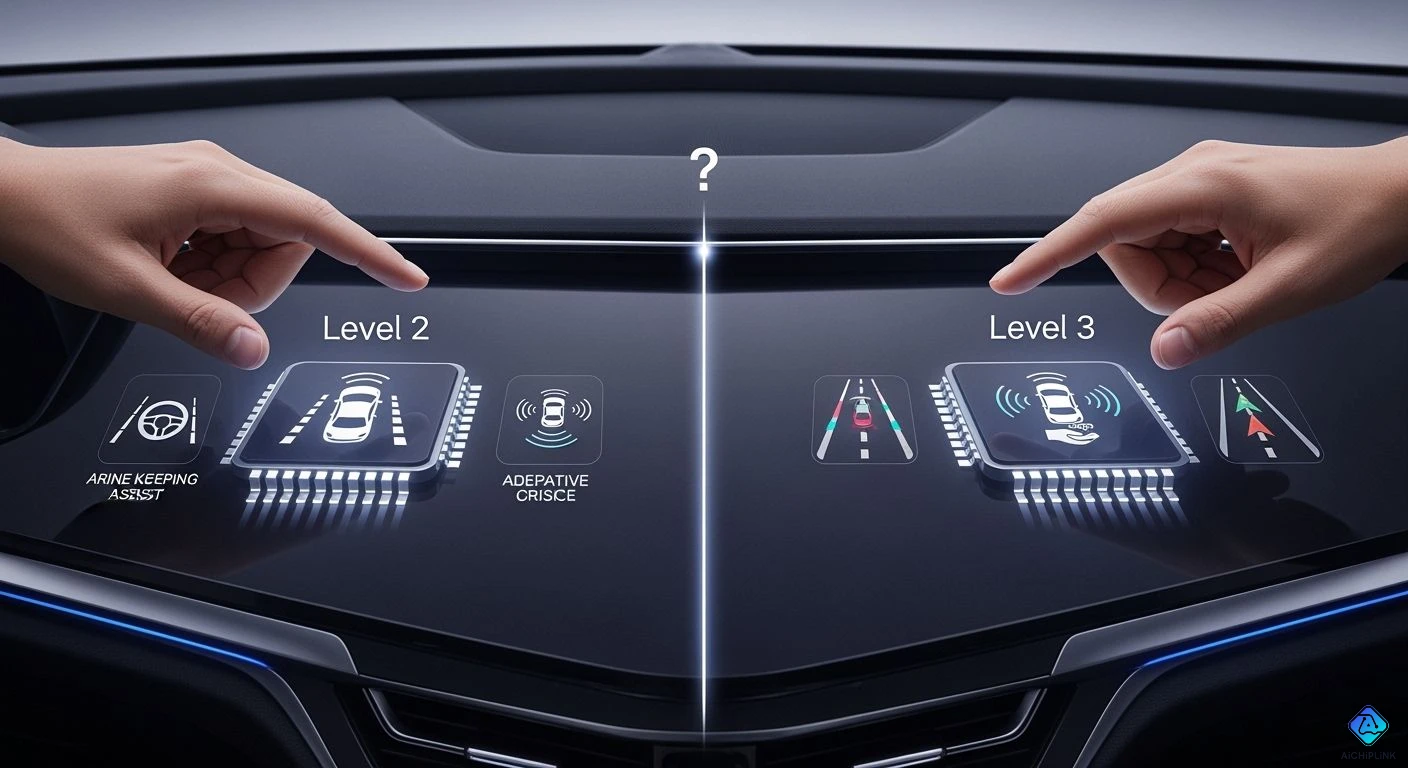
Choosing between level 2 vs level 3 autonomous driving chips depends on how much control you want and what your car supports. Most cars today use Level 2 chips. These systems let you relax a little, but you must always stay alert and ready to take over. Level 3 chips let you take your hands and eyes off the road in certain situations, but only if your car and local laws allow it. New technology and rules are making Level 3 safer, but not every car can use it yet.
-
Level 2 chips appear in most new mid-range and high-end cars.
-
Level 3 needs advanced tech and special safety checks.
You should think about your driving habits and your vehicle’s features before making a choice.
Key Takeaways
-
Level 2 chips are found in many new cars. They help drivers with simple tasks. But drivers still need to pay attention.
-
Level 3 chips let you take your hands off the wheel sometimes. This only works if your car and local laws allow it.
-
Think about how you drive. Level 2 is good for city streets. Level 3 works better on highways or in heavy traffic.
-
Always make sure your car can use the chip you want. Check this before you choose.
-
Price is important. Level 2 chips cost less money. They are also easier to take care of than Level 3 chips.
Level 2 vs Level 3 Autonomous Driving Chips Overview
Partial vs Conditional Automation
When you look at level 2 vs level 3 autonomous driving chips, you see two types of automation. Level 2 chips help with steering, braking, and speeding up. You are always in charge of your car. The system helps you, but you must pay attention. You need to keep your hands on the wheel. This is called partial automation.
Level 3 chips go further with self-driving technology. The system can drive your car by itself sometimes. You can take your hands off the wheel and your eyes off the road. The chip drives for you, but only in certain places like slow traffic or mapped highways. This is called conditional driving automation. You must be ready to help if the system needs you.
Tip: Level 2 chips are found in most new cars. Level 3 chips need special sensors and good detection to be safe.
Driver Engagement Requirements
It is important to know how level 2 vs level 3 autonomous driving chips change your job as a driver. With level 2, you must stay alert and pay attention. You watch the road and react fast if something happens. The system helps you, but you are still responsible.
Level 3 chips make driving different. You can relax and do other things while the system drives. You can read, use your phone, or talk to friends. The system takes over, but you must be ready to drive if it cannot handle something.
Here is a simple table that shows the difference:
| Level | Driver Engagement Requirements |
|---|---|
| 2 | Must stay alert and ready to drive at any time. |
| 3 | Can do other things but must be ready to help when needed. |
Note: Level 3 chips need exact geofencing and perfect positioning. The system only works where it can keep you safe.
Key Features Comparison
You may want to know how level 2 vs level 3 autonomous driving chips work in real life. Level 2 chips help with basic tasks. Most cars have these features. Level 3 chips give more advanced automation, but only in some places.
Here is a table showing the main differences:
| Level | Description |
|---|---|
| 2 | Helps the driver with steering, braking, and speeding up. Most cars have these abilities. |
| 3 | Can drive by itself but needs the driver to help when unsure. |
Safety is important too. Studies show level 2 chips do not lower crashes compared to regular crash avoidance systems. Some drivers misuse partial automation and stop paying attention, which can cause accidents. Level 3 chips try to fix this by letting the system take over in certain situations.
Callout: Moving from level 2 to level 3 needs good detection, trusted positioning, and strong safety checks.
When you pick between level 2 vs level 3 autonomous driving chips, think about what you need and what your car can do. Level 2 chips work for most drivers and cars. Level 3 chips give more freedom, but only if your car supports them and you drive where the system works.
Level Three Autonomy in Real-World Driving
Safety and Legal Factors
Level three autonomy changes how people drive and who is responsible. When your car uses level three autonomy, it can drive by itself sometimes. You can look away from the road for a short time. This new freedom means there are new rules to follow. The car’s technology does the driving, so insurance companies may change who they blame if something goes wrong. If your car makes a mistake, the insurance company might have to pay more money. You could see your insurance cost go up. You should always check the laws where you live because not every place lets you use level three autonomy yet. Safety is still very important. The system must work well in the places it is allowed to keep everyone safe.
Hands-On vs Hands-Off Experience
With level three autonomy, you go from driving with your hands on the wheel to taking your hands off in some cases. You can take your hands off the wheel and look away, but only when the system says it is okay. This eyes-off autonomy lets you relax, read, or talk to people in the car. You still need to pay attention. On long trips, level three autonomy can help you feel less tired, but you must be ready to drive if the car asks. The system can do things like change lanes and merge, but you need to watch in case something strange happens.
Tip: Always pay attention, even when using eyes-off autonomy. The car might need your help at any time.
Transition Moments
Transition moments are very important with level three autonomy. The car might ask you to drive if it finds something it cannot handle, like bad weather or unclear road lines. You must act fast when this happens. These moments happen when the system cannot do its job or when the road changes. You need to notice and react to these signals to keep everyone safe. Level three autonomy works best in slow traffic or on roads it knows well, where it can guess what will happen next.
-
Common transition scenarios:
-
Sudden weather changes
-
Construction zones
-
Unexpected obstacles
-
Level three autonomy gives you more freedom, but you must always be ready to help. This mix of eyes-off autonomy and being ready to drive is what makes level three special.
Choosing the Right Chip for Your Car
Assessing Your Driving Habits
You should start by thinking about how you drive every day. Your habits can help you decide which chip fits your needs.
-
If you drive mostly in the city with lots of stops and starts, Level 2 chips can help you with steering and braking. You still need to watch the road and stay alert.
-
If you spend a lot of time on highways or in slow traffic, Level 3 chips can give you more freedom. You can relax and let the car handle the driving in some situations.
Ask yourself these questions:
-
Do you like to stay in control of your car at all times?
-
Do you want to use your phone or read while the car drives in traffic jams?
-
Do you feel comfortable letting the car take over, even for a short time?
Tip: If you want to relax more during long drives, Level 3 chips may suit you. If you prefer to stay active and alert, Level 2 chips work better.
Vehicle Compatibility
Not every car can use both types of chips. You need to check what your car can support before you make a choice.
| Feature | Level 2 Chip | Level 3 Chip |
|---|---|---|
| Works in most new cars | ✅ | ❌ |
| Needs special sensors | ❌ | ✅ |
| Needs advanced maps | ❌ | ✅ |
| Easy to upgrade | ✅ | ❌ |
Most cars today come with Level 2 chips. These chips use basic cameras and sensors. You can find them in many brands and models. Level 3 chips need more advanced hardware. Your car must have high-quality sensors, strong computers, and special software. Only a few new cars support Level 3 chips right now.
Note: Always check your car’s manual or ask your dealer before you try to upgrade. Some cars cannot use Level 3 chips, even with new parts.
Cost and Upgrade Considerations
You should think about the cost before you choose a chip. Level 2 chips cost less because they use simple technology. Most car makers include them in the price of the car. You may only pay extra for special features.
Level 3 chips cost more. They need better sensors, stronger computers, and more testing. You may need to buy a new car to get Level 3 autonomy. Upgrading an old car to Level 3 is hard and expensive.
Here is a quick look at the costs:
-
Level 2 Chip: Lower cost, often included in new cars, easy to maintain.
-
Level 3 Chip: Higher cost, may require a new car, higher insurance, more maintenance.
Alert: Insurance for Level 3 cars can cost more. The rules for self-driving cars change often. You should check with your insurance company before you buy.
You should balance your budget with your needs. If you want the latest tech and more freedom, Level 3 chips may be worth the price. If you want a good driving helper at a lower cost, Level 2 chips give you great value.
Brand Examples and Market Trends
Tesla and Level 2 Systems
You see Tesla as a leader in Level 2 autonomous driving. Tesla’s Autopilot gives you many helpful features. These features make driving easier, but you must always pay attention and keep your hands ready. Here is a table that shows what Tesla’s Level 2 system can do:
| Feature | Description |
|---|---|
| Stop-and-Go Adaptive Cruise Control (ACC) | Keeps your speed and distance from the car ahead. Stops and starts in traffic. |
| Automated Lane-Centering (ALC) | Keeps your car in the center of the lane, even on curves. |
| Automated Lane Changes | Lets your car change lanes by itself when it is safe, after you approve. |
| Autopilot on All Roads | Works best on highways with clear lines. Needs you to stay alert for cross-traffic. |
| Follow Navigation Route (freeways only) | Follows your route on freeways, changes lanes, and handles exits. You must take over off freeways. |
Tip: Tesla’s system helps you, but you must always be ready to drive.
Mercedes and Level 3 Innovations
Mercedes-Benz brings Level 3 autonomy to real cars. You can use the DRIVE PILOT system on some freeways at speeds up to 40 mph. This system uses advanced sensors like LiDAR, cameras, and radar. These sensors help your car know exactly where it is and what is around it.
-
DRIVE PILOT can control the car by itself on mapped freeways.
-
The system has backup controls for steering and braking to keep you safe.
-
Special lights and signals show you when the car is driving itself.
-
Mercedes works with safety groups and follows all rules for self-driving cars.
-
The car uses a high-precision map that updates often, so it always knows the road.
Note: You must stay ready to take over if the system asks.
Industry Developments
You see big changes in the world of autonomous driving. Many car makers invest in new technology for Level 3, but costs stay high. Some companies focus on Level 2+ systems because they are easier to use and cost less. Here is a table with the latest trends:
| Factor | Description |
|---|---|
| Chinese OEMs | Build their own chips and maps for Level 3. Invest a lot in new driving technology. |
| Regulatory Frameworks | North America and Europe lead in Level 3 rules. Germany has strong laws for self-driving cars. |
| Cost Challenges | Level 3 costs more than Level 2+. Many car makers choose Level 2+ for faster sales. |
Industry experts say Level 2+ systems will stay popular. These systems give you more safety and comfort without the high price or tough rules of Level 3.
Callout: You will see more Level 2+ features in new cars as companies work to make driving safer and easier.
Making Your Decision
User Profiles and Recommendations
You need to match your driving style and needs with the right chip. If you drive in busy cities and like to stay in control, Level 2 chips fit you best. You get help with steering and braking, but you stay alert. If you spend hours on highways or want to relax in traffic jams, Level 3 chips give you more freedom. You can read or use your phone when the system takes over.
Here are some user profiles:
-
Active Driver: You enjoy driving and want to stay in charge. Level 2 chips suit you.
-
Commuter: You face long traffic jams and want to relax. Level 3 chips help you.
-
Tech Enthusiast: You want the latest features and are ready to pay more. Level 3 chips match your needs.
Tip: Always check your car’s compatibility and local laws before you decide.
Summary of Differences
You see clear differences between Level 2 and Level 3 chips. The table below shows the main points:
| Feature | Level 2 Chip | Level 3 Chip |
|---|---|---|
| Driver Attention | Always needed | Needed only sometimes |
| Hands-Off Driving | No | Yes (in some cases) |
| Cost | Lower | Higher |
| Car Compatibility | Most new cars | Only select models |
| Legal Use | Widely allowed | Limited by region |
Alert: Level 3 chips offer more freedom, but you must stay ready to take over.
Next Steps
You should follow these steps to make your choice:
-
Check your driving habits and decide what you want from your car.
-
Review your car’s features and see if it supports Level 2 or Level 3 chips.
-
Ask your dealer about upgrade options and costs.
-
Read local laws about autonomous driving.
-
Talk to your insurance company about coverage and rates.
Callout: You make the best choice when you match your needs, your car, and your budget.
You need to think about how you drive, what your car can use, and how much money you have before picking Level 2 or Level 3 chips. Soon, better chips will help cars drive in harder situations, so Level 3 will get easier to use. When you look at your car, check if it has good networks, fast data, and strong safety parts. In the future, upgrades might make chips smaller and help cars see things around them better. Think about what you want and get ready for new technology when it comes.

Written by Jack Elliott from AIChipLink.
AIChipLink, one of the fastest-growing global independent electronic components distributors in the world, offers millions of products from thousands of manufacturers, and many of our in-stock parts is available to ship same day.
We mainly source and distribute integrated circuit (IC) products of brands such as Broadcom, Microchip, Texas Instruments, Infineon, NXP, Analog Devices, Qualcomm, Intel, etc., which are widely used in communication & network, telecom, industrial control, new energy and automotive electronics.
Empowered by AI, Linked to the Future. Get started on AIChipLink and submit your RFQ online today!
Frequently Asked Questions
What happens if my Level 3 system fails while driving?
You must take control right away. The car will alert you with sounds or lights. Always stay ready to drive, even when the system is active.
Can I upgrade my car from Level 2 to Level 3?
Most cars cannot upgrade from Level 2 to Level 3. Level 3 needs special sensors and computers. You usually need to buy a new car for Level 3 features.
Is Level 3 legal everywhere?
No, Level 3 is not legal everywhere. Some countries and states allow it, but many do not. You should check your local laws before using Level 3 features.
Does Level 3 autonomy make driving safer?
Level 3 can make driving safer in certain conditions. The system uses advanced sensors to avoid mistakes. You still need to stay alert and help when needed.