How Advanced Power Technologies Are Enhancing Data Center Performance
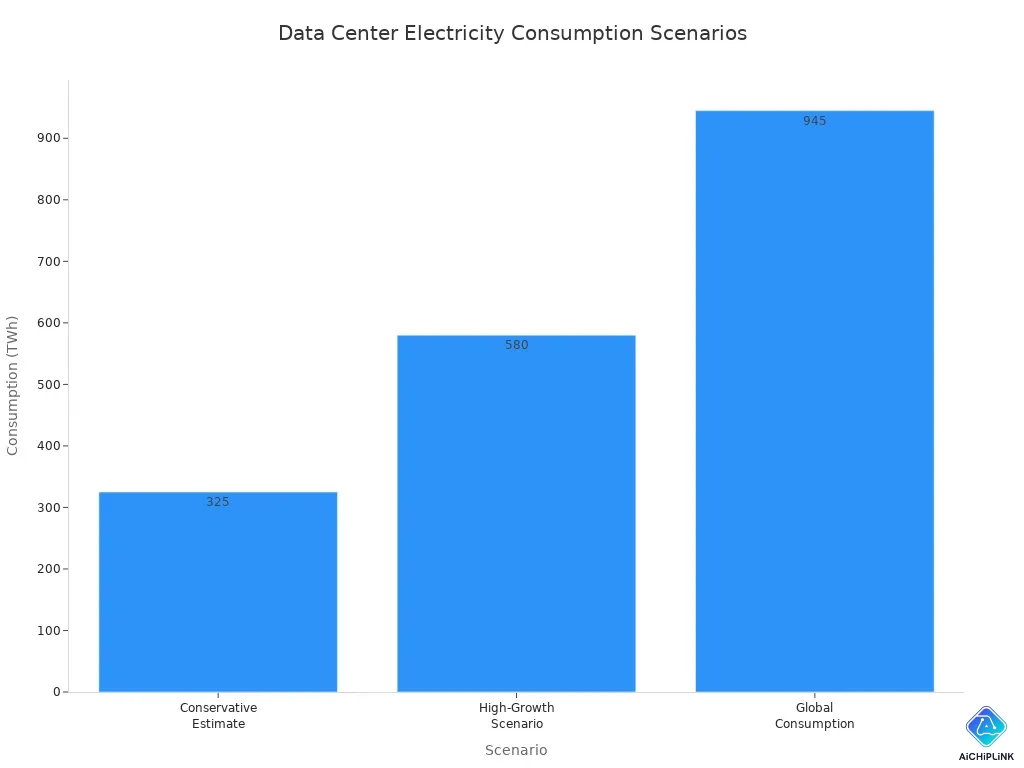
You see data centers changing quickly because of innovative power solutions. These technologies help data centers work better and save energy, while also benefiting the environment. For example, Deloitte says data centers might use 1,065 TWh of energy by 2030. Big companies like Google, Microsoft, Amazon, and Meta have strong sustainability goals:
| Company | Commitment/Goal |
|---|---|
| Carbon-neutral since 2007, targeting 24/7 carbon-free energy by 2030 | |
| Microsoft | Carbon-negative by 2030 commitment |
| Amazon | 100% renewable energy by 2025 goal |
| Meta | Net-zero emissions across value chain by 2030 |
You can see that innovative power solutions make things better. They lower cooling needs and help processors work faster. They also allow data centers to use more power in less space. Look at the chart below to compare electricity use in different data center situations:
Using innovative power solutions helps you get ready for the future. It also benefits the planet. You gain better efficiency, steady energy, and more new ideas in power technology.
Key Takeaways
-
New power solutions, like fusion energy and thermoelectric generators, help data centers work better and use less energy. They also lower carbon footprints.
-
Using renewable energy, like solar and wind, helps data centers save money. It also lets them run in a way that is good for the planet.
-
Custom battery storage systems give backup power. This keeps data centers running during power outages. It also cuts down on downtime costs.
-
AI helps manage energy by watching and changing power use in real time. This saves a lot of energy.
-
Modular data center designs let people set up and grow centers fast. This makes it easier to handle new energy needs and workloads.
Innovative Power Solutions for Data Centers
Fusion Power and Thermoelectric Generators
Data centers are getting power in new ways. Fusion power is a big change. Companies like Helion want to use fusion energy by 2028. This could give almost endless clean energy. Scientists have made progress with laser ignition. But fusion may not be common for many years.
Thermoelectric generators are also helpful. These devices turn waste heat from servers into energy you can use. They help recycle heat and make data centers work better. Right now, thermoelectric systems have some limits. Still, they help data centers save energy.
-
Fusion power gives safe, clean energy for high-density ai workloads.
-
Thermoelectric generators recycle waste heat and help save energy.
-
Both solutions help data centers meet power needs and lower carbon footprints.
Renewable Energy Integration
You can make your data center greener with renewable energy. Many companies put solar panels or wind turbines at their sites. About 38% of tech companies use solar arrays on-site. Around 36% use battery storage to handle energy changes. These steps help save money and make data centers work better.
-
On-site renewable generation lets you make your own green energy.
-
Off-site renewable procurement gives you clean energy from other places.
-
Energy storage systems keep power steady when the sun or wind is not strong.
You can use these energy-saving ideas to help your data center:
-
Use geographic load distribution to lower costs and use more renewables.
-
Connect to more than one utility grid to cut risks and save money.
-
Combine on-site renewables with storage to stop energy loss and keep costs steady.
These new power solutions help you reach your sustainability goals. They also support new ideas in the industry.
Custom Battery Storage Systems
Data centers need backup power they can trust. Custom battery storage systems now replace old diesel generators. Google uses a 2.75 MW/5.5 MWh battery system in Belgium. This system gives backup power and helps the local grid.
-
Lithium-ion batteries work right away during outages, so servers stay on.
-
Batteries help manage energy use and costs by storing power for busy times.
-
Battery systems work over 99.9% of the time, so you avoid downtime.
Note: One hour of downtime can cost $100,000 to $500,000. Google’s Belgium data center saved about $2 million during a grid outage because of its battery system.
Custom battery systems let you add more batteries as you grow. You can meet higher energy needs as your data center gets bigger. This helps you keep up with changes and stay ahead.
By using these new power solutions, you make data centers work better, save money, and help the environment. You also make sure your data center is ready for the future.
Enhancing Energy Efficiency in Data Center Components
Programmable Logic Controllers (PLCs) and Variable Frequency Drives (VFDs)
You can make your data center use less energy by using programmable logic controllers and variable frequency drives. These smart systems help you control parts of your data center very well. PLCs look at sensor data and change settings quickly to keep the temperature right. The system only uses the energy it needs, so nothing is wasted.
VFDs are important for cooling. They change how fast motors run based on how much cooling is needed. When servers need less cooling, VFDs slow down the motors. This saves energy and money. In liquid cooling, VFDs change pump speeds to match how much heat there is. You get the right amount of coolant without wasting power.
-
PLCs and VFDs help you:
-
Keep temperatures steady for ai workloads.
-
Lower energy bills by using less power.
-
Reduce wear on equipment, so you avoid costly repairs.
-
You can see real results. For example, using VFDs in liquid cooling can cut energy use almost in half if pumps run at 80% speed. Some data centers save even more by letting VFDs control cooling units nearby. This keeps your system working well and saves energy, even when workloads change.
Direct-to-Chip Liquid Cooling
Direct-to-chip liquid cooling is changing how data centers handle heat. Cold liquid goes right onto the hottest parts of servers. This removes heat quickly and helps with high-density ai workloads. Water cools better than air because it takes in more heat and moves it away fast.
-
Water has four times the specific heat of air.
-
It is 800 times denser than air.
-
Water’s thermal conductivity is over 23 times higher than air.
Direct-to-chip liquid cooling lets you support stronger ai workloads without needing bigger air-cooling systems. You get better energy efficiency and save space. You also need fewer big fans, which lowers energy use and noise.
Now, direct-to-chip liquid cooling is used more in high-density racks. You see it in racks from 60 to 100 kW. About 29% of data centers use rear door heat exchangers, and liquid cooling is growing fast. Experts think the global market will reach $27.1 billion by 2035. You can use advanced liquid cooling to keep your data center ready for new needs.
Tip: If you want to run more ai workloads in less space, direct-to-chip liquid cooling gives you the best energy efficiency.
AI-Powered Energy Management
You can use ai to manage energy in your data center. Ai systems watch parts of the data center and make smart choices about power use. They track how much energy servers, cooling, and storage need. Ai finds patterns and changes settings to save energy without slowing down ai workloads.
In 2023, data centers used about 4.4% of all electricity in the United States. This number will keep rising as more ai workloads grow. Ai-powered energy management helps you control energy use. You can use power capping to set limits and stop waste. Ai also helps you pick the best time to run tasks, based on how clean the power source is. This lowers your carbon footprint.
-
Ai helps you:
-
Monitor energy use in real time.
-
Adjust cooling and power for changing ai workloads.
-
Use energy-efficient hardware for better performance.
-
You can train ai models in new ways to save even more energy. Carbon-aware ai software lets you move tasks to times when green power is available. This means you get better energy efficiency and help the planet too.
Note: Ai-powered energy management is important if you want to handle more ai workloads and keep energy costs low.
Flexible and Modular Innovative Power Solutions
Modular Data Center Design
Modular design helps your data center change easily. You use modules that are built somewhere else and shipped to you. These modules are ready to put together. You get simple connections for power, cooling, and networking. Some designs use shipping containers, so moving and setting up is fast. Expansion ports let you add more modules when you need them. Remote management lets you control your data center from far away.
| Feature | Description |
|---|---|
| Pre-fabricated modules | Made off-site and put together with all parts. |
| Standardized interfaces | Same connection spots for power, cooling, and networking. |
| Containerized design | Uses containers or boxes for easy setup. |
| Modular expansion ports | Ports and connectors for adding more modules later. |
| Remote management interfaces | Systems for controlling things from far away. |
You can set up a modular data center in just weeks. Building the old way takes much longer. Making modules off-site makes things faster and avoids delays. This design helps you handle new workloads and changing energy needs.
Smart Grid Connectivity
Smart grid connectivity lets your data center watch energy use in real time. It balances loads and saves money. Smart grids help you use renewable energy, which is good for the planet. New technology like AI and IoT devices help you manage power and adjust to changes. You keep your system stable and make it more reliable.
Tip: Smart grids help you use more green energy and keep your data center working well when demand is high.
Scalable Operational Practices
Scalable practices help your data center use energy better. These methods manage cooling, power, and servers. Energy audits and monitoring show how your data center is doing. You can check things like Power Usage Effectiveness (PUE). Changing the temperature by one degree can save 2-4% of cooling energy.
| Practice | Description |
|---|---|
| Advanced Cooling Technologies | New cooling ideas to use less energy and work better. |
| Power Distribution Optimization | Better ways to deliver power and save energy. |
| Server Virtualization | Uses servers more and needs fewer physical machines. |
| Integration of Renewable Energy | Uses less regular power and lowers carbon emissions. |
You can compare power use and find places to improve. Teams often cut power costs and carbon footprint by 30%. Using smart designs and green energy helps you stay sustainable. Better cooling and PUE metrics help you reach your goals.
Note: Scalable practices help your data center grow and try new things.
Real-World Efficiency Gains and Challenges
Case Studies of Leading Data Centers
You can see real progress in top data centers. They use advanced power technologies to work better. Many data centers join demand response programs. These programs help the grid during busy times. Data centers use backup systems to support the grid. Some centers focus on AI workloads. They plan training jobs for times when energy demand is low. This lowers energy use and saves money. Using Power Usage Effectiveness (PUE) metrics helps a lot. Modern data centers reach a PUE as low as 1.05. In 2008, the PUE was about 1.2. This means less energy is needed for the same work.
-
Data centers join demand response programs to help the grid.
-
AI centers schedule training jobs when energy demand is low.
-
Better PUE means big drops in energy use.
Measuring Performance and ROI
You need to track numbers to see how your data center performs. PUE is the main metric for energy efficiency. You get PUE by dividing total power use by IT equipment power use. Most large data centers track PUE. Smaller centers often do not. Bigger centers usually have lower PUE. This means they work better and use less energy.
-
Continuous monitoring gives real-time data on PUE and cooling.
-
Regular energy audits help find ways to cut energy use.
-
Tools like thermal imaging show where energy is wasted.
Tip: Automated systems can warn you about problems early.
Overcoming Implementation Barriers
You may face challenges when using new power solutions. Here are some common barriers:
| Barrier Type | Description |
|---|---|
| Rising Energy Costs | Raises the total energy use of your data center. |
| Inefficiency of Legacy CPUs | Wastes space and increases your carbon footprint. |
| Complexity of Cooling Systems | Makes upgrades expensive and hard to manage. |
| Water Scarcity | Limits how well air cooling works. |
| Nascent Technology | New cooling methods lack standards and can cause problems. |
| Expensive Overhauls | Retrofitting old centers can cost a lot. |
You can solve these problems by focusing on cost and reliability. Work with regulators and utility companies for better solutions. Train your team to handle new systems. Build a strong supply chain to get parts quickly. These steps help improve energy performance and keep your data center running smoothly.
You can see advanced power technologies help data centers use less energy. They also make data centers more sustainable. Many operators use smart cooling and renewable energy. This helps them save money and protect the environment.
-
82% of experts think innovation fills efficiency gaps.
-
90% want new technology to make infrastructure better.
-
Siemens and Johnson Controls have solutions that save energy and cut waste.
| Recommendation | Description |
|---|---|
| Modular Power Systems | Modular units make scaling easy and lower complexity. |
| Renewable Energy Integration | Mix grid power with renewables for stronger sustainability. |
| Automation and Software-Defined Management | Software helps optimize power and reduce mistakes. |
You can be a leader by using these solutions. You will be ready for new trends. Your data center will perform even better.

Written by Jack Elliott from AIChipLink.
AIChipLink, one of the fastest-growing global independent electronic components distributors in the world, offers millions of products from thousands of manufacturers, and many of our in-stock parts is available to ship same day.
We mainly source and distribute integrated circuit (IC) products of brands such as Broadcom, Microchip, Texas Instruments, Infineon, NXP, Analog Devices, Qualcomm, Intel, etc., which are widely used in communication & network, telecom, industrial control, new energy and automotive electronics.
Empowered by AI, Linked to the Future. Get started on AIChipLink and submit your RFQ online today!
Frequently Asked Questions
What is the main benefit of advanced power technologies in data centers?
You use less energy and save money. These technologies help lower your carbon footprint. They also make your data center work better and more reliable.
How do smart grids help your data center?
Smart grids let you use more green energy. You can balance power and stop outages. This helps your data center stay on and run well.
Can you use renewable energy all the time?
You can use renewable energy most days. Battery storage helps when there is no sun or wind. This keeps your servers running.
Why is direct-to-chip liquid cooling important?
Direct-to-chip liquid cooling takes away heat quickly. You can run strong servers without overheating. This method saves energy and space.