How Parking Sensors Work
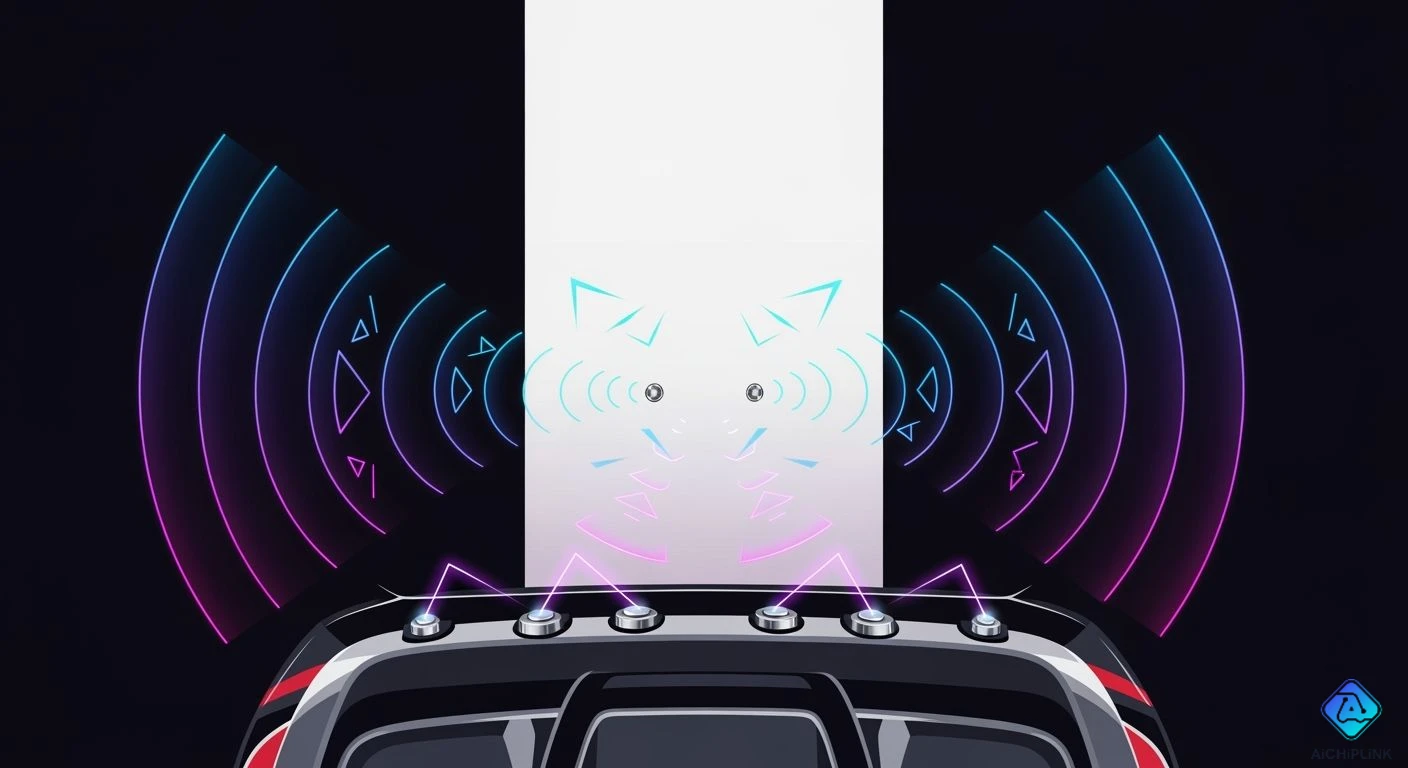
Parking sensors are safety devices installed in car bumpers that alert drivers to nearby objects. You may wonder how these helpers work when squeezing a car into a small spot. These vehicle sensors figure out distance by using bouncing sound waves or shifting magnetic fields. Most cars use ultrasonic sensors to shoot invisible sound pulses at nearby objects. The car's computer measures how long the sound takes to bounce back to calculate distance. Other systems use constant magnetic fields to spot objects close to your bumper. Your parking assistant changes these signal shifts into easy audio or visual warnings, helping you park safely every time.
Key Takeaways
-
Cars use sound waves or magnetic fields to spot nearby objects.
-
Ultrasonic sensors measure the time an echo takes to accurately calculate the distance to an object.
-
Changes in temperature alter how fast sound travels, so the computer must adjust automatically.
-
Dirt, ice, and soft snow can block sensors and cause false alerts.
-
Frequent cleaning helps your sensors keep your bumpers fully protected.
Core Types of Automotive Parking Sensors
Drivers can select from two popular styles of vehicle parking sensors today. Both options help you avoid hitting obstacles while maneuvering into tight spots. Yet, each system uses a unique physical method to spot objects around your car.
Ultrasonic Parking Sensors
Many automakers place ultrasonic parking sensors straight into outer bumper covers. These tools use tiny round buttons fitted flat against the front and rear trim. Inside every sensor, a main controller powers a piezoelectric part at nearly 40 kHz. That movement produces a high-frequency sound wave. Most ultrasonic devices send out quick sound bursts between 40 and 400 kHz. These high sound frequencies rest far above normal human hearing limits. People and nearby animals cannot hear these sound signals at all.
These sonic sensors find exact distances by bouncing high-frequency sound pulses off nearby objects. The chart below lists average operating numbers for a standard vehicle sensor setup:
| Range aspect | Value | Supporting context |
|---|---|---|
| Typical sensor range | 1–10 m (≈3.3–32.8 ft) | Built for spaces under 10 m, leaving a 1 m blind spot from sent pulses. |
| Experimental detection | Reliable within range; no failures inside range; one false echo only beyond ~11 m | Measures spaces from ~2 m to over 11 m well if targets stay within range. |
| Detection capability | A few tens of metres in general | Real-world car parking aid limits stay fixed at 10 m. |
| System application | Ultrasonic sensors are used by parking aid systems | Helps regular passenger cars move safely. |
| You must remember that sound wave signals meet real physical limits during normal daily driving. |
Ultrasonic systems may fail on flat surfaces angled away from the sensor, narrow poles, or longitudinal objects pointed directly at the vehicle, as well as highly sound-absorbent surfaces. Electromagnetic parking sensors instead require slow, smooth vehicle movement toward the obstacle and continue signaling once the obstacle is detected.
Electromagnetic Sensor Systems
Drivers can also use continuous electromagnetic systems to shield their cars. This smart tech uses a flexible sticky antenna strip instead of separate bumper parts. Mechanics stick the strip onto the inner bumper wall after cleaning the area completely. That strip connects to a central control unit and draws power from the reverse-light wiring.
When turned on, the strip forms a constant magnetic field along the whole bumper area. This full coverage leaves no hidden blind spots behind your moving car. Since workers hide the strip inside plastic bumpers, harsh outdoor weather cannot ruin it. Still, steel bumpers will not work because metal pieces block the magnetic field.
Drivers must roll their vehicles smoothly toward objects so these sensors spot field shifts. Outside weather can also affect system performance, as shown in the table below:
| Bumper condition/weather | Effect on electromagnetic parking sensors |
|---|---|
| Heavy rain or a sheet of water flowing over the bumper | Disrupts the electromagnetic sensor field and can produce false alerts |
These car parking sensors provide steady object coverage for your daily drives. They help you guide into narrow parking spots safely while preserving your bumper's clean look.
Signal Workflow and Distance Calculation
You may wonder how car parking sensors function when you shift into reverse. The process begins as bumper parts shoot invisible sound waves into the surrounding air. Your vehicle's computer unit figures out space by timing these waves and watching for nearby items.
Time-of-Flight and Temperature Adjustment
Your ultrasonic parking sensors find distances by using a simple trick called Time-of-Flight. The sensor emits a high-frequency acoustic pulse and waits for the echo to bounce off a target. The control unit tracks this round-trip journey time and finds distance with the formula distance = (speed × round-trip time) / 2. In regular 20°C room air, sound travels at a speed of 343 m/s.
Air temperature changes how quickly sound waves move through the air. When air warms up, sound travels faster. A simple math formula shows sound speed as v = 331.3 + 0.606 × T in m/s, where T means temperature in °C. Sound speed shifts by nearly 0.6 m/s for every 1°C change, equal to 0.17% per °C. A 10°C temperature swing causes a 1.3% error in distance math if speed stays fixed.
Without built-in heat adjustments, changing weather causes real distance errors:
-
Warm air makes an unadjusted system read an error of about -8.5 cm for a true 100 cm target space after a 20°C heat jump.
-
Cold air makes that same unadjusted system read an error of about +7.65 cm for that 100 cm target space after a 20°C temperature drop.
-
Air temperature controls sound speed the most; humidity and air pressure make very small changes.
Car parking sensors use built-in temperature sensors and thermal sensors to block these mistakes. Thermal sensors track surrounding air and unit temperatures all day. The computer unit gets this heat data right away and updates the sound speed number inside its distance formula. This instant update keeps your distance readings exact during summer heat or winter cold.
ECU Alert Trigger Systems
The main electronic control unit turns raw sensor data into instant driver warnings. The chart below shows the step-by-step ECU actions:
| Step | ECU processing action |
|---|---|
| 1 | Receive the amplified ultrasonic echo as digital input information. |
| 2 | Calculate the distance to the obstacle from the signal transit-time difference. |
| 3 | Evaluate signals from several ultrasonic sensors to determine the minimum distance. |
| 4 | Trigger the acoustic signalling device so it generates an audible warning; the beep frequency increases as distance decreases and becomes a continuous tone below 20 cm. |
Newer cars pair audio alerts with visual screens on dashboard displays:
-
Visual screen lights shift from green to yellow to red as your car moves nearer to an item.
-
Live distance numbers change right alongside screen colors to give clear distance feedback.
-
Car display screens draw dynamic path lines to show where your vehicle will travel.
-
Multi-zone sensor systems display separate warning signals for different spots around your car.
These clear visual alerts pair with audio beeps to give you full driving awareness. Your helpful parking system guides your car into tight spots without any worries. Using reliable automotive parking sensors keeps your bumpers safe from hidden objects every day.
Detection Limits and Edge Cases
Physical Blind Spots and Sloped Surfaces
Your car safety tools face real physical limits during daily drives. Ultrasonic sensors emit acoustic waves, but surface shapes can bounce sound away from your vehicle. Hard, smooth walls perpendicular to the sensor face bounce sound back directly. This ideal setup creates the strongest signal, longest detection range, and most stable echo return.
However, sloped walls and angled objects throw off your parking sensors. Surfaces tilted 30–45 degrees from perpendicular deflect sound away from your vehicle. This reflection drop shortens detection range and causes lost object warnings. Physical target textures also change your signal strength:
-
Straight hard walls bounce sound right back, giving you long range and steady warning signals.
-
Tilted surfaces push sound away, which causes lost signals and jumping distance readings.
-
Flat smooth spots send sound one way, making sensors miss objects if angles shift slightly.
-
Bumpy textures bounce sound everywhere, so sensors spot items even at odd angles.
Environmental Interference Factors
Outside weather and surface textures also create tricky situations for your system. Soft items like snowbanks, bushes, or clothing absorb sound waves instead of bouncing them back. Since these materials weaken return echoes, basic parking sensors might fail to detect low obstacles. In contrast, smooth shiny objects reflect waves directionally, so slight angle changes quickly hide objects from your display.
Heavy outdoor rain disrupts automotive parking sensors by creating false warnings. Water sheets running down your bumper interrupt field signals, while thick mud blocks your sensor face entirely. Your central controller needs clean, open space to track nearby items accurately.
Slow maneuvers help your driver setup spot field shifts early. While your parking aid gives you great support, you must still check your mirrors directly. Knowing these boundary conditions keeps your automotive parking sensors effective in every driving season.
Fixing Common Parking Sensor Issues
Your car's safety parts might beep continuously even when nothing is near your bumper. You can easily fix these annoying extra warnings by using a few simple checks.
Resolving Nonstop Alarm Sounds
Grime, physical damage, or crooked holders often make sensors give wrong alerts. Simply wipe the front cover or reset the system after body fixes to stop problems.
| Main cause of wrong alerts | How to fix it |
|---|---|
| Mud, tar, or frost on the front face | Wipe with a damp rag; gently scrape away freezing ice |
| Tiny cracks across the outer shell | Check parts after bumps; swap out any broken pieces |
| Twisted brackets or thick fresh paint | Straighten hardware and run required computer resets |
Try checking your vehicle parts if wiping off dirt does not fix the noise:
-
Wipe off all dirt and inspect mounting brackets for loose fits or crooked placements.
-
Plug a scan tool into your dashboard port, choose the control unit, and look for fault codes.
-
Remove every part and measure internal resistance to ensure you see healthy readings.
-
Check all wires, then test the main module if every individual part works fine.
Regular Cleaning and Hardware Placement
Basic care keeps your warning parts working great through rough winter weather. Road salt and freezing ice can easily block sound waves while you drive.
-
Wash around every button using mild car soap and dry the area completely.
-
Clear away thick snow using a soft brush after heavy winter storms.
Auto body fixes might change your bumper thickness or tilt the small holders. Installing parts correctly brings back original factory angles for safe driving every day.
-
Stop on flat ground and reset your angle tool to zero before taking measurements.
-
Put a small socket on the part to check position angles inside normal limits.
-
Connect a modern car scanner with proper software to fix any bad readings.
Learning proper steps keeps fragile clips from snapping off during quick fixes. Keeping your car parts clean ensures accurate warning sounds during every single drive.
Now you see how parking sensors operate in your car. Your vehicle's computer changes invisible sound waves or magnetic fields into fast distance numbers. The main control box reads these signal echoes instantly to trigger clear driver alerts.
Basic care keeps your automotive parking sensors accurate during tight low-speed turns. Cleaning off dirt and road mud helps guarantee reliable obstacle detection in small spots.
These smart tools also pair with backup cameras to increase overall driver safety. This total parking aid setup gives you complete coverage around your car bumpers. Dependable parking sensors make every single parking attempt totally easy and stress-free.

Written by Jack Elliott from AIChipLink.
AIChipLink, one of the fastest-growing global independent electronic components distributors in the world, offers millions of products from thousands of manufacturers, and many of our in-stock parts is available to ship same day.
We mainly source and distribute integrated circuit (IC) products of brands such as Broadcom, Microchip, Texas Instruments, Infineon, NXP, Analog Devices, Qualcomm, Intel, etc., which are widely used in communication & network, telecom, industrial control, new energy and automotive electronics.
Empowered by AI, Linked to the Future. Get started on AIChipLink and submit your RFQ online today!
Frequently Asked Questions
How do parking sensors work?
Ultrasonic systems send high-frequency sound waves that bounce off nearby objects. Your car's computer measures echo time to figure out space. Electromagnetic systems track shifts in a steady magnetic field instead. Both styles send fast warnings straight to your dashboard.
How to test parking sensors safely at home?
Turn your ignition on without starting the engine. Shift into reverse with your handbrake set. Listen for faint clicking sounds near each bumper sensor. You can also use a scan tool to check your automotive parking sensors for error codes.
How to fit parking sensors on an older vehicle?
You can mount ultrasonic sensors by drilling small holes into the bumper cover. You can also stick a flexible magnetic strip inside your bumper trim. Connect the wiring to your reverse lights for quick power whenever you shift into reverse.
Can dirt or bad weather interrupt your parking aid?
Yes. Heavy rain, cold ice, or thick mud blocks sound waves and triggers false alerts. Soft snow can also absorb sound pulses completely. Keep your bumper clean so your parking aid finds objects well during low-speed driving.