How to Choose the Right Analog-to-Digital Converter for Medical Devices
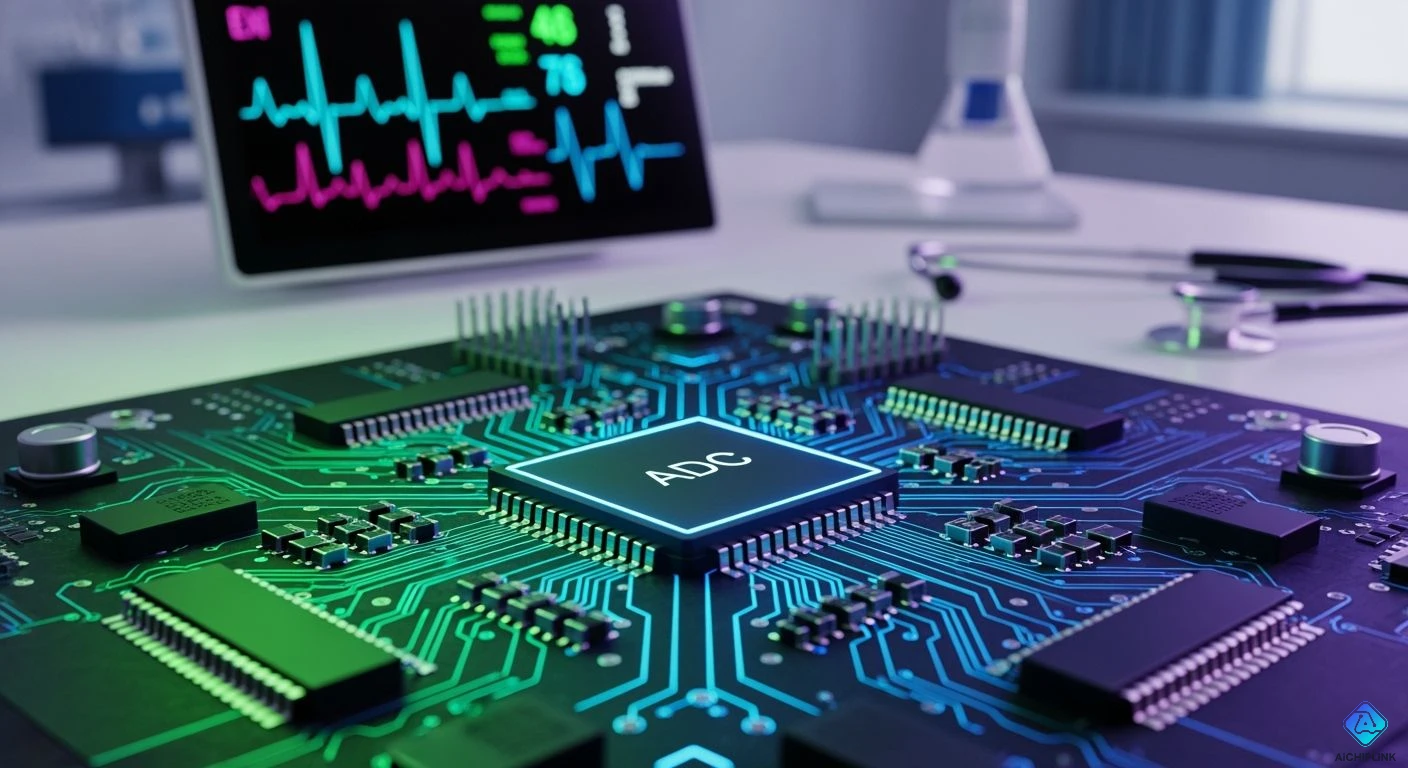
Designing medical devices takes care, making Medical ADC Selection a critical part of the process. You must pick the right converter. First, check the signal bandwidth. Look at the needed bit count. Count all the channels. Check the digital interface next. Look closely at power use. Patient safety isolation is crucial too. The best converter protects your signal. It makes power use better. It speeds up official approvals. Your choice decides system accuracy. This full guide helps you. Engineers can match converter types. They handle tough clinical tasks. They meet strict technical rules. They follow high safety standards.
Key Takeaways
-
Pick ADC types that fit your tool's speed. Also, match your needed detail level.
-
Keep signal quality high. Control your noise levels. Pick good sampling rates.
-
Cut power use to boost battery life. This keeps worn tools cool.
-
Add strong isolation features. They protect patients well. They satisfy strict safety standards.
Medical ADC Selection: Architectures and Trade-Offs
Successive Approximation Register for High-Speed Systems
SAR tools have no signal wait time. You get instant results right away. One chip reads many sensor streams easily. Live tracking tools need this quick speed. They show accurate health data continuously.
You must check sensor setups carefully. Multiplexers use fewer parts in systems. They save board space and power. But parallel setups need dedicated amplifiers. They keep signals synced together perfectly. They use more power overall.
Delta-Sigma for High-Resolution Medical Imaging and Diagnostic Systems
Scan machines need high accuracy tools. Delta-Sigma tools give very clean results. This design captures tiny voltage shifts easily.
It stops bad background noise well. Imaging tools often need 24 bits. Good medical adc selection balances quick speed. It lowers total noise levels too.
Choosing the Right ADC for Precision ECG and EEG Devices
Heart and brain monitors need special parts. A 24-bit tool reads tiny bio-signals. You can target safe brainwave bands.
Set sampling rates to 250 Hz. They can reach up to 2000 Hz. Custom chips keep noise very low. They boost tiny signals by 45 dB. They use just 0.271 µW power. The right tool keeps data clean. It helps your medical adc selection.
Analog to Digital Converter Parameters for Clinical Performance
Resolution, Dynamic Range, and Effective Number of Bits
Match system resolution to biological signals. Small biopotentials need wide dynamic range. They need to catch tiny microvolt shifts. Dynamic range stops signal clipping easily. It keeps baseline wander from blinding inputs.
Your analog to digital converter needs high ENOB. ENOB shows real performance using total noise. Calculate total noise floor for dynamic range. Check it across all operating frequencies.
Signal-to-Noise Ratio and Common-Mode Rejection Ratio
You need high SNR to keep waves clear. High SNR keeps quiet signals very clean. It beats internal noise from your circuits. Matching input impedance lowers overall noise levels.
CMRR removes power line hum and noise. High CMRR clears unwanted noise before digitizing. Low-noise signal chains protect clinical data well.
Sampling Rates, Channel Count, and Digital Interfaces
Your system reads frequencies with good rates.
| Impact Area | Scaling Effect & System Challenge | Design Mitigation & Best Practice |
|---|---|---|
| PCB Layout Complexity | High channel density makes component placement tricky. | Separate analog and digital parts carefully. Keep fast digital lines far away. Avoid crossing analog and digital lines. Use solid ground planes on boards. |
| Crosstalk & Signal Integrity | Channel switching causes bad crosstalk issues. | Use internal reference buffers for reference voltages. This action stops SAR conversion crosstalk. |
A good system offers great interface choices. Serial options like SPI lower trace counts. Parallel setups suit high-speed medical adc selection. They boost multi-channel throughput in every system.
Power Consumption and Thermal Profiles in Wearable Monitors
Control power use to extend battery life. Low-power parts prevent hot surface temperatures. Careful thermal management protects soft skin tissue.
Optimize power budgets using low-power converter modes. Duty cycling lowers power during idle times. Smart energy management ensures non-stop tracking.
Medical Safety Standards and Component Reliability
Designing for IEC 60601-1 Safety and Isolation
Design tools carefully. Keep patients safe from shock.
Strict rules demand strong safety barriers. High voltage can break weak barriers easily. Put isolation between analog and digital units. This step shields patients from high voltage.
A tool with built-in isolation helps you. It makes circuit board design simple. Isolation blocks bad leakage currents. They cannot reach patient lead wires.
This step keeps signals strong. It satisfies global safety rules easily.
Integrated Galvanic Isolation and Defibrillator Protection
Defibrillator shocks send huge voltage spikes. They travel through patient cables quickly. Circuitry must survive these strong pulses. They must avoid permanent damage.
Old methods use many parts per channel. They direct extra energy away safely.
| Protection Approach | Components Required | Description |
|---|---|---|
| Conventional Solution | Gas-Discharge Tubes (GDTs), TVS devices, and secondary ESD diodes | Uses three component layers per channel. It shows high leakage currents. |
| Integrated Solution (MAX30034) | Two external pairs of resistors per channel | Replaces primary GDTs and TVSs. Uses internal structures to divert pulses. |
New protection chips use fewer parts. Route sensor signals into an integrated chip. Save space on your circuit board.
This smart method shields delicate nodes. It maintains very low leakage currents.
Component Longevity and Lifecycle Management
Medical devices need years of testing. They demand complex safety approvals. Choose parts made for long periods.
Medical chips require long sales lifespans. They stay available for 10-15 years.
Device life spans reach 15-20 years. Clinical settings need this long support.
Pick a chip with long support. Avoid expensive hardware redesigns later. Keep devices safe and reliable always.
Great system designs balance converter styles. They match power budgets. They fit dynamic needs. They meet safety rules. You must match signal needs. Pick the best style. This choice keeps readings accurate.
Use this simple list. Pick your converter easily:
-
Input Voltage Range: Match signal sizes accurately.
-
Signal-to-Noise Ratio (SNR): Keep digital data clean.
-
Analog Input Impedance: Keep signal health strong.
-
Power Consumption: Balance heat and battery life.
-
Environmental & Temperature Tolerance: Keep performance stable anywhere.
This checklist helps your selection process. The right chip speeds up approvals. Built-in chips save board space.

Written by Jack Elliott from AIChipLink.
AIChipLink, one of the fastest-growing global independent electronic components distributors in the world, offers millions of products from thousands of manufacturers, and many of our in-stock parts is available to ship same day.
We mainly source and distribute integrated circuit (IC) products of brands such as Broadcom, Microchip, Texas Instruments, Infineon, NXP, Analog Devices, Qualcomm, Intel, etc., which are widely used in communication & network, telecom, industrial control, new energy and automotive electronics.
Empowered by AI, Linked to the Future. Get started on AIChipLink and submit your RFQ online today!
Frequently Asked Questions
Why do delta-sigma ADCs fit precision medical devices best?
Delta-sigma converters offer very high resolution. They show wide dynamic range. They block circuit noise well. You capture tiny bio-signals easily. Heart monitors need these parts. Brain monitors use them too.
How does integrated galvanic isolation protect your medical hardware?
Built-in isolation makes a physical barrier. It keeps circuits safe. It blocks big voltage spikes. Defibrillator surges cannot pass it. This barrier stops bad electric shocks. Patients stay safe. Delicate sensor parts avoid damage.
What determines the ideal sampling rate for your biopotential monitor?
Signal bandwidth sets your sample rate. Sample twice as fast as signals. This step stops bad distortion. Heart monitors need precise rates. Brain monitors need them too. Rates run from 250 Hz. They reach up to 2000 Hz.
Which digital interface works best for multi-channel medical devices?
SPI serial interfaces use fewer board traces. Parallel setups move data very fast. They suit quick hardware well. These interfaces help your system. They pass sensor readings easily. They stop bad signal crosstalk.