How Long Do Electrolytic Capacitors Last in Electronics

When you ask how long electrolytic capacitors last, you get different answers. Most electrolytic capacitors work for thousands of hours if used normally.
-
They can last from 1,000 hours to more than 10,000 hours.
-
The real number depends on the temperature and how you use it.
You might also ask how long electrolytic capacitors last if you just store them. Shelf life matters for reliability too.
| Capacitor Type | Expected Lifespan (Years) | Shelf Life Impact on Reliability |
|---|---|---|
| Electrolytic | 10–20 | Can be hurt by drying if not used |
You need to know how long electrolytic capacitors last because they are the only part in a power supply that wears out. If you want your device to last, learning about Electrolytic Capacitor Lifespan helps you plan for fixing things and avoid problems.
Key Takeaways
-
Electrolytic capacitors usually last from 1,000 to 10,000 hours. Their life depends on how hot it gets and how you use them.
-
Keep capacitors in a cool and dry spot. This helps stop them from drying out. It also makes them last longer on the shelf.
-
Too much heat or too much voltage can make capacitors die faster.
-
Check often for problems like bulging or leaking. This helps you avoid your device breaking.
-
Pick good parts and follow what the maker says. This will help your capacitors last as long as possible.
Electrolytic Capacitor Lifespan
How Long Do Electrolytic Capacitors Last
You might ask how long an electrolytic capacitor works in your device. Most electrolytic capacitors last between 1,000 and 10,000 hours if used at their highest rated temperature. If your device gets hot, the capacitor will not last as long. Using your device in a cooler place helps the capacitor last longer. Every time the temperature drops by 10°C, the service life can double. Electrolytic capacitors work much longer in cool and airy spots.
How often you use your device also matters. Turning your device on and off a lot can make the capacitor wear out faster. High-quality aluminum electrolytic capacitors last longer than cheaper ones. Some old radios or amplifiers still have working electrolytic capacitors after many years. But most electronics for consumers break in 3 to 5 years because they face tough conditions.
Here are the main things that change how long electrolytic capacitors last:
-
High temperatures make the lifetime shorter.
-
Using the capacitor close to its highest voltage lowers its life.
-
Using it a lot or with high ripple current can make it wear out faster.
-
Good quality means the capacitor lasts longer.
Other types of capacitors, like film or ceramic, last much longer. Film capacitors can work for 20 to 30 years or even more. Ceramic capacitors can last even longer than film types. Electrolytic capacitors usually do not last as long as these other kinds.
Manufacturer Ratings vs. Real-World Use
Manufacturers test electrolytic capacitors in labs to find out how long they last. They use high heat and full voltage for these tests. These ratings help you compare different capacitors, but real life is not always the same as lab tests. At home or in an office, the temperature is lower than in the lab. So, your electrolytic capacitor can last much longer than the rating says.
For example, if a manufacturer says a capacitor lasts 2,000 hours at 105°C, it could last 8,000 hours at 85°C. This is called the 10-degree rule. Lowering the temperature by 10°C doubles the service life. New ways of making capacitors help them last longer in real life. Some capacitors can work for many years if you keep them cool and do not overload them.
Here is a table showing how real-world conditions change how long electrolytic capacitors last:
| Factor | Effect on Service Life |
|---|---|
| Temperature | Higher temperatures make capacitors age faster. Every 10°C increase cuts the lifetime in half. |
| Operating Voltage | Using more voltage than allowed can make capacitors fail early. |
| Ripple Current | High ripple current heats up the capacitor and makes it wear out faster. |
| Operating Frequency | High frequency can heat up the capacitor and make it age sooner. |
Capacitor Shelf Life
You may want to know how long you can keep a new electrolytic capacitor before using it. Aluminum electrolytic capacitors can be stored for 2 to 3 years. If you keep them too long, the inside can dry out. This makes the capacitor not last as long when you use it.
Here is a table comparing how long you can store different capacitor types:
| Capacitor Type | Shelf Life |
|---|---|
| Aluminum Electrolytic | 2–3 years |
| Tantalum | 5+ years |
| Film (Polypropylene/Polyester) | 10+ years |
| Ceramic and Mica | Indefinite |
Store electrolytic capacitors in a cool and dry place. If you keep them somewhere hot or damp, they will not last as long. Always check the date code before using a stored capacitor. If you use an old capacitor, you may need to reform it by slowly adding voltage. This helps bring back some of its service life.
Tip: If you want your electronics to last longer, use fresh capacitors and store them the right way. How long a capacitor lasts depends on how you use it and how you store it.
Factors Affecting Lifespan of Electrolytic Capacitors
Temperature and Heat Exposure
Heat is a big reason why electrolytic capacitors do not last long. If your device is in a hot spot, the capacitor gets warmer inside. This extra heat makes the electrolyte dry out faster. When the electrolyte dries, the capacitor cannot work as well. You might ask if electrolytic capacitors get worse over time. Yes, they do, and heat makes them age quicker. Even a small temperature increase, like 10 degrees, can make the capacitor last half as long. Dust makes things worse because it traps heat and stops air from moving. This makes the inside hotter, which dries out the electrolyte and makes the capacitor age faster.
Voltage and Electrical Surges
You should use capacitors at less than their rated voltage. High voltage puts pressure on the thin layer inside that holds the charge. This pressure can break the layer and make the electrolyte leak or dry up. Do electrolytic capacitors get worse over time if you use too much voltage? Yes, they do, and they fail more often. Keeping the voltage low helps the capacitor last longer. Electrical surges can also hurt the electrolyte and make it dry out faster.
Ripple Current
Ripple current is a quick, changing current that goes through the capacitor when your device is on. This current makes the inside of the capacitor hotter. More heat means the electrolyte dries out faster. Over time, this makes the capacitor weaker and it stops working sooner. Do electrolytic capacitors get worse over time because of ripple current? Yes, ripple current is a main reason why the electrolyte dries up and the capacitor wears out.
-
Ripple current makes heat inside the capacitor.
-
This heat makes the electrolyte dry out faster.
-
Controlling ripple current helps your capacitor last longer.
Quality and Storage Conditions
The quality of the capacitor and how you store it are very important. Good capacitors from trusted brands use better materials and have purer electrolyte. These last longer and do not dry out as fast. Bad storage, like high humidity or heat, can break down the electrolyte before you even use the capacitor. Do electrolytic capacitors get worse over time in storage? Yes, especially if you do not store them right. Humidity can make them fail twice as fast, and dust traps heat, making the electrolyte dry out quicker. Always keep capacitors in a cool, dry place and follow the maker’s rules.
Tip: Clean often and make sure air can move. This stops dust and heat from building up, keeps the electrolyte safe, and helps your capacitors last longer.
Signs of Degradation in Electrolytic Capacitors
If you work with electronics, you should know when electrolytic capacitors start to go bad. Finding these problems early helps you stop bigger issues and keeps your devices working well.
Physical Symptoms
You can spot many problems with a simple look. Here is a table that shows what you should check for:
| Symptoms | Description |
|---|---|
| Bulging | The top or sides look puffy or rounded. |
| Leaking | You see liquid or crusty stuff at the bottom. |
| Discoloration | The label looks faded or burned from heat. |
| Increased ESR | Special tools show more resistance than normal. |
Tip: If you see bulging or leaking, change the capacitor right away. This will help stop more damage.
Electrical Symptoms
Sometimes, your device acts weird before you see any changes. Here are some electrical signs that show electrolytic capacitors are wearing out:
| Electrical Symptoms | Description |
|---|---|
| Decreased Capacitance | The capacitor cannot hold as much charge as before. |
| Increased ESR | The resistance inside gets much higher than it should. |
| High Leakage Current | More current leaks through the capacitor than normal. |
| Fluctuating Capacitance | The capacitance value changes, especially when it gets hot. |
-
Bad capacitors can make the DC voltage go down.
-
High ESR acts like another resistor and makes circuits weaker.
-
You might see more AC ripple, which means the voltage is not steady.
Impact on Device Performance
When electrolytic capacitors start to fail, your device may not work right. Heat makes the inside break down faster, which changes how much charge it can hold and its resistance. This can make your device act strange or even stop working.
| Performance Aspect | Description |
|---|---|
| Capacitance | Goes down over time and causes power problems. |
| Equivalent Series Resistance | Goes up, which means more heat and wasted energy. |
| Heat Generation | Gets worse, making the problem bigger. |
| Failure Mode | The capacitor might stop working at all. |
You may notice your device restarts, makes odd sounds, or loses power. These are all signs to check the capacitors. If you do not fix these problems, other parts can get damaged too. Always watch for these signs to keep your electronics safe.
When to Replace Electrolytic Capacitors
Preventive vs. Reactive Replacement
You might ask when to change electrolytic capacitors in your electronics. You can replace them before they break, or wait until you see problems. Changing them early helps stop sudden failures and keeps your devices working well. Waiting means you only change them after you see bulging, leaking, or bad performance.
Manufacturers and experts give different times for changing capacitors early. The best time depends on what kind of equipment you have and how you use it. Here is a table that shows common times for replacement:
| Equipment Type | Typical Replacement Interval | Basis |
|---|---|---|
| UPS systems | 5-7 years | Manufacturer recommendation |
| VFDs (variable frequency drives) | 7-10 years | Based on Arrhenius life at typical ambient |
| Power supplies (telecom, data center) | 7-10 years | Carrier and OEM guidelines |
| Medical equipment | 5-7 years | Regulatory and liability requirements |
| Industrial controls (PLC power supplies) | 10-15 years | Typically replaced when other components fail |
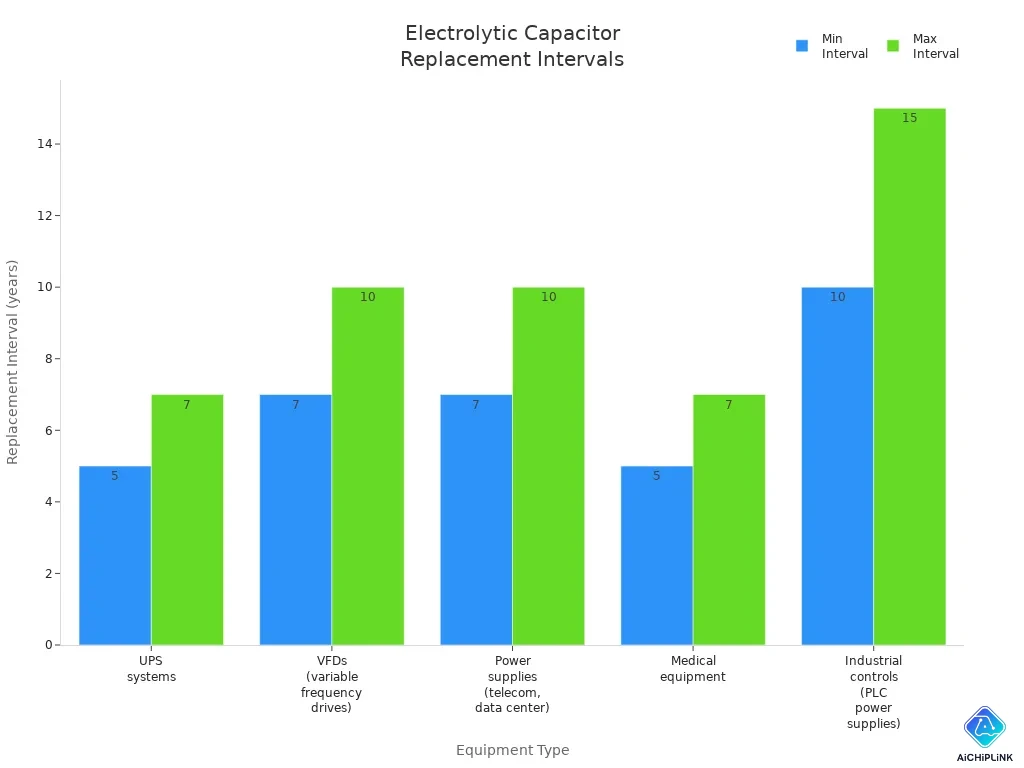
You should think about when to change capacitors, especially if your device is important or used a lot. If you follow these times, you can stop failures and keep your equipment safe.
Tip: If your electronics are in tough places, you may need to change capacitors sooner.
Maintenance Guidelines
You can use simple tips to help capacitors last longer and keep your devices working. Here are some easy steps:
-
Keep cool: Make sure your device has good airflow and cooling.
-
Avoid voltage spikes: Use surge protectors to stop sudden damage.
-
Use within ratings: Operate capacitors within their rated limits.
-
Regular cleaning: Dust and dirt cause overheating and stress.
If you follow these tips, you can wait longer before changing capacitors. You should check your capacitors often and look for signs of wear. If you see bulging or leaking, you know it is time to change them right away. Staying alert and checking often helps you avoid bigger problems.
Maximizing Capacitor Life
Proper Storage
You can help electrolytic capacitors last longer by storing them well. Always keep capacitors in a cool and dry spot. Good storage keeps moisture out and stops the electrolyte from drying. If you want to store them for a long time, use sealed bags or containers. These block humidity and protect the inside. Do not store capacitors where temperatures change a lot. High heat or freezing cold can hurt the inside parts. For long storage, check the date codes and use the oldest ones first. If you keep capacitors for a long time, you may need to reform them. Reforming brings back lost performance after long storage. You do this by slowly adding voltage before using the capacitor. Reforming old electrolytic capacitors is important to stop early failure. Always follow the manufacturer's rules for storage and reforming.
Tip: Storing and reforming capacitors the right way helps you avoid problems when you use them.
Design and Usage Tips
You can make smart choices when you build your circuit. These choices help your capacitors last longer. Try these tips:
-
Pick a voltage rating higher than your circuit’s highest voltage.
-
Choose capacitors that match your device’s temperature range.
-
Select parts with a lifespan that fits your needs.
-
Use quality components from trusted brands.
-
Learn how temperature and voltage affect your capacitors.
-
Check capacitors often and look for signs of wear.
-
Read the application guide for aluminum electrolytic capacitors.
-
Use an ESR meter to test capacitors.
-
Do regular maintenance to keep your device working well.
If you use these tips, you will not need to reform old capacitors as much. You will also reduce the need for reforming after storing them for a long time.
Choosing Reliable Components
When you pick capacitors, look at more than just price. Use this table to help you choose:
| Criteria | Description |
|---|---|
| Performance | Check how the capacitor works under real conditions. |
| Reliability | Look at failure rates and how it handles stress. |
| Size | Make sure it fits your circuit and mounting needs. |
| Cost | Balance your budget with quality and reliability. |
| Specific Features | Learn about the special traits of aluminum electrolytic and film capacitors. |
Aluminum electrolytic capacitors can handle up to 120% of their rated voltage, but too much stress can cause leaks or shorts. Film capacitors change less with temperature and make less heat. Always think about storage, reforming, and long-term storage when you choose parts. If you follow these steps, your electronics will work longer and you will avoid problems with reforming.
You can make your electronics last longer if you know what affects electrolytic capacitors. High heat, ripple current, and chemical changes make them age faster. You should pick capacitors that can handle higher temperatures. Use less voltage than the maximum rating. Make sure air can move around your device. Watch for bulging, leaking, or voltage that jumps around. These are signs the capacitor is failing. Check your capacitors often by looking at them and measuring ESR. If you do not check and change bad capacitors, your device can get too hot. This can cause safety problems and stop your device from working. Always pay attention and change capacitors when needed to keep your electronics safe.
| Inspection Method | Importance |
|---|---|
| Visual Inspection | Find bulging, leakage, and physical abnormalities. |
| ESR Measurement | Check capacitor health for stable operation. |

Written by Jack Elliott from AIChipLink.
AIChipLink, one of the fastest-growing global independent electronic components distributors in the world, offers millions of products from thousands of manufacturers, and many of our in-stock parts is available to ship same day.
We mainly source and distribute integrated circuit (IC) products of brands such as Broadcom, Microchip, Texas Instruments, Infineon, NXP, Analog Devices, Qualcomm, Intel, etc., which are widely used in communication & network, telecom, industrial control, new energy and automotive electronics.
Empowered by AI, Linked to the Future. Get started on AIChipLink and submit your RFQ online today!
Frequently Asked Questions
How can you tell if an electrolytic capacitor is failing?
You can spot problems by looking for bulging or leaking. Sometimes the color changes on the capacitor. Devices might restart, lose power, or make weird sounds. An ESR meter can help you find electrical issues.
Can you extend the life of electrolytic capacitors?
Keep your device cool to help capacitors last longer. Try to stop voltage spikes and clean away dust often. Use capacitors only within their rated limits.
What happens if you use a capacitor past its shelf life?
The capacitor may not work as well or fail early. The liquid inside can dry out and make it weak. Always check the date code before using stored capacitors.
Do all electrolytic capacitors need reforming after storage?
Only capacitors stored for a long time need reforming. Slowly adding voltage helps them work better again. Always follow the manufacturer’s instructions.
Why do electrolytic capacitors fail more often than other types?
Electrolytic capacitors have liquid inside that dries out over time. Other types, like film or ceramic, last longer because they do not use liquid.