Comprehensive guide to automotive motor control IC selection
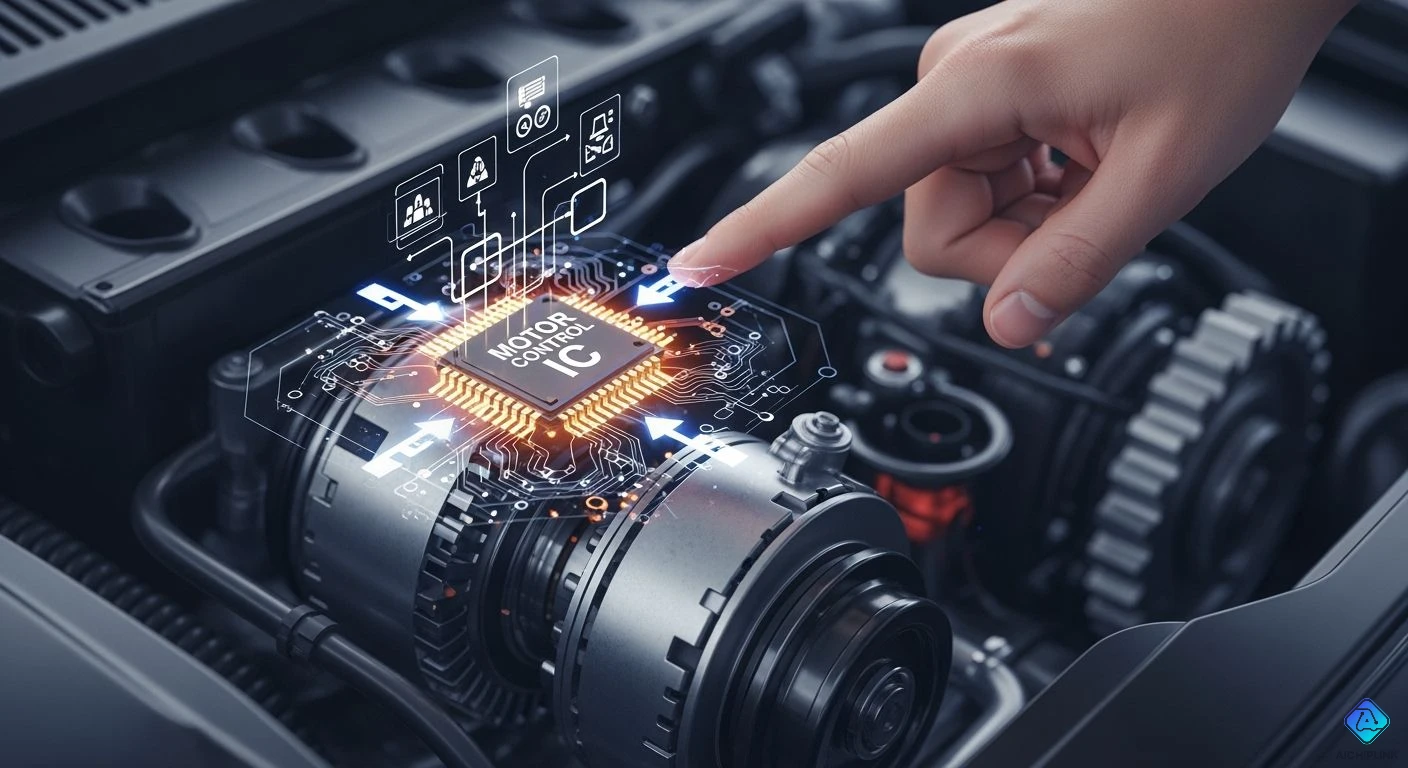
When considering Automotive Motor Control IC Selection, it's essential to think about several important factors. Motor driver ICs serve as the connection between your electric motor and the rest of your system. They play a crucial role in controlling the motor's speed, strength, and direction. It's important to match the voltage, current, and horsepower to your project requirements to ensure optimal performance and prevent damage. Additionally, protection and diagnostics features are vital for preventing issues and maintaining safety. You can choose from various package types, as outlined below:
| Package Type | Description | Typical Application |
|---|---|---|
| Integrated Circuit | SMD or Through-Hole chips; requires external components | Used in large-scale production, custom PCB |
| Driver Module | Compact PCB with driver IC and additional components | Ideal for quick testing, easy to repair |
| System-in-Package | Combines IC and power MOSFETs into one small unit | Commonly used in robotics and confined spaces |
Simple interfaces such as PWM or digital I/O facilitate basic control, while advanced interfaces like SPI, I2C, or CAN enable diagnostics and configuration adjustments.
Key Takeaways
-
Pick the right motor driver IC by matching voltage, current, and horsepower to what your project needs. This stops the IC from getting too hot and helps it work well.
-
Find motor driver ICs that have strong protection features like overcurrent detection. These features make cars safer and more reliable.
-
Think about using control algorithms like Field Oriented Control (FOC) for better efficiency and torque control. This is very helpful in electric vehicles.
-
Choose ICs that work with modular and scalable designs. This makes it easy to upgrade and change as car technology gets better.
-
Always look at the manufacturer's support and datasheets. Good technical help makes it easier to use the IC and fix problems.
Key criteria for automotive motor control IC selection
Voltage, current, and horsepower ratings
When you pick a motor driver IC, you must match the voltage, current, and horsepower to your project. Electric vehicles and regular cars need different things. The table below shows how they are not the same:
| Aspect | Electric Vehicles (EVs) | Internal Combustion Engine (ICE) Vehicles |
|---|---|---|
| Power Source | Electric motors powered by rechargeable batteries | Fuel combustion (gasoline or diesel) |
| Torque Delivery | Instantaneous peak torque due to fewer moving parts | Gradual torque build-up requiring time and friction |
| Voltage Range | Typically 350-800V for commercial EVs | N/A |
| Current Requirement | Lower current needed at higher voltages | N/A |
| Horsepower Measurement | Directly related to voltage and current | Requires acceleration and transmission optimization |
Electric motors can give full torque even when not moving. ICE vehicles need a transmission to get the best power at different speeds. Always check that the voltage and current ratings fit your motor and system. This helps stop overheating and keeps speed control working well.
Control algorithms and system requirements
You also need to think about what control algorithms your motor driver IC can use. These algorithms help you control speed, torque, and how well the motor works. Some common control methods are:
-
Field Oriented Control (FOC): This method gives high efficiency and very good torque control. It is used a lot in electric vehicles and motors that need to save energy.
-
Vector Control: This method helps you get fast changes and accurate control of torque and flux.
-
Proportional Integral Derivative Control (PID): This method is good for simple uses that do not need fancy features.
Field-Oriented Control (FOC) is now the main choice for strong motor control systems. It gives better torque control, efficiency, and quick response, especially in electric vehicles. When you pick a motor driver, make sure it works with the control algorithm you need. You should also see if the IC has interfaces like PWM, SPI, or CAN for easy connection to your system.
Protection and diagnostics features
Safety is very important when you choose a motor driver IC. You should look for ICs with good protection and diagnostic features. Important protection features are overcurrent and overtemperature detection. Diagnostic feedback lets you check how your motor control system is doing. Following safety rules like ISO 26262 is needed for important safety jobs.
The table below shows how good protection and diagnostics make things safer:
| Feature | Impact on Reliability |
|---|---|
| Enhanced Reliability | Minimizes failure rates, ensuring consistent operation. |
| Efficient Power Distribution | Reduces power losses, improving overall system function. |
| Rapid Switching Capabilities | Provides precise control over current flow for protection. |
| Comprehensive Protection | Safeguards against overcurrent, reducing motor damage risk. |
| Thermal Management | Prevents overheating during high-load scenarios. |
If you pick a motor driver with these features, your automotive system will be safer and work better.
Thermal management and MOSFET parameters
Thermal management is very important when picking a motor driver IC. Good heat control keeps your system working well. You need to choose the right semiconductors and thermal materials to keep things cool. This is extra important in electric vehicles, where heat problems can hurt range, performance, and safety.
Some common heat problems are:
-
Keeping electric cars running well.
-
Making batteries last longer.
-
Keeping people safe and comfortable.
You should also look at the MOSFET parameters in your motor driver IC. Good MOSFETs help save energy and cut down on power loss. Always check the thermal resistance and switching speed of the MOSFETs in your IC.
Modularity, scalability, and robustness
When you plan for the future, you want your motor control to be modular, scalable, and strong. Modularity lets you use chiplet technology, so you can mix parts for better results. Scalability means you can make products for both simple and fancy car systems.
Here is a table that shows why modular and scalable designs are good:
| Benefit | Description |
|---|---|
| Optimized Manufacturing Processes | Chiplet technology uses the best process for each part, improving performance and reliability. |
| Improved Performance | Modular designs let you add advanced features for specific automotive needs. |
| Cost Reductions | You can save 20-40% in system costs by reusing designs and choosing the best technology. |
| Scalability | You can build basic systems with fewer parts or premium systems with more advanced features. |
Robustness means your motor driver IC can handle tough car conditions. If you focus on modularity, scalability, and robustness, you will have motor control ICs that last and work well in the future.
Types of motor driver ICs for automotive applications
Brushed DC motor driver ICs
Brushed DC motor driver ICs are used in many cars. These ICs are simple and do not cost much. They control motors that have brushes to change the current. You can use them for things like window lifts, seat adjusters, and door locks. Many cars still use these ICs because they are easy to work with and fix.
-
Brush motor drive ICs are still wanted by many people.
-
They work well for simple movement jobs.
Brushless DC (BLDC) motor driver ICs
Brushless DC motor driver ICs are now very popular. You can find them in electric cars, fans, and pumps. These ICs do not have brushes, so they last longer and need less fixing. They also use energy better and make less noise.
-
Brushless motor drive ICs had a 43.9% market share in 2022.
-
You can use them for jobs that need high power and save energy.
Stepper motor driver ICs
Stepper motor driver ICs help you move motors in tiny steps. These ICs are small and work well. You can use them where there is not much space, like in instrument clusters or headlight adjusters. They make it easy to use the same control for different parts and help you finish your design faster.
-
Stepper motor driver ICs last a long time and can handle different loads.
-
They let you use one solution for many product types.
Fully integrated motor driver IC
A fully integrated motor driver IC puts many jobs into one chip. You can use these ICs to make your design smaller and easier. They help lower the total cost, especially if you make many cars. You will also have fewer things that can break, so your system works better.
Tip: A fully integrated motor driver IC can help you finish your project faster and make your system more stable.
Discrete vs. integrated solutions
You need to pick between discrete and integrated solutions for your motor driver. Discrete solutions use separate parts. Integrated solutions put everything together in one package. The table below shows how they are different:
| Aspect | Discrete Solutions | Integrated Solutions |
|---|---|---|
| Performance | May work better for some special jobs | Usually made for good efficiency and easy use |
| Cost | Usually costs less at first | Costs more at first but can save money later |
| Integration Complexity | Needs more work and space to design | Easier to use, saves space and time |
| Design Flexibility | Can be changed more for special needs | Not as easy to change because all parts are together |
You will see that integrated solutions save space and time. They also make your car system work better by having fewer parts.
Matching ICs to automotive applications
Picking the right motor driver IC for cars means matching features to what each system needs. You need to check how well it works, how easy it is to control, and if it is reliable. Make sure the IC follows car rules and can use communication interfaces like PWM, CAN, or SPI.
Power steering systems
Power steering needs high efficiency and strong safety. You want a motor driver IC with PowerMOS output stages that waste little energy. This helps motors stay cool and use less power. The system faces tough conditions, so it must be strong. Choose ICs with diagnostic features and flexible control, like PWM and serial connections.
| Requirement | Description |
|---|---|
| Efficiency | PowerMOS output stages help motors work well and save energy. |
| Robustness | Good protection and diagnostics make the system reliable in cars. |
| Control Interfaces | PWM and serial interfaces give you more ways to control things. |
-
Low energy loss
-
Handles heat well
-
Works with high precision (temperature)
-
Small size
Thermal management (fans, pumps)
Fans and pumps in electric cars need ICs that work in hot and cold places. Built-in microcontrollers help control speed and performance. Protection features like current limiters and overtemperature detection keep things safe. These features also lower costs by needing fewer parts.
| Feature | Description |
|---|---|
| Built-in Microcontroller | Has a CPU core for smart motor control |
| Advanced Control Algorithms | Makes motors work better and saves power |
| Protection Mechanisms | Stops too much current and heat from hurting parts |
| Operating Temperature Range | Works from -40° C to +150° C, good for tough car places |
| Reduced Component Count | Needs fewer parts, so it costs less and is simpler |
Chassis control (brakes, suspension)
Brakes and suspension need motor driver ICs that control speed exactly and react fast. These ICs must be reliable and talk quickly to other parts. They must follow strict car safety rules. Pick ICs with real-time diagnostics and strong protection.
Body electronics (windows, seats, mirrors)
Body electronics use different motor driver ICs. Brushed DC motor drivers are good for windows and seats. BLDC motor drivers are better for HVAC flaps and seat actuators because they use less energy and are quieter. Stepper motor drivers help move mirrors exactly. You want ICs with built-in protection and simple ways to control them.
| Functionality | Description |
|---|---|
| Body Control Module (BCM) | Controls lights, locks, mirrors, and windows, and is changing to new designs. |
| BLDC Motor Drivers | Used for HVAC flaps and seat actuators, they save energy and make less noise than brushed motors. |
| Stepper Motor Drivers | Needed for moving mirrors exactly, they give accurate control and have built-in protection. |
| Brushed DC Motor Drivers | Used in windows and seats, they are simple and cheap for tough places. |
Advanced driver-assistance systems (ADAS)
ADAS needs motor driver ICs that work fast and use smart control algorithms. Pick ICs that talk quickly and give real-time diagnostics. These systems must follow car safety rules. Look for ICs that can be upgraded and changed for future needs.
Tip: Always make sure your motor driver IC follows car rules and uses the right communication interfaces. This keeps your car safe and working well in all situations.
Comparing popular automotive motor driver IC solutions
Leading manufacturers and product families
There are many motor driver ICs from top brands. Companies like Texas Instruments, Infineon, STMicroelectronics, and NXP make trusted products. Each company has its own motor driver IC families. These families focus on electric motor control, efficiency, and safety. For example, Texas Instruments has the DRV and TIDA series. Infineon makes the TLE and MOTIX lines. STMicroelectronics offers the STSPIN and L99 series. These families work with different control methods, like pwm and CAN. This helps you build a strong system.
| Manufacturer | Product Family | Focus Area |
|---|---|---|
| Texas Instruments | DRV, TIDA | Electric motor control, diagnostics |
| Infineon | TLE, MOTIX | Automotive efficiency, safety |
| STMicroelectronics | STSPIN, L99 | Versatile control, integration |
| NXP | GD, MCX | Robust system, scalability |
Advantages and limitations
Motor driver ICs from big brands are very reliable. They have advanced control features and strong protection. You also get diagnostics and modular designs. These ICs help your system work better and be less complex. You can use them in electric vehicles, body electronics, and chassis control.
Tip: Pick a motor driver IC that fits your needs and supports the right control interfaces.
But there are some downsides. Some ICs are hard to design and cost more if they have advanced features. You may need skilled engineers to use them. Small companies might have trouble choosing and using these ICs because of money limits.
Cost, availability, and support
You should think about cost, availability, and support when picking a motor driver IC.
-
The market changes fast because of new technology and rules.
-
OEMs want ICs that are reliable and have many features. Aftermarket customers want ICs that are easy to use and install.
-
Modular and upgradeable ICs are becoming more popular as things change.
-
High design complexity and development costs can make production more expensive.
-
Small businesses may have trouble using advanced motor driver ICs.
-
Supply chain problems can change prices and make ICs hard to find.
-
Advanced ICs need good support and technical skills.
Note: Always check the manufacturer’s support and guides. Good technical help makes your system easier to build and fix.
You can make a better choice by comparing product families, knowing the pros and cons, and looking at cost and support.
Troubleshooting and common pitfalls in automotive motor control IC selection
Typical selection mistakes
You can make mistakes when picking a motor driver IC for cars. Many people do not check if the IC fits the voltage and current needs. Some forget about control interfaces like pwm or CAN. You might miss safety features that are important for safe systems. Sometimes, you pick an IC that does not follow car safety rules. This can cause bad performance or even make the system stop working.
Here are mistakes people often make:
-
Not checking voltage and current ratings for electric vehicles.
-
Picking an IC without the right control interfaces.
-
Forgetting safety needs for important systems.
-
Not making sure the IC follows car safety rules.
-
Missing thermal management and efficiency.
Tip: Always look at the datasheet and match it to your system before choosing.
Diagnostic and testing tips
You need to test your motor driver to make sure it works well. Start by checking control signals like pwm for correct speed and torque. Use tools to watch system health and find problems early. Try real car conditions, like changes in temperature and load. Make sure the motor driver has safety features, such as fault reporting and shutdown.
| Test Type | Purpose |
|---|---|
| PWM Signal Check | Checks speed and torque |
| Thermal Test | Makes sure it is safe and efficient |
| Fault Simulation | Tests safety features |
| Interface Test | Checks control communication |
Note: Testing often helps you find problems before they hurt performance.
Reliability and lifecycle concerns
You must think about reliability and lifecycle when picking a motor driver IC for cars. Electric vehicles need parts that last and can be used a lot. Safety systems need strong motor control and safety features. You should pick ICs that can handle tough car conditions, like hot and cold or shaking. Look for motor driver ICs that are proven to be reliable and have system diagnostics.
-
Pick ICs that last a long time.
-
Make sure they follow car safety rules.
-
Check for built-in diagnostics and control features.
-
Look at manufacturer support for lifecycle management.
Callout: Reliable motor driver ICs help electric vehicles work better and stay safe.
You can pick the right motor control IC by checking what your project needs. Begin with a simple plan and use a checklist for every step. Put decoupling capacitors near the power pins to help the circuit. Follow good PCB layout rules to keep things working well. Always think about protection, diagnostics, and making your design easy to grow. If your system is complicated, ask the manufacturer or do more research to make sure it works well.

Written by Jack Elliott from AIChipLink.
AIChipLink, one of the fastest-growing global independent electronic components distributors in the world, offers millions of products from thousands of manufacturers, and many of our in-stock parts is available to ship same day.
We mainly source and distribute integrated circuit (IC) products of brands such as Broadcom, Microchip, Texas Instruments, Infineon, NXP, Analog Devices, Qualcomm, Intel, etc., which are widely used in communication & network, telecom, industrial control, new energy and automotive electronics.
Empowered by AI, Linked to the Future. Get started on AIChipLink and submit your RFQ online today!
Frequently Asked Questions
What is a motor control IC?
A motor control IC helps you control a motor. It lets you change the speed, direction, and torque. This makes sure your motor works safely and well in many systems, like cars.
How do I choose the right motor driver IC for my project?
First, check your motor’s voltage and current needs. Think about how you want to control the motor. Look for protection features in the IC. Make sure the IC fits your car project. Always read the datasheet before picking one.
Why are protection and diagnostics important in automotive motor control?
Protection and diagnostics keep your system safe. They stop damage from too much heat or current. You can find problems early and fix them before they get worse.
Can I use the same motor driver IC for different types of motors?
You must match the IC to your motor type. Some ICs only work with brushed motors. Others work with brushless or stepper motors. Always check if the IC works with your motor before buying.
What communication interfaces do motor driver ICs support?
Most motor driver ICs use interfaces like PWM, SPI, I2C, or CAN. These help you control the motor and get feedback. Pick the interface that works best for your system.