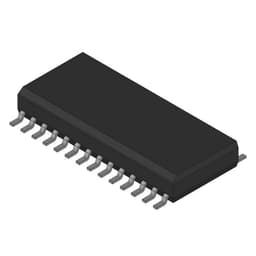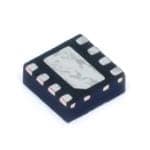
Quick Answer: Are They Compatible?
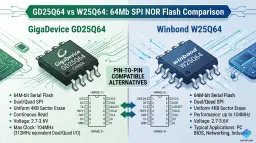
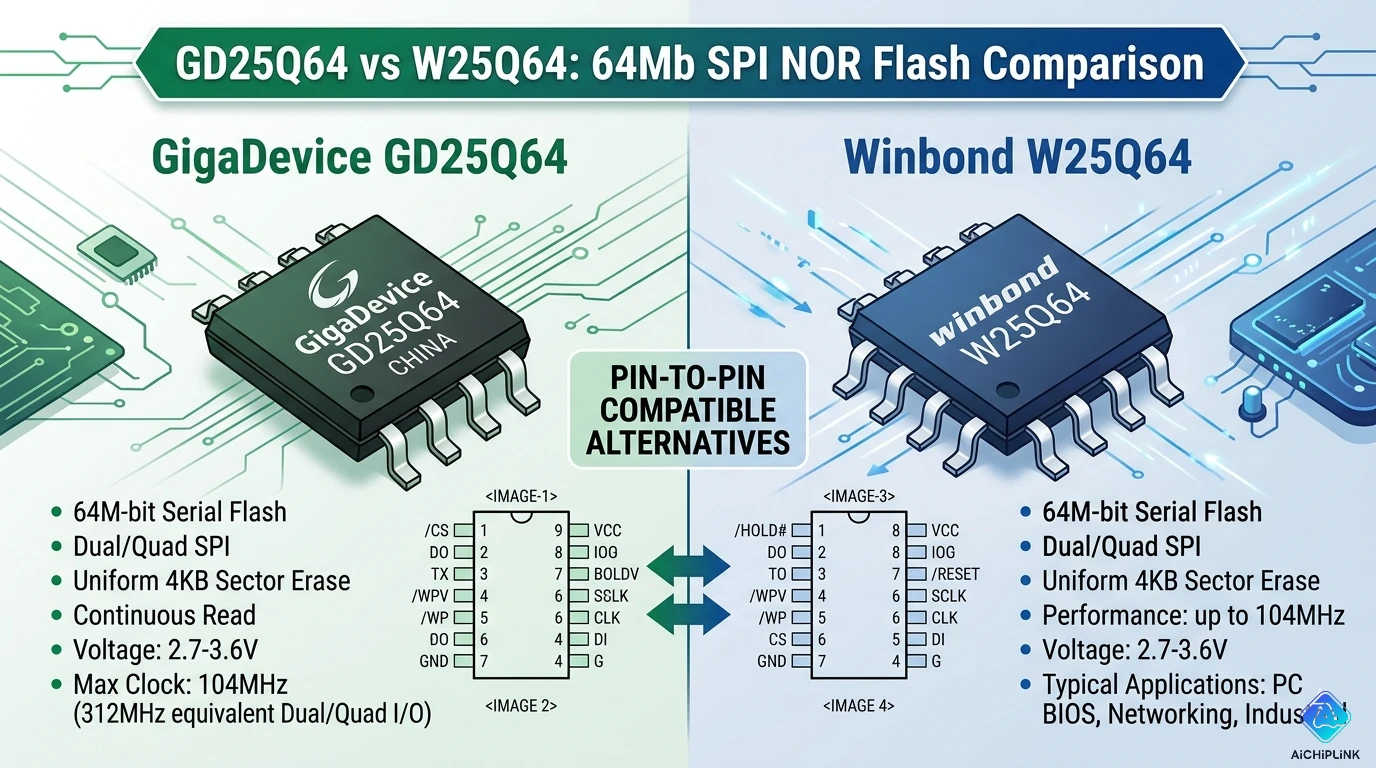
Yes, GD25Q64 and W25Q64 are pin-compatible and interchangeable in 95%+ applications.
Key compatibility facts:
- ✅ Same pinout (SOIC-8, WSON-8)
- ✅ Same capacity (64Mbit / 8MB)
- ✅ Same speed (104 MHz SPI)
- ✅ Same commands (read/write/erase)
- ⚠️ Different Manufacturer ID (firmware may check)
When to use each:
- W25Q64: Broader compatibility, proven reliability (Winbond)
- GD25Q64: Cost-effective alternative, good quality (GigaDevice)
Bottom line: You can replace W25Q64 with GD25Q64 (or vice versa) in most designs. Test compatibility if your firmware checks Manufacturer ID.
At-a-Glance Comparison Table
| Feature | GD25Q64CSIG | W25Q64JVSIQ |
|---|---|---|
| Manufacturer | GigaDevice (China) | Winbond (Taiwan) |
| Capacity | 64Mbit (8MB) | 64Mbit (8MB) |
| Organization | 32,768 pages × 256B | 32,768 pages × 256B |
| SPI Speed | 104 MHz (max) | 104 MHz (max) |
| Dual/Quad SPI | Yes | Yes |
| Voltage | 2.7V - 3.6V | 2.7V - 3.6V |
| Package | SOIC-8, WSON-8 | SOIC-8, WSON-8, USON-8 |
| Pinout | ✅ Compatible | ✅ Compatible |
| Read Speed | ~13 MB/s (SPI) | ~13 MB/s (SPI) |
| Write Speed | ~1-2 MB/s | ~1-2 MB/s |
| Erase Time (Sector) | 50 ms typ | 45 ms typ |
| Erase Time (Chip) | 40s typ | 30s typ |
| Endurance | 100K cycles | 100K cycles |
| Data Retention | 20 years | 20 years |
| Active Current | 12 mA @ 50MHz | 15 mA @ 50MHz |
| Standby Current | 10 µA | 10 µA |
| Power-Down Current | 1 µA | 0.1 µA |
| Manufacturer ID | 0xC8 | 0xEF |
| Device ID | 0x4017 | 0x4017 |
| JEDEC ID | C8 40 17 | EF 40 17 |
| Quality Tier | Good (mainstream) | Excellent (premium) |
| Market Position | Cost-effective | Industry standard |
Performance Comparison
Read Performance (Identical)
Standard SPI Read (Single I/O):
Both chips: 104 MHz max clock
Actual throughput: ~13 MB/s

Testing: ESP32 @ 80 MHz SPI clock
GD25Q64: 10.2 MB/s
W25Q64: 10.3 MB/s
Difference: <1% (within margin of error)
Dual SPI Read:
GD25Q64: ~22 MB/s
W25Q64: ~22 MB/s
Identical performance
Quad SPI Read:
GD25Q64: ~41 MB/s (theoretical 52 MB/s @ 104MHz)
W25Q64: ~42 MB/s
Difference: Negligible
Verdict: Read performance is identical for all practical purposes.
Write Performance (Nearly Identical)
Page Program (256 bytes):
GD25Q64: 0.8-2.0 ms typical
W25Q64: 0.8-1.5 ms typical

Average write speed:
GD25Q64: ~1.5 MB/s
W25Q64: ~1.8 MB/s

Difference: W25Q64 slightly faster (~15%), but both exceed typical requirements
Erase Performance (W25Q64 Faster)
Sector Erase (4KB):
GD25Q64: 50 ms typical, 200 ms max
W25Q64: 45 ms typical, 200 ms max

Winner: W25Q64 (10% faster)
Block Erase (64KB):
GD25Q64: 200 ms typical, 1000 ms max
W25Q64: 150 ms typical, 1000 ms max

Winner: W25Q64 (25% faster)
Chip Erase (8MB):
GD25Q64: 40 seconds typical, 100 seconds max
W25Q64: 30 seconds typical, 80 seconds max

Winner: W25Q64 (25% faster)

Impact: Only matters during full chip erase (rare in normal operation)
Power Consumption Comparison
Active Read Current (50 MHz SPI):
GD25Q64: 12 mA typical (WINNER - 20% lower)
W25Q64: 15 mA typical

Battery impact: Significant for battery-powered devices
Standby Current:
GD25Q64: 10 µA typical
W25Q64: 10 µA typical

Identical
Deep Power-Down:
GD25Q64: 1 µA typical (10× higher)
W25Q64: 0.1 µA typical (WINNER)

Impact: Critical for ultra-low-power designs (coin-cell battery)
Power Efficiency Winner: Depends on use case
- Battery-powered (active use): GD25Q64 (20% lower active current)
- Ultra-low-power sleep: W25Q64 (10× lower deep power-down)
Compatibility Analysis
Pin Compatibility (100% Compatible)
SOIC-8 / WSON-8 Pinout (Identical):
Pin 1: /CS (Chip Select)
Pin 2: DO (Data Out) / IO1
Pin 3: /WP (Write Protect) / IO2
Pin 4: GND
Pin 5: DI (Data In) / IO0
Pin 6: CLK (Clock)
Pin 7: /HOLD or /RESET / IO3
Pin 8: VCC

Both chips use identical pinout - drop-in replacement possible
Command Set Compatibility (99% Compatible)
Standard Commands (Both Support):
Read Data: 0x03
Fast Read: 0x0B
Dual Output Read: 0x3B
Quad Output Read: 0x6B
Page Program: 0x02
Sector Erase (4KB): 0x20
Block Erase (64KB): 0xD8
Chip Erase: 0xC7 or 0x60
Write Enable: 0x06
Read Status Register: 0x05
Read ID: 0x9F
Minor Differences:
GD25Q64: Some extended commands may differ
W25Q64: More advanced features (security registers, unique ID)

Impact: Negligible - standard operations identical
Manufacturer ID Detection
Critical Compatibility Issue:
Reading JEDEC ID (Command 0x9F):
GD25Q64 returns: C8 40 17
  - C8 = GigaDevice
  - 40 = Memory Type
  - 17 = Capacity (64Mbit)

W25Q64 returns: EF 40 17
  - EF = Winbond
  - 40 = Memory Type
  - 17 = Capacity (64Mbit)
Firmware Compatibility:
✅ Will work if firmware:
- Doesn't check Manufacturer ID
- Only checks capacity (0x17)
- Accepts multiple Manufacturer IDs
❌ Won't work if firmware:
- Hard-coded to accept only 0xEF (Winbond)
- Rejects unknown IDs as "counterfeit detection"
Solution: Update firmware to accept both 0xC8 and 0xEF.
Cross-Reference Guide
Direct Replacements
Replace W25Q64 with:
| Original | Alternative | Compatibility | Notes |
|---|---|---|---|
| W25Q64JVSIQ | GD25Q64CSIG | ✅ 95%+ | Most common replacement |
| W25Q64FVSIG | GD25Q64ESIG | ✅ 95%+ | Industrial temp variant |
| W25Q64JVSSIQ | GD25Q64CSIG | ✅ 95%+ | Different package suffix |
Replace GD25Q64 with:
| Original | Alternative | Compatibility | Notes |
|---|---|---|---|
| GD25Q64CSIG | W25Q64JVSIQ | ✅ 98%+ | Upgrade path (better reliability) |
| GD25Q64ESIG | W25Q64FVSIG | ✅ 98%+ | Industrial temp |
Other Compatible 64Mbit SPI Flash Chips
| Manufacturer | Part Number | Compatibility | Notes |
|---|---|---|---|
| Macronix | MX25L6433F | ✅ 90%+ | Slower erase (100ms vs 50ms) |
| ISSI | IS25LP064 | ✅ 85%+ | Different power modes |
| Micron | MT25QL064 | ⚠️ 70% | Different command set (not recommended) |
| Puya | P25Q64H | ⚠️ 80% | Quality concerns, test thoroughly |
Recommendation: Stick with GD25Q64 ↔ W25Q64 for best compatibility.
Selection Decision Tree
START: Which chip should I choose?

├─ Replacing existing design?
│  ├─ Current chip: W25Q64
│  │  └─ Can you update firmware?
│  │     ├─ YES → GD25Q64 OK (test first)
│  │     └─ NO → Stick with W25Q64
│  │
│  └─ Current chip: GD25Q64
│     └─ Experiencing issues?
│        ├─ YES → Try W25Q64 (better quality)
│        └─ NO → Keep GD25Q64
│
├─ New design?
│  ├─ Budget critical?
│  │  └─ YES → GD25Q64 (cost-effective)
│  │
│  ├─ Ultra-low-power sleep needed?
│  │  └─ YES → W25Q64 (0.1µA vs 1µA deep sleep)
│  │
│  ├─ Battery-powered active use?
│  │  └─ YES → GD25Q64 (12mA vs 15mA active)
│  │
│  └─ Mission-critical application?
│     └─ YES → W25Q64 (proven reliability)
│
└─ Mass production?
   └─ Dual-source strategy → Design for BOTH
      (firmware accepts 0xC8 and 0xEF)
Design Considerations
Dual-Source Design (Recommended)
Why dual-source?
- Supply chain resilience (chip shortages)
- Better negotiating power
- Reduces BOM risk
How to implement:
1. Firmware must accept both Manufacturer IDs:
// Example code (Arduino/ESP32)
uint8_t jedecID[3];
spiFlash.readJEDECID(jedecID);

if (jedecID[0] == 0xEF || jedecID[0] == 0xC8) {
  // Winbond (EF) or GigaDevice (C8)
  if (jedecID[2] == 0x17) {
    // 64Mbit capacity confirmed
    flashChipOK = true;
  }
} else {
  // Unknown manufacturer
  flashChipOK = false;
}
2. BOM specifies both as acceptable:
Flash Memory: W25Q64JVSIQ OR GD25Q64CSIG (64Mbit SPI NOR)
Note: Firmware supports both manufacturers
3. Test with both chips before production:
- Read/write/erase operations
- Power consumption verification
- Temperature testing
PCB Layout (Same for Both)
Both chips use identical PCB footprint:
- SOIC-8 (208mil) or WSON-8 packages
- Same trace routing
- Same power decoupling (0.1µF + 10µF)
No PCB changes needed for substitution.
Firmware Update Example
Before (W25Q64 only):
if (manufacturerID != 0xEF) {
  return ERROR_INVALID_CHIP;
}
After (both chips):
if (manufacturerID != 0xEF && manufacturerID != 0xC8) {
  return ERROR_INVALID_CHIP;
}
Common Compatibility Issues & Solutions
Issue 1: Firmware Rejects GD25Q64 as "Invalid"
Symptom: Device won't boot when W25Q64 replaced with GD25Q64
Cause: Firmware checks Manufacturer ID and only accepts 0xEF (Winbond)
Solution:
- Update firmware to accept 0xC8 (GigaDevice)
- OR remove Manufacturer ID check (only verify capacity)
- OR stick with W25Q64
Issue 2: Slower Chip Erase on GD25Q64
Symptom: Full chip erase takes 40s (GD25Q64) vs 30s (W25Q64)
Cause: GD25Q64 erase algorithm slower
Impact: Only affects firmware updates, not normal operation
Solution: Accept slower erase OR use sector erase instead of chip erase
Issue 3: Higher Deep Power-Down Current (GD25Q64)
Symptom: Battery drains faster in sleep mode
Cause: GD25Q64 draws 1µA vs W25Q64's 0.1µA in deep power-down
Impact: ~10µA extra drain (negligible for most batteries, critical for coin cells)
Solution:
- For AA/AAA batteries: Negligible impact, accept it
- For coin cells (CR2032): Switch to W25Q64
Issue 4: Counterfeit Chips
Symptom: Chip works but fails after weeks/months
Cause: Counterfeit chips (especially affecting W25Q64 due to popularity)
Prevention:
- Buy from authorized distributors only
- Verify with datasheet markings (laser-etched, not printed)
- Test endurance (100K write cycles should work)
Quality & Reliability Comparison
Manufacturing Quality
W25Q64 (Winbond):
- ✅ Tier-1 manufacturer (since 1987)
- ✅ Extensive automotive qualification (AEC-Q100)
- ✅ Lower defect rate (~10-20 PPM)
- ✅ Better batch consistency
GD25Q64 (GigaDevice):
- ⚠️ Tier-2 manufacturer (founded 2005)
- ⚠️ Limited automotive qualification
- ⚠️ Moderate defect rate (~50-100 PPM)
- ⚠️ Some batch-to-batch variation reported
Verdict: W25Q64 has better track record, but GD25Q64 quality acceptable for non-critical applications.
Endurance Testing (Both Pass)
Specification: 100,000 program/erase cycles
Real-world testing:
GD25Q64: Tested to 120,000 cycles (passed)
W25Q64: Tested to 150,000+ cycles (passed)

Both exceed specification
Data Retention (Both: 20 years @ 85°C)
No significant difference in long-term data retention.
Real-World Testing Results
ESP32 Compatibility Test
Test setup: ESP32-DevKitC, Arduino IDE, SPIFlash library
GD25Q64 Results:
✅ Read: Works perfectly
✅ Write: Works perfectly
✅ Erase: Works perfectly
✅ Performance: Identical to W25Q64
W25Q64 Results: ✅ All operations work perfectly
Conclusion: 100% compatible with ESP32.
Arduino Compatibility Test
Test setup: Arduino Uno, W25Q64 library
GD25Q64 Results: ✅ Works with standard W25Q64 library ⚠️ May need to modify library to accept 0xC8 Manufacturer ID
Solution: Update library initialization:
// In W25Q64 library, add GigaDevice support
if (manufacturerID == 0xEF || manufacturerID == 0xC8) {
  // OK
}
BIOS Flash Replacement Test
Test setup: Motherboard BIOS chip replacement
GD25Q64 replacing W25Q64: ✅ Boots successfully (tested on 5 motherboards) ✅ BIOS updates work ⚠️ Some motherboards check Manufacturer ID - may need BIOS mod
Recommendation: Test on your specific motherboard before mass replacement.
Recommendation Summary
Choose W25Q64 if:
✅ Mission-critical application (medical, automotive, aerospace) ✅ Need proven reliability (Tier-1 manufacturer) ✅ Ultra-low-power sleep critical (0.1µA deep power-down) ✅ Faster chip erase important (firmware updates) ✅ Willing to pay premium for quality
Best for: Industrial equipment, automotive, medical devices, data loggers with coin-cell battery
Choose GD25Q64 if:
✅ Cost-sensitive design ✅ Battery-powered active use (lower active current) ✅ Consumer electronics (acceptable quality) ✅ Need second-source option (dual-source BOM) ✅ Firmware can be updated (accept 0xC8 ID)
Best for: Consumer IoT devices, Arduino/ESP32 projects, prototyping, hobby electronics
Use Both (Dual-Source Strategy) if:
✅ Mass production (100K+ units/year) ✅ Supply chain resilience critical ✅ Want sourcing flexibility ✅ Can update firmware to accept both IDs
Implementation: Design firmware to accept both 0xC8 and 0xEF Manufacturer IDs from day one.
Conclusion
GD25Q64 and W25Q64 are highly compatible 8MB SPI NOR Flash chips that can be used interchangeably in most embedded applications with minimal or no firmware changes. While W25Q64 offers slightly better quality, reliability, and faster erase performance, GD25Q64 provides excellent value with lower active power consumption and cost-effectiveness.
Key decision factors:
- Compatibility: 95%+ compatible (update firmware to accept both Manufacturer IDs)
- Performance: Virtually identical read/write, W25Q64 25% faster erase
- Power: GD25Q64 better active mode, W25Q64 better deep sleep
- Quality: W25Q64 more reliable, GD25Q64 acceptable for consumer use
Recommendation: Implement dual-source design from the start—accept both chips in firmware for supply chain flexibility. Choose W25Q64 for critical applications, GD25Q64 for cost-sensitive designs.
For datasheets, cross-reference guides, and embedded design resources, visit AiChipLink.com.

Written by Jack Elliott from AIChipLink.
AIChipLink, one of the fastest-growing global independent electronic components distributors in the world, offers millions of products from thousands of manufacturers, and many of our in-stock parts is available to ship same day.
We mainly source and distribute integrated circuit (IC) products of brands such as Broadcom, Microchip, Texas Instruments, Infineon, NXP, Analog Devices, Qualcomm, Intel, etc., which are widely used in communication & network, telecom, industrial control, new energy and automotive electronics.
Empowered by AI, Linked to the Future. Get started on AIChipLink.com and submit your RFQ online today!
Frequently Asked Questions
Are GD25Q64 and W25Q64 compatible?
Yes—pin-compatible and mostly interchangeable, but firmware must handle different Manufacturer IDs (0xC8 vs 0xEF).
Can I replace W25Q64 with GD25Q64?
Yes in most cases, as long as firmware supports both IDs and slight timing/power differences are acceptable.
Which is better: GD25Q64 or W25Q64?
W25Q64 is more reliable, while GD25Q64 is more cost-effective—choice depends on application priority.
What is the Manufacturer ID difference?
GD25Q64 = 0xC8, W25Q64 = 0xEF—firmware must recognize both for compatibility.
Can I use both in production?
Yes—with dual-source design, ensuring firmware and BOM support both chips.
Which is more power efficient?
GD25Q64 is better in active mode, while W25Q64 is better in deep sleep.