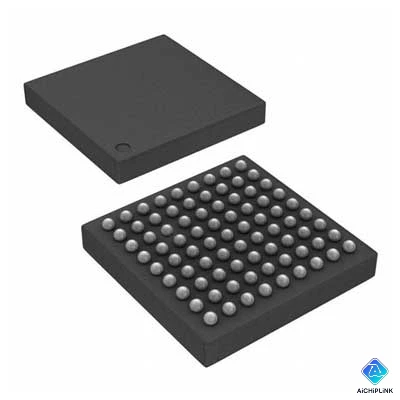
In an era of 1.0V FPGAs and microscopic BGAs, the Altera (Intel) EPM3256AQC208-10 stands as a testament to reliability and ease of use.
As part of the MAX® 3000A family, this CPLD offers something modern chips often lack: 5V I/O Tolerance and a hand-solderable PQFP package. It is the workhorse of industrial control boards, legacy interface bridges, and systems that need "Instant-On" logic without external boot flash.
If you are repairing older equipment or designing a robust interface for 5V sensors, this guide covers the specs, the software trap you must avoid, and the hardware design rules.
Table of Contents
- Decoding the Part Number: QC208 vs. TC144
- Technical Specs: The 5V Advantage
- Software Compatibility: The Quartus Trap
- Hardware Design: PQFP-208 & JTAG
- Troubleshooting: JTAG Lockout
- Conclusion
1. Decoding the Part Number: QC208 vs. TC144
Altera part numbers are descriptive. Here is the breakdown for EPM3256AQC208-10:
| Segment | Code | Meaning |
|---|---|---|
| EPM | Family | Erasable Programmable Macrocell (MAX Series). |
| 3256 | Density | 256 Macrocells (The highest density in the 3000A family). |
| A | Voltage | 3.3V Core (Advanced architecture). |
| QC | Package | Plastic Quad Flat Pack (PQFP). (vs. TC = TQFP). |
| 208 | Pins | 208 Pins. (Provides ~158 User I/Os). |
| -10 | Speed | 10 ns Propagation Delay ($t_{PD}$). |
Legacy Note: You might see "N" at the end (e.g., EPM3256AQC208-10N). This indicates the RoHS / Lead-Free version. Functionally, they are identical.
Procurement Tip: This part is officially Obsolete (EOL) by Intel but widely available in the secondary market. [Check Stock for EPM3256AQC208-10 at Aichiplink] to verify inventory.
2. Technical Specs: The 5V Advantage
The EPM3256A is a Flash-based CPLD, meaning it is Non-Volatile. It remembers its configuration when power is lost and wakes up instantly.
- Core Voltage ($V_{CCINT}$): 3.3 V.
- I/O Voltage ($V_{CCIO}$): Can be powered by 3.3V or 2.5V.
- Input Tolerance: Crucially, the inputs are 5.0V Tolerant (when powered by 3.3V).
- Application: This allows the CPLD to safely read signals from legacy 5V TTL logic or sensors without needing external voltage dividers or level shifters.
- Macrocells: 256. Enough for complex glue logic, address decoding, or even small state machines for motor control.
3. Software Compatibility: The Quartus Trap
If you download the latest Quartus Prime Lite (v20+), you will not find the MAX 3000A family. Intel dropped support years ago.
Required Software: Quartus II Web Edition 13.0 Service Pack 1 (13.0sp1).
- Why: This is the last version to support the MAX 3000A / 7000 families.
- Cost: It is free (Web Edition).
- OS: Native support for Windows 7. On Windows 10/11, it runs fine but may require specific USB-Blaster driver installation steps (disabling driver signature enforcement).
4. Hardware Design: PQFP-208 & JTAG
The QC208 is a robust Plastic Quad Flat Pack with a 0.5mm pitch.
- Pinout Strategy:
- User I/Os: ~158 pins available.
- Global Pins: Look for GCLK (Global Clock), GCLR (Global Clear), and OE (Output Enable) dedicated pins for high-speed signals.
- Power: Requires multiple VCCINT (3.3V) and VCCIO pins connected. Don't leave any power pins floating.
- Programming: Uses the standard 10-pin JTAG header.
- Tool: USB-Blaster (or clone).
- Voltage: Ensure the JTAG VCC pin is connected to the board's 3.3V rail.
5. Troubleshooting: JTAG Lockout
A common issue with "pulled" or used chips: JTAG Disabled. The MAX 3000A allows you to reconfigure JTAG pins as general I/O. If a previous design did this, the chip will ignore the programmer.
The Unlock Trick: To re-enable JTAG, you often need to apply a High Voltage ($V_{PP} \approx 11V-12V$) to the OE1 pin during the programming sequence.
- Note: This usually requires a specialized programmer (like a SuperPro or 3rd party tool) rather than a standard USB-Blaster, which lacks the 12V generator.
6. Conclusion
The Altera EPM3256AQC208-10 is a classic for a reason. Its combination of 5V tolerance, 208-pin count, and easy-to-solder package makes it irreplaceable for maintaining industrial electronics. As long as you keep a copy of Quartus II 13.0 handy, this CPLD remains a powerful tool in your repair and design arsenal.
Sourcing Legacy CPLDs Need to repair a controller board? Visit Aichiplink.com to search for EPM3256AQC208-10 and other obsolete Altera components.

Written by Jack Elliott from AIChipLink.
AIChipLink, one of the fastest-growing global independent electronic components distributors in the world, offers millions of products from thousands of manufacturers, and many of our in-stock parts is available to ship same day.
We mainly source and distribute integrated circuit (IC) products of brands such as Broadcom, Microchip, Texas Instruments, Infineon, NXP, Analog Devices, Qualcomm, Intel, etc., which are widely used in communication & network, telecom, industrial control, new energy and automotive electronics.
Empowered by AI, Linked to the Future. Get started on AIChipLink.com and submit your RFQ online today!
Frequently Asked Questions
What is the key feature of EPM3256AQC208-10?
It provides 5V-tolerant inputs with a 3.3V core, ideal for legacy systems.
Is the EPM3256A a volatile device?
No, it is non-volatile and retains its configuration without external memory.
Which Quartus version supports MAX 3000A CPLDs?
Only Quartus II Web Edition 13.0 SP1 supports this device.
What package does EPM3256AQC208-10 use?
It uses a PQFP-208 (QC208) package, which is easy to hand-solder and inspect.
Can it directly interface with 5V TTL logic?
Yes, its inputs are 5V tolerant when powered at 3.3V.