What is a Vibration Sensor?
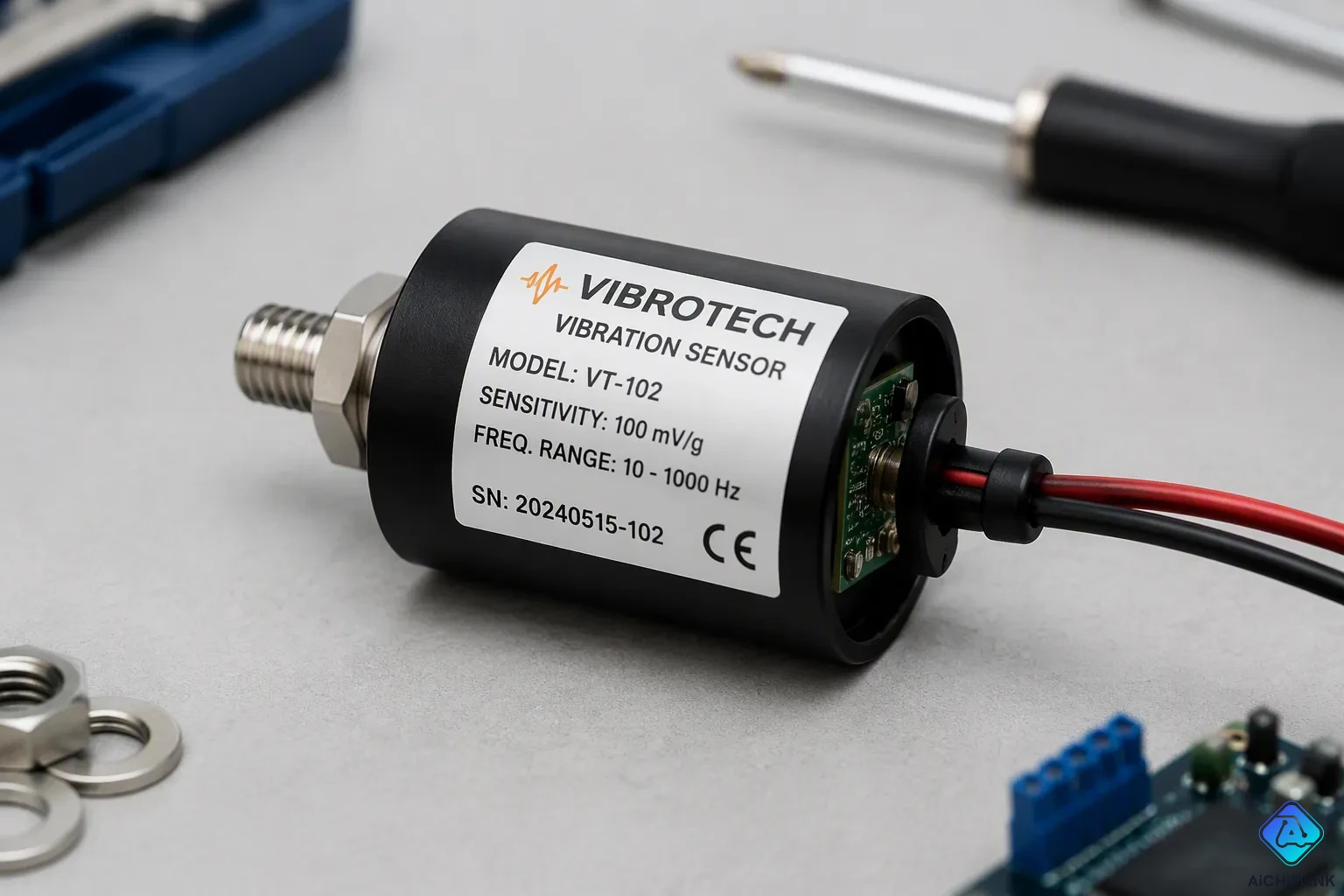
A vibration sensor works as a transducer. It changes mechanical movement into an electrical signal. You use this device to check equipment health. Its main job is in predictive maintenance. Finding small problems early helps you stop big failures. Knowing the size and frequency of vibrations gives you key details about machine condition. The global market for vibration sensors hit 2.139 billion USD in 2024, according to a recent report. This number shows the rising need for vibration sensors in many industries. You depend on them to keep your operations running well. This signal tells you exactly how much a machine shakes. By studying this data, you find worn bearings or loose parts before they fail. A vibration sensor is vital for any predictive maintenance plan.
Key Takeaways
-
Vibration sensors change machine shakes into electrical signals.
-
They measure shake size and speed to find machine problems early.
-
Using them saves money and cuts downtime.
-
Different sensors work best for different machines and problems.
-
Connecting sensors to software helps predict failures.
The Core Purpose of a Vibration Sensor
A vibration sensor has one main job: it turns mechanical movement into electrical signals you can measure and understand. This change turns invisible physical forces into useful data. Every machine shakes a little when it runs. The important part is figuring out what those shakes say about the machine's inner condition.
What It Measures: Magnitude and Frequency
The sensor catches two key parts of motion: magnitude and frequency. Magnitude shows how much the machine moves. You measure this as speed in inches per second or millimeters per second. Frequency shows how fast the movement repeats, measured in hertz (Hz). Together, these two numbers create a vibration pattern that is unique to each machine.
Think of magnitude as how loud a sound is and frequency as its pitch. A loud, low rumble points to different issues than a soft, high whine. The same idea works for machines. A big shake at a low frequency might mean imbalance or misalignment. A small shake at a high frequency could suggest bearing wear or gear damage.
The ISO 10816-3 standard gives practical limits for reading these numbers. This standard applies to Group 2 machines, which include equipment with power ratings between 20 and 402 horsepower on rigid mounts. The table below shows the operating states based on vibration speed:
| Operational State | Vibration Threshold (in/sec, peak) | Vibration Threshold (mm/sec, RMS) |
|---|---|---|
| Newly Commissioned | ≤ 0.08 | ≤ 1.4 |
| Unrestricted Operation | ≤ 0.16 | ≤ 2.8 |
| Restricted Operation | 0.16 – 0.25 | 2.8 – 4.5 |
| Damage Occurs | > 0.25 | > 4.5 |
Group 1 machines, those above 402 horsepower, can handle slightly higher levels. These limits give you a starting point for judging if your equipment runs within safe ranges.
How It Aids in Equipment Health Monitoring
Vibration sensors act like your diagnostic eyes inside the machinery. They spot problems long before you see any visible signs. This early detection makes them essential for checking equipment health.
Take bearing faults as an example. At the first stage, a bearing defect would not cause any odd noise or temperature change and can be found only by methods that work well at high frequency ranges (20 to 40 kHz). Standard vibration sensors pick up these high-frequency signals, showing damage that your ears and thermometers completely miss.
The data from vibration sensors feeds straight into condition monitoring programs. You take measurements at regular times and compare them to baseline readings. A slow rise in magnitude signals steady wear. A sudden jump points to an immediate problem that needs action. This step-by-step method turns raw data into maintenance choices.
The money impact of this approach is big. Switching to condition-based maintenance, which uses methods like vibration analysis, leads to a longer asset life of 20-40% compared to reactive or time-based methods. You replace parts when needed, not on a set schedule. You avoid extra downtime while stopping major failures.
Vibration monitoring also helps you rank maintenance tasks. When several machines need attention, you send resources to the equipment with the highest vibration levels first. This data-based ranking makes your maintenance team work better.
The link between vibration sensors and modern software tools boosts their value. You get automatic alerts when measurements go past limits. You track trends over months and years. You build a history that improves your knowledge of each machine's behavior.
In the end, vibration sensors let you see inside your equipment without opening it. They turn mechanical motion into a language you can read and use. This ability changes maintenance from a guessing game into a precise science.
Why Vibration Detection is Crucial
You might ask why so many industries spend a lot on vibration detection. The reason is money, safety, and reliability. A machine that breaks without warning stops work, delays shipments, and costs thousands for emergency fixes. Vibration detection helps you see these problems before they happen.
Why Vibration Detection is Crucial for Predictive Maintenance
Predictive maintenance uses data to guess when equipment will fail. Vibration sensors give the best data for this job. You check vibration levels often and compare them to known baselines. This comparison shows faults while parts still work.
The money benefits are big. McKinsey research says moving from reactive to predictive maintenance gives clear results:
-
Maintenance cost reduction: 18% to 25% lower total maintenance costs
-
Downtime reduction: Up to 50% less unplanned downtime
These numbers show why vibration monitoring matters. You replace parts based on real condition, not guesses. You plan repairs during scheduled stops instead of emergency breaks. Your maintenance team works better because they know which machines need help.
Vibration monitoring also makes equipment last longer. You catch small issues before they turn into big damage. A bearing with early wear costs little to replace. The same bearing left alone can ruin a shaft, harm a housing, and stop a whole production line.
Spotting Early Anomalies in Machinery
Every machine makes a unique vibration pattern when healthy. You set this baseline first. Then you watch for changes from that pattern. Even small shifts in size or speed can mean trouble.
The hard part is telling real problems from false alarms. A simple detection system might mark normal changes as faults. This causes alarm fatigue, where workers ignore warnings because too many are wrong.
Modern methods fix this with smarter tools. One way mixes vibration and temperature data to find outliers that show changing machine states. The system then talks with machine operators, using their input to remove false alarms. In tests on real factory data from crushers and gantries, this method cut false alarms by 90.25% on average compared to simple outlier detection.
This accuracy matters for your work. You want alerts that need action, not noise that wastes time. Good condition monitoring with vibration sensors gives you trust in your maintenance choices. You believe the data because the system learns from real working conditions.
The result is a maintenance plan that finds problems early, avoids extra work, and keeps your equipment running well.
How Vibration Sensors Work
Knowing how vibration sensors work helps you pick the right one and read its data correctly. The process measures certain details and changes mechanical motion into electrical signals you can study.
Key Parameters in Vibration Measurement
Vibration sensors track three main things: acceleration, velocity, and displacement. Each one focuses on different speed ranges and points out different machine problems.
Acceleration shows how fast velocity changes over time. It works best for fast vibrations above 60,000 CPM, so it catches early bearing issues, gear damage, and cavitation. You measure it in g's or meters per second squared. Displacement measures the gap between a spinning part and the sensor. It works best for slow vibrations below 600 CPM, finding misalignment, resonance, loose bolts, and frame problems. You measure it in mils (one-thousandth of an inch) peak-to-peak. Velocity shows how fast displacement changes over time, covering middle speeds from 600 to 60,000 CPM. This one gives a balanced view for most machine faults, using inches per second or millimeters per second.
| Parameter | Definition | Typical Units | Best For |
|---|---|---|---|
| Acceleration | How fast velocity changes over time | m/s², g's | Fast vibrations (e.g., bearing or gear faults) |
| Displacement | Gap between a spinning part and the sensor | mm, mils | Very slow vibrations (e.g., eccentricity, unbalance) |
| Velocity | How fast displacement changes over time | mm/s, in/s (ips) | Middle speeds; a balanced choice for most machines |
Your choice depends on the fault you think is there. For full coverage, many systems record all three at once.
The Piezoelectric Sensing Mechanism
Most factory vibration sensors use the piezoelectric effect to turn mechanical stress into electrical charge. This idea is the base of modern vibration analysis.
The sensing part works in a simple order. A piezoelectric material sits on a metal diaphragm that takes in the pressure being measured. When mechanical force pushes the diaphragm, it bends a little. This bending creates stress across the piezo material, which makes an electrical charge. That charge is read as voltage and processed for data.
How you mount the sensor changes how accurate it is. Loose mounts lower the top frequency you can read, and extra weight lowers the resonant frequency. A handheld probe tops out at 500 Hz, magnetic mounts reach 2000 Hz, adhesive mounts handle 2500–5000 Hz, and stud mounts go past 6000 Hz. Bad mounting causes resonance at lower frequencies, which distorts readings and hides important high-speed signals.
Sensitivity ranges from 10 mV/G for high-range accelerometers to 100 mV/G for low-range, high-sensitivity units. The material you pick sets the heat limit. Quartz works up to 573°C, PZT up to 300°C, and YCOB up to 1000°C.
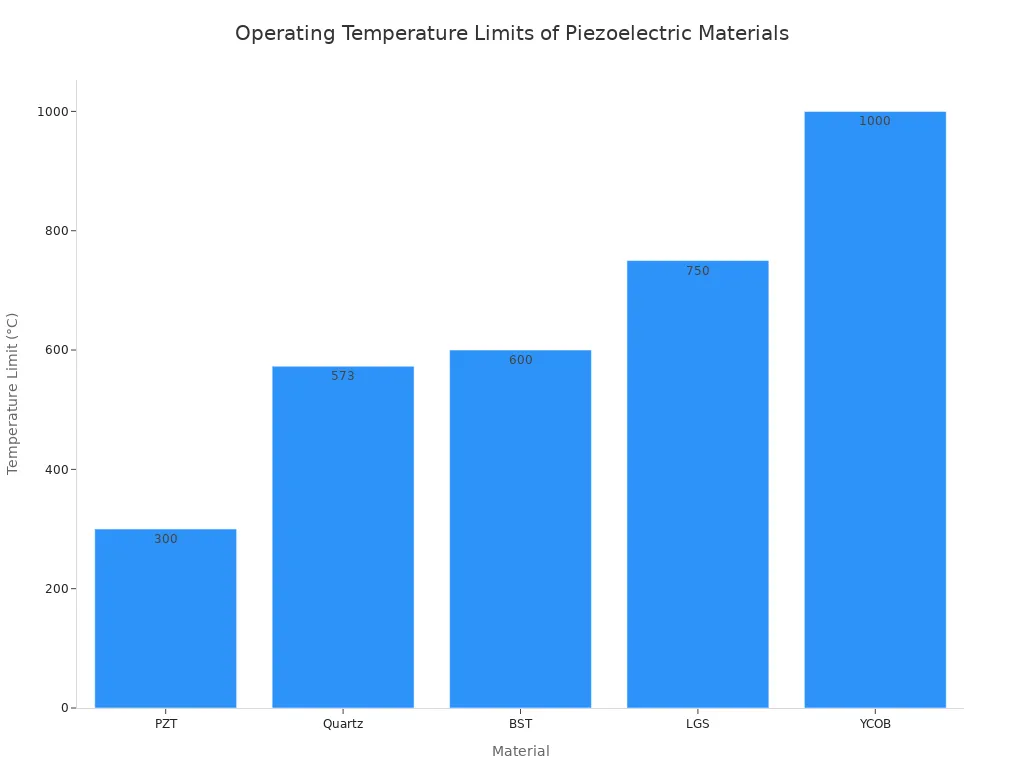
These factors together decide how well your vibration sensors perform in real factory settings.
Common Types of Vibration Sensors
You have several choices when picking a vibration sensor for your machines. The right one depends on your equipment, your setting, and the faults you want to find. Knowing the main types helps you choose wisely.
Contact and Non-Contact Vibration Sensors
The first big split is between contact and non-contact sensors. Contact sensors attach right onto the machine surface. They touch the equipment and measure its motion through that touch. Non-contact sensors measure vibration without touching the machine. They use magnetic fields or laser light to spot movement from a distance.
The three most common vibration sensors in factories are:
-
Accelerometers: These measure changes in speed and turn them into electronic signals. They work well across a wide range of frequencies and handle most general monitoring jobs.
-
Velocity sensors: These measure change in distance over time. Their output grows with vibration strength. They work best for mid-range frequencies from 5 Hz to 2000 Hz. They fit rolling element bearing machines running at or below 60 Hz. Some electromechanical versions make their own signal without outside power, which makes setup easier.
-
Displacement sensors (proximity probes): These non-contact sensors create a radio frequency magnetic field. They detect relative motion between the probe tip and a metal surface. They measure displacement directly and work well for fluid film bearings, both axial and radial. Their low-frequency signal strength is excellent. Output comes in mils or microns peak-to-peak.
Each sensor type has strengths. Accelerometers give you wide coverage. Velocity sensors provide clear readings in the mid-frequency range. Proximity probes excel at measuring shaft position and slow movements.
Non-contact sensors offer clear benefits in tough environments. All contact sensors have a limited operating temperature range. Extreme heat hurts their accuracy. Non-contact sensors like laser Doppler vibrometers avoid this problem entirely. You can measure directly on very hot test surfaces without any contact. These measurements stay mostly unaffected by environmental conditions. This makes them the top choice for high-temperature parts such as catalytic converters.
Eddy current probes, another non-contact option, deliver amazing precision. They achieve high resolution down to 0.5 μm or better. For small measuring ranges of 0 to 0.5 mm, they keep resolution below 1 μm. This accuracy makes them valuable for tight-tolerance applications.
Industrial Applications of Each Type
Your application decides which sensor you pick. Accelerometers lead in general machine monitoring. You mount them on motor housings, pump casings, and gearboxes. They catch bearing faults and gear damage at high frequencies.
Velocity sensors fit machines with moderate speeds. You use them on fans, blowers, and centrifugal pumps. Their self-generating options work well in remote spots where power is hard to get.
Proximity probes serve critical rotating equipment. You install them on large turbines, compressors, and generators with fluid film bearings. They measure shaft vibration directly, giving you the true motion of the rotating part rather than the housing response.
For extreme environments, laser Doppler vibrometers provide non-contact measurement on hot or moving surfaces. You can scan large areas quickly without stopping equipment.
The different vibration sensors each fill a specific role. Choosing correctly ensures you get reliable data. The vibration sensors available today cover nearly every industrial situation you might face. Understanding these vibration sensors helps you build an effective monitoring program. Your choice directly impacts the quality of your predictive maintenance strategy.
Applications of the Industrial Vibration Sensor
Monitoring Pumps, Motors, and Fans
You use an industrial vibration sensor to check pumps, motors, and fans. Each machine type shows different fault patterns that various vibration sensors can detect. A vibration sensor gives you data to make maintenance choices.
For centrifugal pumps, cavitation is a frequent issue. Suction cavitation creates vibration in the 1–10 kHz range. You find it by watching the spectral noise floor trend and the blade pass frequency ratio. The table below shows the key ranges:
| Cavitation Type | Frequency Range | Detection Method |
|---|---|---|
| Suction Cavitation | 1–10 kHz, sub-synchronous | Spectral noise floor trend + BPF ratio |
| Discharge Recirculation | Sub-BPF, 0–200 Hz | Sub-BPF energy ratio + flow context |
| Incipient (AE) | 100 kHz–1 MHz | AE energy trend + burst rate analysis |
For electric motors, broken rotor bars create clear patterns. Vibration sensors on motor housings spot them:
-
Under load, vibration changes at poles times slip frequency. A broken bar makes this beat stronger.
-
A cracked bar causes rotor bowing and strong 1× vibration with slip frequency sidebands.
-
Loose bars show vibration at rotor bar passing frequencies.
-
Run analysis under at least 50% load to reveal signs.
-
Pole pass frequency (poles × slip speed) points to rotor bar faults.
These vibration sensors need proper mounting for accurate data.
For fans, imbalance and bearing wear are typical. Vibration sensors on fan housings catch these problems early. Good vibration monitoring here stops unexpected failures.
Integration with Predictive Maintenance Software
The real power of vibration sensors shows when you link them to predictive software. This turns raw data into automated actions. Vibration sensors form the base. The vibration sensors send data to the software, which studies trends and flags issues. You watch vibrations all the time and get alerts when patterns shift.
Modern platforms offer key features:
-
Continuous condition monitoring: Catches slow changes in machine behavior. Deloitte says good PdM programs cut downtime by 5–15%.
-
AI-powered fault detection: Studies hundreds of vibration, temperature, and electrical signals. It finds fault signs earlier with fewer false alarms.
-
Early alerts with full diagnostics: Alerts tell you what is failing, how bad it is, and what to do.
-
CMMS or ERP integration: Automates work order creation and adds repair instructions.
-
Certified analyst review: CAT III or IV-certified analysts check alerts and turn raw signals into useful data.
This process ensures you never miss a growing fault. The vibration monitoring software tracks trends over time and compares each machine to its baseline. The mix of vibration sensors and smart software makes your condition monitoring program work well.
Vibration sensors transform mechanical motion into electrical signals you can measure and interpret. They capture both magnitude and frequency, giving you a complete picture of machine health. This data reveals worn bearings, loose parts, and misalignment before visible damage appears.
You shift from reactive repairs to predictive maintenance with vibration sensors. You replace components based on actual condition, not guesswork. This approach cuts downtime and extends equipment life significantly.
Vibration monitoring becomes more valuable as Industry 4.0 expands. Smart factories depend on continuous data from vibration sensors to automate decisions. You connect these sensors to software platforms that track trends and trigger alerts automatically.
The future of maintenance relies on vibration sensors. You gain visibility into every rotating asset. You prevent failures before they stop production. Vibration monitoring transforms maintenance from a cost center into a strategic advantage.

Written by Jack Elliott from AIChipLink.
AIChipLink, one of the fastest-growing global independent electronic components distributors in the world, offers millions of products from thousands of manufacturers, and many of our in-stock parts is available to ship same day.
We mainly source and distribute integrated circuit (IC) products of brands such as Broadcom, Microchip, Texas Instruments, Infineon, NXP, Analog Devices, Qualcomm, Intel, etc., which are widely used in communication & network, telecom, industrial control, new energy and automotive electronics.
Empowered by AI, Linked to the Future. Get started on AIChipLink and submit your RFQ online today!
Frequently Asked Questions
How Often Should You Take Vibration Measurements?
You should measure based on how critical the machine is. For most equipment, monthly readings work well. For critical assets, take readings weekly or use continuous monitoring. New machines need more frequent checks during the first months. After you establish a stable baseline, you can adjust the schedule.
What Is the Best Way to Mount a Vibration Sensor?
Stud mounting gives you the most accurate readings. It works up to 6000 Hz. Magnetic mounts reach 2000 Hz. Adhesive mounts handle 2500 to 5000 Hz. Handheld probes only reach 500 Hz. Choose the most secure mount your equipment allows for reliable data.
Can One Vibration Sensor Work for Different Machine Types?
Yes, you can use one sensor across different machines. Accelerometers work well for most general monitoring tasks. You need to set a separate baseline for each machine. Each machine produces a unique vibration pattern. Your monitoring software can store and compare these individual baselines.
How Do You Know Which Parameter to Measure?
You choose based on the fault you suspect. Acceleration catches bearing and gear damage at high frequencies. Velocity works well for most common machine faults. Displacement finds misalignment and loose parts at slow speeds. Many modern systems record all three parameters at once for complete coverage.
What Causes False Alarms in Vibration Monitoring?
Normal operating changes often trigger false alarms. Simple detection systems mark these changes as faults. You can reduce false alarms by combining vibration data with temperature readings. Smart software learns from real working conditions. This approach cut false alarms by 90.25% in factory tests on crushers and gantries.