What Are Proximity Sensors and How Do They Work?
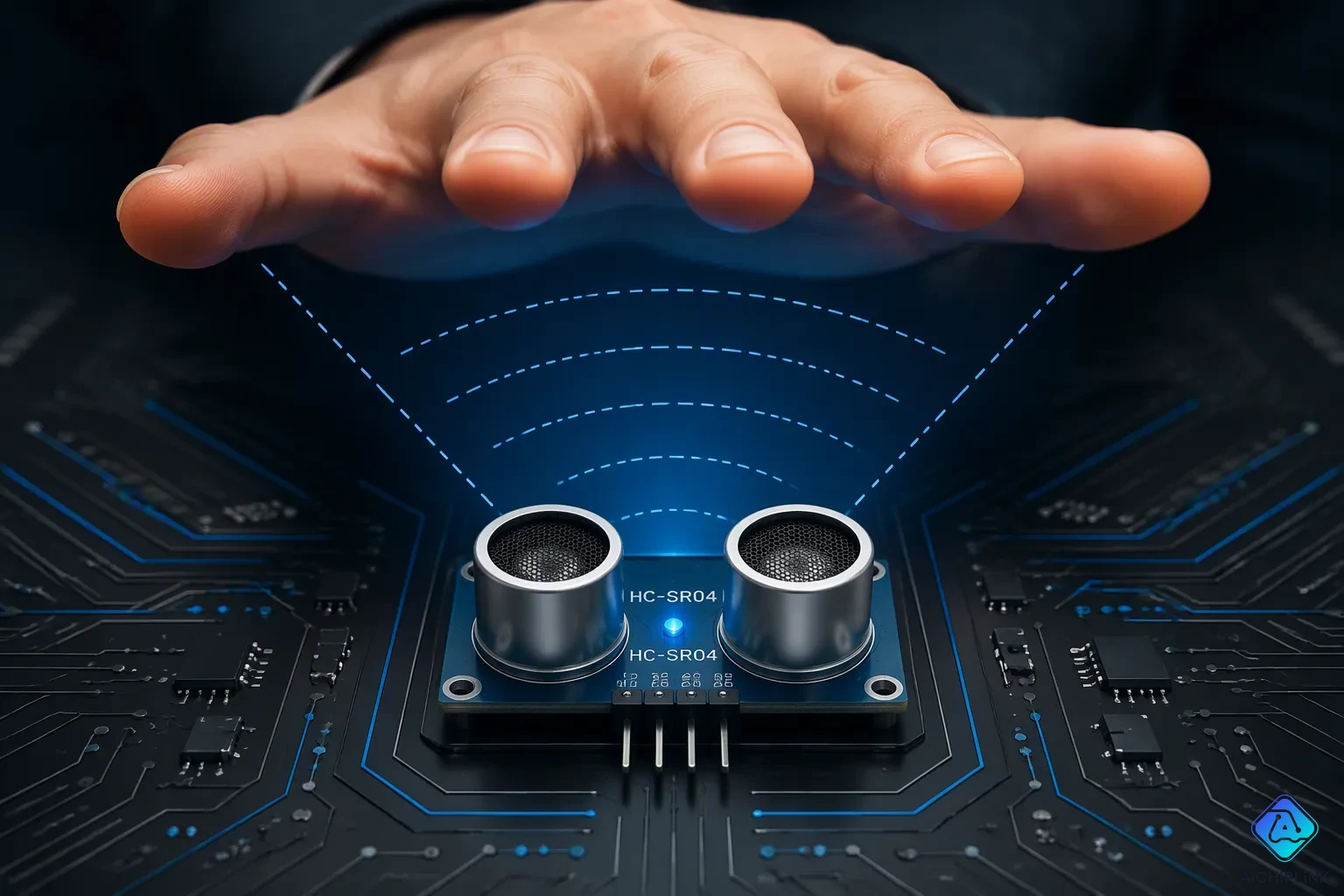
When you walk through automatic doors or hold your phone to your ear, proximity sensors do the detecting. A proximity sensor is a part that detects if an object is there or not, without touching it. This no-touch detection is the main job of these devices. These devices work without touching anything. You will find them in many places. According to GMInsights, the global proximity sensors market reached USD 4.7 billion in 2023, with a predicted CAGR of over 5% from 2024 to 2032. This article will explain how these sensors work and where you find them in daily life.
Key Takeaways
-
Proximity sensors can find objects without making contact with them.
-
They work by sending out a field and detecting changes.
-
Some different types are inductive, capacitive, ultrasonic, optical, and magnetic.
-
You can find them in smartphones, cars, automatic doors, and factories.
-
They help devices work better and stay safer in everyday life.
Defining Proximity Sensors and Their Core Function
What Proximity Sensors Do
A proximity sensor spots if something is there or not without touching it. When an object moves into the detection area, the sensor sends an electrical signal. That signal tells a machine or device that an object is present. The sensor does not have to touch the item to know it is there.
Think about a smartphone. When you bring it close to your ear during a call, the screen turns off. A proximity sensor inside the phone detects your face. It sends a signal to turn off the display. This simple action saves battery power and stops accidental touches.
Industry standards define these devices clearly. According to JIS C 8201-5-2, which matches IEC 60947-5-2, proximity switches detect target objects without contact when they are near or inside the sensor's range. The standard groups them into inductive, capacitive, ultrasonic, photoelectric, and magnetic types. These sensors serve many uses across different industries.
The output signal can be digital or analog. A standard switch digital output sensor gives a simple ON/OFF signal. An analog output inductive proximity sensor gives a steady voltage from 0 to 10 volts or a current from 4 to 20 milliamps. That output changes with distance.
The Principle of Non-Contact Detection
The main detection method uses emitting a field and watching for changes. The sensor creates an electromagnetic field, sound wave, or light beam. When an object enters that field, the sensor notices the disturbance. This is the core of non-contact detection.
You can compare this to feeling heat from a stove without touching it. Your hand senses the heat radiation. The stove does not need to touch you for you to know it is hot. Proximity sensors work the same way. They sense an object's presence through a field.
Different sensors use different energy fields. Inductive sensors make electromagnetic fields. Ultrasonic sensors send out ultrasound beams. Photoelectric sensors use infrared beams or light from LEDs. Capacitive sensors detect changes in capacitance. Magnetic sensors respond to magnetic fields.
The signal creation varies by type. An inductive sensor uses an oscillator to make a high-frequency alternating electromagnetic field. When metal enters the field, eddy currents take energy and reduce oscillation strength. The sensor changes its output when the strength drops below a set level. A capacitive sensor's face acts as a capacitor plate. An approaching object changes the dielectric constant and raises capacitance. Oscillation detection circuits then cause an output change.
Ultrasonic sensors work differently. A piezoelectric transducer sends out high-frequency sound pulses. The sensor receives the reflected echo and measures the time of flight. If the measured distance falls within the set window, the sensor reports the object as present. Photoelectric sensors send a light beam. An object either blocks the beam or reflects it back. A change in received light intensity triggers the output.
These principles allow reliable presence detection in many places. The sensor never touches the target. It simply watches for changes in its emitted field.
Main Types of Proximity Sensors
Inductive Proximity Sensors and Capacitive Types
An inductive proximity sensor uses a coil oscillator to create a high-frequency magnetic field. When a ferrous metal target enters this field, electromagnetic induction causes eddy currents to flow inside the target. These eddy currents increase the load on the oscillator circuit. The oscillation then weakens or stops completely. The signal processing circuit detects this change and outputs a detection signal.
The inductive coil inside these proximity sensors consists of many turns of very fine copper wire. This thin wire adds electrical resistance and causes small power losses. The circuit must compensate for these losses continuously to sustain oscillation. Fine copper wire allows a high number of turns in a compact size. This design generates the inductance and fixed oscillation frequency the circuit needs.
Capacitive proximity sensors work differently. Their sensing face acts as a capacitor plate. When an object approaches, it changes the dielectric constant and raises capacitance. The sensor detects this shift and triggers an output. Unlike inductive types, capacitive proximity sensors detect both conductive and non-conductive materials. You can use them for liquids, plastics, wood, and powders.
Ultrasonic Proximity Sensors and Optical Types
Ultrasonic proximity sensors send out high-frequency sound pulses and measure the time of flight. Here is how the detection method works:
-
The sensor emits a short ultrasonic pulse, typically around 40 kHz.
-
The pulse travels to the object and reflects back.
-
The sensor measures the total round-trip time in microseconds.
-
Distance is calculated as d = (v × t) ÷ 2.
-
The speed of sound in air depends primarily on temperature.
-
Temperature compensation matters for accuracy.
Optical proximity sensors use light to detect objects. Photoelectric sensors fall into this group. Through-beam optical proximity sensors can reach long distances. Retro-reflective types cover medium distances. Diffuse optical proximity sensors work at short range.
Magnetic proximity sensors detect a paired magnet mounted on the target; when the magnet is present, the output changes.
Where Proximity Sensors Are Used in the Real World
Everyday Devices: Smartphones, Cars, and Automatic Doors
You use proximity sensors more than you might think. Your smartphone has one that works during calls. When you put the phone to your ear, the sensor notices your face and shuts off the screen. This stops accidental touches and saves battery power. When you pull the phone away, the screen comes back on.
Your car uses these sensors to help with parking. Ultrasonic sensors send out sound pulses and measure how long they take to return. They spot obstacles when you drive slowly. Electromagnetic sensors make a field around the bumper. They warn you when something enters that area.
Automatic doors need proximity sensors to open. Microwave radar sensors detect movement using Doppler technology. Active infrared sensors send and receive IR light to detect motion. Some doors use dual-technology sensors that mix radar with infrared. This cuts down on false triggers. You find these doors in hotels, restaurants, and garages. These daily uses show how proximity sensors make life easier.
Industrial and Safety Systems: Manufacturing and Automation
In factories, proximity sensors do many important jobs. They spot an object on the conveyor belt and count it without touching it. This no-touch detection keeps production lines moving fast. The sensor sends a signal each time an object enters the detection zone.
Robotic arms use proximity sensors to position themselves precisely. These sensors watch the area around them all the time. They help robots change their movements as needed. For assembly, they make sure each object is in the right spot before joining. For collision avoidance, they stop accidents between robots and workers. In warehouses, they help with accurate pick-and-place tasks. These tough sensors handle dust, vibration, and extreme temperatures.
Machine safety interlocks also depend on proximity sensors to detect presence. They sense if a guard or door is there. They stop the machine if it opens. This keeps workers safe from moving parts. These safety uses need high reliability and durability.
The market shows this wide use across many applications. The global proximity sensor market was valued at USD 4.7 billion in 2023, with a predicted CAGR of over 5% from 2024 to 2032. It is used across many sectors such as consumer electronics, automotive, industrial automation, and healthcare.
Proximity sensors are important no-touch detectors in your daily life and in industry. They sense if an object is there without touching it. They use inductive, capacitive, ultrasonic, optical, or magnetic technology. You can find these sensors in your phone, your car, and in factory automation. Next time you walk through automatic doors, take a moment to notice the detection around you. Learning about this simple sensor technology helps you value the smart devices you use every day.

Written by Jack Elliott from AIChipLink.
AIChipLink, one of the fastest-growing global independent electronic components distributors in the world, offers millions of products from thousands of manufacturers, and many of our in-stock parts is available to ship same day.
We mainly source and distribute integrated circuit (IC) products of brands such as Broadcom, Microchip, Texas Instruments, Infineon, NXP, Analog Devices, Qualcomm, Intel, etc., which are widely used in communication & network, telecom, industrial control, new energy and automotive electronics.
Empowered by AI, Linked to the Future. Get started on AIChipLink and submit your RFQ online today!
Frequently Asked Questions
What materials can inductive proximity sensors detect?
Inductive proximity sensors detect ferrous metal objects. These proximity sensors use a coil oscillator. A metal object enters the field. Eddy currents form. The proximity sensor notices the change. You cannot use them for plastic or wood objects.
Can capacitive sensors detect non-conductive materials?
Capacitive proximity sensors detect conductive and non-conductive objects. These proximity sensors sense changes in capacitance. You can use them for liquids, plastics, wood, and powders. The object does not need to conduct electricity.
How does temperature affect ultrasonic sensors?
Temperature changes affect ultrasonic proximity sensors. These proximity sensors use sound speed. The speed varies with temperature. Temperature compensation matters for accuracy. You need temperature compensation.
What range do photoelectric sensors offer?
Photoelectric proximity sensors have different ranges depending on the type: through-beam, retro-reflective, and diffuse. Choose based on your object size and distance.
Can you use a single sensor type for all applications?
Different proximity sensors work for different needs. Each object type demands a specific sensor. Each environment also demands a specific sensor. Inductive sensors work for a metal object. Capacitive sensors work for many materials. Ultrasonic sensors work for long-range detection.