What a Parking Sensor Distance Detector Is and How It Works
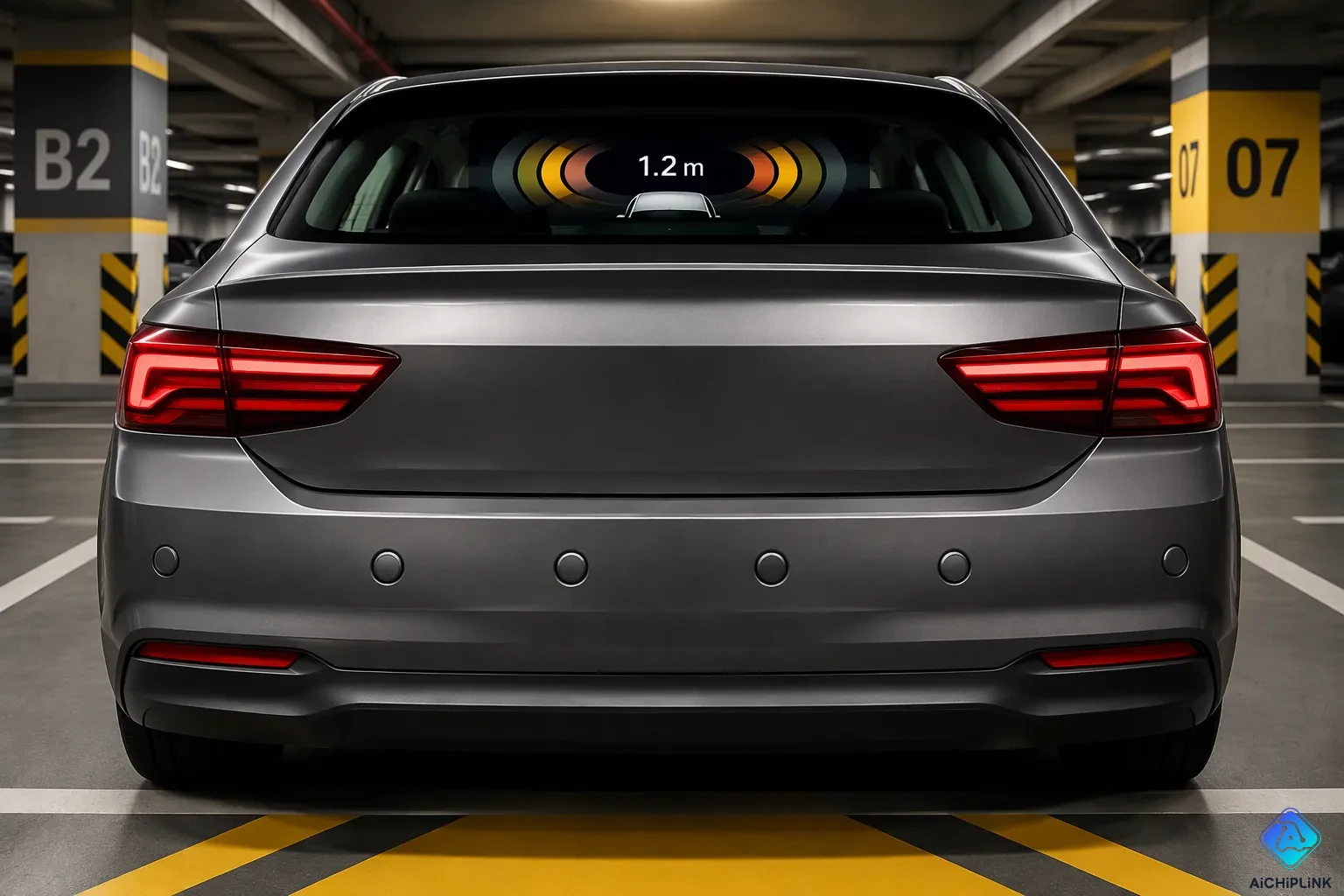
A parking sensor distance detector is a system that senses nearby obstacles and reports how far away they are. It has three main parts: sensors, a control unit, and a display or alert system. The sensors act like a bat's ears. A bat sends out a sound, listens for the echo, and knows what lies ahead. This system works in a similar way. The article explains how detection and distance calculation work, the main types of parking sensor systems, and real-world accuracy.
Key Takeaways
-
A parking sensor distance detector measures the space between your car and nearby objects.
-
The system has three main parts: sensors, a control unit, and a display or alert.
-
Sensors send out signals that bounce off objects and come back. Then the control unit uses them to figure out the distance.
-
There are different types, such as ultrasonic, electromagnetic, radar, and camera-based systems.
-
Parking sensors help drivers park safely, but they do not take the place of careful driving and mirrors.
What a Parking Sensor Distance Detector Is
A parking sensor distance detector is an electronic driver-assistance system that measures the gap between a vehicle and nearby obstacles and reports that gap to the person behind the wheel. The device turns an invisible space into useful information. A driver then knows how much room remains before contact.
Core Components
Three parts work together to make this happen. The first part is the sensor set. These small devices mount in the rear bumper, the front bumper, or both. Each sensor sends out a signal and listens for its return. Some vehicles use four sensors per bumper. Larger vehicles may use more. The count depends on bumper width and the coverage the manufacturer wants.
The second part is the control unit. This small computer hides behind the bumper trim or under the dashboard. It fires the sensors in sequence, times each echo, and turns raw timing data into a distance value. It also decides when to trigger a warning. The control unit is the brain of the system. Sensors gather raw data, and the control unit gives that data meaning.
The third part is the display and alert layer. This layer carries the message to the driver. It may be a small screen, a set of indicator lights, an audible tone, or a mix of all three. Some systems tie into the infotainment screen and show a graphic of the vehicle with colored zones around it.
Driver Alerts and Display
The alert design follows one simple rule: the closer the obstacle, the more urgent the signal. A driver first hears a slow, steady beep when an object enters the detection zone. The beep rate climbs as the gap shrinks. A continuous tone usually means the obstacle sits at the minimum safe distance. Many systems add a visual layer on top of the sound. Green, yellow, and red bars or zones show the same progression on a screen. Some units add a spoken distance callout. Others flash a warning icon when a child, pet, or pole enters a blind spot behind the vehicle.
These alerts serve one purpose. They give the driver time to stop, adjust, or check the mirrors before a bumper meets a wall, a curb, or another car. The parking sensor does not park the car. It supplies the distance information a careful driver needs.
Main Types of Parking Sensor Systems
Ultrasonic and Electromagnetic
Ultrasonic systems are the most common choice for close-range parking. Each sensor sends out a sound pulse that is too high for human ears to detect. The pulse bounces off a nearby object and returns to the sensor. This design works well at low speeds and short gaps. That makes it a natural fit for tight garages, crowded lots, and parallel parking. Ultrasonic sensors also cost less than many alternatives, so manufacturers fit them to a wide range of vehicles.
Electromagnetic systems take a different path. They create a magnetic field around the bumper and watch for changes in that field. A metal object such as a pole, a gate, or another car disturbs the field, and the system reports the change. These units suit drivers who want a clean look, because the installer can hide the sensing strip behind the bumper skin. Electromagnetic systems perform best with metal obstacles. They also work well in narrow spaces where a driver needs a simple warning.
Radar and Camera-Based
Radar systems send out radio waves instead of sound. Radio waves travel farther than ultrasonic pulses, so radar fits longer-range needs. A radar unit can spot a vehicle or a wall well before an ultrasonic sensor would notice it. This makes radar a strong option for rear cross-traffic alerts. It also helps drivers of large trucks, vans, and SUVs who need extra warning distance. Radar also holds up better in rain and snow than sound-based designs.
Camera-based systems add a visual layer to the parking sensor family. A rear camera shows the area behind the vehicle on a screen. Many units overlay guide lines that bend with the steering wheel. The driver sees the actual obstacle rather than a tone alone. Cameras shine when a driver needs visual confirmation of a curb, a child, or a low post. Many modern vehicles combine a camera with ultrasonic or radar sensors, so the driver gets both a picture and a distance warning.
The Detection Process
Emit, Reflect, Measure
Every measurement follows the same three-step cycle. The system sends out a signal, the signal bounces off an object, and the system listens for the return. A bat hunting in the dark does exactly this. It chirps, waits for the echo, and builds a picture of the space around it. A parking sensor follows the same logic with silent pulses.
The cycle unfolds in a fixed order:
-
The control unit triggers one sensor at a time. That sensor emits a short pulse, either a sound wave or a radio wave depending on the design.
-
The pulse travels outward through the air. It strikes the nearest obstacle, such as a wall, a parked car, or a curb.
-
Part of the pulse reflects back toward the vehicle. The same sensor, now acting as a receiver, picks up that returning echo.
-
The control unit records the exact moment of emission and the exact moment of reception. The gap between those two moments is the round-trip travel time.
The system repeats this cycle many times per second. Each sensor takes its turn, so neighboring pulses do not overlap and confuse the reading. This rapid sequence gives the driver a fresh distance value almost continuously.
Calculating Distance
The control unit turns travel time into a distance reading with one simple idea. A signal travels at a known speed through air. The echo time tells the control unit how long the signal was in flight. Half of that time covers the trip out to the obstacle. The other half covers the trip back. The control unit multiplies the one-way time by the signal speed and reports the result as the gap to the obstacle.
The bat analogy holds here too. A bat judges distance by how long its call takes to return. A longer wait means a farther object. A shorter wait means a closer one. The parking sensor applies the same rule with precise timing.
Once the control unit has a distance value, it compares that value against preset thresholds. A large gap triggers no alert. A medium gap triggers a slow beep. A small gap triggers a fast beep or a steady tone. The control unit refreshes this comparison with every cycle, so the alert rate tracks the closing gap in real time. This is the moment a parking sensor earns its keep. Raw timing data becomes a warning the driver can act on.
Accuracy, Range, and Limits
Accuracy and Range
A parking sensor gives steady readings inside the zone it was built to cover. The control unit updates the distance value many times each second. Because of this, the number on the screen stays close to the real gap. Small errors can still happen. A sensor may show a gap that is a little different from the true measurement. That difference is small enough to trust when parking. Drivers should use the reading as a helpful guide, not as an exact measurement.
Detection range depends on the type of sensor. Ultrasonic units focus on the close area around the bumper. They pick up obstacles a short distance away and work well for tight maneuvering. Radar units reach farther and warn the driver sooner. Camera systems show the scene at a greater visual distance. Each design covers the range its job requires.
Real-World Limitations
Weather and grime can affect performance. Rain, snow, and road spray can scatter a signal or block a sensor face. Dirt, mud, and ice on the lens or membrane weaken the echo. A quick wipe of the sensor surface brings back normal operation in many cases. Drivers should check the sensors after a storm or a muddy drive.
Some obstacles challenge any system. Low curbs, soft bushes, and thin poles may reflect a weak echo or slip below the beam. A Parking Sensor also has trouble with objects that soak up sound, such as thick fabric or loose snow. These limits mean the technology helps the driver. It does not replace careful driving. Mirrors, a slow pace, and a direct look out the window are still essential habits.
A parking sensor distance detector measures the gap between a vehicle and nearby obstacles and reports it to the driver. Sensors, a control unit, and a display or alert layer form the core. Ultrasonic, electromagnetic, radar, and camera designs each fit different needs. Every type follows the same emit-reflect-measure cycle. Readings stay reliable within the designed range, yet rain, dirt, and soft or low objects can weaken detection. A Parking Sensor supports the driver with useful warnings. It never replaces mirrors, a slow pace, and a careful look around.

Written by Jack Elliott from AIChipLink.
AIChipLink, one of the fastest-growing global independent electronic components distributors in the world, offers millions of products from thousands of manufacturers, and many of our in-stock parts is available to ship same day.
We mainly source and distribute integrated circuit (IC) products of brands such as Broadcom, Microchip, Texas Instruments, Infineon, NXP, Analog Devices, Qualcomm, Intel, etc., which are widely used in communication & network, telecom, industrial control, new energy and automotive electronics.
Empowered by AI, Linked to the Future. Get started on AIChipLink and submit your RFQ online today!
Frequently Asked Questions
Do parking sensors work in heavy rain or snow?
Rain, snow, and road spray can scatter the signal or cover the sensor face. Performance may drop in these conditions. A quick wipe of the sensor surface often brings back normal operation. Drivers should be extra careful with readings during storms and check the sensors after a muddy drive.
Can a driver add parking sensors to an older vehicle?
Yes. Aftermarket kits are made for many vehicles. A shop can mount sensors in the bumper and wire a control unit and display. Drivers should pick a kit that fits the bumper material and the vehicle's size. Professional installation helps ensure proper coverage and clean wiring.
Do parking sensors detect children, pets, and small objects?
Sensors pick up many obstacles, including people and pets, within their detection zone. Thin poles and low curbs may send back a weak echo. Soft or sound-absorbing objects can also slip past detection. Drivers should always walk around the vehicle and check mirrors before reversing.
Do parking sensors replace mirrors or a rear camera?
No. Sensors give distance warnings, and cameras give a visual picture. Mirrors show angles that sensors cannot cover. Each tool covers a different gap. The safest habit combines all three: sensors, mirrors, and a direct look out the window at a slow pace.
Do parking sensors work at highway speeds?
Most parking sensors are built for low-speed maneuvering, not highway travel. Ultrasonic designs focus on the close area around the bumper. Radar units reach farther and can support cross-traffic alerts. Drivers should rely on the system as a parking aid, not as a highway safety feature.