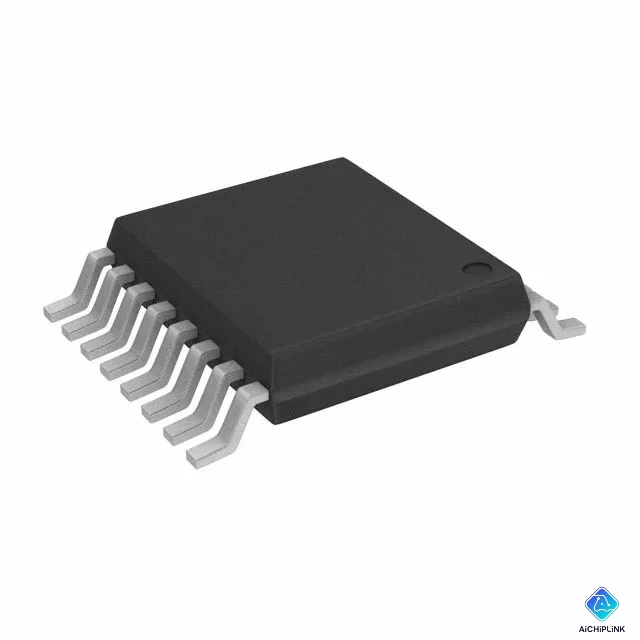
Introduction
The SC18IS602BIPW/S8HP is an I²C-to-SPI bridge interface IC manufactured by Analog Devices Inc, enabling I²C bus masters to communicate with SPI peripheral devices through simple register-based commands, supporting up to 1.7 MHz SPI clock, 4 chip select lines, and wide voltage operation (1.8-3.6V) for microcontroller systems, sensor networks, and embedded applications requiring protocol translation between incompatible interfaces.
Technical Overview
Core Specifications
| Parameter | Specification |
|---|---|
| Function | I²C-to-SPI protocol bridge |
| I²C Speed | Up to 400 kHz (Fast-mode) |
| SPI Speed | Up to 1.7 MHz clock |
| Chip Selects | 4 independent SS lines |
| Buffer Size | 200-byte internal FIFO |
| Supply Voltage | 1.8V - 3.6V |
| Package | TSSOP-16 (S8HP variant) |
| Operating Temp | -40°C to +85°C |
Part Number Decoder
SC18IS602BIPW/S8HP:
- SC18IS602B = I²C-to-SPI bridge, 4 chip selects
- I = Industrial temperature grade
- PW = TSSOP package (standard)
- /S8HP = Alternative package code
Key Features
Protocol Translation:
- I²C slave (address: 0x28-0x2B configurable)
- SPI master (modes 0-3 supported)
- Automatic data transfer via buffer
- No CPU intervention needed
Flexible Configuration:
- SPI clock: 58 kHz to 1.7 MHz (8 settings)
- SPI modes: CPOL/CPHA configurable
- MSB/LSB first bit order
- 4 independent chip select outputs
Internal Buffer:
- 200-byte bidirectional FIFO
- Reduces I²C overhead
- Supports burst transfers
- Status flags for buffer full/empty
Low Power:
- Active: ~1 mA @ 3.3V
- Standby: <10 µA
- I²C wake-up support
Complete Specifications
I²C Interface
| Parameter | Specification |
|---|---|
| I²C Address | 0x28, 0x29, 0x2A, 0x2B (pin selectable) |
| Speed | Standard (100 kHz), Fast (400 kHz) |
| SCL/SDA Voltage | 1.8V - 3.6V (level compatible) |
| Input Capacitance | <10 pF |
SPI Interface
| Parameter | Options/Range |
|---|---|
| Clock Frequency | 58 kHz, 115 kHz, 230 kHz, 460 kHz, 920 kHz, 1.7 MHz |
| SPI Mode | Mode 0, 1, 2, 3 (CPOL/CPHA) |
| Data Order | MSB first, LSB first |
| Chip Selects | SS0, SS1, SS2, SS3 (active low) |
Electrical Specifications
| Parameter | Min | Typ | Max | Unit |
|---|---|---|---|---|
| VDD | 1.8 | 3.3 | 3.6 | V |
| IDD (active) | - | 1.0 | 2.0 | mA |
| IDD (standby) | - | 5 | 10 | µA |
| Output Drive | - | 4 | - | mA |
Applications
Microcontroller Interface Expansion
I²C MCU with SPI Peripherals:
I²C-Only MCU (STM32L0, ESP8266)
    ↓ I²C Bus
SC18IS602BIPW (Bridge)
    ↓ SPI Bus
SPI Peripherals: SD Card, LCD, ADC, DAC
Benefits:
- Add SPI devices to I²C-only systems
- Reduce MCU pin count (2 I²C vs 4+ SPI)
- Software control of SPI parameters
Sensor Networks
Multi-Sensor I²C Bus:
- I²C bus with multiple sensors
- SC18IS602B adds SPI sensor support
- Temperature, pressure, accelerometer (SPI)
- Centralized I²C master (Raspberry Pi, Arduino)
Display Controllers
SPI Display on I²C Bus:
- OLED/LCD displays (SPI interface)
- Connect via SC18IS602B bridge
- I²C command sequences control display
- Reduces wiring in space-constrained PCBs
Industrial Automation
PLC/SCADA Systems:
- I²C fieldbus communication
- SPI peripheral modules (I/O, ADC)
- Isolated SPI interfaces
- Distributed control systems
Implementation Guide
Hardware Connection
Basic Circuit:
I²C Master (MCU)
  SDA ──────────┐
  SCL ──────────┤
               │
           SC18IS602BIPW
               │
  MISO ────────┤
  MOSI ────────┤  SPI Peripherals
  SCLK ────────┤  (SD Card, Sensor)
  SS0-3 ───────┘
Pin Configuration:
- VDD: 1.8V - 3.6V supply
- SDA/SCL: I²C data/clock (pull-up resistors required: 4.7kΩ)
- MISO/MOSI/SCLK: SPI signals (connect to peripherals)
- SS0-SS3: Chip select outputs (active low)
- A0/A1: I²C address selection (GND = 0x28)
Register Configuration
Function ID Register (0xF0):
I²C Write: [Address] [0xF0] [Config Byte]

Config Byte bits:
[7:6] - SPI Mode (00=Mode0, 01=Mode1, 10=Mode2, 11=Mode3)
[5:3] - Clock Rate (000=1.7MHz ... 111=58kHz)
[2]   - LSB First (1=LSB, 0=MSB)
[1:0] - Order (reserved)
Example: Configure SPI Mode 0, 1.7 MHz, MSB first:
Write to 0xF0: 0x00
Data Transfer Sequence
Write to SPI Device:
1. I²C Start
2. Write SC18IS602 address + W bit (0x50 for 0x28)
3. Write SS number (0x01 = SS0, 0x02 = SS1, etc.)
4. Write data bytes (up to 200)
5. I²C Stop
→ SC18IS602 automatically transfers via SPI
Read from SPI Device:
1. I²C Write: [Address] [SS] [Dummy Bytes]
2. I²C Start (repeated)
3. I²C Read: [Address + R] [Read Data]
→ Returns SPI response from buffer
Example Code (Arduino)
#include <Wire.h>

#define SC18IS602_ADDR 0x28
#define SPI_CONFIG 0xF0
#define SS0 0x01

void setup() {
  Wire.begin();

  // Configure: SPI Mode 0, 1.7 MHz, MSB first
  Wire.beginTransmission(SC18IS602_ADDR);
  Wire.write(SPI_CONFIG);
  Wire.write(0x00);
  Wire.endTransmission();
}

void spiWrite(uint8_t data) {
  Wire.beginTransmission(SC18IS602_ADDR);
  Wire.write(SS0);  // Select SS0
  Wire.write(data); // Data to send
  Wire.endTransmission();
  delay(1); // Allow SPI transfer
}

uint8_t spiRead() {
  // Write dummy byte to clock data
  Wire.beginTransmission(SC18IS602_ADDR);
  Wire.write(SS0);
  Wire.write(0xFF); // Dummy
  Wire.endTransmission();

  delay(1);

  // Read response
  Wire.requestFrom(SC18IS602_ADDR, 1);
  return Wire.read();
}
Comparison & Alternatives
vs SC18IS600 (2 Chip Selects)
| Feature | SC18IS602B | SC18IS600 |
|---|---|---|
| Chip Selects | 4 | 2 |
| Buffer | 200 bytes | 96 bytes |
| SPI Speed | 1.7 MHz max | 1.7 MHz max |
| Use Case | Multi-device | Simple bridge |
vs Software Bit-Banging
| Approach | SC18IS602B (Hardware) | Bit-Bang (Software) |
|---|---|---|
| CPU Load | Low (automatic) | High (manual) |
| Timing | Precise | Variable |
| Speed | Up to 1.7 MHz | Limited (~100 kHz) |
| Code Size | Small | Large |
| Cost | +$1-2 component | $0 (code only) |
Conclusion
The SC18IS602BIPW/S8HP provides seamless I²C-to-SPI protocol translation with 4 chip selects, 1.7 MHz SPI speed, 200-byte buffer, and wide voltage operation (1.8-3.6V), enabling I²C-only microcontrollers to interface with SPI peripherals through simple register-based commands, ideal for sensor networks, display controllers, storage interfaces, and pin-constrained embedded systems requiring protocol bridge functionality.
Key Advantages:
✅ I²C-to-SPI Bridge: Protocol translation in hardware
✅ 4 Chip Selects: Support multiple SPI devices
✅ 1.7 MHz SPI: Adequate for most peripherals
✅ 200-Byte Buffer: Efficient burst transfers
✅ Low Power: <10 µA standby, ~1 mA active
✅ Wide Voltage: 1.8-3.6V operation
✅ Simple Integration: Minimal external components
Designing embedded systems? Visit AiChipLink.com for interface IC sourcing and embedded system design consultation.

Written by Jack Elliott from AIChipLink.
AIChipLink, one of the fastest-growing global independent electronic components distributors in the world, offers millions of products from thousands of manufacturers, and many of our in-stock parts is available to ship same day.
We mainly source and distribute integrated circuit (IC) products of brands such as Broadcom, Microchip, Texas Instruments, Infineon, NXP, Analog Devices, Qualcomm, Intel, etc., which are widely used in communication & network, telecom, industrial control, new energy and automotive electronics.
Empowered by AI, Linked to the Future. Get started on AIChipLink.com and submit your RFQ online today!
Frequently Asked Questions
What is SC18IS602BIPW/S8HP used for?
The SC18IS602BIPW/S8HP from ADI is used to bridge I²C and SPI protocols, allowing microcontrollers with only I²C interfaces to communicate with SPI devices such as sensors, ADCs, DACs, and displays.
How fast is the SPI interface?
The SC18IS602BIPW/S8HP supports SPI clock speeds up to 1.7 MHz, with overall data throughput limited by the I²C interface, typically making it suitable for moderate-speed data transfers.
Can multiple SC18IS602B share one I²C bus?
Yes, up to 4 devices can share the same I²C bus using different selectable addresses, allowing control of multiple SPI peripherals within one system.
What SPI modes are supported?
The SC18IS602BIPW/S8HP supports all four standard SPI modes (0–3), ensuring compatibility with a wide range of SPI devices.
Does it work with 5V systems?
The device operates at 1.8V to 3.6V, but its I/O pins are 5V tolerant, allowing integration with 5V systems when powered correctly.


