Line Regulation Explained What Determines Its Stability
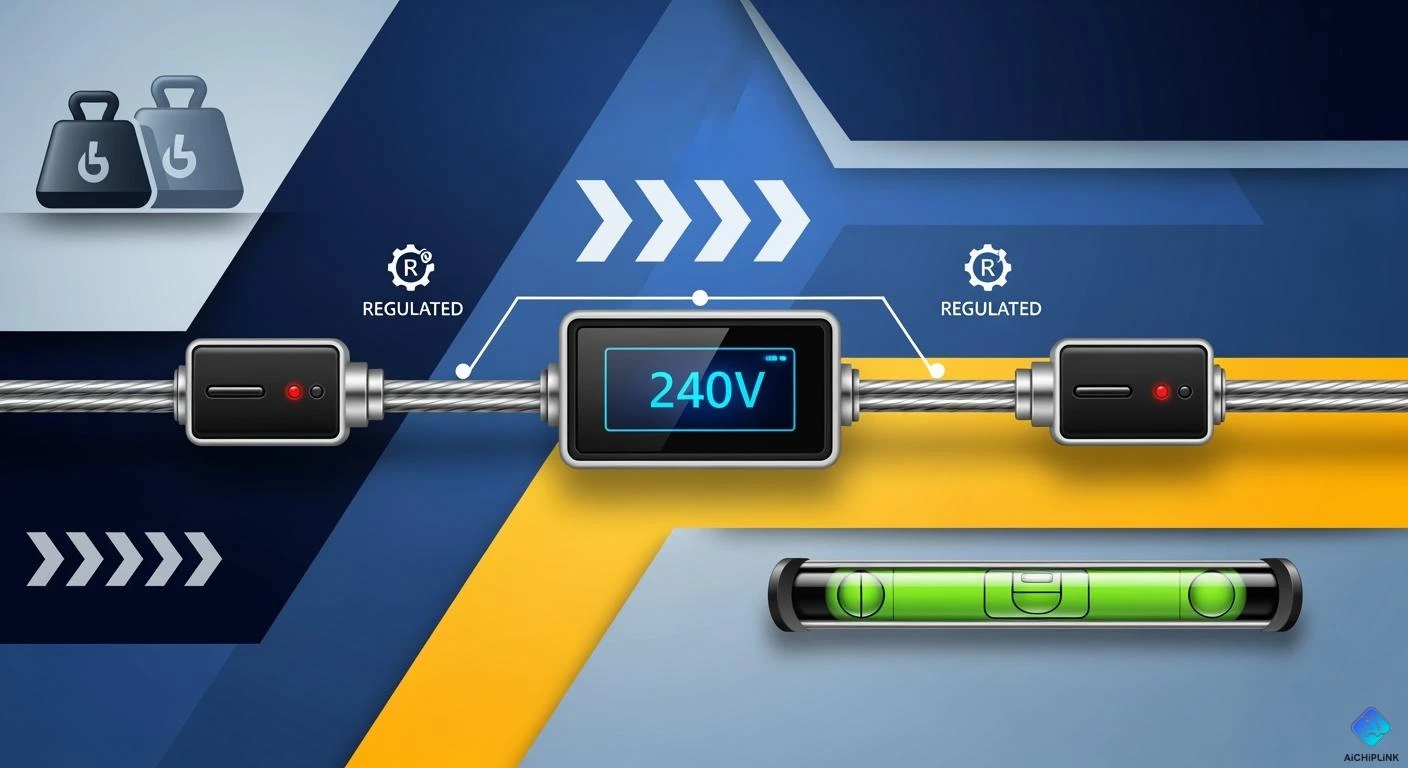
Line regulation tells us how well a power supply keeps voltage steady when the input changes. You need stable output voltage to keep your devices safe and working well.
-
Line regulation shows how much the output voltage changes when the input voltage or frequency changes.
-
Companies often show stability as an uncertainty, like ±(0.01% + 1mV), so you know the voltage stays steady even if the input changes.
Key Takeaways
-
Line regulation helps keep the output voltage steady. It does this even when the input voltage changes. This protects your devices from getting damaged.
-
Good line regulation means the voltage changes very little. It is shown in small percentages. This keeps your devices safe and working well.
-
Using good parts and smart design makes line regulation better. This gives more stable voltage and helps devices last longer.
-
Check your power supply often for voltage problems. This stops instability and keeps your electronics working well.
-
Using automatic voltage regulators and low ESR capacitors helps a lot. They make voltage control better and improve system efficiency.
What Is Line Regulation?
Line Regulation Definition
It is important to know about line regulation. This helps your devices work safely and last longer. Line regulation shows how much the output voltage changes when the input voltage changes in a power supply. If you see a number like ±0.01%, it means the output voltage does not change much, even if the input voltage goes up or down. Good line regulation means your system can handle changes from the wall or battery. This keeps your electronics working well and protects them from getting damaged.
How Line Regulation Is Measured
You can measure line regulation with a few easy tools.
-
Meters let you check the output voltage when you change the input voltage.
-
Electronic loads help you see how the power supply works in different situations.
-
Current shunts let you measure small changes in current, so you can see how steady the output voltage is.
To test line regulation, you change the input voltage and watch the output voltage. If the output voltage does not move much, your power supply has good line regulation. This means your devices get steady energy, even if the input is not perfect.
Tip: Always use the same load when you measure line regulation. This gives you the best results.
Why Output Voltage Stability Matters
Output voltage stability is important for all your electronic devices. If the voltage changes a lot, your device might not work right or could break. Stable voltage helps your device use energy well and last longer. You want your power supply to keep the voltage steady, so your electronics stay safe and work well. Good line regulation helps you know your system will work, even if the input changes.
Factors Affecting Line Regulation
Input Voltage Variations
Voltage can change every day. This happens when the power grid shifts. It also happens when you use different devices at home or work. Line regulation checks how your system deals with these changes. You can measure this by looking at the ratio of output voltage change to input voltage change. For example, if your power supply says 0.05% over a 1 V input change, a 5 V to 6 V input swing will only cause a 2.5 mV shift in output voltage. This means your system controls voltage well. Keeping voltage changes small protects your devices and helps them work smoothly.
Note: Small voltage changes can cause instability if your system does not have high-precision regulation.
System Architecture and Design
How you build your system affects voltage stability. Good design uses tools like Automatic Voltage Regulators (AVRs) and Constant Voltage Transformers (CVTs). These devices help control voltage changes and keep voltage steady. They work even when the power grid is unstable. Using these tools helps you avoid voltage instability and protects sensitive equipment. You also need to think about winding resistance and leakage inductance in transformers. High winding resistance or bad transformer design can cause voltage instability and energy loss. Planning your system well gives you better line regulation and stable voltage.
Component Precision and Nonlinearities
Component precision is important for voltage stability. You need high-quality resistors and capacitors to keep voltage steady. Good parts give you better control and less voltage instability. Here are some key points:
-
High-quality components keep voltage steady.
-
Good regulation stops failures in your electronic systems.
-
You lower thermal stress, which can cause instability and damage.
-
High-quality parts last longer and cost less to maintain.
Nonlinearities in parts like diodes and transistors can cause voltage instability. These devices can distort signals, especially when voltage changes are big. This distortion adds unwanted frequencies and makes voltage instability worse. Transistors and integrated circuits only work in a linear way for a short range. If you push them too far, you get more instability and less control.
Watch out for diode resistance. In switching power supplies, the dynamic resistance of a Zener diode affects line regulation. Lower resistance gives you better control and less voltage instability. High resistance causes more voltage drops and more instability.
Capacitor ESR (Equivalent Series Resistance) is another important factor. Low ESR capacitors help keep voltage steady and reduce energy loss as heat. If ESR is too high, you get more voltage instability and less control over voltage changes.
Control Loops and Feedback
Control loops and feedback help fight voltage instability. These systems let your power supply adjust quickly when voltage changes happen. If the input voltage changes or the load shifts, control loops keep the output voltage steady. This quick action stops overloads and keeps your sensitive devices safe. You need strong control to get high-precision regulation and stable voltage. Good feedback helps your system handle voltage changes and avoid instability.
Environmental Influences
Environmental factors like temperature and humidity can cause voltage instability. If the temperature changes by just 1°C, the relative humidity can swing from 56.5% to 63.7%. These changes can affect how your parts work and cause voltage instability. You also need to control the total heat load in your space. Lights, equipment, and air movement all affect temperature and humidity. If you do not control these things, you get more voltage instability and less stable voltage. Place sensors in smart spots and make sure air moves evenly to keep conditions steady. This helps you avoid voltage changes and keep your system stable.
Tip: Always check your environment for hidden sources of instability. Good control over temperature and humidity means better voltage stability.
| Factor | How It Affects Line Regulation |
|---|---|
| Input Voltage Variations | Causes voltage changes and instability |
| System Architecture | Good design improves control and stability |
| Component Precision | High-quality parts reduce instability |
| Nonlinearities | Distortion leads to voltage instability |
| Diode Resistance | High resistance increases instability |
| Capacitor ESR | Low ESR improves voltage stability |
| Control Loops & Feedback | Fast control stops voltage changes |
| Environmental Influences | Poor control causes voltage instability |
Many factors work together to affect line regulation. If you control each one, you get better voltage stability and less voltage instability in your power supply.
Line Regulation vs Load Regulation
Key Differences
It is important to know the difference between line regulation and load regulation. Line regulation shows how well a power supply keeps voltage steady when the input voltage changes. This is important if your energy source is not stable. For example, if the wall outlet voltage goes up or down, line regulation tells you how much the output voltage will change.
Load regulation is different. It checks how steady the output voltage stays when your device uses more or less current. If you plug in extra devices or turn equipment on and off, the load changes. Good load regulation means the voltage does not jump up or drop down when this happens.
You can see the main differences in this table:
| Feature | Line Regulation | Load Regulation |
|---|---|---|
| What it measures | Output voltage vs. input voltage change | Output voltage vs. load current change |
| When it matters | Unstable energy sources | Rapid or large load changes |
| Main risk | Damage from input swings | Instability from load shifts |
Bad line regulation can hurt sensitive parts and cause mistakes in digital circuits. Poor load regulation can make your devices act weird or stop working.
Why Both Matter for Power Supply Stability
You want your system to work every time you turn it on. Both line regulation and load regulation help you reach this goal. Line regulation keeps the output voltage steady when the input voltage changes. Load regulation keeps the voltage steady when your devices use more or less energy. If you ignore one, you risk voltage swings that can break your equipment or make it fail.
Both types of regulation work together to give you the best stability. You need both to stop output changes and keep your electronics running smoothly. When you pay attention to both, you make sure your power supply gives safe and reliable energy to every part of your system.
Line Regulation in Power Supply Applications
Consumer Electronics
You use lots of devices every day. These devices need a power supply. Smartphones, tablets, and laptops need steady voltage to charge. Line regulation helps keep the voltage steady when you plug in your phone. If the voltage changes too much, your phone battery can overcharge or undercharge. This can make the battery not last as long. It can also cause safety problems. Good line regulation keeps your device safe and working longer. You also see this in TVs and gaming consoles. These devices need steady energy to stop glitches or shutdowns.
Industrial and Critical Systems
Factories and hospitals need power supplies with strong voltage control. Machines in factories use sensors and motors. These need steady voltage to work right. If the voltage changes, machines can stop or give wrong readings. Hospitals use medical devices that must not make mistakes. Bad voltage control can put patients at risk. These places use backup systems and special regulators to keep voltage steady. Power supply units may have extra capacitors to help stability. These systems keep energy flowing and protect important equipment.
Impact of Poor Line Regulation
Poor line regulation causes many problems in power supplies. You may see ringing in the output signal. This means the voltage goes up and down and does not settle fast. It makes it hard to measure and control your devices. High peaks in these swings can hurt circuits. Motors and other inductive loads can make the power supply unstable. This is worse when you use high current. Adding more output capacitance can help make things more stable.
Tip: Always check your power supply for voltage problems. Protect your devices by using systems with good line regulation.
| Problem | Effect on Devices |
|---|---|
| Voltage ringing | Longer measurement time |
| High oscillation peaks | Circuit damage |
| Instability with inductive loads | Device malfunction |
You need strong line regulation to keep voltage steady. Stable energy helps your electronics and machines work safely every day.
Common Line Regulation Issues and Solutions
Typical Problems
Voltage regulation problems happen in many power systems. These problems make voltage go up and down. Devices may turn off or act weird. High resistance in wires can cause voltage to drop. Bad capacitors can make voltage spike. Old automatic voltage regulators can cause more problems. Poor circuit design can make voltage change too much. These issues waste energy and can hurt your equipment.
Tip: Always check for loose wires and old parts. Small problems can cause big voltage regulation issues.
Mitigation Strategies
There are ways to fix voltage regulation problems. Use good parts in your power systems. Pick low ESR capacitors to keep voltage steady. Put automatic voltage regulators near your devices. This helps control voltage and keeps it stable. Use strong wires and connectors. Test your power supply often to find problems early. Add sensors to check voltage and temperature. This helps you spot trouble before it gets worse. Good voltage control saves energy and makes your system work better.
| Best Practice | Benefit |
|---|---|
| Use quality components | Better voltage management |
| Add automatic voltage regulators | Improved stability |
| Monitor voltage regularly | Early problem detection |
| Upgrade power control systems | Higher efficiency |
Advances in Technology and Standards
New technology helps with voltage control and stability. Modern automatic voltage regulators use smart chips. These chips adjust voltage quickly and keep it steady. New power systems use digital feedback to watch voltage all the time. This gives you better efficiency and less energy loss. New standards, like IEC 61000-4-7, set rules for voltage quality. These standards help you build safer and more stable systems. Follow these standards to avoid voltage regulation problems and make your power supply better.
Note: Keep learning about new standards and technology. This helps you keep your voltage control strong and your systems safe.
You can make line regulation better by using smart design. Pick good parts and use strong feedback systems. Keeping output voltage steady helps your devices stay safe. It also helps them last longer. You should check your power supply often. Here are some steps you can follow:
-
Use voltage regulators to keep energy steady.
-
Keep devices safe from voltage swings.
-
Teach your team about new rules and updates.
-
Look for new ideas in technology.
Always watch for changes in rules. This helps keep your system strong.

Written by Jack Elliott from AIChipLink.
AIChipLink, one of the fastest-growing global independent electronic components distributors in the world, offers millions of products from thousands of manufacturers, and many of our in-stock parts is available to ship same day.
We mainly source and distribute integrated circuit (IC) products of brands such as Broadcom, Microchip, Texas Instruments, Infineon, NXP, Analog Devices, Qualcomm, Intel, etc., which are widely used in communication & network, telecom, industrial control, new energy and automotive electronics.
Empowered by AI, Linked to the Future. Get started on AIChipLink and submit your RFQ online today!
Frequently Asked Questions
What is the main purpose of line regulation?
Line regulation keeps output voltage steady. It works when input voltage changes. This helps devices stay safe. Devices last longer with steady voltage.
How do constant voltage transformers help with line regulation?
Constant voltage transformers keep output voltage stable. They work even if input voltage goes up or down. Sensitive electronics are protected from voltage swings.
Can novel line-voltage regulators improve power supply stability?
Novel line-voltage regulators use advanced designs. They react fast to input changes. This gives better voltage control. Devices stay safer with improved stability.
Why should you care about output voltage stability?
Stable output voltage keeps electronics safe. It stops shutdowns and damage. You avoid expensive repairs and downtime.
What happens if you ignore line regulation in your system?
Ignoring line regulation causes voltage swings. Devices can have errors or fail. Device life gets shorter. Equipment may stop working.