Light Dependent Resistor vs Other Light Sensors Which Is Right for Your Project
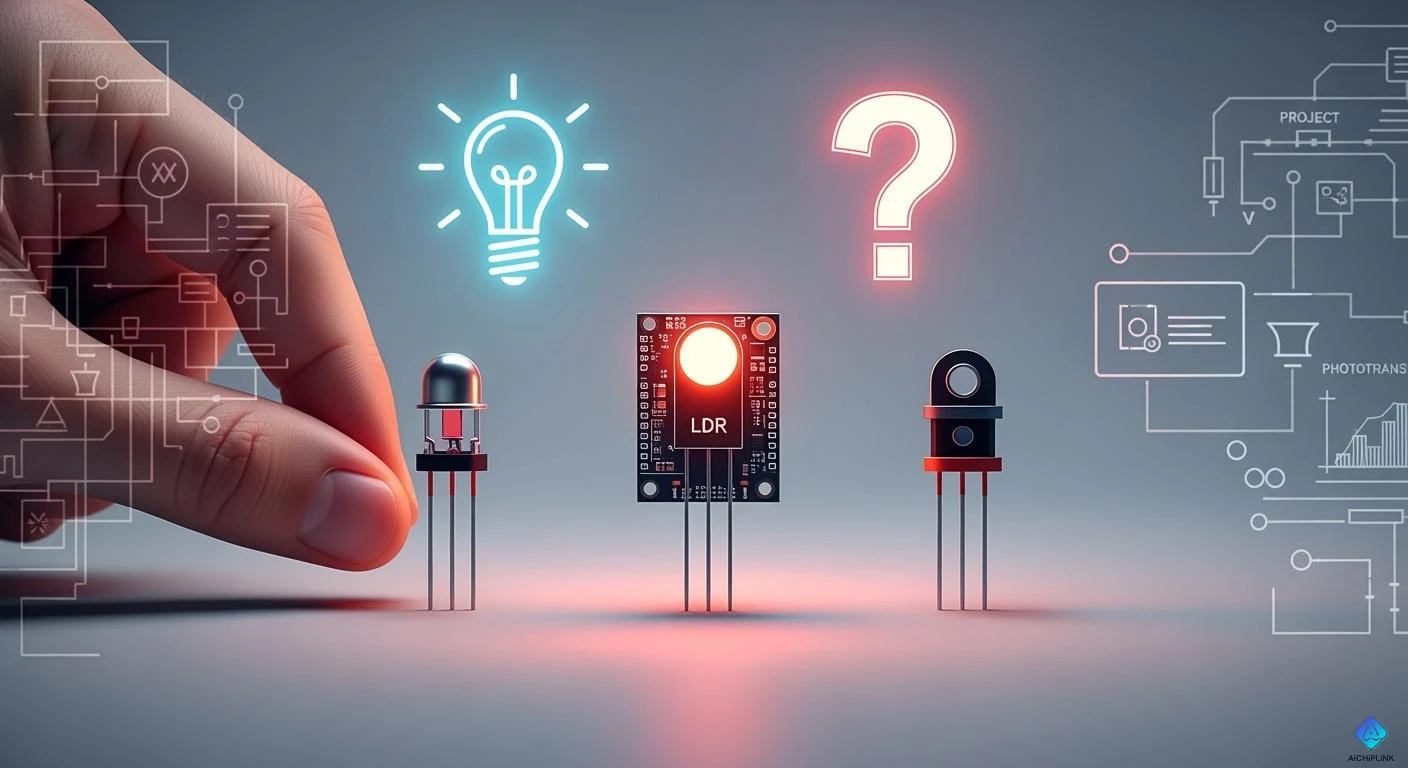
You should pick an LDR for easy light sensing jobs. It works well for things like streetlights or changing screen brightness. Photodiodes are good for quick and exact tasks. They help with barcode scanning or sending signals with light. Phototransistors are best for projects needing more sensitivity. They are used in security alarms or automatic doors. When you compare Light Dependent Resistor vs Other Light Sensors, think about what your project needs. You should look at speed, accuracy, and cost. Many projects use these sensors to count things, find people, or set off alarms.
Key Takeaways
-
Pick a Light Dependent Resistor for easy and cheap jobs. It works well for streetlights and simple alarms.
-
Choose a photodiode if your project needs quick and exact light sensing. It is good for barcode scanners and medical tools.
-
Use a phototransistor to notice small changes in light. It is best for security systems and automatic doors.
-
Think about speed, accuracy, and cost before picking a light sensor. Make sure it fits what your project needs.
-
Do not use LDRs for jobs that need fast answers. They are slower and less exact than photodiodes and phototransistors.
Light Dependent Resistor vs Other Light Sensors: Quick Guide
Best Uses for LDR
A light dependent resistor is good for simple light detection. It does not cost much money. You do not need fast or very accurate results to use it. People use these in streetlights and smart lighting. They are also in basic alarm systems. The sensor turns lights on or off when sunlight changes. It can measure how bright the light is for taking photos. It can also count tiny particles in the air.
Here is a quick look at common uses for LDRs:
| Use Case | Description |
|---|---|
| Smart Lighting Systems | Adjusts lighting based on ambient light levels |
| Automatic Streetlights | Turns streetlights on/off depending on surrounding light |
| Alarm Systems | Detects light presence for security alarms |
| Light Meters | Measures light intensity for photography and other fields |
| Particle Counters | Detects light interruptions caused by particles |
Light dependent resistors have some problems. They are slow to react when light changes. If the temperature changes, they are less accurate. They only see visible light. They do not work for projects that need to see more types of light. If you need a sensor that is fast or very exact, try another kind.
Tip: Pick an LDR if you want to sense sunlight or need something cheap and easy.
When to Choose Photodiodes
Pick a photodiode if you need to sense light quickly and accurately. Photodiodes react fast when the light changes. They give you steady and exact numbers. You find photodiodes in fiber-optic tools and medical machines. They are also in science tools and light meters. These sensors are good for scanning barcodes or sending signals with light.
Photodiodes can see special kinds of light, like near-infrared. This helps in advanced security and smart monitoring. You get fast and very exact results. Light dependent resistors cannot do this.
Here is a table showing key features of photodiodes:
| Specification | Description |
|---|---|
| Light Conversion | Converts light into a linear output current |
| Fast Response Time | Responds quickly to changes in light |
| Linear Output | Provides stable and accurate measurements |
| Applications | Used in communication, medical, and scientific devices |
Note: Photodiodes cost more than LDRs, but you get better speed and accuracy.
When to Use Phototransistors
Use a phototransistor if you need to sense small changes in light. It makes the signal from light stronger. This helps you notice even tiny changes. You see phototransistors in security alarms and motion sensors. They are also in automatic doors. They are good for finding objects, like laser tripwires for alarms or cameras.
Phototransistors are faster than LDRs but slower than photodiodes. They do not cost as much as photodiodes. They are a good choice if you want both sensitivity and a good price. Use them in projects that need to sense movement or changes in light.
Here is a table showing where phototransistors fit best:
| Application Type | Description |
|---|---|
| Security Systems | Detects movement or light changes for alarms and sensors |
| Automation | Controls lighting and brightness sensors |
| Object Detection | Triggers alarms or cameras when a light beam is interrupted |
Tip: Pick a phototransistor if you need to sense small changes in light for alarms or automatic lights.
You can compare light dependent resistor vs other light sensors in this table. It helps you see which one is best for your project:
| Feature | Phototransistor | Photodiode | Photoresistor (LDR) |
|---|---|---|---|
| Response Time | Slow to Moderate (µs–ms) | Very Fast (ns–µs) | Very Slow (ms–100s of ms) |
| Sensitivity | High | Moderate to High | High |
| Cost | Low to Moderate | Low | Very Low |
Think about what your project needs. If you want something cheap and easy, use an LDR. If you need fast and exact sensing, pick a photodiode. If you want to sense small changes and make signals stronger, use a phototransistor. Comparing light dependent resistor vs other light sensors helps you choose the right one.
How LDRs and Other Light Sensors Work
Knowing how light sensors work helps you choose the best one. Each kind of light sensor uses its own way to sense light. You can learn about them by looking at how they work.
Light Dependent Resistor Principle
A light dependent resistor changes how much it resists electricity when light shines on it. This happens because of something called photoconductivity. When light hits the LDR, more electricity can move through it. If the light is bright, the resistance gets lower. LDRs are used in simple circuits because they are easy to use. You do not need many extra parts.
-
LDRs sense light using photoconductivity.
-
More light makes the resistance go down.
-
They are simple for basic projects.
Photodiode Principle
A photodiode works in another way. It uses the photovoltaic effect. When light hits the photodiode, it makes an electric current. The current changes fast when the light changes. This gives you quick and correct results. Photodiodes can sense many kinds of light, not just what we see. You find them in tools that need fast and exact light sensing.
-
Photodiodes use the photovoltaic effect.
-
Light makes a current that matches the light amount.
-
Good for fast and correct sensing.
Phototransistor Principle
A phototransistor is like a normal transistor but it reacts to light. It has a special part called a base that senses light instead of electricity. When light hits the base, more current flows from collector to emitter. This makes it very sensitive to light. You can use phototransistors to find small changes in light.
-
Phototransistors have a base that senses light.
-
Light makes more current flow.
-
They are very sensitive to tiny changes.
Here is a table to help you compare these sensors:
| Device | Working Principle | Sensitivity | Response Time |
|---|---|---|---|
| LDR | Photoconductivity | Lower sensitivity | Slower response |
| Photodiode | Photovoltaic effect | Higher sensitivity | Faster response |
| Phototransistor | Light-sensitive transistor | Very high sensitivity | Very fast response |
You can see that light dependent resistors are slower and not as sensitive. Photodiodes and phototransistors are faster and can sense smaller changes. When you pick a light sensor, think about how fast and sensitive your project should be.
LDR vs Other Light Sensors: Performance Comparison
Sensitivity and Accuracy
When you pick a light sensor, think about sensitivity and accuracy. Sensitivity means how well the sensor can notice small changes in light. Accuracy means how close the sensor’s reading is to the real light level.
Light dependent resistor sensors act like the human eye. They are good for basic light detection. But they are not very exact. Their output does not change evenly with the light. This makes it hard to measure the exact amount of light.
Photodiodes are very accurate. Their output changes evenly with the light. You can use them for jobs that need exact numbers, like science tools or medical machines.
Phototransistors are more sensitive than light dependent resistor sensors. They can notice small changes in light. Their output is more even than light dependent resistor sensors, but not as perfect as photodiodes.
Here is a table to help you compare sensitivity and accuracy:
| Sensor Type | Sensitivity Characteristics | Accuracy |
|---|---|---|
| LDR | Matches human eye, but slow and less sensitive | Low, nonlinear response |
| Photodiode | Fast, good dark/light current ratio, very sensitive | High, linear response |
| Phototransistor | Has gain for increased sensitivity, slower than photodiodes | Medium, more linear than LDR |
-
Light dependent resistor sensors are not good for measuring exact light levels.
-
Photodiodes are best for measuring exact light.
-
Phototransistors are in the middle and can notice small changes.
Tip: If you need to measure exact light, pick a photodiode. For simple jobs, a light dependent resistor works fine.
Response Time Differences
Response time means how fast a sensor reacts to changes in light. You should pick a sensor with the right speed for your project.
Light dependent resistor sensors are the slowest. They can take a long time to react. This makes them bad for things that need fast changes, like barcode readers or quick alarms.
Phototransistors are faster than light dependent resistor sensors. They can react in a short time. They are good for motion sensors and alarms, but not for super fast jobs.
Photodiodes are the fastest. Some can react in less than one microsecond. You can use them for things that need to be very quick, like fiber-optic tools.
Here is a quick list to help you remember:
-
Light dependent resistor sensors: Very slow, not good for fast jobs.
-
Phototransistors: Faster than LDR, but not as fast as photodiodes.
-
Photodiodes: Fastest, best for quick changes.
If your project needs to react fast, do not use light dependent resistor sensors. Pick photodiodes for the quickest response.
Cost and Simplicity
You should also think about price and how easy each sensor is to use. Light dependent resistor sensors are the cheapest. You only need a resistor to use them. This makes them great for beginners and simple projects.
Photodiodes cost more than light dependent resistor sensors. You need extra parts to make the signal strong. This makes the setup harder.
Phototransistors cost less than photodiodes but more than light dependent resistor sensors. You need to set them up the right way. They are not as easy as light dependent resistor sensors, but not too hard.
Here is a table to compare cost and simplicity:
| Feature | LDR Sensor | Photodiode | Phototransistor |
|---|---|---|---|
| Cost | Very low | Higher | Low to moderate |
| Circuit complexity | Very simple, needs only a resistor | Needs amplifier for small signals | Needs biasing and configuration |
Note: If you want something cheap and easy, pick a light dependent resistor. For harder jobs, use photodiodes or phototransistors.
Environmental Impact
You should know how each sensor acts in different places. Light dependent resistor sensors can change if the temperature changes. This can make your results wrong. They only sense visible light, so they do not work for other types of light.
Photodiodes and phototransistors are not as bothered by temperature. They can sense different kinds of light, like infrared. This makes them better for outdoor or science projects.
-
Light dependent resistor sensors can lose accuracy in hot or cold places.
-
Photodiodes and phototransistors work better in many places.
-
If you need to sense more than visible light, do not use a light dependent resistor.
Tip: For outdoor or science projects, photodiodes and phototransistors are better.
You can use this table to compare all three types:
| Feature | LDR Sensor | Photodiode | Phototransistor |
|---|---|---|---|
| Sensitivity | Low | High | Medium-High |
| Accuracy | Low | High | Medium |
| Response Time | Very slow | Very fast | Moderate |
| Cost | Very low | High | Low to moderate |
| Simplicity | Very simple | Complex | Moderate |
| Environmental | Affected by temp. | Stable | Stable |
| Light Types | Visible only | Visible, IR, UV | Visible, IR |
When you compare light dependent resistor sensors to other light sensors, you see each one has good and bad points. You should pick the sensor that fits your project’s needs for light, speed, and price.
Choosing the Right Light Sensor for Your Project
Key Factors: Speed, Accuracy, Budget
You need to pick a sensor that fits your project. Think about these important things:
-
Speed: Fast sensors are needed for safety or real-time jobs. Automatic doors and barcode readers need quick sensors.
-
Accuracy: You want sensors that give correct readings. Light meters and science tools need high accuracy. If mistakes are not okay, pick a sensor that is very accurate.
-
Budget: Price matters when choosing a sensor. Some sensors cost more and need extra parts. Others, like a photoresistor, are cheap and good for simple jobs.
You should also think about where you use the sensor. High heat can change how a photoresistor works. Dust or bad weather can block sunlight and make readings wrong. Always put your sensor in the best spot and set it up right.
Tip: Use a photoresistor for easy and cheap projects. Pick advanced sensors if you need speed and accuracy.
Decision Table: LDR vs Other Sensors
This table helps you find the best sensor for your project:
| Project Need | Best Sensor | Why |
|---|---|---|
| Simple light detection | LDR | Low cost, easy to use |
| Fast response | Photodiode | Quickest reaction to light changes |
| High sensitivity | Phototransistor | Detects small changes in light |
| Accurate light measurement | Photodiode | Best for light meters and science |
| Budget-friendly | Photoresistor | Cheapest option |
| Outdoor use | Photodiode/Phototransistor | Handles temperature and light types |
You can use this table to match your project with the right sensor.
Common Mistakes to Avoid
People sometimes make mistakes when picking a light sensor. You can avoid these problems:
-
Do not use a photoresistor if you need a fast sensor.
-
Do not forget about heat and dust. These can change your results.
-
Do not skip setting up your sensor right. Light meters and other tools need proper setup.
-
Do not pick a sensor just because it is cheap. Make sure it fits your project’s speed and accuracy needs.
Note: Always check what your project needs before picking a sensor.
Real-World Examples: LDR and Other Sensors
LDR Project Ideas
You can use LDRs for many fun projects. These sensors help you make smart things that react to light. Here are some ideas:
-
Smart Lighting System: You can control how bright your room is. The lights turn on when it gets dark. They turn off when there is enough sunlight.
-
Power-Conserving Street Light Project: Streetlights get brighter when people or cars go by. The lights get dim when it is quiet to save energy.
-
Smart Agriculture: You can check if your plants get enough sunlight. The system helps you change shade or watering for your crops.
-
IoT Home Automation: You can connect LDRs to smart home devices. Your house can change the lights by itself for comfort and to save energy.
-
Solar Panel Tracking: LDRs help solar panels follow the sun. This helps collect more energy.
Tip: LDRs are best for saving energy and making smart systems.
Photodiode Project Ideas
Photodiodes are used in lots of new technology. You find them in things that need to sense light fast and right. Here are some ways to use them:
Photodiodes help send internet through fiber optic cables. They are in digital cameras and phones to change screen brightness. Fitness trackers and smartwatches use photodiodes to check your heart rate. They do this by sensing light changes in your skin. Smoke detectors use photodiodes to find smoke and set off alarms. Barcode scanners use photodiodes to read barcodes by looking at reflected light.
Note: Photodiodes are great for projects that need fast and exact light sensing.
Phototransistor Project Ideas
Phototransistors help you make cool light-sensing projects. You can use them for these things:
-
Image Scanner: You can build a scanner with a phototransistor array. The array sees light from a page and sends the data to a computer.
-
Motion Detection: You can set up a system that turns on an alarm or camera. It works when someone walks through a light beam.
-
Object Counters: You can count things on a conveyor belt. The sensor works when something blocks the light.
-
Automatic Door Openers: Phototransistors can sense when someone comes close. The door opens by itself.
Try phototransistors if you want to find small changes in light or need more sensitivity in your project.
Now you know which light sensor to use. Pick an LDR for easy and cheap projects. Use a photodiode if you need something fast and correct. Choose a phototransistor if you want to sense small changes in light. Always make sure the sensor fits what you need. Look at this table before you pick:
| Criteria | What to Check |
|---|---|
| Size & Mounting | Will it fit your space? |
| Energy Requirements | Does it match your power supply? |
| Response Speed | Is it fast enough for your project? |
| Environmental Durability | Can it handle tough conditions? |
Tip: Check the table to help you choose the right sensor!

Written by Jack Elliott from AIChipLink.
AIChipLink, one of the fastest-growing global independent electronic components distributors in the world, offers millions of products from thousands of manufacturers, and many of our in-stock parts is available to ship same day.
We mainly source and distribute integrated circuit (IC) products of brands such as Broadcom, Microchip, Texas Instruments, Infineon, NXP, Analog Devices, Qualcomm, Intel, etc., which are widely used in communication & network, telecom, industrial control, new energy and automotive electronics.
Empowered by AI, Linked to the Future. Get started on AIChipLink and submit your RFQ online today!
Frequently Asked Questions
What is the light dependent resistor meaning?
A light dependent resistor is a sensor. It changes resistance when light shines on it. This sensor helps you check how bright the light is. You use it to measure light in many places.
Where do you use light dependent resistors in real-world applications?
Light dependent resistors are in streetlights and alarm systems. They are also in smart lighting. These sensors turn lights on or off. You see them in photography and solar panel tracking too.
How do you choose between light dependent resistors and other sensors for applications?
You compare the light dependent resistor meaning to other sensors. If you need simple light detection, pick an LDR. For fast or sensitive jobs, use photodiodes or phototransistors.
Can you use light dependent resistors for outdoor applications?
You use light dependent resistors outside for garden lights and solar trackers. You must keep the sensor safe from bad weather. The light dependent resistor meaning shows it works best for visible light outside.
Why do some applications need photodiodes instead of light dependent resistors?
Some jobs need fast response and high accuracy. Light dependent resistors are slower and less accurate. Photodiodes work better for things like barcode scanning and fiber-optic communication.