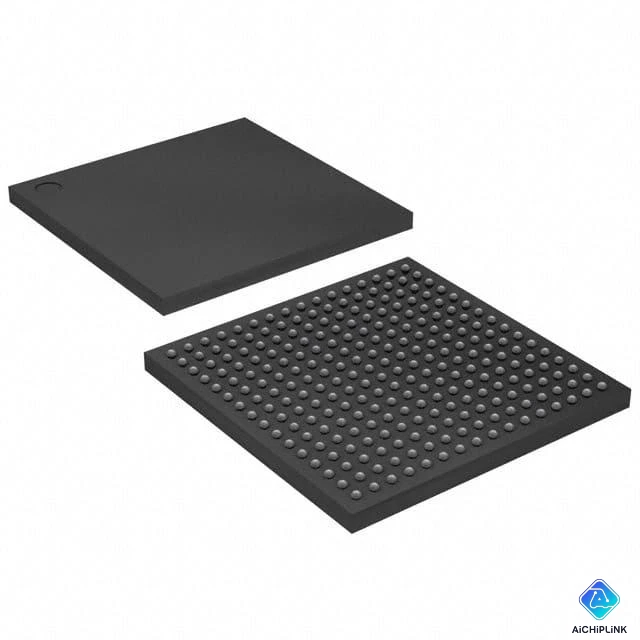
Introduction
The BCM84898B0KFSBG is a high-performance 10GBASE-T Ethernet PHY transceiver manufactured by Broadcom (now part of Avago Technologies), designed for enterprise switches, routers, network interface cards (NICs), and server connectivity applications requiring 10 Gigabit Ethernet over copper twisted-pair cabling. This single-port PHY supports IEEE 802.3an 10GBASE-T standard, providing full-duplex 10 Gbps data rates over Category 6a/7 copper cables up to 100 meters, with backward compatibility to 1000BASE-T, 100BASE-TX, and 10BASE-T for legacy network infrastructure. This technical guide covers the BCM84898B0KFSBG's key features, detailed specifications, typical applications, and design considerations for network equipment manufacturers.
Product Overview
What is the BCM84898B0KFSBG?
Part Number Breakdown:
- BCM84898 = Product family (10GBASE-T PHY series)
- B0 = Revision/stepping identifier
- KFSBG = Package code and ordering information
Device Type: Physical Layer (PHY) transceiver IC
Primary Function: Converts digital XGMII/XAUI signals from MAC (Media Access Controller) to analog 10GBASE-T Ethernet signals for transmission over copper cabling
Key Features
1. Multi-Rate Operation:
- 10GBASE-T: 10 Gbps full-duplex (IEEE 802.3an)
- 5GBASE-T: 5 Gbps (NBASE-T, optional depending on variant)
- 2.5GBASE-T: 2.5 Gbps (NBASE-T, optional)
- 1000BASE-T: 1 Gbps (IEEE 802.3ab)
- 100BASE-TX: 100 Mbps (IEEE 802.3u)
- 10BASE-T: 10 Mbps (IEEE 802.3)
2. Interface Support:
- MAC-side: XGMII (10 Gbps), XAUI (4×3.125 Gbps), or reduced XGMII (depending on configuration)
- Line-side: RJ-45 connector via magnetics, supports Cat 6a/7 cabling
3. Power Management:
- IEEE 802.3az Energy Efficient Ethernet (EEE): Reduces power during low traffic periods
- Auto-Negotiation Power Down: Lowers power consumption during link negotiation
- Link-Down Power Saving: Minimal power when no link detected
4. Advanced Features:
- Cable diagnostics (TDR - Time Domain Reflectometry)
- Automatic MDI/MDIX crossover detection
- Comprehensive LED indicators (link, activity, speed)
- Temperature monitoring via internal sensor
- MDIO/MDC management interface (Clause 22/45)
Technical Specifications
Electrical Characteristics
| Parameter | Specification |
|---|---|
| Data Rates | 10M/100M/1G/10G bps |
| Duplex Mode | Full-duplex (10G), half/full-duplex (10M/100M) |
| Supply Voltage | 1.0V (core), 1.8V/2.5V (I/O), 3.3V (analog) |
| Power Consumption | ~3-4W (10GBASE-T active) |
| Temperature Range | 0°C to +70°C (commercial) / -40°C to +85°C (industrial, if specified) |
| Package | BGA (Ball Grid Array), typical 484-ball or similar |
Interface Specifications
MAC-Side Interface:
- XGMII: 32-bit data path @ 312.5 MHz (10G mode)
- XAUI: 4 differential pairs @ 3.125 Gbps per lane
- GMII/MII: For 1G/100M/10M speeds (backward compatibility)
Line-Side (Copper) Interface:
- Connector: RJ-45 (via external magnetics)
- Cable Support:
- Category 6a (augmented): 100m @ 10GBASE-T
- Category 7: 100m @ 10GBASE-T
- Category 6: 55m @ 10GBASE-T (reduced distance)
- Category 5e: 1000BASE-T only (not suitable for 10G)
Management Interface:
- MDIO (Management Data I/O): IEEE 802.3 Clause 22 (legacy) and Clause 45 (extended)
- MDC (Management Data Clock): Up to 25 MHz
Performance Specifications
| Metric | Value |
|---|---|
| Latency | <500 ns (typical, 10GBASE-T) |
| Jitter | <50 ps RMS |
| BER (Bit Error Rate) | <10⁻¹² (error-free transmission) |
| Return Loss | >10 dB (IEEE 802.3an compliant) |
| Insertion Loss | <2 dB @ 100m Cat 6a |
Applications & Use Cases
Application 1: Enterprise Switches
10G Aggregation Switches
Typical Deployment:
- Core/Distribution switches: Uplink ports connecting access layer switches
- Port density: 24/48-port 10GBASE-T switches
- Use case: Data center, campus networks, high-bandwidth aggregation
BCM84898 Integration:
[Switch ASIC] ──XAUI/XGMII── [BCM84898 PHY] ──RJ45── [Cat 6a Cable] ── [Server/Switch]
Benefits:
- Cost-effective 10G over copper (vs SFP+ fiber)
- RJ-45 connector compatibility (existing infrastructure)
- Power over Ethernet (PoE++) capability (with additional circuitry)
Application 2: Network Interface Cards (NICs)
Server 10G NICs
Configuration:
- Single-port or dual-port 10GBASE-T NICs
- PCIe x8/x16 host interface
- RJ-45 connectors for direct server-to-switch connectivity
BCM84898 Integration:
[Server PCIe] ── [NIC Controller] ──XGMII── [BCM84898] ── RJ45 ── Switch
Advantages:
- No fiber transceivers needed (lower cost)
- Backward compatible with 1GbE switches
- Cable management simplicity
Application 3: Routers
Enterprise/Carrier Routers
Use Cases:
- WAN aggregation routers
- Branch office routers with 10G uplinks
- Carrier-grade CPE (Customer Premises Equipment)
BCM84898 Role:
- Provides 10G copper uplink interface
- Connects to fiber aggregation switches via media converters
- Enables high-speed branch-to-datacenter connectivity
Application 4: Storage Networks
NAS/SAN Connectivity
Applications:
- Network Attached Storage (NAS) 10G ports
- Storage Area Network (SAN) copper connectivity
- Backup/replication traffic (high bandwidth)
Performance:
- 10 Gbps sustained throughput
- Low latency (<500 ns) critical for storage I/O
- Supports jumbo frames (9K MTU)
Design Considerations
PCB Layout Guidelines
Critical Design Aspects:
1. Power Supply Decoupling:
- Place 0.1µF ceramic capacitors close to each power pin
- Add 10µF bulk capacitors per power rail
- Separate analog (3.3V) and digital (1.0V/1.8V) power planes
2. High-Speed Signal Routing:
- XGMII/XAUI differential pairs:
- Impedance: 100Ω differential
- Length matching: ±5 mils within pair, ±50 mils between pairs
- Avoid vias if possible; if needed, use back-drilling
- MDI (RJ-45 signals):
- Route as differential pairs (100Ω)
- Minimize trace length to magnetics (<1 inch ideal)
3. Thermal Management:
- Power dissipation: 3-4W typical @ 10GBASE-T
- Cooling: Heatsink or thermal pad recommended
- PCB: 4-layer minimum (6-layer preferred for signal integrity)
- Thermal vias: Place under package for heat transfer to ground plane
4. Magnetics Selection:
- Pulse Electronics: H5025NLT (10GBASE-T magnetics with integrated termination)
- Wurth Elektronik: 7499210121 (10G Ethernet transformer module)
- Bourns: SM51630EL (10GBASE-T single-port magnetics)
Software/Firmware Considerations
PHY Configuration via MDIO:
Typical Initialization Sequence:
- Reset PHY (MDIO write to control register)
- Configure speed/duplex (auto-negotiation enable or force mode)
- Enable EEE (if power saving required)
- Configure LEDs (link, activity, speed indicators)
- Set loopback modes (for testing, if needed)
Register Access Example (Clause 45):
// Read PHY ID Register
MDIO_READ(PHY_ADDR, DEVAD=1, REG=2) → Returns OUI (Broadcom ID)

// Enable Auto-Negotiation
MDIO_WRITE(PHY_ADDR, DEVAD=7, REG=0, VALUE=0x1200)
Driver Support:
- Linux kernel drivers: Broadcom PHY driver (bcm84881.c or similar)
- Custom firmware: MDIO register access via I2C/SPI-to-MDIO bridge
Compliance & Testing
Required Certifications:
1. IEEE 802.3 Compliance:
- 10GBASE-T interoperability testing
- Cable compliance (Cat 6a/7 certification)
2. Electromagnetic Compatibility (EMC):
- FCC Part 15 Class A/B (radiated emissions)
- EN 55032 (European EMC directive)
3. Safety:
- UL/cUL certification (if applicable)
- CE marking (European Economic Area)
Test Equipment:
- BERT (Bit Error Rate Tester): Anritsu, Keysight
- Cable certifier: Fluke DSX-5000 (Cat 6a certification)
- Oscilloscope: ≥20 GHz bandwidth for eye diagram analysis
Comparison with Alternatives
BCM84898 vs Competing 10GBASE-T PHYs
| Feature | BCM84898 (Broadcom) | Marvell 88E2110 | Aquantia AQR107 |
|---|---|---|---|
| Data Rates | 10M/100M/1G/10G | 10M/100M/1G/10G | 100M/1G/2.5G/5G/10G |
| NBASE-T Support | Limited | No | Yes (2.5G/5G) |
| Power Consumption | 3-4W | 3.5W | 2.5W (lower) |
| EEE Support | Yes | Yes | Yes |
| Package | BGA | BGA | BGA |
| Typical Use | Enterprise switches | NAS, switches | Consumer routers, gaming |
BCM84898 Advantages:
- Proven enterprise-grade reliability (Broadcom reputation)
- Wide adoption in tier-1 networking equipment (Cisco, HP, Dell)
- Comprehensive cable diagnostics
Aquantia AQR107 Advantage:
- Lower power consumption (important for multi-port switches)
- Native NBASE-T support (2.5G/5G for Wi-Fi 6/6E access points)
Conclusion
The BCM84898B0KFSBG from Broadcom is a high-performance, enterprise-grade 10GBASE-T Ethernet PHY transceiver enabling 10 Gigabit connectivity over standard copper cabling in switches, NICs, routers, and storage networks. With support for multi-rate operation (10M/100M/1G/10G), IEEE 802.3az Energy Efficient Ethernet, comprehensive cable diagnostics, and proven reliability in tier-1 networking equipment, the BCM84898B0KFSBG provides an ideal solution for network equipment manufacturers requiring cost-effective 10G copper connectivity with backward compatibility to legacy Gigabit Ethernet infrastructure.
Key Takeaways:
✅ 10GBASE-T PHY: 10 Gbps over Cat 6a/7 copper (100m)
✅ Multi-rate: Backward compatible to 1G/100M/10M
✅ Interfaces: XGMII/XAUI (MAC-side), RJ-45 (line-side)
✅ Power: 3-4W with IEEE 802.3az EEE support
✅ Applications: Enterprise switches, server NICs, routers
✅ Features: Auto-negotiation, cable diagnostics, MDI/MDIX
✅ Design: Requires careful PCB layout, magnetics, thermal management
Sourcing BCM84898B0KFSBG or need design support? Visit AiChipLink.com for availability, pricing, and technical consultation for 10GBASE-T PHY integration.

Written by Jack Elliott from AIChipLink.
AIChipLink, one of the fastest-growing global independent electronic components distributors in the world, offers millions of products from thousands of manufacturers, and many of our in-stock parts is available to ship same day.
We mainly source and distribute integrated circuit (IC) products of brands such as Broadcom, Microchip, Texas Instruments, Infineon, NXP, Analog Devices, Qualcomm, Intel, etc., which are widely used in communication & network, telecom, industrial control, new energy and automotive electronics.
Empowered by AI, Linked to the Future. Get started on AIChipLink.com and submit your RFQ online today!
Frequently Asked Questions
What is the BCM84898B0KFSBG used for?
The BCM84898B0KFSBG is a 10GBASE-T Ethernet PHY transceiver used for high-speed network connectivity over copper cables. It is commonly deployed in enterprise switches, server network interface cards (NICs), routers, and storage systems, enabling reliable 10 Gigabit Ethernet communication with backward compatibility for lower-speed networks.
What are the key specifications of the BCM84898B0KFSBG?
The BCM84898B0KFSBG supports multi-rate Ethernet speeds up to 10 Gbps and standard interfaces like XGMII or XAUI. It offers up to 100m transmission over Cat 6a/7 cables, typical power consumption of 3–4W, multiple voltage domains, and features such as auto-negotiation, energy-efficient Ethernet, and cable diagnostics.
How do I design a circuit with the BCM84898B0KFSBG?
Designing with the BCM84898B0KFSBG requires proper power supply design, high-speed signal routing, and magnetics integration. Key steps include providing stable voltage rails, routing differential pairs with controlled impedance, connecting to Ethernet magnetics and RJ-45 connectors, and ensuring adequate thermal management for reliable operation.
What is the difference between BCM84898 and BCM84881?
The main difference is port density and application focus. BCM84898 is a single-port 10GBASE-T PHY suited for low-port designs, while BCM84881 integrates multiple ports for higher-density applications like switches, offering better cost efficiency per port in large-scale deployments.
Is the BCM84898B0KFSBG compatible with Cat 6 cabling?
Yes, but with limited distance for 10G operation. While it can run over Cat 6 cables, the maximum reliable distance is typically around 55 meters, whereas Cat 6a or higher is recommended to achieve the full 100-meter range at 10 Gbps.