How 800V HVDC Architecture Optimizes Power Delivery for AI Data Centers
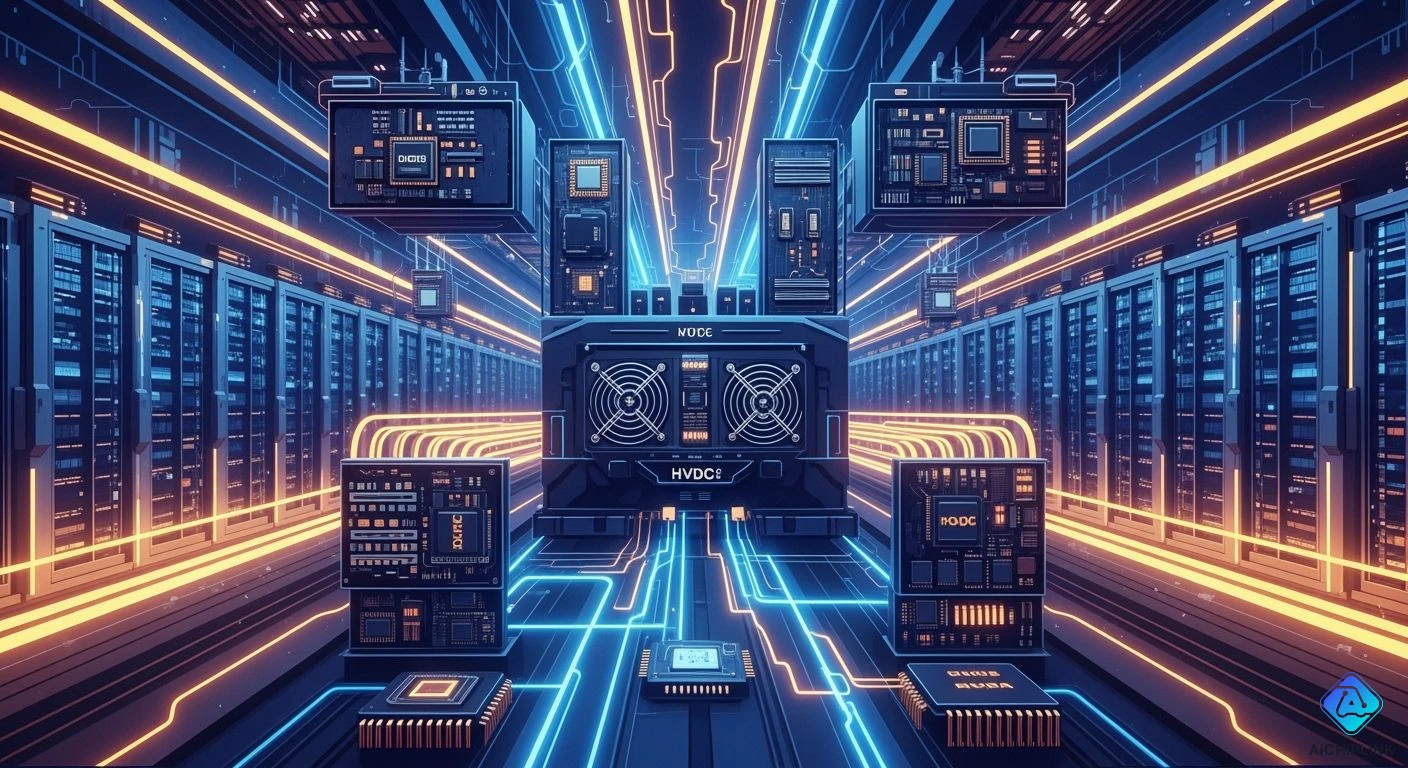
Modern server setups push old systems to their limits. Standard server racks used to handle 15 to 20 kW, but new AI systems now need 60 to 100 kW. You need dense power delivery systems to handle these changing workloads.
An 800V HVDC system improves power delivery in AI data centers. Switching to high-voltage DC reduces electric current, removes extra conversion steps, and lowers heat. This 800V HVDC data center power design makes wiring easier for new AI servers while boosting energy efficiency.
| Benefit | Quantitative Value | Baseline |
|---|---|---|
| Copper reduction | 45% reduction | Traditional 415 VAC systems |
| Power capacity | 85% more power transmitted | 800 VDC vs 415 VAC |
| Energy efficiency | Up to 5% improvement | Current 54 V systems |
Key Takeaways
-
High-voltage DC power reduces the need for copper cables by 45 percent.
-
Fewer power changes save energy and lower the heat inside server racks.
-
Thinner cables save space for liquid cooling systems in crowded AI server setups.
-
Better efficiency reduces daily running costs and helps support future computer growth.
Addressing Power Bottlenecks in Modern AI Data Centers
Limits of Legacy AC and 48V Distribution
Old power systems struggle to feed modern computer hardware. Traditional alternating current setups need heavy transformers and waste energy at every conversion step. This lost electricity turns into extra heat before reaching the silicon chips.
Standard low-voltage designs also fail when computer workloads suddenly spike. A low-voltage power distribution system must carry huge electrical currents to meet high power goals. These heavy currents waste energy as heat along thick copper busbars. Engineers need high-density power delivery to support intense computing without losing reliability.
Old power setups create physical space problems inside modern data halls. Huge cable bundles block air from flowing over servers and cooling fans. Upgrading your facility layout removes these major performance bottlenecks for HPC data centers.
Thermal and Cabling Strain at High Rack Densities
Packed server racks create serious heat problems inside modern equipment rooms. High-current busbars need active liquid cooling to prevent overheating during heavy processing loads. Extreme heat from high-density racks damages delicate parts, equipment, and structural materials. Facility managers rely on specialized infrastructure to handle these hot computing environments:
-
AI racks often pass 60°C/140°F and require specialized advanced liquid cooling.
-
Higher ceilings and larger data halls are needed to accommodate cabling and cooling infrastructure like rear door heat exchangers.
-
Latest GPUs operate with facility fluid inlet temp of 45°C enabling dry cooler heat rejection.
You should update facility layout designs to support high-performance AI hardware accelerators. Heavy copper lines overload rack weight limits and take up space needed for wiring. Replacing old power lines opens up room for advanced liquid thermal management components in next-generation AI systems.
Data center managers need smart electrical setups for high-density AI cluster deployments. New server hardware works best with direct power to improve efficiency across the entire building. You can simplify facility operations across all your AI data centers with high-voltage direct current options.
How 800V HVDC Data Center Power Architectures Function
Eliminating Redundant AC-to-DC Conversion Stages
Older facilities waste energy because they change electrical formats too many times. Standard systems drop power to 415 VAC, send it through an AC UPS, and change it to 54 VDC inside server racks. Then, smaller internal parts drop the voltage again right on the computer board. Every single step creates heat, reduces overall system reliability, and lowers facility performance. You lose a lot of power from these extra changes throughout the building.
The 800V HVDC data center power design fixes this wasteful process completely. This new setup handles main power changes at the main building level. Large rectifiers convert incoming utility AC power directly into 800 VDC efficiently. The facility then sends high-voltage dc power straight to servers across the room. Moving these steps away makes repairs easier and keeps hot gear away from delicate chips.
This simple layout removes double power changes inside the server room. Direct high-voltage lines deliver electricity straight to computing equipment without extra feed boxes. Removing extra transformers and internal rack converters makes server designs much simpler. You shorten the total path from the power grid to the chip. Fewer electrical parts in server rows improve energy use, cut costs, and leave cleaner rooms.
Upstream Conversion and In-Rack Voltage Stability
Moving power equipment outside server rooms frees up space inside the building. You get rid of huge electrical boxes between the rows of computers. Instead, you put big rectifiers in special equipment rooms far from the servers. This setup saves valuable floor space inside crowded computer halls. Facilities get extra room for extra server racks and liquid cooling systems. You fit much more computing power into your current space.
Modern hardware relies on advanced semiconductor components to handle high-voltage lines. Advanced Gallium Nitride (GaN) devices allow smooth 800V DC bus operations inside tight server equipment. These solid-state switches work at higher speeds than older silicon parts. They react instantly when power needs change during big tasks. Smaller onboard GaN converters easily fit onto compact server boards.
Fast-changing AI tasks cause sudden, sharp jumps in electrical power needs. Heavy processor chips need instant energy when running hard calculations or complex algorithms. These fast changes strain older power systems and cause dangerous heat spikes. Gallium Nitride devices steady internal voltages right away during heavy work. Quick control prevents unexpected server crashes and stops downtime during big jobs.
This advanced power distribution system shields delicate processors from dangerous voltage drops. Steady electricity keeps high-voltage dc systems running without any stops. Facility engineers control voltages accurately right at the circuit board level. Modern data centers use this easy setup for long, reliable operations. You keep computing clusters running safely even when work demands jump.
Using an 800 v hvdc topology gives tech companies a great way to send power to growing server setups. Better power flow keeps every server system running smoothly. You get high power efficiency by cutting down internal resistance and extra heat. Fewer power steps lower energy use across busy AI compute centers. Less heat means your cooling systems do not have to work as hard.
This modern 800v hvdc data center power architecture delivers steady energy to crowded server racks. You protect expensive hardware while getting the most work out of your building. New AI systems run much better on strong hvdc infrastructure setups. You build a great system that handles future computing growth easily.
Key Technical Advantages of 800 V HVDC Systems
An 800 v hvdc architecture changes how high-density power delivery works in modern infrastructure setups. Traditional electrical layouts reach physical limits quickly when you run heavy compute jobs. Higher voltage levels directly drop electrical current demands across the entire facility. This modern approach provides a key solution for severe energy bottlenecks.
It enables them to pack more compute power in much smaller spaces to run the latest AI applications; 800 VDC also reduces waste heat from electric wires, lowers cable weight, and eliminates equipment needed in multiple AC to DC to AC conversions.
Using high-voltage dc infrastructure unlocks major operational benefits across the building:
-
Reduced power losses, copper usage, and thermal stress.
-
Better efficiency in the power train.
-
CapEx savings of $4–8M per 10MW build.
-
8–12% annual OpEx reductions from higher end-to-end efficiency.
-
Avoidance of AC architecture saturation at high rack densities.
-
Minimized conversion chain that recovers stranded compute capacity, recovering up to 5-7% of facility power that would otherwise be lost as heat in traditional AC architectures.
Reducing Copper Usage and Physical Routing Volume
At traditional low voltages, the high current required for high-power racks would demand unsustainable amounts of copper cabling, leading to excessive physical volume and cost. 800 VDC eliminates this need, preventing ballooning infrastructure and allowing more GPUs in a smaller space. Higher voltage levels cut conductor thickness dramatically while delivering the exact same amount of energy.
You save massive amounts of physical materials inside your server rooms. Thinner cables reduce weight across overhead support structures and raise total system efficiency. Lower current levels prevent electrical lines from generating unnecessary heat. You build cleaner routing paths while maintaining continuous power delivery to critical hardware.
Synergies with Liquid-Cooled AI Server Racks
Compact wiring opens vital internal space inside dense computer chassis. Modern liquid-cooling hardware requires extra room for fluid pipes, pumps, and quick-disconnect valves. Standard bulky AC cables block coolant flow and complicate regular server maintenance. High-voltage dc lines streamline internal server layouts completely.
You gain substantial space savings inside compact server enclosures:
| Space-Saving Benefit | Value |
|---|---|
| Reduction in conductor cross-section | 20× |
| Reduction in cable tray weight | Up to 85% |
| Reallocation of saved space | Additional GPU nodes, increasing compute density |
Copper requirements are reduced by 45% due to thinner conductors. Removing rack-level AC/DC conversion elements frees up valuable space for more compute resources, enabling higher-density configurations. Conductor cross-sections are reduced by approximately 20 times, leading to a reduction in cable tray weight by up to 85%. This frees up physical space within the rack, which can be reallocated to additional GPU nodes, increasing compute density.
You protect sensitive high-performance computing components from excessive thermal stress. Reduced cabling footprint frees up critical internal space inside high-density, liquid-cooled AI server chassis. Efficient direct connections allow your engineering team to install advanced liquid manifolds right alongside processing nodes. You optimize next-generation ai setups for continuous heavy workloads without thermal throttles.
Building managers scale next-generation ai compute racks without expanding building footprints. Better spatial layout simplifies air dynamics inside liquid-cooled cabinets. Efficient energy flow helps next-generation ai deployments achieve top performance goals. Advanced facilities rely on this smart solution to power hpc workloads efficiently. Your operational teams streamline maintenance routines across all ai data centers using this modern system layout.
Implementation and Infrastructure Future-Proofing
Industry Standards and OCP Architecture Alignment
Global technology groups assist operators with building dependable facilities to support modern computing requirements. Open Compute Project guidelines offer clear blueprints for hardware deployments. Big industry names follow these shared rules to evaluate fresh voltage concepts. As an example, NVIDIA tested and approved ST's 12 kW power delivery board. ST then displayed this full prototype unit at the OCP 2025 summit. That presentation showed how shared design standards make adopting new hardware easier for technical groups.
NVIDIA validated ST’s 12 kW power delivery board and is showcasing a complete prototype designed by ST at OCP 2025, the summit organized by the Open Compute Project.
Facilities update faster when teams match their physical layouts with unified industry frameworks. Standardized electrical setups ensure equipment components from various sellers work together seamlessly. Technical staff can easily test hardware inside next-generation ai data centers. This open blueprint provides a plain strategy to handle equipment updates. Having a shared strategy gives companies a proven method for growing next-generation ai workloads efficiently.
CapEx and OpEx Impact on AI Facilities
High-voltage direct current power systems cut overall facility expenses. Transforming Medium-Voltage AC right at the utility entrance into 800 VDC avoids middle conversion steps entirely. Raising the voltage decreases the electrical current. Smaller currents generate far less heat loss along lines. You minimize energy loss in dense setups ranging from 100 kW to 1 MW per rack. This 800v hvdc data center power design frees up building room for dense server gear.
Updating your facility layout brings great long-term financial advantages:
-
Up to 45% reduction in copper requirements
-
Up to 5% improvement in overall efficiency
-
As much as 30% lower total cost of ownership
Higher voltage systems boost operational efficiency while cutting raw material expenses. You spend less on costly copper lines and reduce recurring utility charges. Building operators shield high-value electrical equipment inside hpc data centers. Adopting this modern layout gets your next-generation ai infrastructure ready for steady future expansion.
Transitioning to an 800v hvdc data center power architecture solves critical heat, space, and power delivery bottlenecks in modern facilities. You remove extra conversion steps to boost system efficiency. This high-voltage dc solution cuts current requirements significantly.
Adopting this advanced power layout offers huge long-term advantages for your facilities:
-
Lower material costs through a 45% reduction in copper usage.
-
Greater energy efficiency across the entire electrical path.
-
Higher rack density support for dynamic compute workloads.
Data center engineers and IT executives must evaluate this scalable power infrastructure today. You protect valuable facility investments while scaling next-generation ai compute racks smoothly. Embrace this next-generation ai strategy to build a sustainable, high-performance computing environment.

Written by Jack Elliott from AIChipLink.
AIChipLink, one of the fastest-growing global independent electronic components distributors in the world, offers millions of products from thousands of manufacturers, and many of our in-stock parts is available to ship same day.
We mainly source and distribute integrated circuit (IC) products of brands such as Broadcom, Microchip, Texas Instruments, Infineon, NXP, Analog Devices, Qualcomm, Intel, etc., which are widely used in communication & network, telecom, industrial control, new energy and automotive electronics.
Empowered by AI, Linked to the Future. Get started on AIChipLink and submit your RFQ online today!
Frequently Asked Questions
Why does an 800V HVDC system lower heat in data centers?
Sending power at higher voltages drops the amount of current in the lines. This smaller flow creates far less extra heat along the wires. Protecting fragile server parts from high temperatures helps the building's cooling equipment run much easier.
How much copper can you save with 800V HVDC power delivery?
Choosing this setup cuts down needed copper cabling by nearly 45 percent compared to older 415 VAC systems. Skinny wires make server racks way lighter. Using thinner cables creates vital extra room inside crowded cases for advanced liquid cooling gear.
How does 800V HVDC improve overall energy efficiency?
This design gets rid of unnecessary power changes between the electric company and computer chips. Cutting out those middle steps boosts total energy efficiency by up to 5 percent. You stop wasting power and regain extra computing capacity.
Is 800V HVDC suitable for modern AI data centers?
Yes, this layout manages heavy power demands very well for changing, high-density server jobs. Modern Gallium Nitride parts deal with sudden power spikes without any trouble. You keep fast computer chips safe from sudden power drops during big jobs.